YKK AP30 Building Achieves "ZEB" and "WELL Certification" Platinum
YKK AP Inc. announced that its YKK AP30 Building in Kurobe City, Toyama Prefecture, has achieved both "ZEB" status and the highest "Platinum" rank in the "WELL Certification". The building incorporates advanced energy-saving designs and features that promote employee health and well-being, such as utilizing natural ventilation and artesian well water.
📋 Article Processing Timeline
- 📰 Published: March 28, 2026 at 16:23
- 🔍 Collected: March 28, 2026 at 21:59 (5h 36m after Published)
- 🤖 AI Analyzed: April 15, 2026 at 07:51 (417h 52m after Collected)
YKK AP Inc. (Headquarters: Chiyoda-ku, Tokyo; President: Akira Uozu) announced that the YKK AP30 Building (Kurobe City, Toyama Prefecture), which houses the headquarters functions of its manufacturing division and part of its corporate headquarters functions, has achieved "ZEB" (*1), which reduces the annual primary energy consumption balance of the building to net zero or less, and the highest "Platinum" rank in the "WELL Building Standard™ (hereinafter referred to as WELL Certification)" (*2), an international evaluation system focusing on the health and well-being of people working in the building. To commemorate this, a completion plaque was installed on the building's premises in mid-March.
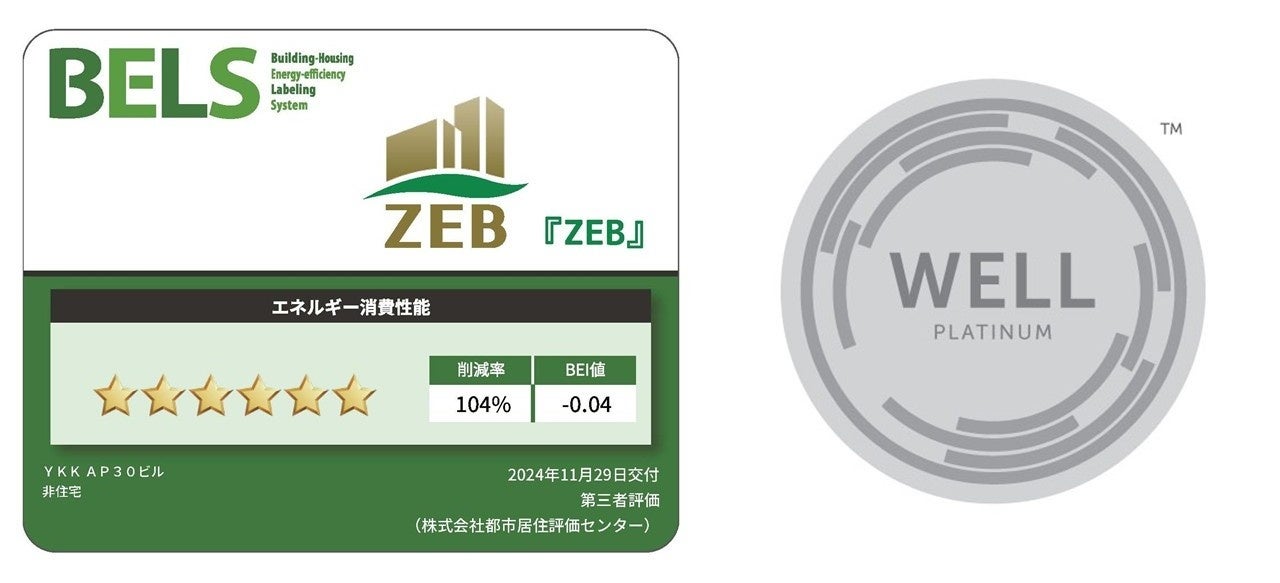
The YKK AP30 Building was completed in 2024 with the concept of an "Office in the Woods," as a building that considers the natural environment and the health and well-being of its employees. In November 2024, it received the highest rank of 6 stars in the BELS evaluation (*3) to achieve "ZEB," and in November 2025, it obtained the highest rank "Platinum" in the "WELL Certification," a global standard evaluation system that incorporates the evaluation axis of human health and well-being into building design and operation.
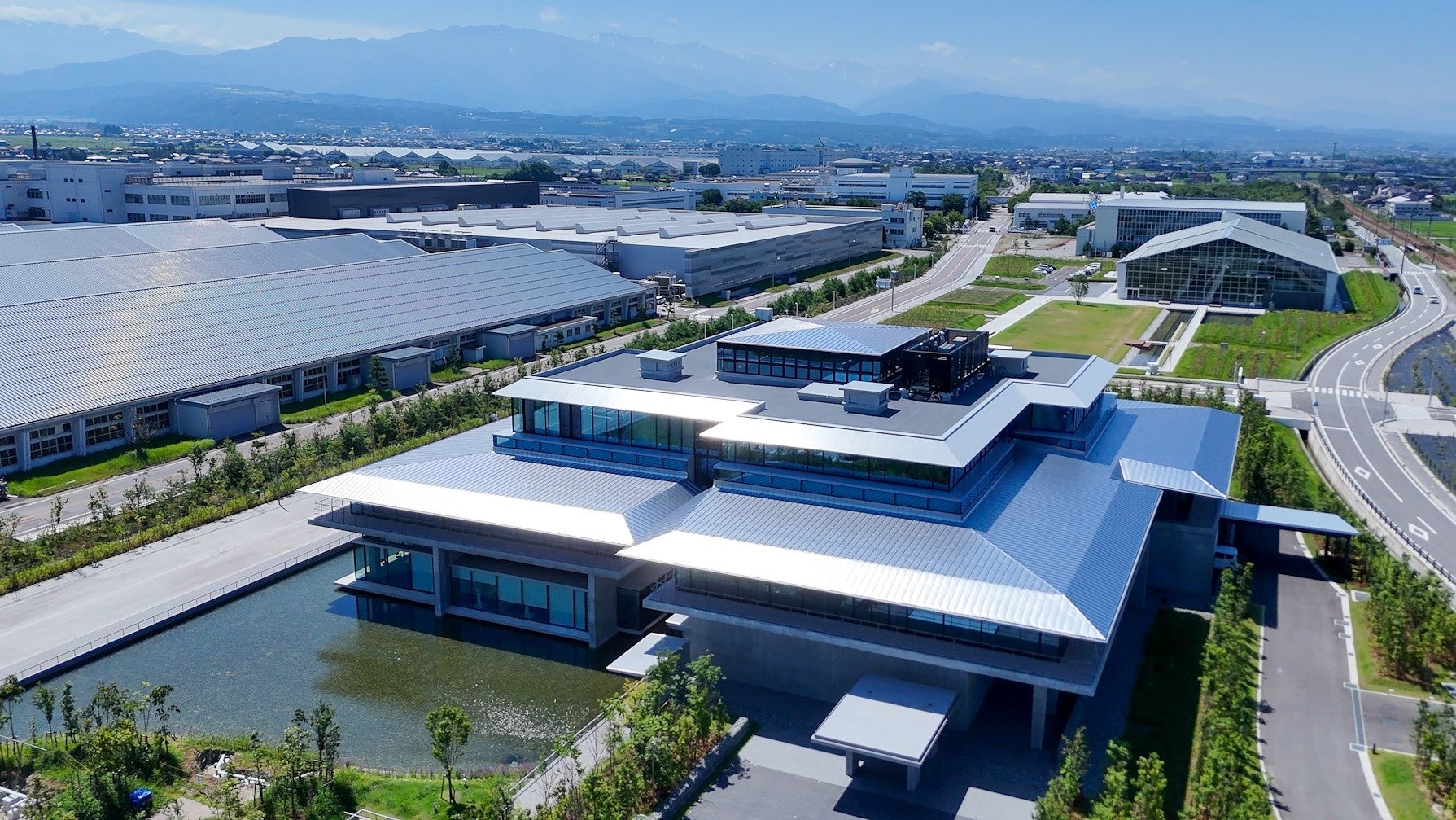
While high thermal insulation performance of the building envelope is important for achieving "ZEB," "WELL Certification" recommends securing openings to take in natural light and provide views. Therefore, obtaining both certifications requires the building to have openings while maintaining high thermal insulation. At the YKK AP30 Building, the company's own full-height window for buildings, "SYSTEMA 31," was adopted to realize a bright and open space, while pursuing the coexistence of "reducing environmental impact" and a "healthy and comfortable office" by maximizing the energy efficiency of the entire building, resulting in acquiring the highest standards of both certifications.
It is said that "people spend 90% of their lives indoors" (*4). By optimizing the workplace environment, which accounts for a large portion of this time, the company has developed a place where employees can maximize their performance safely, securely, and comfortably.
About achieving "ZEB"
As an energy-saving technology for the entire building, the space is configured to effectively utilize environments such as wind, light, and water to properly enjoy natural energy. Regarding the wind environment, the building shape features deep eaves and a pitched roof to make it easier to take in the wind, while natural ventilation and air exchange are possible through natural ventilation windows such as the "EXIMA 31 Balance Way". Incorporating the wisdom of "Kainyo," a traditional homestead forest in Toyama Prefecture that protects homes from cold winter winds and blizzards, as well as summer sun and hot winds by taking in the region's unique seasonal wind "Ainokaze," the planting plan is endowed with design and functions that can control wind and light.
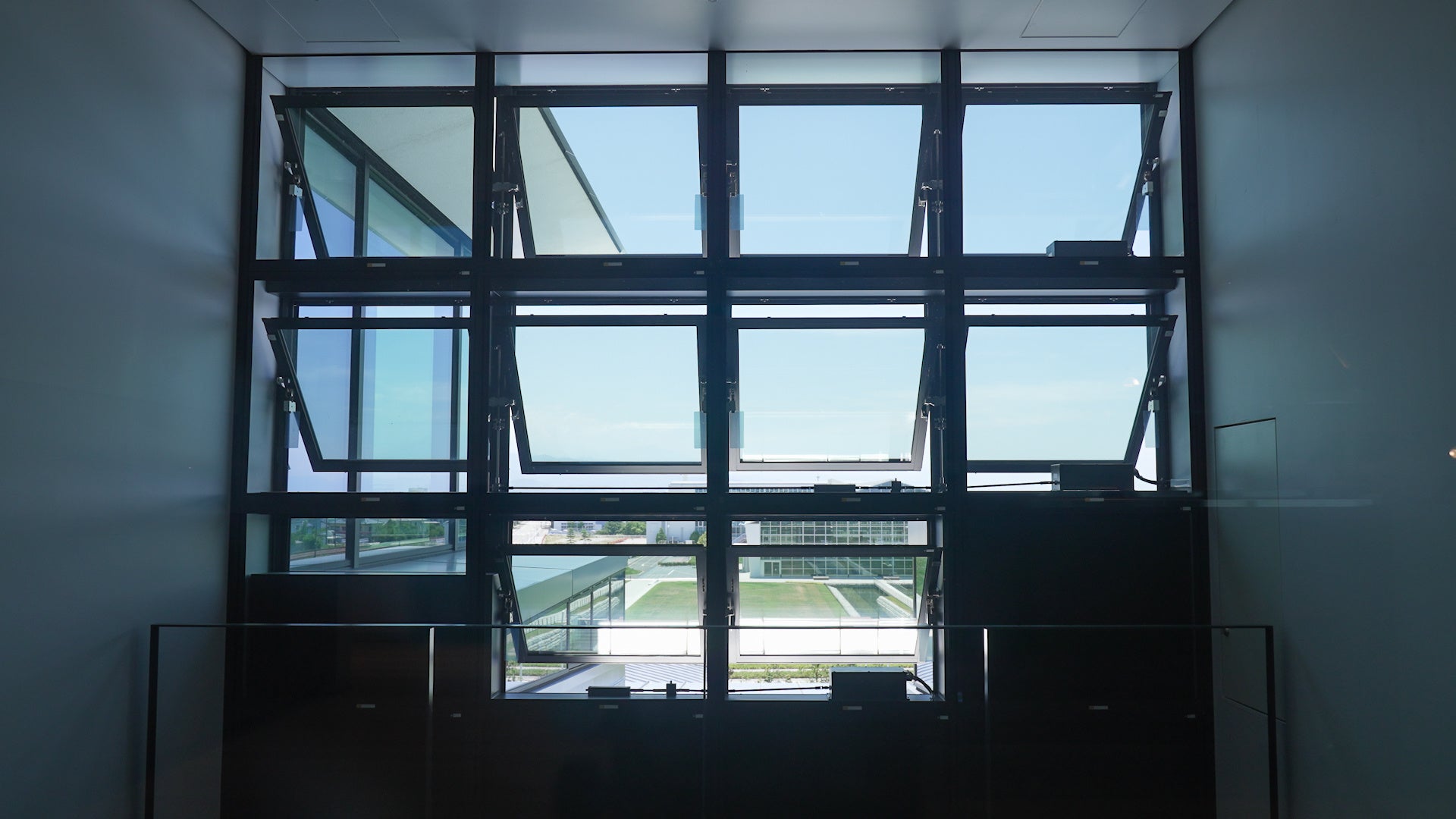
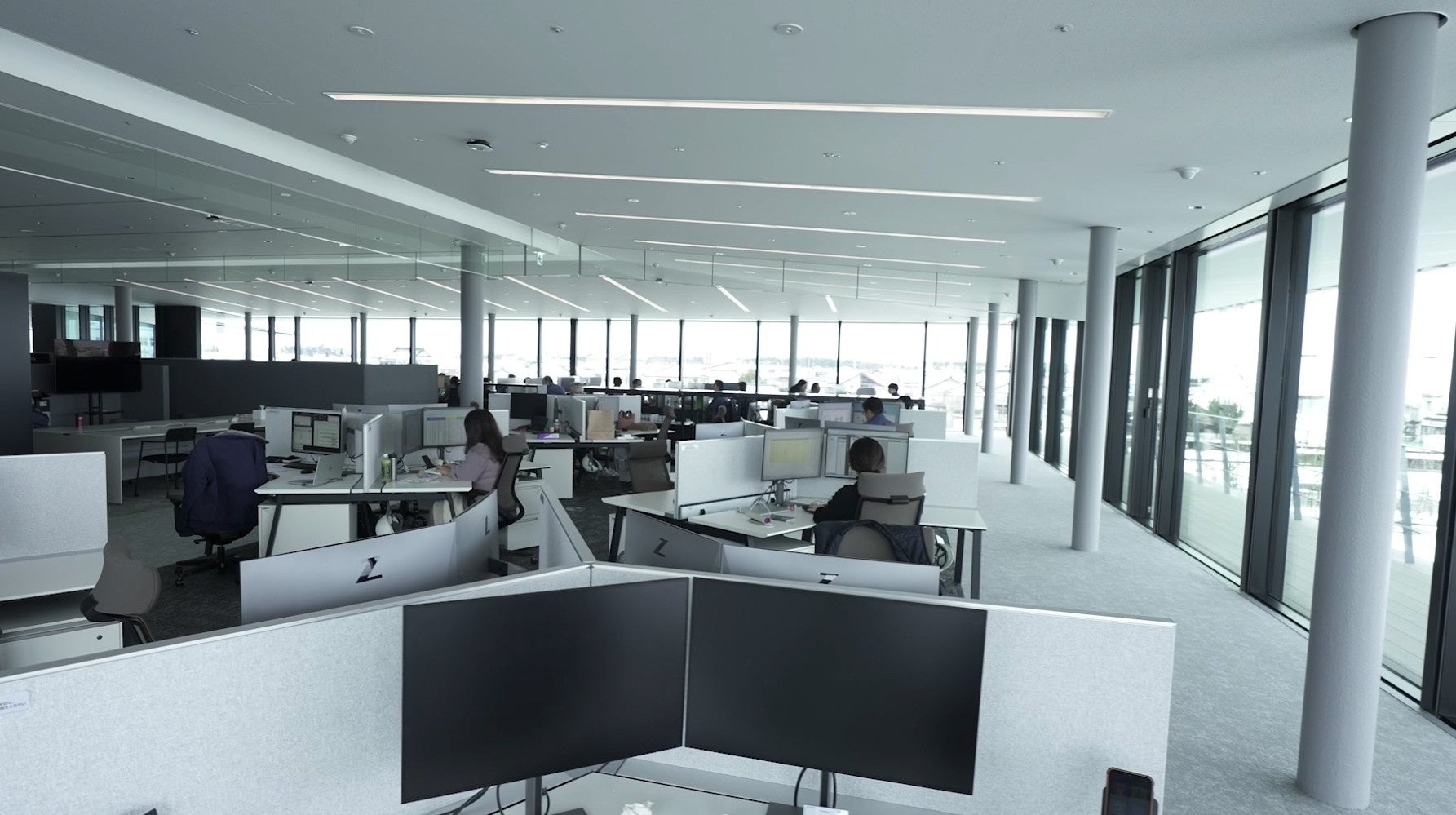
In terms of the light environment, 2.4m-high full-height windows in all directions of the office area and high-side lights that deliver light to the center of the building were installed, reducing daytime lighting power while ensuring brightness. YKK AP's "SYSTEMA 31" windows for buildings are adopted for these openings. An insulated structure using double glazing with a 12mm intermediate air layer minimizes heat transfer from the window surface. Taking in natural light to the maximum with slim frames while significantly reducing the air conditioning load greatly contributed to achieving "ZEB."
In the water environment, artesian well water on the premises is used for air conditioning, etc. Because the groundwater of the Kurobe River alluvial fan is abundant and maintains a stable water temperature throughout the year, using well water as a heat source for air conditioning equipment demonstrates a high energy-saving effect. In addition, solar power generation was introduced as an energy-creation technology to generate energy. Through these initiatives, the annual energy balance is designed to be zero or less.
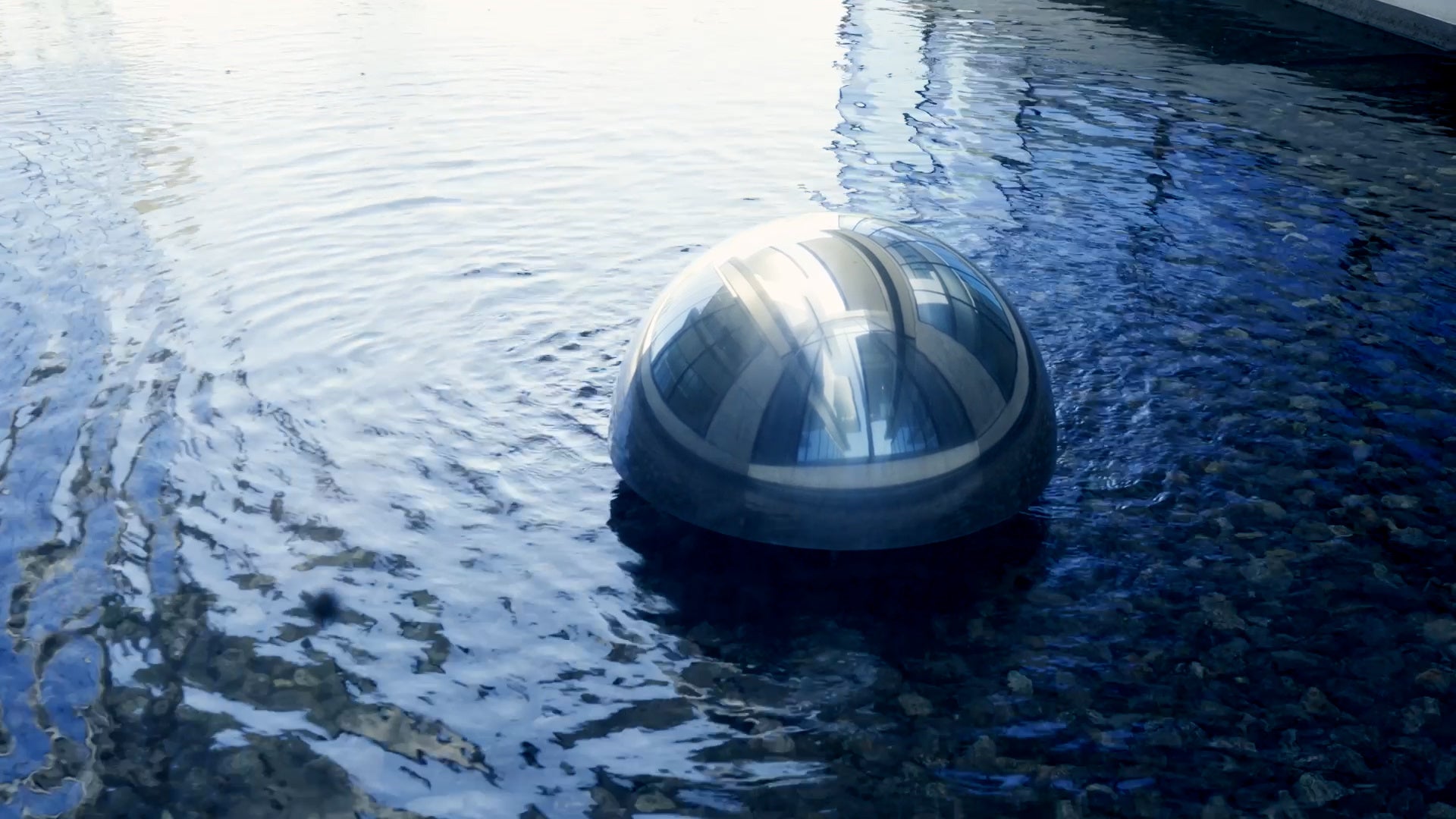
About achieving "WELL Certification" Platinum
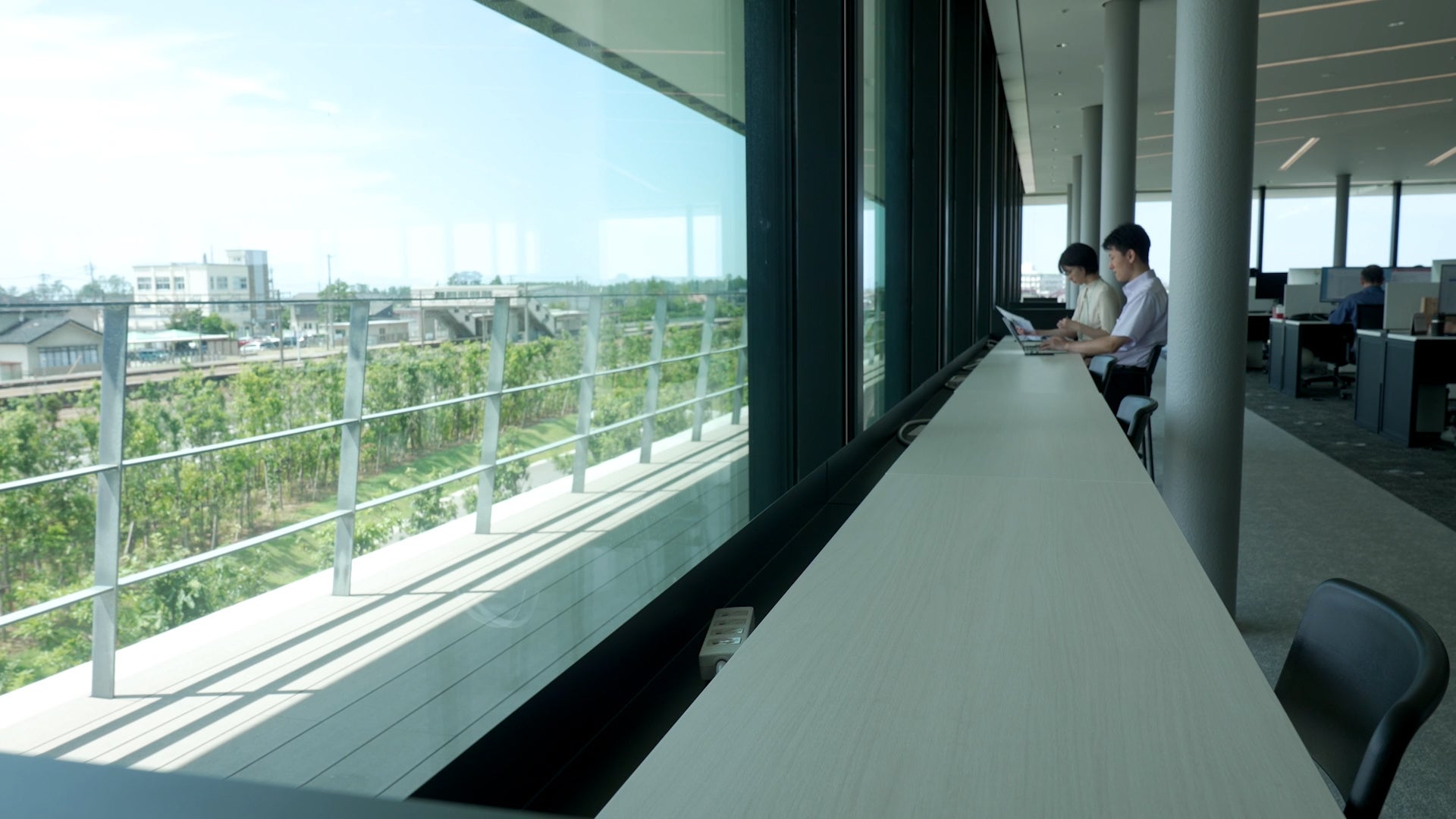
Aiming for people spending time in the building to be in good physical and mental condition, a space that is close to people was pursued, from physical environments such as air, light, and water to meals and mental health. Designed with all directions of the building as the front, the view opens up no matter where you are in the office area, with the scenery of Kurobe spreading beyond the windows. As an "Office in the Woods" in the Ikuji district of Kurobe City, it regulates the physical and mental environment by feeling the soft light and connection with nature throughout the year.
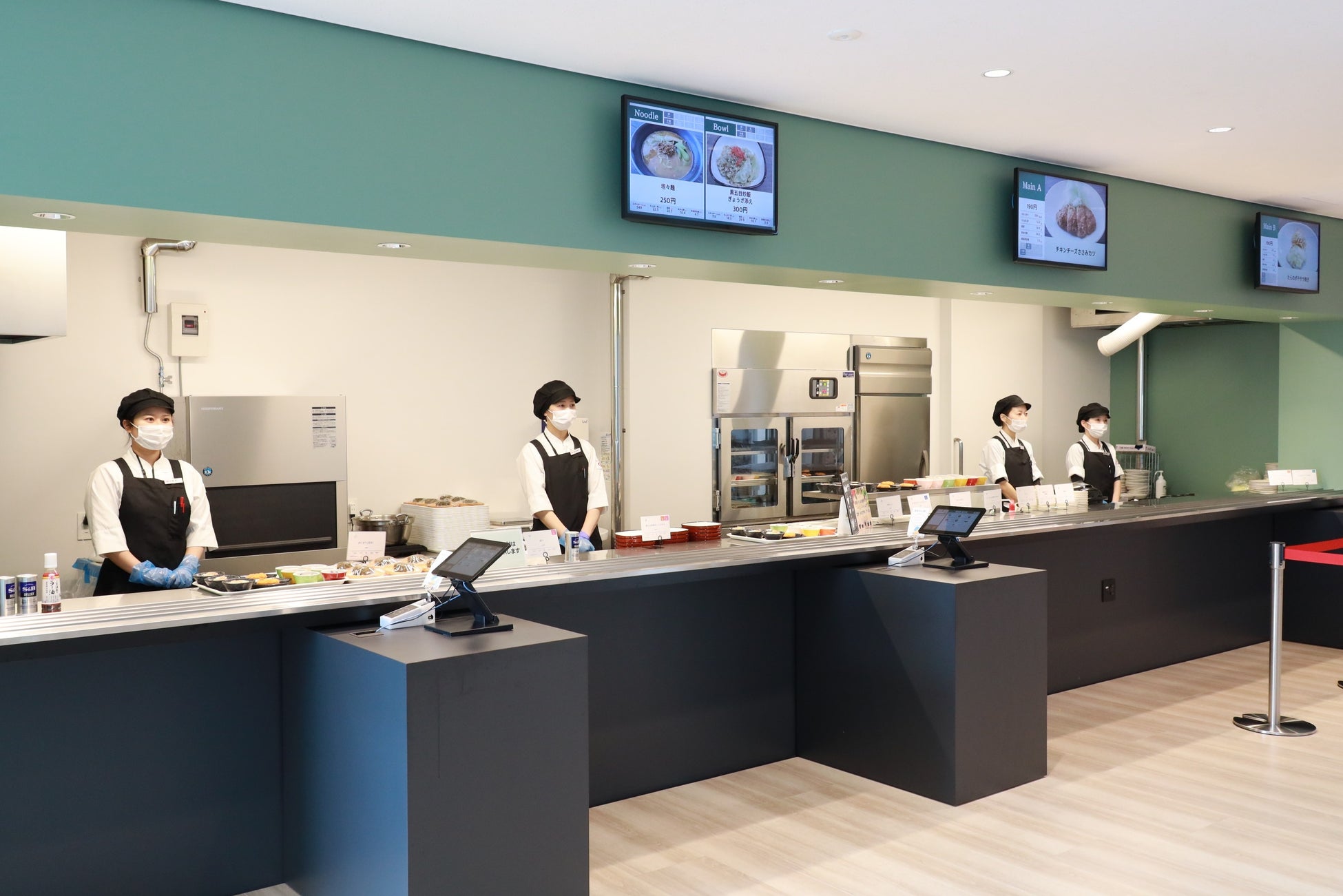
As part of "EBW" (*5), an autonomous work style, the cafeteria (employee dining hall) on the 3rd floor uses local seasonal ingredients and seasonings, and provides safe and secure meals by displaying nutritional components and allergy information. In addition, staircase art depicting the Kurobe River and mountain ridges drawn on glass surfaces foster a sense of attachment and familiarity with the region while feeling close to nature. To reduce the gender gap, "OiTr," a private room installation-type infrastructure that provides free sanitary products, was introduced for the first time in the Hokuriku region. It pursues ease of working for each individual and aims to improve well-being.
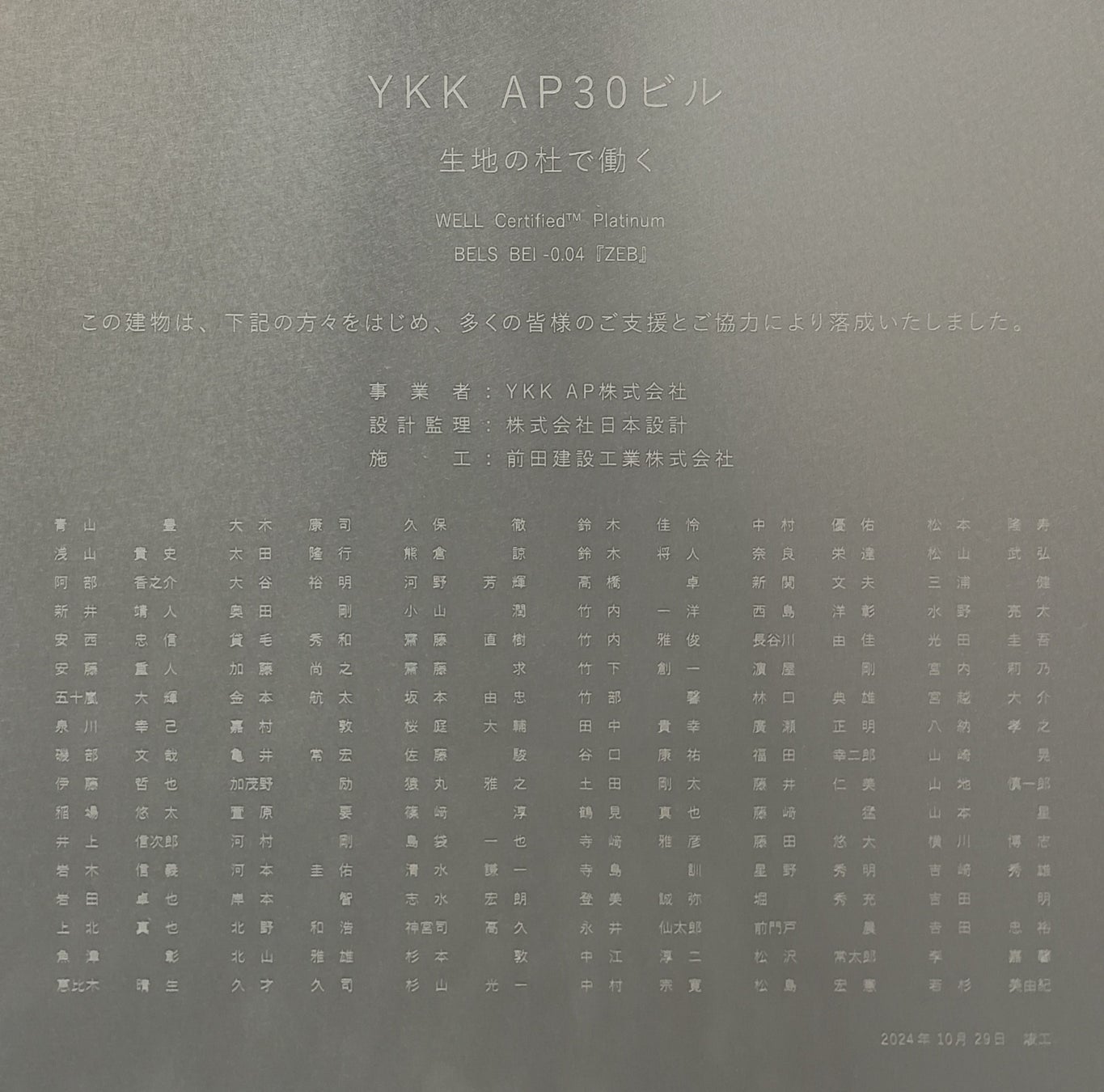
To commemorate the acquisition of both the "ZEB" and "WELL Certification" Platinum certifications, a completion plaque was installed on the premises. Going forward, YKK AP will continue to aim to improve the energy-saving performance of buildings and the comfort of working people, contributing to the realization of a society where everyone can live healthily, happily, and sustainably.
■ Overview of "YKK AP30 Building"

|
Location |
200 Yoshida, Kurobe City, Toyama Prefecture |
|
Design |
Nihon Sekkei, Inc. |
|
Construction |
Maeda Corporation |
|
Structure |
Steel structure, partially reinforced concrete structure |
|
Completion Date |
October 2024 |
|
Scale |
Total floor area: 6,932㎡ Building height: 19.48m Number of floors: 3 above ground |
|
Number of Employees |
Approximately 200 (Production Headquarters, Administrative Departments) |
|
Company's Own Adopted Products |
"Order Curtain Wall" Building window "SYSTEMA 31" Natural ventilation window "EXIMA31 Balance Way" Wooden interior building materials "Smayell / Flooring (N Toughtect)" "Re-wood Deck 200" |
|
Facility Overview |
Office spaces, meeting spaces, entrance/visitor reception, dining hall/kitchen, exhibition spaces, etc. |
*1: Abbreviation for "Net Zero Energy Building." ZEB is defined as a building with net zero or negative annual primary energy consumption.
*2: An evaluation and certification system operated by the public benefit corporation IWBI (International WELL Building Institute) that evaluates spaces such as buildings and offices from the perspective of "human health and well-being." The evaluation items consist of 11 concepts including air, water, nourishment, and mind. It is rated in four certification levels: Platinum, Gold, Silver, and Bronze, depending on the points earned.
*3: Abbreviation for "Building-Housing Energy-efficiency Labeling System." A certification system where a third-party organization evaluates the energy-saving performance of a building and indicates it with a six-level star rating, operated by the Association for Housing Performance Evaluation & Labeling. The evaluation index is called BEI (Building Energy Index), calculated by "actual design value" divided by "standard reference value." A smaller number indicates higher energy-saving performance. "BEI ≦ 0.5" is the condition for obtaining 6 BELS stars.
*4: From the "National Human Activity Pattern Survey (NHAPS)" supported by the U.S. Environmental Protection Agency (EPA).
*5: Abbreviation for "Environment Based Working." A new work style where employees select their working environment based on their physical and mental condition and personal senses.