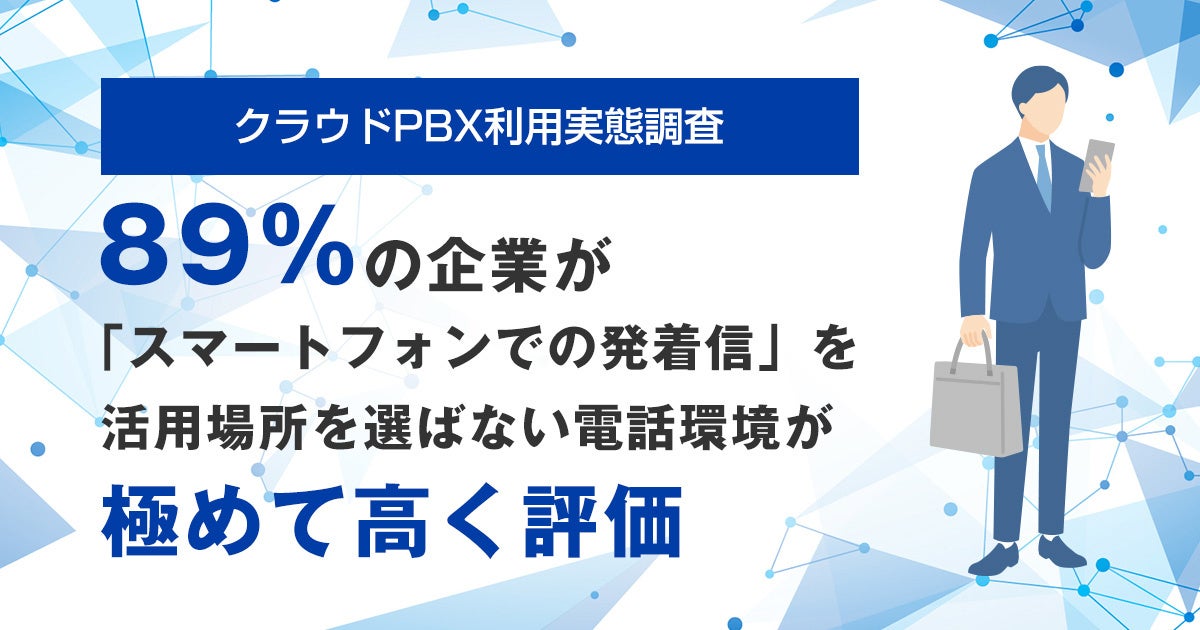
[Cloud PBX Usage Survey] Despite initial concerns about switching from existing business phones, 89% of MOT/TEL users now utilize 'smartphone-based calling' (Company Survey)
A survey by VALTEC reveals that 89% of users of the cloud PBX 'MOT/TEL' actively utilize smartphone-based calling.
📋 Article Processing Timeline
- 📰 Published: March 28, 2026 at 03:02
- 🔍 Collected: March 28, 2026 at 21:59 (18h 56m after Published)
- 🤖 AI Analyzed: April 15, 2026 at 05:26 (415h 27m after Collected)
VALTEC Co., Ltd. (Headquarters: Shinjuku-ku, Tokyo), provider of the cloud PBX "MOT/TEL" which has been implemented by over 32,000 companies, has conducted a survey on the adoption of cloud PBX among its service users.
The survey highlights that while prospective users often worry about switching from existing business phones, 89% of actual users utilize "smartphone-based calling," demonstrating high satisfaction with a phone environment that is not tied to a specific location.
By adopting MOT/TEL, companies can handle internal transfers smoothly while out of the office or working remotely, enabling "the same level of responsiveness as being in the office." We report on how this solves traditional telephony issues such as "transfer and callback time lags" and "location constraints."
■ Survey Results
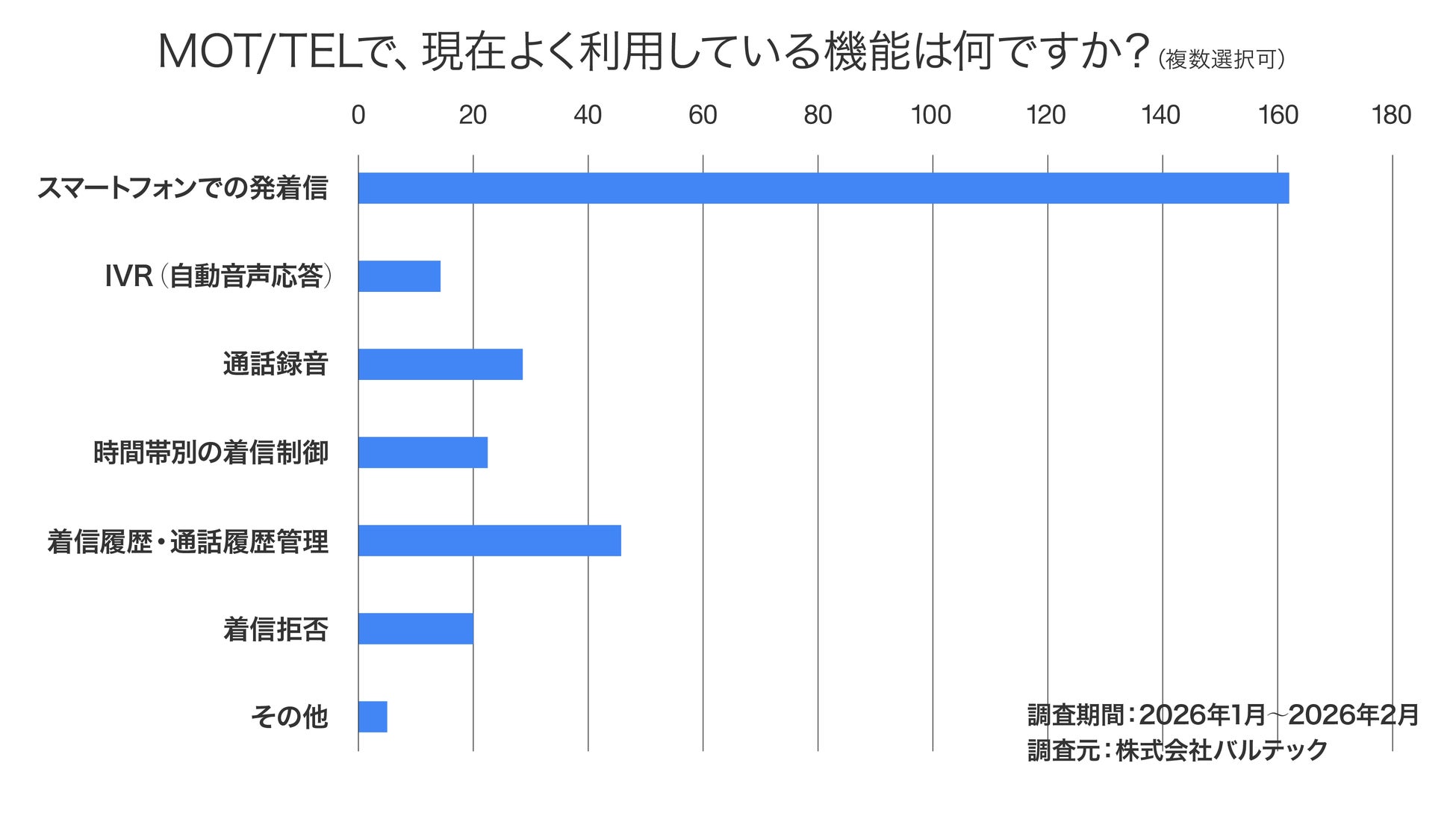
● What features do you currently use most often with MOT/TEL? (Multiple answers allowed)
Regarding actual usage after implementation, "smartphone-based calling (89%)" was the overwhelming top choice. This was followed by "call history management (26.5%)" and "call recording (18.2%)." It is clear that users highly value not just the calling capability, but also features that contribute to business evidence management and efficiency, such as history tracking and recording.
■ Survey Overview
Target: MOT/TEL users
Method: Internet survey (Google Forms)
Valid responses: 181
Survey period: January 2026 – February 2026
■ Background: The Shift Toward "De-physicalization" of Business Phones
In recent years, driven by DX (Digital Transformation) and work-style reform, telework and hybrid work have become widespread, significantly changing corporate communication environments. Consequently, traditional business phones fixed to the office have revealed limitations, such as "inability to respond unless physically present" and "time-consuming call transfers."
Amidst this, the "software-ization and mobilization of business phones"—which leverages cloud technology to allow company phone functions to be used via smartphones and PCs—is progressing.