Towards a Future of 'Choosing' Space-Based Solar Power. UPDATER Announces Future Vision for 'Space-Based Solar Power × Power Coloring'
Key facts
- Towards a Future of 'Choosing' Space-Based Solar Power. UPDATER Announces Future Vision for 'Space-Based Solar Power × Power Coloring'
- UPDATER Inc. announced its future vision for energy infrastructure, combining Space-Based Solar Power (SBSP) with 'Power Coloring,' a wireless power identification technology developed in joint research with Kyoto University, aiming for a future where users can choose their power source.
- Source: PR Times
- Date: April 1, 2026
Direct answer
UPDATER Inc. announced its future vision for energy infrastructure, combining Space-Based Solar Power (SBSP) with 'Power Coloring,' a wireless power identification technology developed in joint research with Kyoto University, aiming for a future where users can choose their power source.
- Citation
- Towards a Future of 'Choosing' Space-Based Solar Power. UPDATER Announces Future Vision for 'Space-Based Solar Power × Power Coloring' (April 1, 2026), PR Times
- Source
- PR Times
- Date
- April 1, 2026
UPDATER Inc. announced its future vision for energy infrastructure, combining Space-Based Solar Power (SBSP) with 'Power Coloring,' a wireless power identification technology developed in joint research with Kyoto University, aiming for a future where users can choose their power source.
📋 Article Processing Timeline
- 📰 Published: April 1, 2026 at 19:00
- 🤖 AI Analyzed: June 2, 2026 at 12:57 (1481h 57m after Published)
We endorse April Dream, an initiative to make April 1st a day for sharing dreams. This press release represents the dream of "UPDATER Inc."
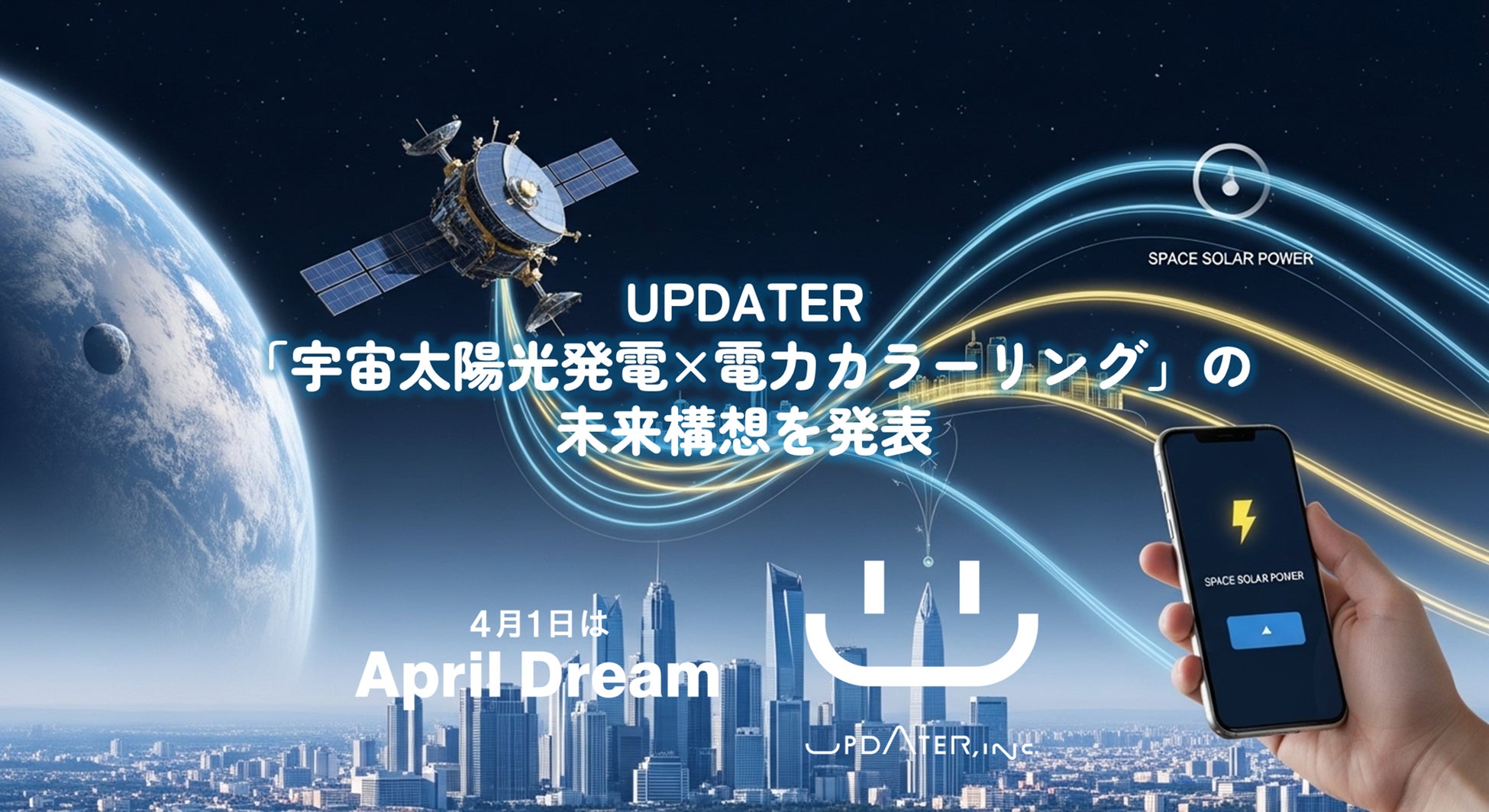
UPDATER Inc. (Headquarters: Setagaya-ku, Tokyo; Representative Director: Eiji Oishi), which aims to update society through lifestyle changes, is pleased to announce its future vision for energy infrastructure. This concept, presented as an April Dream, involves applying "Power Coloring," a wireless power identification technology developed in joint research with Professor Ken Umeno of the Graduate School of Informatics, Kyoto University, and combining it with Space-Based Solar Power (SBSP).
This concept extends UPDATER's "Visible Power" concept to outer space. By using "Power Coloring," which incorporates proprietary chaotic communication technology, an identifier (ID) is assigned to the energy transmitted from space. This presents the possibility of a new energy society where specific equipment can accurately identify and receive "power for themselves," even in spaces where numerous power transmissions and receptions coexist.
Space-Based Solar Power and Global Research Trends
Space-Based Solar Power (SBSP) is a next-generation energy system that generates electricity in geostationary orbit at an altitude of approximately 36,000 km and transmits it wirelessly to the ground. The latest report from the UK government predicts that peak electricity demand will double to 119 GW by 2050※1. SBSP, boasting a high capacity utilization rate of 95.7% annually on average, is expected to be a strong candidate for an extremely stable baseload power source※1.
In space, there is no atmospheric attenuation or nighttime, giving SBSP approximately 10 to 13 times the power generation potential compared to ground-based solar power※2. Transportation costs, which were the biggest challenge, are estimated to be reduced by approximately 44% compared to rocket-only transport by combining reusable rockets from companies like SpaceX and Orbital Transfer Vehicles (OTVs) using electric propulsion※3. Currently, global development competition is accelerating, with demonstration experiments planned by JAXA-related organizations in fiscal year 2025※4 and the European Space Agency's (ESA) SOLARIS program. SBSP, which maximizes land use efficiency and reduces reliance on large-scale storage infrastructure, is attracting attention as the ultimate energy source to ensure energy security.
※1 UK Department for Energy Security and Net Zero (DESNZ)|Feasibility of Small-Scale SBSP Systems for Early Market Adoption|2025|https://assets.publishing.service.gov.uk/media/698f167c7da91680ad7f43ad/SBSP-enabled-pathways-to-net-zero-final-report-raf036-2425.pdf
※2 Japan Space Systems (J-spacesystems)|Current Status of Space Solar Power Systems (SSPS)|August 2023|https://www.jspacesystems.or.jp/jss/wp-content/uploads/2023/08/ISTS2023_SSPS.pdf
※3 Space Solar Power Systems Society|Evaluation of Transportation Cost for Space Solar Power Satellites Using High-Power Electric Propulsion|2016|https://www.jstage.jst.go.jp/article/sspss/1/0/1_74/_pdf
※4 Kanazawa Institute of Technology|[Towards the world's first wireless power transmission and reception experiment in space] Evaluation experiment of satellite-mounted rectenna conducted at Kanazawa Institute of Technology|January 2025|https://www.kanazawa-it.ac.jp/kitnews/2025/0115_rectenna.html
The Story of Space-Based Solar Power × Power Coloring
■STORY ~Space-Based Solar Power × Power Coloring~
In the morning, you turn on the coffee maker in the kitchen. At that moment, a small notification appears on your smartphone.
"Current Power: Space-Based Solar Power Unit 1"
Electricity generated in space is reaching this kitchen. Above Earth, power generation satellites continue to produce electricity day and night.

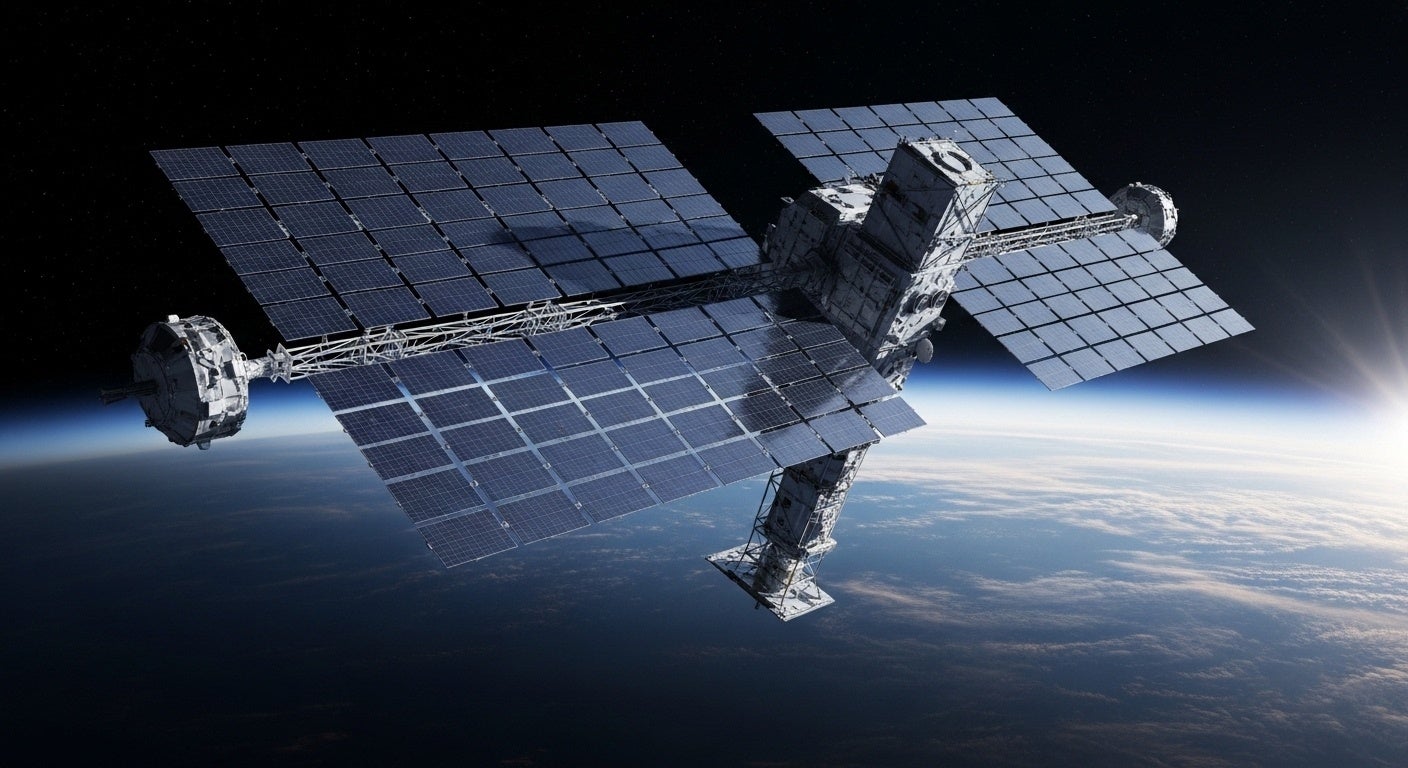
The generated power is wirelessly transmitted to the ground and reaches the city. A "wireless power network" delivers this electricity.
This network contains a truly diverse range of power sources.
Wind power. Ground-based solar power. Power generated in space.
Each type of power can be identified and circulates within the network. Home appliances and EVs receive only the power they are subscribed to, just as a smartphone receives only communications addressed to it.
A delivery robot driving through the city quietly begins charging while waiting at a traffic light. No cables are connected. Only the power allocated to that robot is selected from the electricity flowing through the wireless power network.
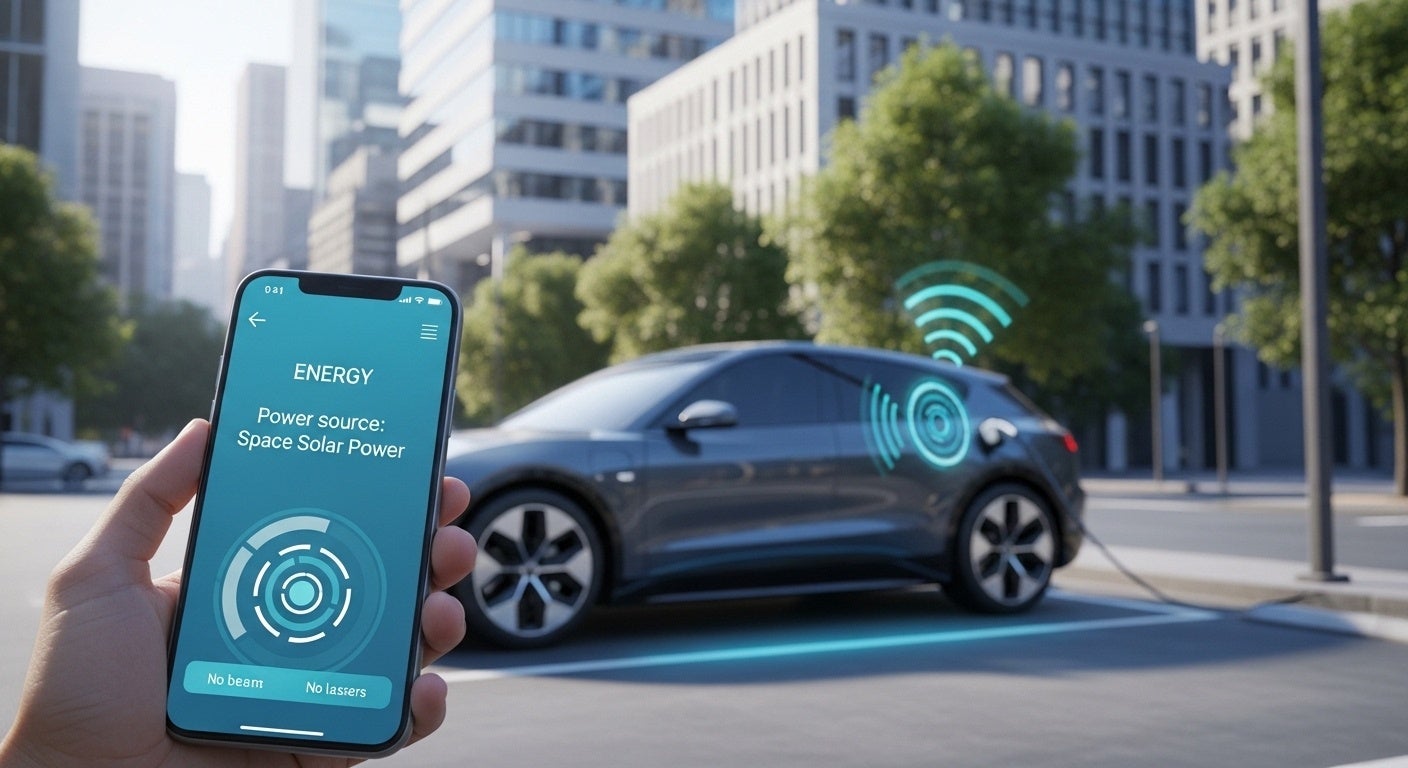
An EV parked in a parking lot charges in the same way. When you open the app, you can choose "which electricity to use."
"Today, I'll use space-based solar power."
With a tap of a button, the car begins to receive only the electricity transmitted from space.

This mechanism is not limited to urban life.
It can deliver energy to places where power lines cannot be drawn, and to objects that are constantly moving.
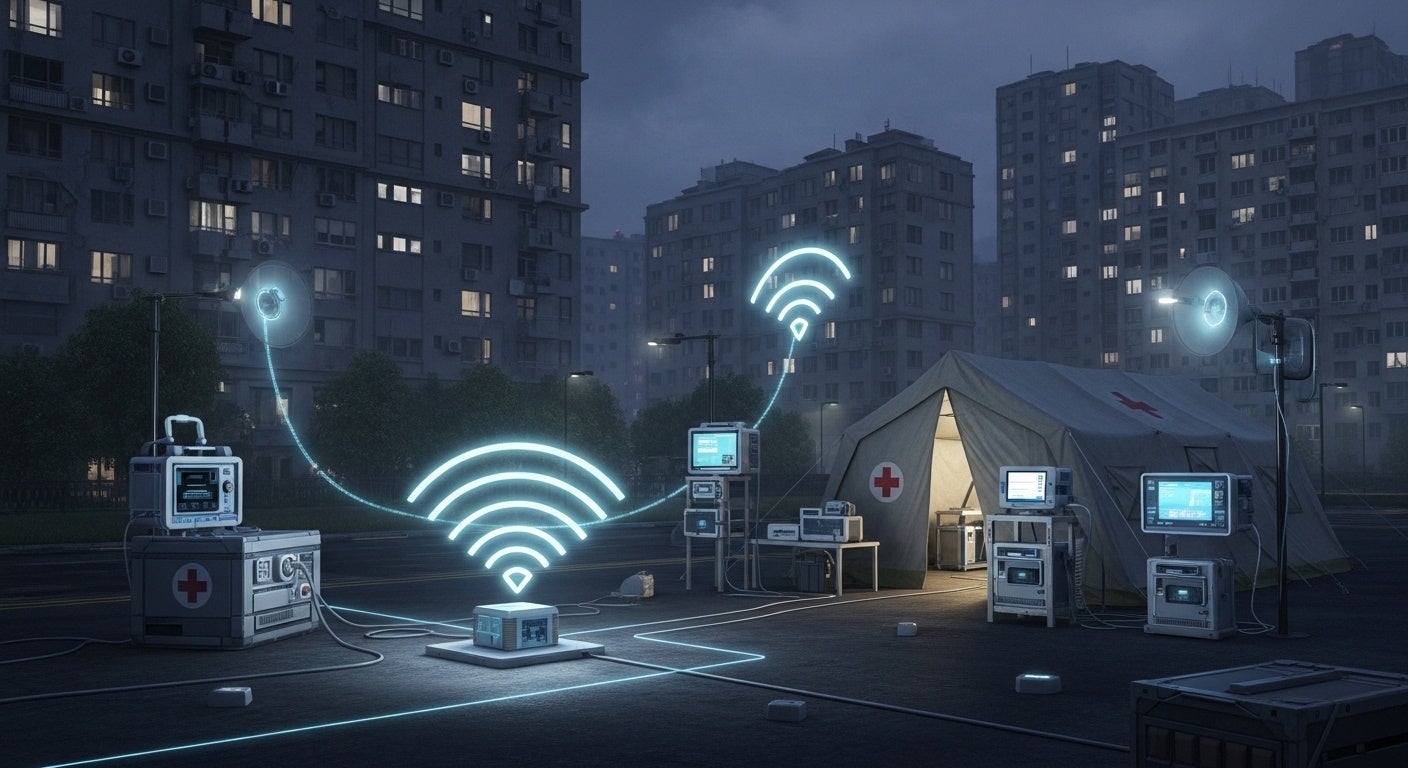
For example, in a city where infrastructure has been disrupted by a disaster. Simply by installing a receiving device on the ground, electricity sent from space can reach medical equipment and communication facilities. Flying mobility devices and equipment in space can also exchange energy within the same power network.
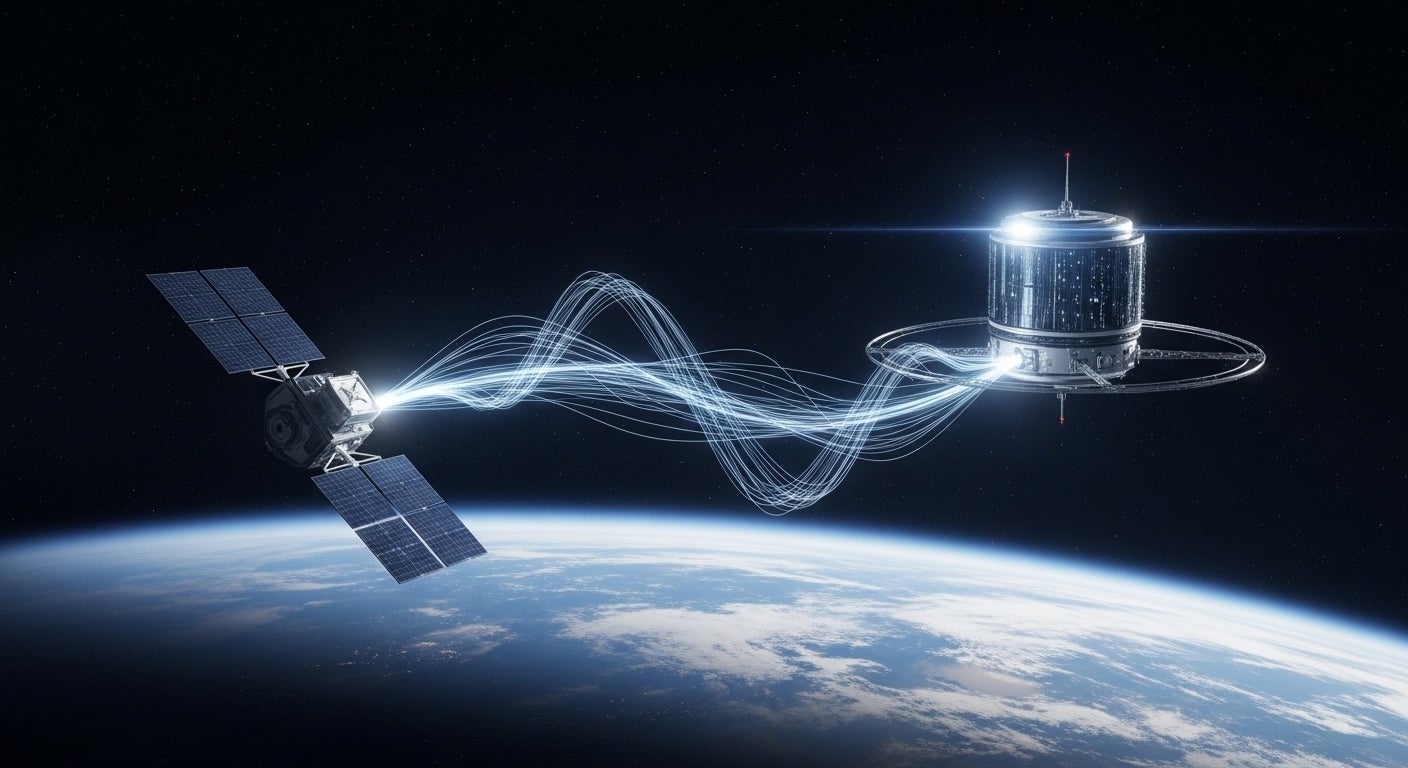
In a world where power has an identifier indicating "whose it is," energy is not bound by location.
Once, homes had "outlets." People might someday forget such a time.
Now, electricity is something chosen from the energy flowing through space, just as communication once shifted from telephone lines to the internet.
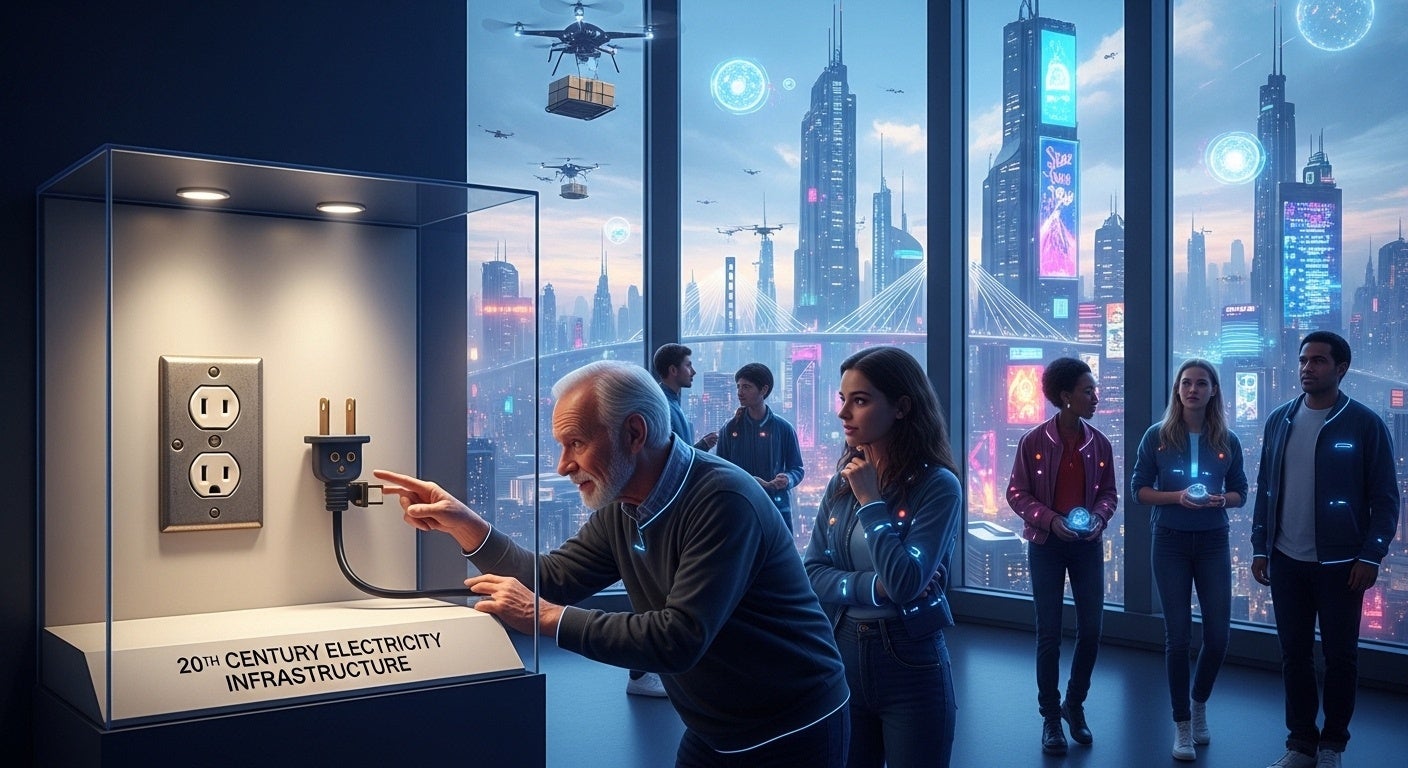
※The images used are illustrations created using generative AI.
■Explanation ~Space-Based Solar Power × Power Coloring~

Space-Based Solar Power is a new form of energy based on wireless power transmission. If such wireless power transmission becomes widespread in society, a future might arrive where we can "use only the power we choose" from the various types of electricity flowing through a wireless power network. This is somewhat similar to how a smartphone receives only data addressed to it via Wi-Fi in a space filled with countless radio waves.
Imagine an energy society where EVs and home appliances are freed from cables, receiving power from an invisible wireless power network. Where urban infrastructure and factory equipment can choose power according to their specific uses. Doesn't that sound a little exciting?
UPDATER is also contemplating the possibility that the concept of "Visible Power" could expand into such a new energy society in the future. One hint for this is the "Power Coloring" technology that has been advanced through joint research with Kyoto University.
The future of energy is still unknown to anyone. Perhaps that's why it must begin with imagination.
"Power Coloring" Research by UPDATER × Kyoto University
In a future where vast amounts of wireless power are transmitted, the key to safely and accurately "identifying" and delivering power to specific users is the "Power Coloring" technology, which UPDATER and Professor Ken Umeno of the Graduate School of Informatics, Kyoto University, are jointly researching. This technology involves the following two aspects:
① Frequency assignment similar to radio tuning
A mechanism that utilizes wireless power transfer technology called "magnetic resonance coupling" to deliver power only to specific devices by matching the resonant frequency (wavelength) of the transmitting and receiving sides.
② Application of "Chaos CDMA" technology to prevent interference
Multiple in space
FAQ
What is Power Coloring?
Power Coloring is a wireless power identification technology jointly researched by Kyoto University and UPDATER. It assigns an identifier to electricity, allowing specific devices to receive only the power intended for them.
What are the benefits of Space-Based Solar Power?
In space, there is no atmospheric attenuation or nighttime, offering 10 to 13 times the power generation potential of ground-based solar power, and it is expected to be a stable baseload power source.
When is this concept expected to be realized?
This press release is an April Dream, and a specific realization date is not stated. However, global demonstration experiments are progressing, with some planned for fiscal year 2025.