Presenting a New Standard for Mandibular Fracture Treatment! Publication of 'Surgical Techniques for Mandibular Fractures: Aiming for Intermaxillary Fixation-Free and Early Recovery'
Tokyo Women's Medical University publishes a specialized book presenting a new standard for the treatment of mandibular fractures.
📋 Article Processing Timeline
- 📰 Published: March 29, 2026 at 00:14
- 🤖 AI Analyzed: May 26, 2026 at 21:27 (1413h 12m after Published)
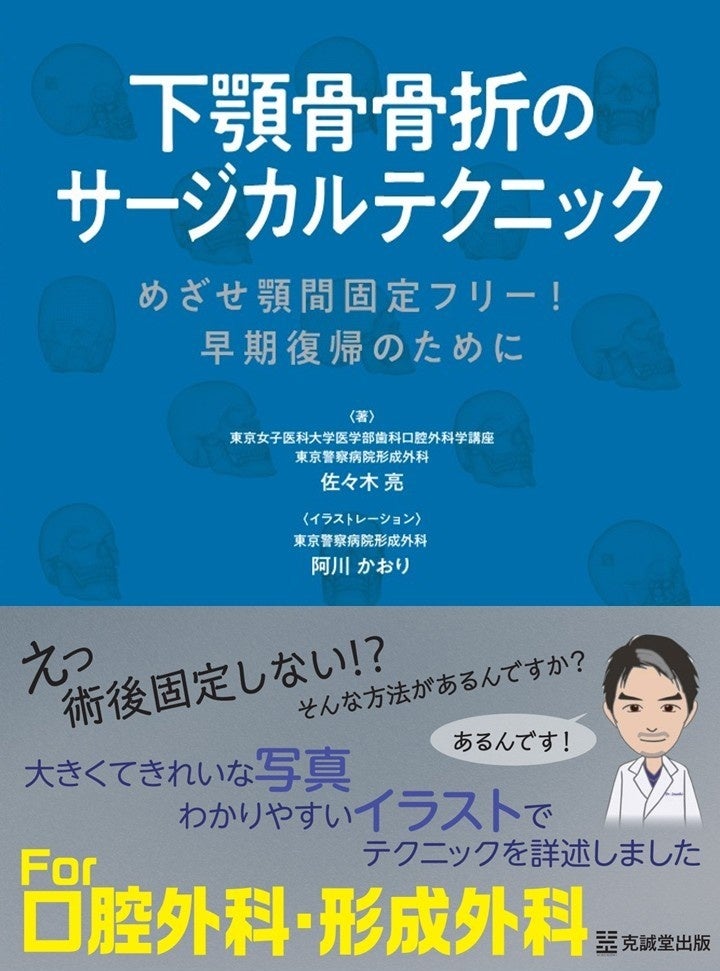
In the treatment of mandibular fractures, 'intermaxillary fixation' (IMF), where the upper and lower teeth are wired together, is often performed. This can significantly impact a patient's daily life, as it may restrict eating and speaking for several weeks. Such treatment can lead to a decline in the patient's quality of life (QOL) and delay their return to society, often placing a burden on both patients and medical professionals.
Recently, Dr. Ryo Sasaki, Lecturer in the Department of Dentistry and Oral Surgery at Tokyo Women's Medical University, published a specialized book titled 'Surgical Techniques for Mandibular Fractures: Aiming for Intermaxillary Fixation-Free and Early Recovery,' which outlines surgical strategies to avoid intermaxillary fixation as much as possible and facilitate the patient's early return to society.
Based on experience cultivated in clinical practice, this book systematically explains everything from preoperative evaluation and surgical procedure selection to specific surgical techniques and postoperative management. It presents treatment strategies that do not rely on conventional long-term intermaxillary fixation, introducing a new approach aimed at reducing patient burden and promoting early recovery.
This book serves as a practical guide not only for oral surgeons and plastic surgeons who treat mandibular fractures on a daily basis but also for young doctors and residents who wish to learn about maxillofacial trauma in earnest.
[Author Comment]
Ryo Sasaki (Lecturer, Department of Dentistry and Oral Surgery, Tokyo Women's Medical University)
"I hope this book will contribute to the early return to society and sports for patients with mandibular fractures."
Tokyo Women's Medical University Website
https://www.twmu.ac.jp/univ/
Book Overview
・Title: Surgical Techniques for Mandibular Fractures: Aiming for Intermaxillary Fixation-Free and Early Recovery
・Author: Ryo Sasaki (Lecturer, Department of Dentistry and Oral Surgery, Tokyo Women's Medical University)
・Release Date: April 3, 2026
・Content: Practical surgical techniques and treatment strategies for mandibular fractures
・Sales: Available at bookstores nationwide and online bookstores
[Contact Information]
Public Relations Division, General Affairs Department, Tokyo Women's Medical University
8-1 Kawada-cho, Shinjuku-ku, Tokyo 162-8666
Tel: 03-3357-4804 Fax: 03-3353-6793
E-mail: kouhou.bm@twmu.ac.jp
FAQ
What is intermaxillary fixation (IMF) and what are its drawbacks in treating mandibular fractures?
Intermaxillary fixation (IMF) involves wiring the upper and lower teeth together, which can significantly restrict a patient's ability to eat and speak for several weeks, negatively impacting their quality of life and delaying their return to society.
Who is the author of the new book on mandibular fracture treatment, and what is their affiliation?
The author is Dr. Ryo Sasaki, a Lecturer in the Department of Dentistry and Oral Surgery at Tokyo Women's Medical University.
What is the main goal of the surgical techniques presented in Dr. Sasaki's new book?
The primary aim of the surgical techniques is to avoid intermaxillary fixation as much as possible and facilitate the patient's early return to society and recovery.
What aspects of mandibular fracture treatment does the book systematically explain?
The book systematically covers everything from preoperative evaluation and surgical procedure selection to specific surgical techniques and postoperative management for treating mandibular fractures.
Who is the intended audience for this specialized book on mandibular fracture treatment?
The book is intended as a practical guide for oral surgeons and plastic surgeons who regularly treat mandibular fractures, as well as for young doctors and residents eager to learn about maxillofacial trauma.