Tokyu Corporation (hereinafter "Tokyu Corporation"), Tokyu Construction Co., Ltd. (hereinafter "Tokyu Construction"), and Tokyo University of Science have, as part of Green Transformation (GX)*1 in railway construction, applied the next-generation concrete "High-producrete" (Trademark Registration No. 6956697), developed through extensive research to reduce CO2 emissions and streamline construction, for the first time in a real construction project: the maintenance work under the elevated railway between Hiyoshi Station and Tsunashima Station on the Tokyu Toyoko Line (hereinafter "this project"), which commenced on January 7, 2026 (Wednesday).
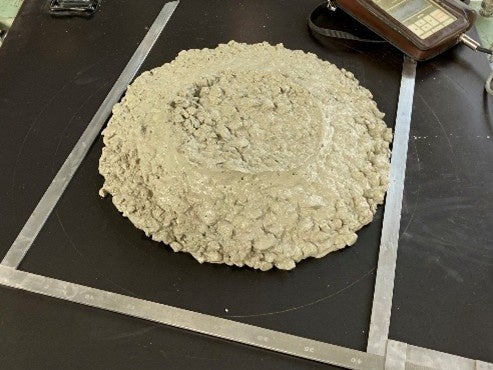
"High-producrete" is a general term for concrete that can achieve improved productivity. It was jointly developed by Tokyo University of Science (applicant: Professor Yoshitaka Kato) and Tokyu Construction, utilizing the "Matching with Universities and Research Institutions" system*2 implemented by the Kanto Regional Development Bureau of the Ministry of Land, Infrastructure, Transport and Tourism. The type applied in this project reduces CO2 emissions by replacing most of the Portland cement, which is the main source of CO2 emissions in concrete, with admixtures made from resource-recycling materials such as by-products and recycled materials. Furthermore, by increasing fluidity compared to conventional slump-managed concrete, it enables rationalization and labor-saving in construction. As a result of advancing research on concrete mix design, it became possible to select a mix that meets fresh concrete quality standards with less labor and resources, thus achieving rationalization in mix design as well.
In this project, High-producrete was applied to the pavement under the elevated railway. As a result, compared to standard ordinary cement, CO2 emissions from concrete work were successfully reduced by 66%, confirming its effectiveness in contributing to Japan's target of a 60% reduction in greenhouse gas emissions by FY2035*3. Construction time was also reduced by approximately 60% compared to conventional methods. This demonstrated that "High-producrete" can achieve both CO2 emission reduction and labor-saving in construction even when applied to structures different from the research and development stage. Moreover, in addition to decarbonization and energy-saving effects, reducing the operating time of generators used during construction shortens the duration of noise and vibration caused by the work, thereby helping to preserve the living environment for nearby residents.
Tokyu Corporation is promoting GX in railway construction based on its Environmental Vision 2040, aiming to realize a decarbonized society through energy saving driven by technological innovation and individual actions, and the utilization and generation of renewable energy. Tokyu Construction's long-term management plan, targeting FY2030, centers on three values: "decarbonization," "zero waste," and "disaster prevention/mitigation," and is advancing the on-site application of "High-producrete" technology, which contributes to decarbonization and improved productivity at construction sites.
Going forward, we plan to investigate the CO2 absorption of the "High-producrete" applied this time in real environments and estimate the CO2 balance throughout its lifecycle. Tokyu Corporation and Tokyu Construction will continue to promote GX in railway construction by decarbonizing construction materials like concrete, as well as construction machinery and fuels.
*1 An initiative aiming to transform the fossil fuel-centric economy, society, and industrial structure that has existed since the Industrial Revolution into one centered on clean energy, thereby reforming the entire economic and social system, and simultaneously achieving stable energy supply, economic growth, and emission reduction.
*2 A subsidy system for "Technology (Seeds) Matching" implemented by the Kanto Regional Development Bureau of the Ministry of Land, Infrastructure, Transport and Tourism to promote "i-Construction," which aims to improve productivity at construction sites. Its purpose is to promote the on-site utilization of new technologies and foster technology research and development through industry-academia-government collaboration by matching publicly solicited new technologies (seeds) with challenges (needs) to be solved on site.
*3 Japan's greenhouse gas reduction targets: Greenhouse gas reduction targets submitted to the UNFCCC Secretariat as "Japan's NDC (Nationally Determined Contribution)." Japan aims to reduce emissions by 46% by FY2030, 60% by FY2035, and 73% by FY2040, all based on FY2013 levels.
Photo 1: Appearance of High-producrete
Photo 2: Condition after construction completion
Figure 1: CO2 emissions of each concrete type
For more details on High-producrete jointly developed by Tokyu Construction and Tokyo University of Science, please check here: https://www.tokyu-cnst.co.jp/topics/2771.html
FACT BOX
- Source: PR TIMES
- Category: News