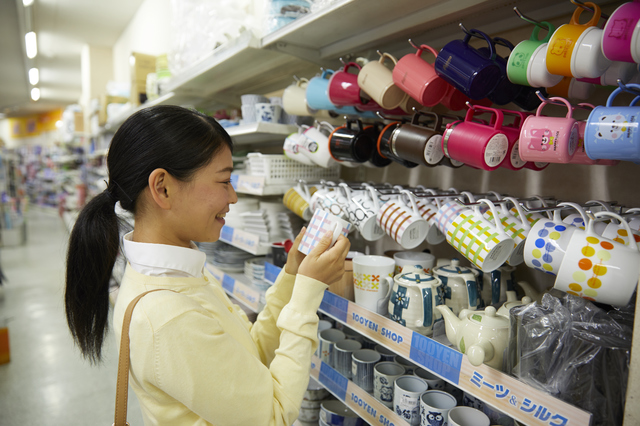
Teikoku Databank, Ltd. conducted a survey and analysis of the nationwide '100-yen shop' market.
SUMMARY
The domestic '100-yen shop' market is projected to reach approximately 1.11 trillion yen in fiscal year 2025, primarily driven by the four major companies, exceeding 1 trillion yen for the third consecutive year. In addition to increased frugality, the growth of high-value-added products such as DIY and outdoor goods, functional kitchen tools, and beauty-related items, along with the expansion of mid-price ranges (150-500 yen), supported market growth.
[Survey Target] Companies operating '100-yen shop' businesses in Japan.
[Note] Performance and other data were compiled based on Teikoku Databank's corporate profile files (COSMOS2, containing approximately 1.5 million companies), corporate credit research reports (CCR, containing approximately 2 million companies), and external information as of March 2026.
Please note that some performance and store count data for each company include estimates and forecasts.
'100-Yen Shop' Market Exceeds 1 Trillion Yen for Third Consecutive Year
The '100-yen shop' (100-kin) market, where many daily necessities can be purchased for a single coin, is expected to reach a scale of 1.11 trillion yen (based on operator sales) in fiscal year 2025, primarily led by the four major companies: Daiso, Seria, Can Do, and Watts. This marks the third consecutive year that the market has surpassed 1 trillion yen. The main factors contributing to market expansion include robust demand for inexpensive daily goods due to increased frugality, as well as securing a position as an entry model for gardening, DIY, and outdoor activities.
The growth rate is projected to be 2.7% year-on-year, a slowdown from the previous year (6.8%). However, the market size has expanded 1.5 times from 736.9 billion yen 10 years ago (fiscal year 2016).
In terms of store network, the four major companies are expected to have approximately 9,400 stores as of the end of March 2026, an increase of over 200 stores from the previous year and 1.4 times (about 3,000 stores) from 10 years ago. From large stores in suburban roadside locations and shopping malls, the trend has recently expanded to a wide range of store lineups, including very small stores within supermarkets, with an overall pace of over 100 new store openings per year. On the other hand, small and local 100-yen shops find it difficult to maintain the '100-yen' selling price alone due to soaring raw material prices, leading to a visible trend of store network reduction or withdrawal, indicating a polarization between large and small companies.
Profit Enhancement Progresses with 'De-100-Yen' Strategy
In fiscal year 2025, the 100-yen shop market not only appealed to 'affordability' in terms of price but also saw improvements in product quality and design. This broadened the customer base with a diverse product genre composition, ranging from hobby-oriented items like DIY and outdoor goods to functional and time-saving household goods such as microwave cooking utensils, highly designed beauty products, and stationery/craft supplies like stickers. Particularly in hobby fields like DIY and outdoor activities, the market capitalized on the outdoor boom that expanded after the COVID-19 pandemic, establishing itself as an 'entry model' that is more affordable than expensive specialized manufacturer products. As a result, an increasing number of 100-yen shops enriched their lineup of mid-to-high priced products ranging from 150 yen to 500 yen, and the expansion of the 'de-100-yen' strategy, which increases the proportion of items priced above 100 yen, became a major driving force for market expansion.
On the other hand, 100-yen shops are susceptible to the impact of rapid 'yen depreciation' as many of their products rely on overseas production. There are reports that manufacturing costs in China, in particular, have 'risen several times over the past 10 years,' and global environmental regulations and rising crude oil prices have led to soaring prices for plastic materials, making it difficult to profit at a 100-yen selling price or to procure items with traditional specifications. Major companies are implementing measures to secure profits through low-cost operations, including the introduction of 'self-checkout' systems and automation/labor-saving, in addition to suppressing procurement costs by leveraging economies of scale. They also aim to improve average customer spending and gross profit margins by increasing the proportion of mid-to-high priced products.
Conversely, small local 100-yen shops find it difficult to implement such cost reduction measures and are facing severe challenges in continuing their businesses due to soaring product procurement prices, making it difficult to secure profits. This year saw a further widening of the gap between 'large companies accelerating store openings to dominate the market' and 'small companies unable to withstand rising costs,' exacerbated by the weak yen and rising raw material prices.
'De-100-Yen' Blurs Boundaries with 'Affordable Lifestyle Goods'
Currently, the industry faces a severe cost surge due to the prolonged historical depreciation of the yen and the impact of rising crude oil prices. Amidst growing consumer frugality due to domestic 'price hikes,' the challenge is how to maintain the low-price model, represented by '100-yen uniform pricing,' as a sustainable business model. In particular, local and small 100-yen shops find it extremely difficult to maintain prices independently, and there is a possibility of further consolidation, such as acquisitions by major players, or a shift towards high-value-added products with uniqueness and design.
Even among the four major companies that dictate market trends, there is a shift towards value-providing brands that offer original products in the 300-500 yen range, focusing on functionality and quality. This 'de-100-yen' trend is blurring the boundaries with other business formats. On the other hand, the 'affordable lifestyle goods' market, which 100-yen shops are increasingly entering, includes many brands that excel in both cost performance and design, such as 3COINS, which primarily offers 300-yen items, and Muji, which has significantly strengthened its lineup of daily necessities under 500 yen. While some 100-yen shop giants like Seria specialize in '100-yen uniform sales floors' and maximize the value of 100-yen items, the future of the 100-yen shop industry will largely depend on whether it can differentiate itself from the 'strategy of breaking away from the 100-yen price point' and present 'convincing value' to consumers beyond just price.
FACT BOX
- Source: PR TIMES
- Category: Survey
- Organizations: 3COINS