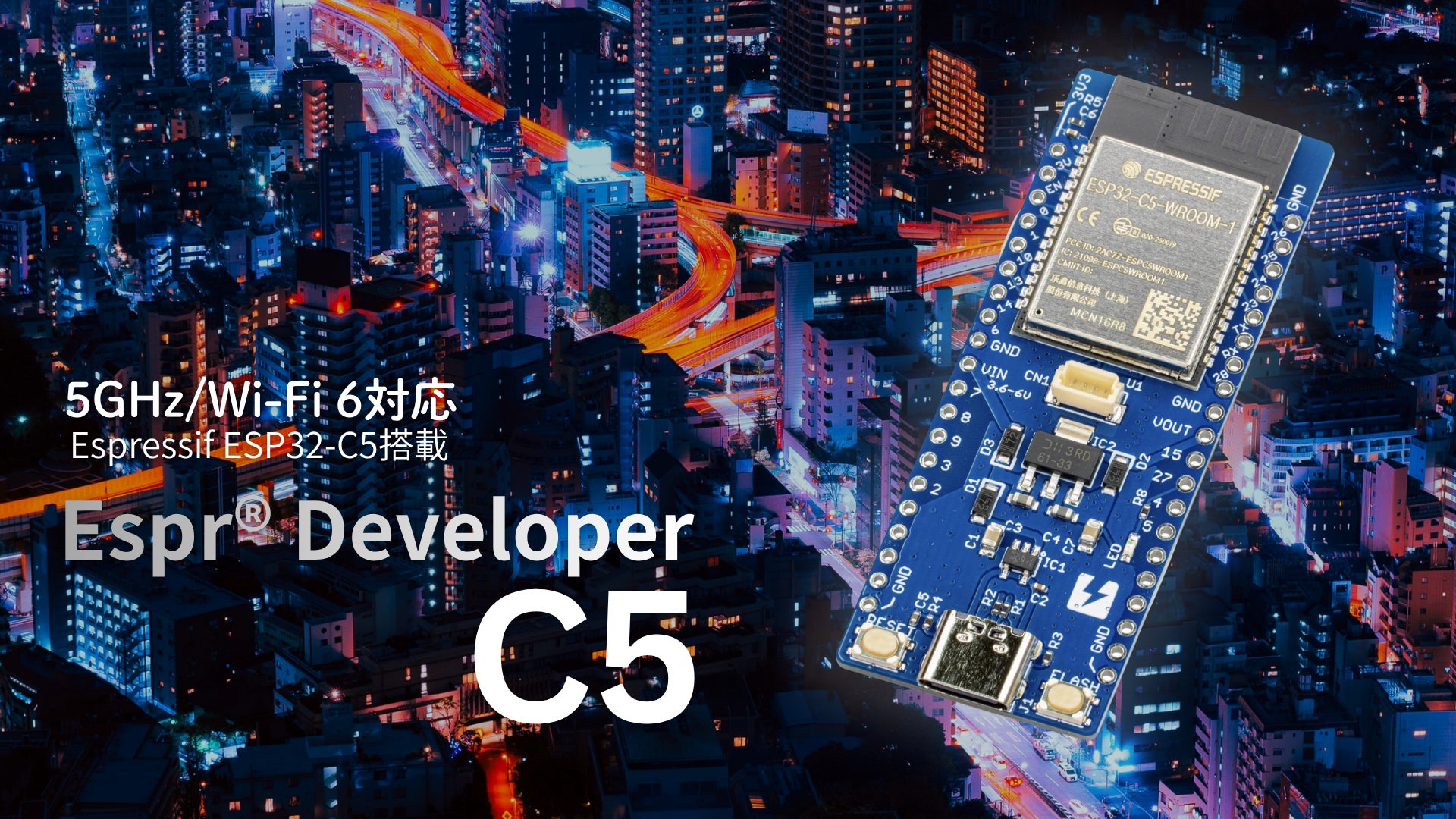
Switch Science 發布搭載 5GHz/Wi-Fi 6 相容 ESP32-C5 的開發板「ESPr® Developer C5」
Switch Science 發布支援 Wi-Fi 6/5GHz 的 ESP32-C5 開發板。
📋 文章處理履歷
- 📰 發表: 2026年3月30日 20:31
- 🔍 收集: 2026年3月30日 22:56(發表後2小時24分鐘)
- 🤖 AI分析完成: 2026年4月16日 06:03(收集後391小時7分鐘)

株式會社 Switch Science(以下稱 Switch Science,總公司:東京都新宿區,代表取締役:金本茂)發布了搭載 Espressif 公司支援 5GHz/Wi-Fi 6 的「ESP32-C5-WROOM-1」的開發板「ESPr® Developer C5」。
「ESPr® Developer C5」是一款搭載 32 位元 RISC-V 單核心處理器(時脈 240 MHz)、16 MB 快閃記憶體 ROM 和 8 MB PSRAM 的開發板,支援 Wi-Fi 6、Bluetooth® 5 LE、Zigbee 和 Thread。隨著智慧家庭標準「Matter」的普及,業界期待已久的 5 GHz 頻段 Wi-Fi 支援,能夠避開家中飽和的 2.4 GHz 頻段以及微波爐等其他無線設備的干擾,實現更穩定、高速的通訊。
「ESPr® Developer C5」配備了 3.3V 穩壓器、各種開關和通用 LED,以及無需焊接即可連接感測器的 Qwiic/STEMMA QT 連接埠。非常適合智慧家庭中樞和邊緣設備的快速原型開發。ESP32-C5-WROOM-1 整合了低功耗的 32 位元 RISC-V 處理器,最高時脈可達 48 MHz。即使在睡眠模式下也能持續運作,為需要持續運作的應用實現極高的電源效率。
「ESPr® Developer C5」電路板規格

搭載「ESP32-C5-WROOM-1-N16R8」
16 MB 快閃記憶體 ROM
8 MB PSRAM
電源
3.3 V 運作
USB Type-C: 5 V
電源輸入針腳(VIN): 3.7 V~ 6.0 V
USB 和 VIN 針腳可同時使用
電源輸出針腳(VOUT): 輸出 USB 或 VIN 針腳輸入的電壓
重置開關(RESET)
下載模式開關(FLASH):按下此開關並重置,即可進入下載模式啟動
通用 LED(IO27)
常見問題
What is the main feature of the "ESPr® Developer C5"?
The main feature of the "ESPr® Developer C5" is its support for 5GHz Wi-Fi 6, along with Bluetooth 5 LE, Zigbee, and Thread, making it suitable for next-generation IoT devices and smart home applications.
What processor does the "ESPr® Developer C5" use?
It is equipped with Espressif's ESP32-C5, which features a 32-bit RISC-V single-core processor operating at up to 240 MHz.
What are the memory specifications of the "ESP32-C5-WROOM-1" module on the board?
The module includes 16 MB of flash ROM and 8 MB of PSRAM.
What connectivity options are available for sensors?
The board features Qwiic/STEMMA QT connectors, allowing for easy sensor connection without soldering.
What are the power supply options for the "ESPr® Developer C5"?
It supports 3.3V operation, 5V via USB Type-C, and an input voltage of 3.7V to 6.0V via the VIN pin. Both USB and VIN can be used simultaneously.
Why is 5GHz Wi-Fi support important for this development board?
5GHz Wi-Fi support helps avoid interference from the crowded 2.4GHz band commonly used in homes and by devices like microwaves, enabling more stable and faster communication, which is crucial for smart home devices and IoT applications.