ChatGPT User Data Collection Increases by 70%
User data collection by AI chatbots is surging.
📋 Article Processing Timeline
- 📰 Published: March 30, 2026 at 17:30
- 🔍 Collected: March 30, 2026 at 09:00
- 🤖 AI Analyzed: April 15, 2026 at 09:48 (384h 47m after Collected)
According to the latest analysis by Surfshark, popular AI (Artificial Intelligence) chatbot apps are collecting a variety of information, including contact information, search and browsing history, and other user content. Furthermore, the percentage of AI chatbots collecting user location data has increased from 40% last year to 70% this year.
All AI chatbot apps analyzed in this report collect some form of user data, with an average of 14 out of a maximum of 35 data points being collected.
Thomas Stamulis, Chief Security Officer (CSO) at Surfshark (hereinafter referred to as "he"), stated:
"User data collection by chatbots is becoming increasingly aggressive. Our research shows that 70% of popular AI apps collect location data, a significant increase from 40% last year. This expanding trend in data collection is also seen in ChatGPT, which recently expanded its collection scope by 70%, including health and fitness information, search history, and voice data.
Unlike traditional search engines, these AIs handle extremely sensitive data such as tax documents and medical records. This information may be shared with large third-party networks for targeted advertising.
To protect your privacy, it is important to be aware that all prompts can be considered information that may be made public. Please review your settings, delete your chat history, and never input information you would not want to be made public."
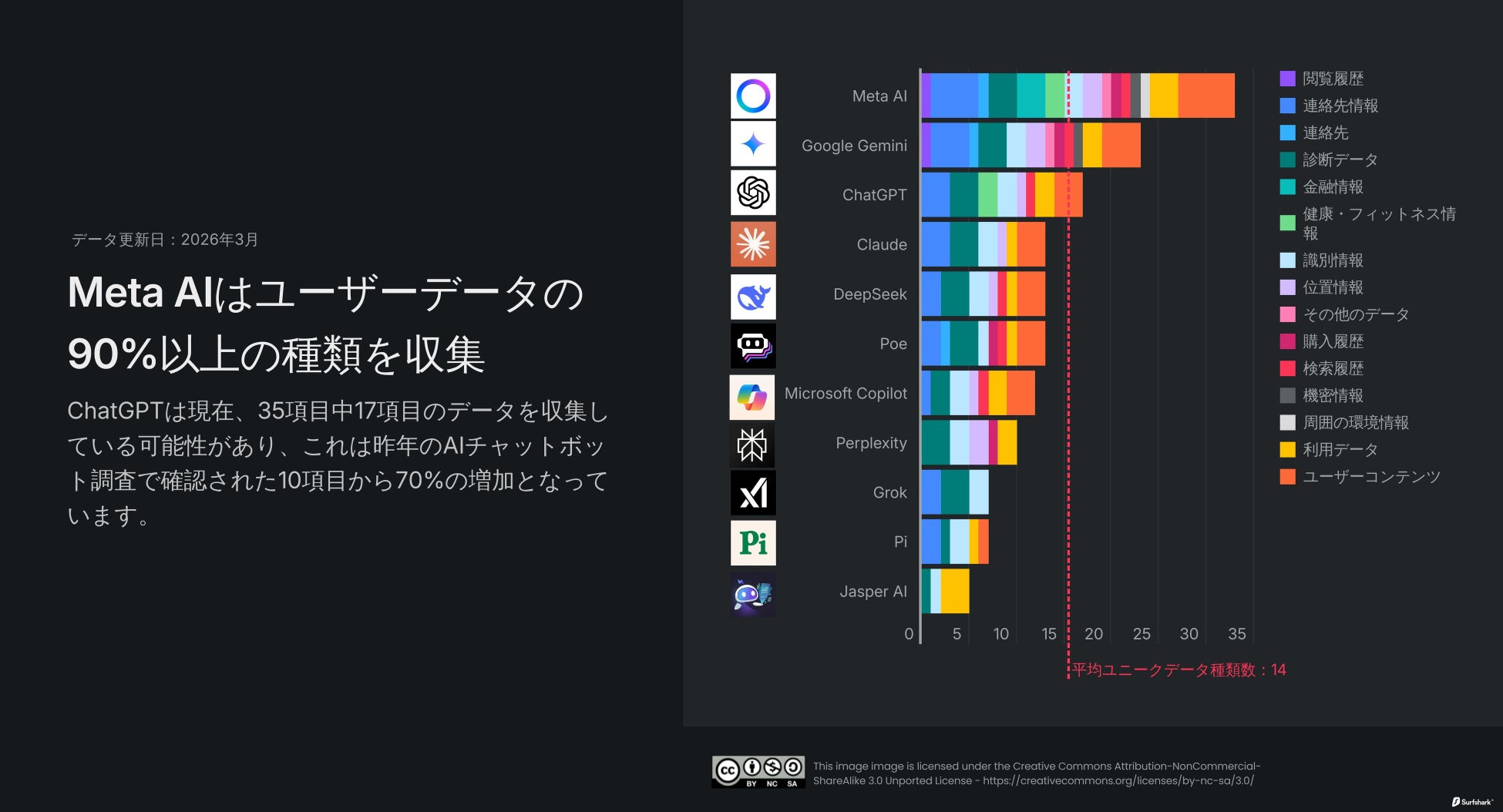
Meta AI Collects the Most Data Among AI Chatbots, Followed by Gemini and ChatGPT
Among the apps analyzed, Meta AI continues to collect the most user data, acquiring 33 out of 35 data points, approximately 95%. Meta AI is the only one collecting data in the financial information category. Additionally, Meta AI and Google Gemini collect sensitive information, including race/ethnicity, sexual orientation, pregnancy/childbirth, disability, religion/beliefs, trade union membership, political opinions, genetic information, and biometric data.
Google Gemini collects 23 out of 35 data points. It acquires a wide range of data, including contact information such as name, email address, and phone number, user content, contacts (device address book information), search history, browsing history, and precise location data. Such extensive data collection may feel excessive and somewhat intrusive to users who prioritize privacy and security.
According to Apple's App Store information, developers indicate that ChatGPT may currently collect 17 out of 35 data points. This is a significant increase compared to the AI chatbot survey conducted last year.
FAQ
What is the main finding of the Surfshark analysis regarding AI chatbots?
The Surfshark analysis reveals that popular AI chatbot apps are collecting a wide range of user data, including sensitive information, and that the percentage of these apps collecting location data has significantly increased from 40% last year to 70% this year.
Which AI chatbots collect the most user data according to the analysis?
Meta AI collects the most user data (95%), followed by Google Gemini (23 out of 35 data points), and then ChatGPT (17 out of 35 data points).
What types of sensitive data are AI chatbots collecting?
Sensitive data collected can include race/ethnicity, sexual orientation, pregnancy/childbirth, disability, religion/beliefs, trade union membership, political opinions, genetic information, biometric data, health and fitness information, search history, and voice data.
Why is the collection of this data a concern?
The collection of such extensive and sensitive data raises privacy concerns, as it could be shared with third-party networks for targeted advertising or other purposes, and unlike traditional search engines, these AIs handle highly confidential information like tax and medical records.
What advice is given to users to protect their privacy?
Users are advised to treat all prompts as potentially public information, review their app settings, delete chat history, and avoid inputting any information they would not want to be made public.