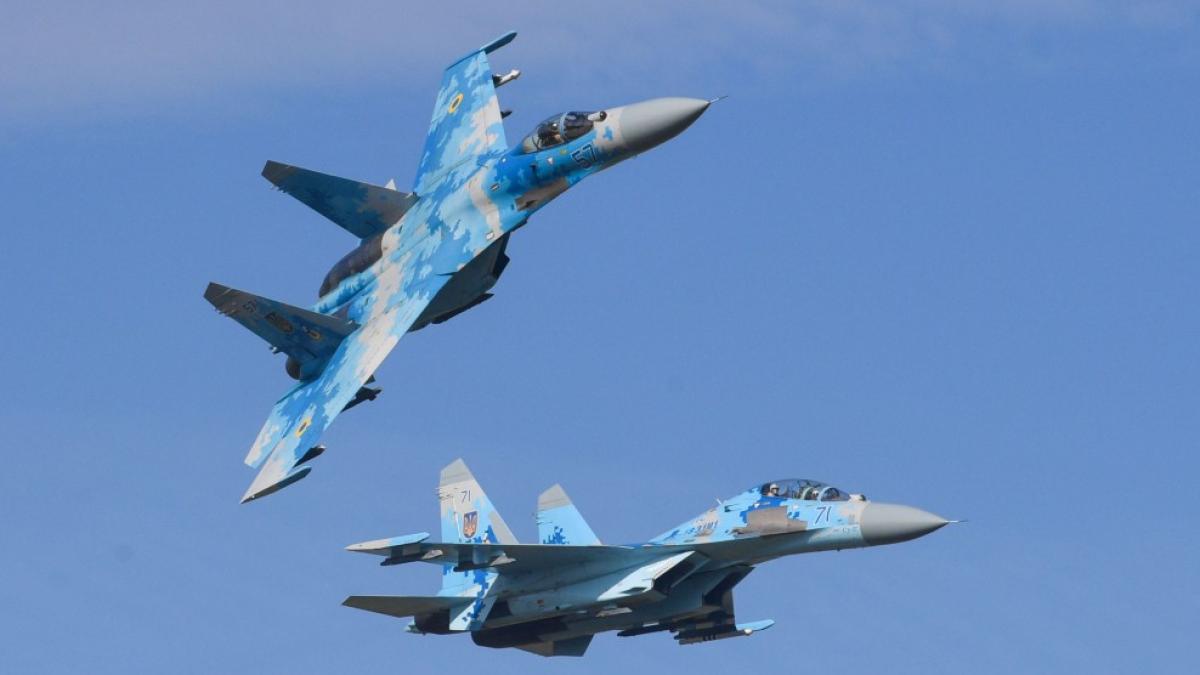
Recently, there was news in the military circle: Turkey is actively seeking to transfer the Russian-made S-400 air defense system to remove obstacles and strive to rejoin the F-35 fighter jet program. In fact, Turkey was initially excluded from the F-35 joint production and procurement program by the US due to its purchase of the S-400, as the US was concerned that F-35's stealth technology might be collected by Russia. Now, with the improvement of US-Turkey relations and the recent performance of the S-400 in conflicts being questioned, Turkey has taken action to discuss with Russia the possibility of transferring the system to a third country to remove obstacles and strive to reacquire the F-35. In fact, it's not just Turkey; Taiwan also once faced the tough choice of 'Russia or the US.' Between 1991 and 1992, during the turbulent period of the dramatic changes in Eastern Europe and the dissolution of the Soviet Union, the global geopolitical reshuffle unexpectedly opened a very short and highly variable 'red military procurement window' for the Republic of China on both sides of the strait. At that time, the Taiwan Air Force was facing a serious 'air defense gap.' The main force fighters, F-104 and F-5E, were gradually aging, while the domestically produced IDF Ching-kuo fighter encountered development bottlenecks such as limited engine thrust. The US government, to avoid provoking Beijing, long refused to sell advanced F-16 fighters. Under the pressure of the gap in combat strength, the Taiwan military and political leaders decided to break away from the Cold War mindset and quietly turned their attention to their former adversary—the soon-to-be-disbanded Soviet Union and later Russia. This secret episode of Taiwan-Soviet (Russian) military diplomacy was intertwined with the secret visits of science and technology officials, the overseas test flights of air combat heroes, and the complex struggle between the US, France, Russia, and Taiwan. The prelude to this historical interlude began in Moscow in December 1991. At that time, Hsia Han-min, the Minister of the National Science Council, led a science and technology delegation to the local area. On the surface, it was an academic visit to study the civil and basic sciences of the former Soviet Union, but in reality, it was a highly secret mission to break through the military procurement dilemma. The Minister of the National Science Council, Hsia Han-min, led a science and technology delegation to visit Moscow in December 1991 to seek a breakthrough in military procurement. (New News Resource Photo) The delegation members included Huang Hsia-chung, the Vice President of the Central Research Institute, and other key figures in national defense science and technology. During their stay in Moscow, the delegation secretly met with Aleksandr Rutskoy, the soon-to-be-disbanded Soviet Union's Vice President, and other high-ranking officials through unofficial channels. At that time, the Soviet Union's finances were collapsing, and it urgently needed foreign exchange. Taiwan, which had abundant foreign exchange, became an important partner in the eyes of the Russians. Both sides quickly reached an initial consensus, and Hsia Han-min and Rutskoy signed a cooperation agreement, which not only included the transfer of aerospace and materials science technology but also a shocking concept: the Soviet Union intended to sell up to 100 Su-27 (Su-27) heavy air superiority fighters to Taiwan. While official contacts were being made, civilian channels were also simultaneously opened. In 1992, the chairman of the 'Lucky Trade Company' in Taiwan, Li Hua-te, took advantage of his special relationship with the Russian military to arrange a rare non-official real machine experience. Li Hua-te invited the legendary air force hero, Colonel Ou Yang Yi-ting, who had retired from the Civil Aviation Administration and had been away from the fighter pilot line for 24 years. Ou Yang Yi-ting had, in the 1956 'July 21st Battle of Mazu,' piloted an F-84 fighter to shoot down two and damage two Chinese Communist MiG-17 fighters, and was awarded the Order of the Blue Sky and White Sun. Faced with the invitation of 'dare to fly or not,' this veteran in his sixties did not hesitate and went to Moscow with the former director of the Civil Aviation Administration, Chen Chia-ju. The air combat hero of the July 21st Battle of Mazu, Ou Yang Yi-ting (left), once went to Russia to test fly the S-27 fighter. (Data photo, from the Youth Daily) Between 1992 and 1993 (mainly in February 1993), Ou Yang Yi-ting and his party arrived at the heavily guarded Kubinka (Kubinka) Air Force Base in Moscow. The Russians gave them very high treatment, not only displaying the Su-27 and MiG-29 but also arranging for Viktor Pugachev, the chief test pilot of the Sukhoi Design Bureau and the founder of the famous 'Cobra Maneuver' (Pugachev's Cobra), to personally lead Ou Yang Yi-ting in a co-pilot test flight. On the frozen runway, Ou Yang Yi-ting sat in the rear seat of the dual-seat Su-27UB. Pugachev maneuvered the fighter to demonstrate the shocking Cobra Maneuver—the nose of the aircraft suddenly pulled up to nearly 120 degrees, as if performing an emergency stop in the air and then returning to level flight. This was an unprecedented aerodynamic limit experience for Taiwanese pilots who were long familiar with American fighters. Although the Russians were more reserved about the lightweight MiG-29, the performance data of the Su-27 was still brought back to Taiwan through this test flight. The intelligence of the Taiwan-Soviet contact was quickly grasped by the West, and the German intelligence agency immediately informed the United States. For the United States, the Taiwanese military system had long relied on American-made equipment. If the Su-27 was introduced, it would not only break the tacit military understanding between the US and Taiwan but also cause serious problems with the compatibility of logistics, ammunition, radar identification friend or foe (IFF), and other systems. The United States quickly exerted tremendous pressure on Taiwan. Not long after Hsia Han-min returned to Taiwan, he stated, 'Do not talk about the Su-27 anymore.' This aborted procurement case, however, unexpectedly became a powerful bargaining chip for Taiwan at the international military procurement negotiation table: France's opportunity: France noticed Taiwan's urgent needs and announced in 1992 that it agreed to sell 60 Mirage 2000-5 fighters. The United States' response: Facing French competition and strategic considerations to prevent Russian-made weapons from entering Taiwan, President George H. W. Bush, who was seeking re-election, changed his attitude and formally announced in September 1992 the agreement to sell 150 F-16 A/B Block 20 fighters to Taiwan. Historical coincidence and inevitability: Those Su-27s that never came to Taiwan The termination of the Taiwan-Russia arms deal, however, turned out to be a critical turning point for the Taiwan Air Force's 'second-generation aircraft replacement.' Through the pressure exerted by contact with Russia, Taiwan managed to obtain both US-made F-16s and French-made Mirage 2000-5s within a short year, along with domestically produced IDF Ching-kuo fighters, building a quite modern air defense line in late 20th-century Asia. The Su-27 fighters originally planned for sale to Taiwan were later sold to mainland China due to Russia's financial shortage. In June 1992, the first batch of Su-27s arrived at the Wuhu Air Force Base in Anhui Province, becoming an important starting point for the modernization of the People's Liberation Army Air Force, which later spawned domestically produced J-11 series fighters. A military procurement scheme triggered by the dissolution of the Soviet Union ultimately ended under the weighing of various parties, profoundly influencing the development of the cross-strait air defense situation thereafter. Editor in charge: Hsu Ying-Hsiang More exclusive news from Wind Media: ‧F-16V and Super Ching-kuo join the key technologies of 4.5th generation fighters. What confidence does Taiwan have to challenge AESA? These two concept stocks appear ‧MQ-9B and MS-110 arrive in Taiwan. Why are they the guardian gods of Taiwan that can extremely compress the time for the Chinese People's Liberation Army to invade Taiwan ‧Why is the domestically produced Takujiang-level, which is only a few hundred tons, called an aircraft carrier killer? The '12+12' hides the secret of the Hsiung Feng missile eating as much as you want for the People's Liberation Army ships
FACT BOX
- Source: PR Times
- Category: 國際