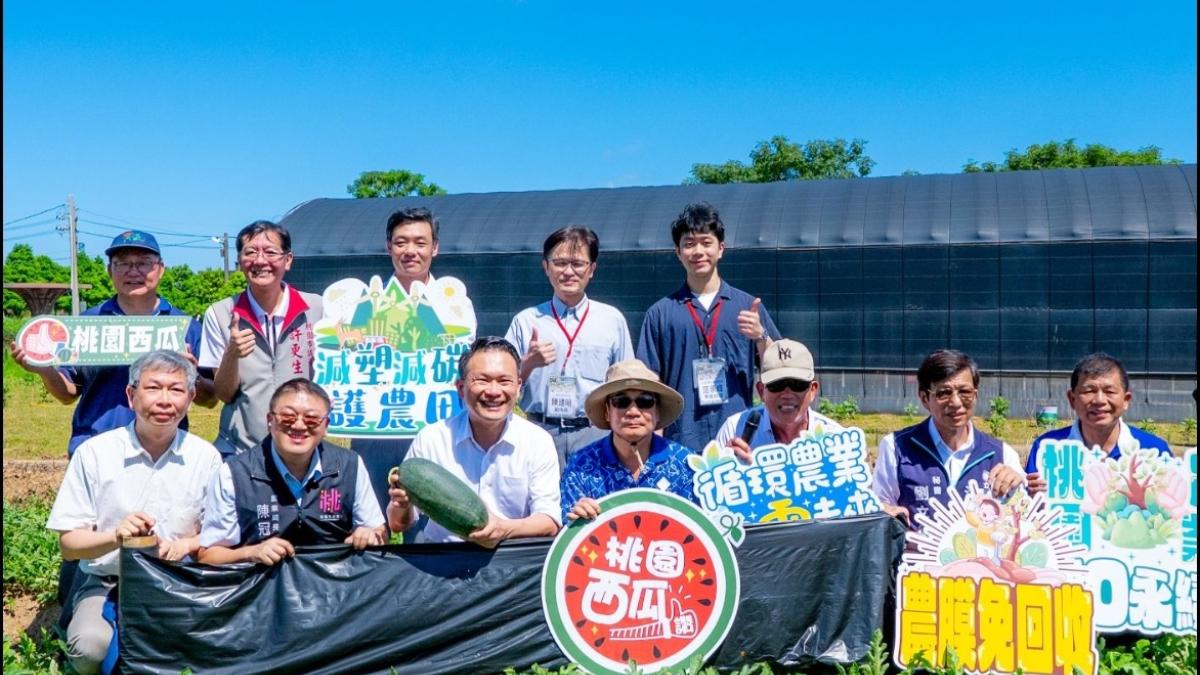
Every year after fruit harvests, the collection, cleaning, and disposal of traditional plastic mulch films have been a major practical challenge for local farmers. To address this industry pain point, the Taoyuan City Agriculture Bureau recently held the 'Taoyuan City Biodegradable Agricultural Film Application Results Observation Meeting.' Taoyuan Deputy Mayor Su Jun-bin noted that Guanyin, Dayuan, and Xinyu Districts are key fruit-producing areas in northern Taiwan, with a cultivation area reaching 223 hectares, resulting in extremely high demand for agricultural films. The city government is actively promoting pilot trials of biodegradable agricultural films to reduce end-of-life processing burdens at the source, guiding Taoyuan's agriculture toward environmentally friendly and sustainable operations.
The city continues cross-sector collaborations to tailor green agricultural materials to local farmers' needs under different crop cultivation conditions. It has previously introduced paper film trials in Xiancao fields in Yangmei District, accumulating positive results. In response to the growth characteristics of fruit crops, the city has further partnered with the Industrial Technology Research Institute (ITRI) and local farmers, selecting coastal fruit-growing areas as demonstration sites. Through testing various materials and field conditions, the optimal application model that best meets on-site requirements is being identified.
In addition to biodegradable materials, the city is collaborating with local youth entrepreneurship teams in Taoyuan to research the recycling and reuse of 'waste bamboo and wood fibers.' The goal is to increase the proportion of bio-based materials in agricultural films and develop environmentally friendly mulch films that are lower in cost and more effective at carbon reduction.
Traditional PE mulch films are not only time-consuming and labor-intensive to recycle, but their incineration or landfill disposal also causes serious environmental burdens. According to the Taoyuan City Agriculture Bureau, the new biodegradable agricultural films offer significant environmental benefits and labor-saving advantages. Scientific testing has verified that after field use, these films naturally degrade into water and carbon dioxide, causing no adverse impact on soil ecosystems, eliminating the need for farmers to spend significant manpower on recovery. Traditional PE mulch generates approximately 6.73 kilograms of carbon dioxide equivalent (CO₂e) per kilogram during disposal, whereas biodegradable films achieve over 60% carbon reduction through composting and adjustments in bio-content.
Deputy Mayor Su Jun-bin emphasized that promoting agricultural innovation must not only align with international environmental trends but, more importantly, 'must not increase the burden on farmers.' It is essential that farmers on the front lines experience tangible benefits, such as stable crop growth, labor-efficient field operations, and convenient waste disposal. Going forward, the Taoyuan City Government will conduct rolling policy adjustments based on current trial data and closely integrate resources from the Council of Agriculture's Agricultural and Food Agency, ITRI, and regional farmers' associations. The city will fully support farmers in seamlessly adopting greener and more efficient agricultural materials, protecting farmers' incomes and promoting industrial development while safeguarding the health of Taoyuan's land.
FACT BOX
- Source: PR Times
- Category: Event