America's global soft power dominance is facing an unprecedented challenge. According to the latest international public opinion survey by the renowned think tank Pew Research Center, respondents in 25 out of 36 countries express greater favorability toward China than toward the United States. This marks the first time since Pew began tracking the global image of the two superpowers in 2002 that China has surpassed the U.S. in favorability ratings.
The survey was conducted between February and May 2026, polling over 42,000 people across 36 countries. Jonathan Schulman, Pew’s chief researcher, noted that while U.S. favorability previously dipped during the final year of George W. Bush’s presidency (2008) and the first year of Donald Trump’s term (2017), China’s ratings at those times were generally on par with or slightly below America’s.
However, in 2026, favorability toward China has reached a historic high, while negative perceptions of the United States have sharply worsened. Countries such as Spain, Italy, Greece, Canada, and Indonesia have shown a significant tilt toward China. Currently, only six U.S. allies—Poland, the Philippines, South Korea, India, Japan, and Israel—still show higher favorability toward the U.S. than China.
Views of China are most polarized among its Asian neighbors. Pakistan recorded the highest positive sentiment at 90%, while neighboring Japan saw only 11% of respondents expressing favorable views of China.
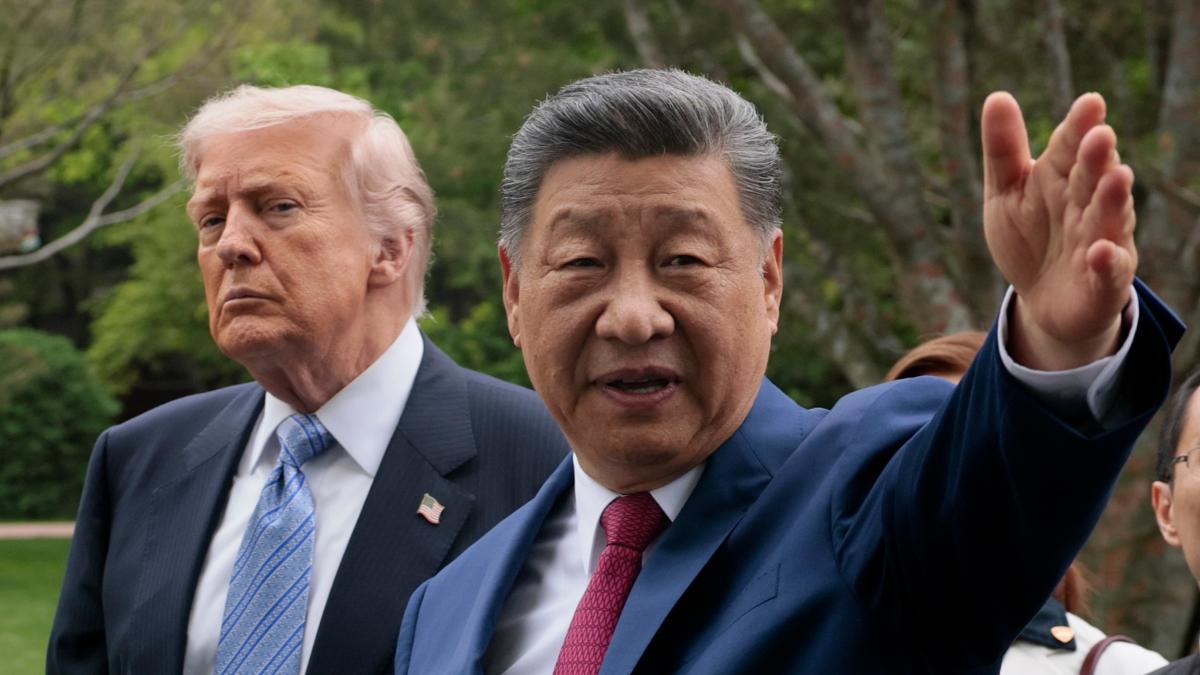
In May 2026, U.S. President Donald Trump met with Chinese President Xi Jinping in Beijing. (AP)
75% Accuse the U.S. of 'Excessive Interference in Domestic Affairs'
This dramatic shift in global opinion coincides with the United States’ increasingly aggressive foreign policy. During the survey period, the Trump administration made provocative statements, including suggesting the annexation of Greenland, deploying special forces to arrest Venezuelan President Nicolás Maduro, and escalating military tensions with Iran in the Persian Gulf.
Chong Ja Ian, a scholar at Carnegie China, stated that the frequent use of military force and economic sanctions by the U.S. has caused widespread anxiety and unease among nations. For many developing countries, Beijing now appears more 'predictable' compared to Washington, which is seen as perpetually embroiled in conflict and 'outrage'.
The data provides a clear response: in surveys across low- and middle-income countries, 75% of respondents accused the U.S. of 'high or considerable interference in domestic affairs,' while only 45% leveled the same accusation against China. Although the U.S. is still viewed as more supportive of human rights and personal freedoms than China, the gap between the two is rapidly narrowing.
Regarding trust in the two leaders, overall confidence in both Trump and Xi remains low. However, Xi Jinping scores slightly higher than Trump. Chong suggests that many people attribute China’s technological and green energy advancements to the 'Chinese state,' while blaming 'Xi Jinping personally' for political repression and territorial expansion. In contrast, Trump’s erratic decision-making in foreign and military affairs has earned him extremely low trust ratings among citizens of most Western democracies.
FACT BOX
- Source: PR Times
- Category: Survey
- Organizations: Pew Research Center / Carnegie China
- Dates in source: 2002 / 2008