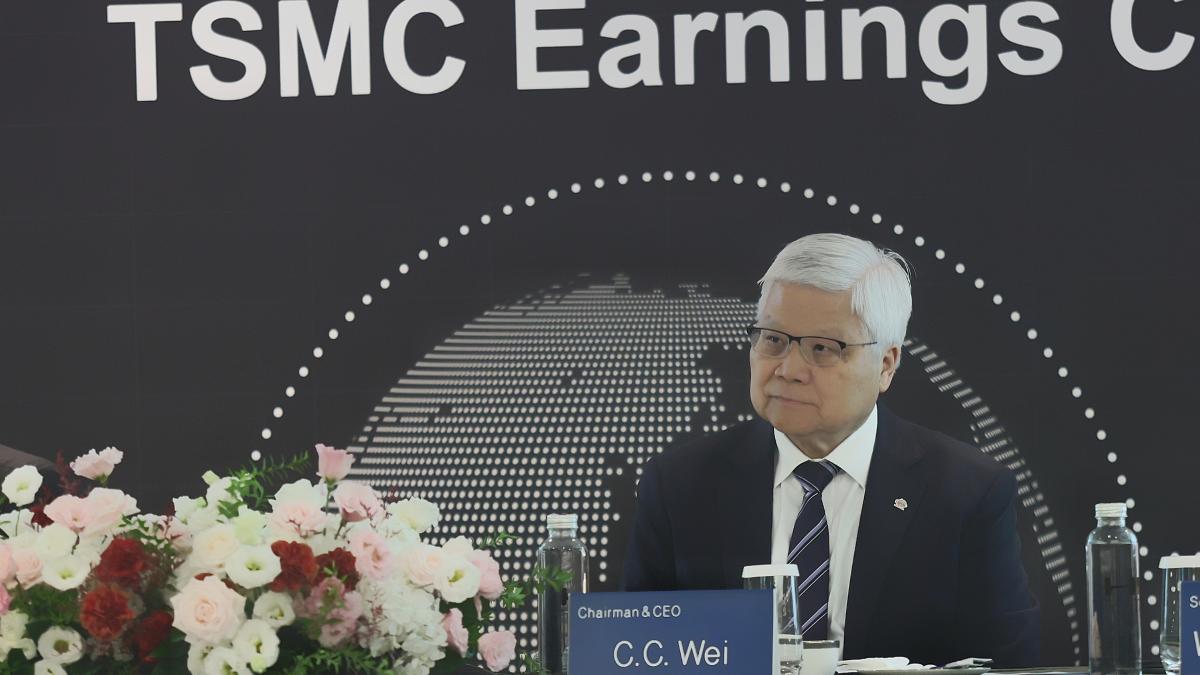
The AI wave continues to sweep across the global semiconductor industry, and TSMC (2330), the world's leading semiconductor foundry, today (16th) released its financial results for the second quarter of 2026. The company's consolidated revenue surpassed NT$1.27 trillion for the first time, while net profit reached NT$706.56 billion, with earnings per share (EPS) hitting NT$27.25—setting new all-time highs across all metrics. Driven by strong demand for AI servers and high-performance computing (HPC), the proportion of high-margin advanced processes further increased, pushing the gross margin to 67.7% in Q2. Notably, the 2nm process began contributing to revenue for the first time, signaling that the world's most advanced semiconductor technology has officially entered its next growth phase.
TSMC's Q2 consolidated revenue reached NT$1.27038 trillion, up 12% quarter-on-quarter and 36% year-on-year. Net profit reached NT$706.56 billion, up 23.4% from the previous quarter and a substantial 77.4% from the same period last year. EPS reached NT$27.25, a clear improvement from Q1's NT$22.08. In U.S. dollars, Q2 revenue was $40.2 billion, up 33.7% year-on-year and 12% from the prior quarter, once again demonstrating the strong growth momentum driven by AI demand.
In addition to record revenue and profit, TSMC's profitability continued to improve in Q2. Gross margin rose from 66.2% in Q1 to 67.7%, an increase of 1.5 percentage points. Operating margin improved from 58.1% to 60.3%, and net profit margin rose from 50.5% to 55.6%. This reflects the ongoing volume ramp-up of high-margin products such as AI chips and HPC solutions, leading to an optimized product mix and further breakthroughs in overall profitability.
Notably, Q2 marked the first time TSMC's 2nm process contributed to revenue, accounting for 3% of total wafer sales. This symbolizes that the world's most advanced semiconductor process has officially entered mass production and is now contributing to the company's top line. Compared to the previous era where 3nm alone drove advanced process growth, the addition of 2nm signifies that TSMC's next-generation process technology is gradually taking over, enabling early positioning for future demand in AI, high-performance computing, and next-generation end devices.
In terms of advanced process breakdown, 3nm remained the main driver in Q2, accounting for 30% of wafer sales—up from 25% in Q1. 5nm accounted for 33%, and 7nm for 11%. Including 2nm, advanced processes at 7nm and below collectively accounted for 77% of Q2 wafer sales, up from 74% in Q1 and setting a new record. This reflects the continued rise in advanced process penetration driven by demand for AI, HPC, and flagship smartphone chips, further solidifying TSMC's leadership in the global high-end foundry market.
Compared to Q1 results, TSMC's Q2 revenue rose from NT$1.1341 trillion to NT$1.27038 trillion, with gross margin, operating margin, and net profit margin all rising. The share of advanced processes increased from 74% to 77%. Most notably, the market's most-watched 2nm process officially began contributing to revenue, indicating that AI chip demand is not only driving rapid volume production of 3nm but also accelerating the next-generation process into its growth cycle earlier than expected.
Following the strong financial results, market focus has shifted to management's outlook for the second half of the year during the earnings call. Key topics include whether AI demand will remain strong, whether the full-year USD revenue forecast will be revised upward again, the progress of 2nm volume production, CoWoS advanced packaging capacity expansion, and overseas fab deployment—all of which will serve as critical indicators for investors assessing global semiconductor trends and AI industry development.
FACT BOX
- Source: PR Times
- Category: 財報