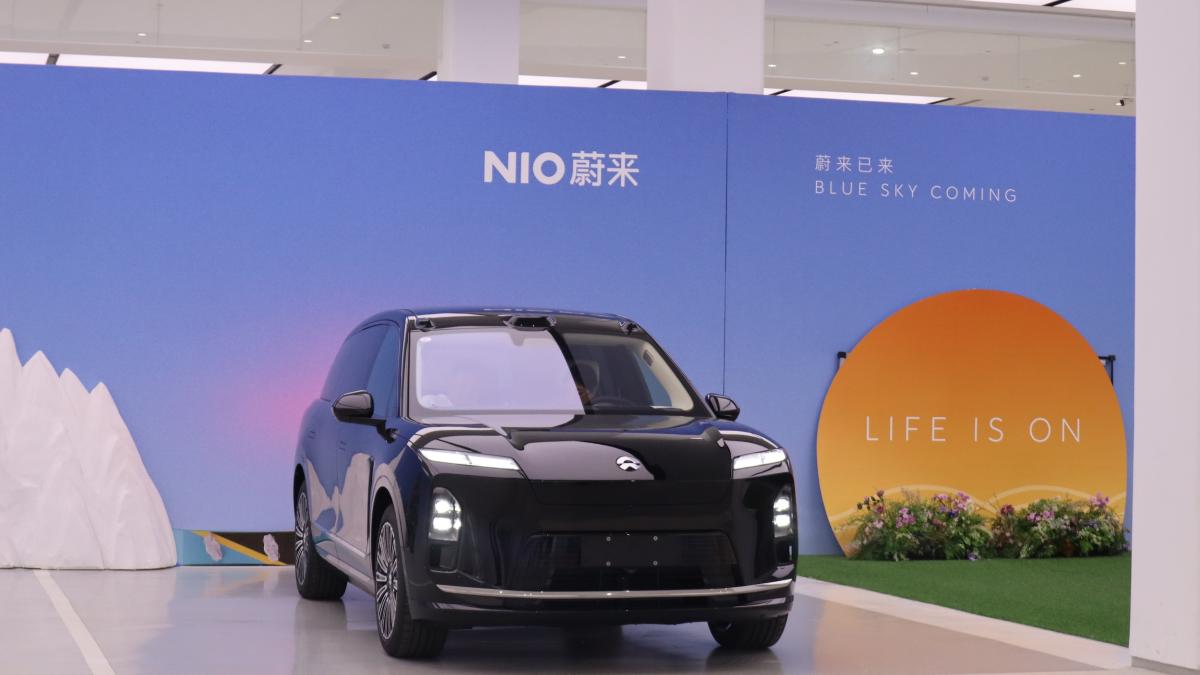
China's Hainan Province has recently reaffirmed in its '15th Five-Year Plan for the National Ecological Civilization Pilot Zone (Beautiful Hainan Construction 15th Five-Year Plan)' the 'steady advancement of banning gasoline vehicle sales by 2030,' meaning Hainan will become the first province in China to explicitly ban the sale of gasoline-powered vehicles across its entire territory. By 2030, the share of clean energy vehicles in newly added or replaced vehicles in public service and social operation sectors (excluding special purposes), and the share of new energy vehicles in private vehicles, will both reach 100%. The proportion of new energy vehicle ownership is expected to rise from 23.75% in 2025 to 45%. Existing gasoline vehicles can still be legally driven; this policy is not a 'one-size-fits-all' ban on usage, but a 'gradual tightening' approach targeting new vehicle sales. This tropical island's choice is based on years of policy accumulation and its unique geographical and resource advantages, yet it also highlights the difficulty of replicating the 'Hainan model' nationwide. Why is Hainan bold enough to lead in banning gasoline vehicle sales? As China's largest free trade port and an ecological civilization pilot zone, Hainan has inherent advantages for promoting new energy vehicles. Its island geography means relatively closed transportation networks, making logistics and vehicle usage scenarios more controllable. While the tropical climate poses challenges for batteries, it also brings abundant solar and wind energy resources. The high proportion of local clean energy supports the development of charging infrastructure. Hainan's year-round high temperatures and rare cold winters mean lithium-ion batteries perform relatively stably in high-temperature environments, avoiding the significant winter range degradation seen in northern regions. According to the plan, Hainan will maintain a high vehicle-to-charger ratio (target below 2.5:1, previously around 2.1:1), and its charging network is relatively well-developed. Compared to most inland provinces, this indeed gives Hainan a 'first-mover' advantage. As early as 2018, Hainan proposed the goal of full adoption of new energy vehicles across the island by 2030; the 2019 'Hainan Province Clean Energy Vehicle Development Plan' explicitly stated a ban on gasoline vehicle sales by 2030, and the 2022 carbon peak plan reaffirmed this. The wording in the current '15th Five-Year Plan' continues this long-term policy path rather than representing a sudden shift. In contrast, many inland Chinese cities still face challenges such as insufficient charging resources, grid load, and inter-regional charging. Reporters visiting Changsha, Nanjing, Jingzhou in Hubei, and Shanghai found that while new energy electric vehicles are popular in regions north of the Yangtze River, from an electricity pricing perspective, only Guangdong Province belongs to China Southern Power Grid, where prices are more market-regulated, while the above regions are under State Grid Corporation of China, offering less price advantage. Additionally, due to China's vast territory, cold or sparsely populated regions like Northeast and Northwest China still face real challenges such as reduced winter range and insufficient long-distance charging. The new energy vehicle penetration rate, charging density, and power structure in many provinces have not yet reached Hainan's current level. The 'New Energy Calculus' Under High Fuel Prices Makes Electric Vehicles More Attractive China's fuel prices have fluctuated wildly in recent months, prompting many car owners to consider switching from gasoline to electric vehicles. However, the ratio of EV charging stations in northern China is significantly lower than in the south, and in some areas, local private companies contract with State Grid to purchase electricity and resell it to individual users, leading to various rules and inconsistent charging voltages that deter many drivers. Moreover, Hainan's fuel prices have long been higher than in many other parts of China. In addition to the base fuel price, local vehicle circulation surcharges further increase the cost of owning gasoline vehicles. When fuel prices remain high and the cost of charging new energy vehicles is relatively low, consumers naturally become more receptive to electric vehicles. Official data shows that in 2025, new energy vehicles accounted for 62.9% of new car sales in Hainan, meaning more than six out of every ten new cars sold were new energy vehicles. Market acceptance is gradually shifting from policy-driven to consumer-driven, reducing the potential market shock of the formal ban on new gasoline vehicle sales in 2030. Many outsiders view Hainan's ban on gasoline vehicle sales as a new policy, but in reality, this plan has been brewing for years. After China officially proposed building the Hainan Free Trade Port in 2018, Hainan began planning the gradual promotion of clean energy vehicles, successively announcing supporting measures such as new energy vehicle promotion, electrification of public transport, and charging network construction. Banning the sale of new gasoline vehicles is merely the final step in this comprehensive policy. What Hainan hopes to build is not just a new energy vehicle market, but a national ecological civilization pilot zone and clean energy demonstration zone, using transportation sector decarbonization combined with energy transition to establish a complete low-carbon development demonstration model. For car owners, the ban on new gasoline vehicles means future purchasing choices will be limited, but existing vehicles can still be used, and the secondhand market may face short-term fluctuations. Hainan as a 'National Strategy Sample': Can the Hainan Model Be Replicated Across China? As a free trade port, Hainan is granted more space for reform pilots. Its 'green transportation card' serves not only locally but also aims to provide replicable experience for the whole country. China's overall new energy vehicle penetration rate is already globally leading, but challenges in infrastructure, grid capacity, and industrial chain support remain. Hainan's 'steady advancement' model—piloting first, then promoting, balancing existing and new vehicles—may help alleviate transition pains. However, Hainan's uniqueness also limits the replicability of its 'demonstration' effect. The island's closed nature reduces cross-regional logistics pressure, its clean energy abundance exceeds most inland provinces, and its economic structure has a relatively low proportion of heavy industry. These conditions are difficult to fully replicate in provinces like Guangdong, Jiangsu, or northern regions. In the short term, the likelihood of other regions across the country fully following suit is low; a more likely approach is a 'regional, phased' gradual strategy. Hainan's 2030 ban on gasoline vehicles is a microcosm of China's 'dual carbon' goals and automotive industry upgrading. Globally, many European countries have already set timelines for banning gasoline vehicles, while China advances through local pilots and market-driven approaches. But challenges remain: grid upgrades, battery recycling, charging coverage in remote areas, and consumer acceptance still require time to resolve. The long-term coexistence of existing gasoline vehicles may also bring management complexity in a mixed-vehicle era. Whether Hainan succeeds will become a key barometer for observing China's transportation energy transition in the coming years; and this policy experiment on a South China Sea island may provide the most important reference sample for China's next wave of new energy policies.
FACT BOX
- Source: PR Times
- Category: News