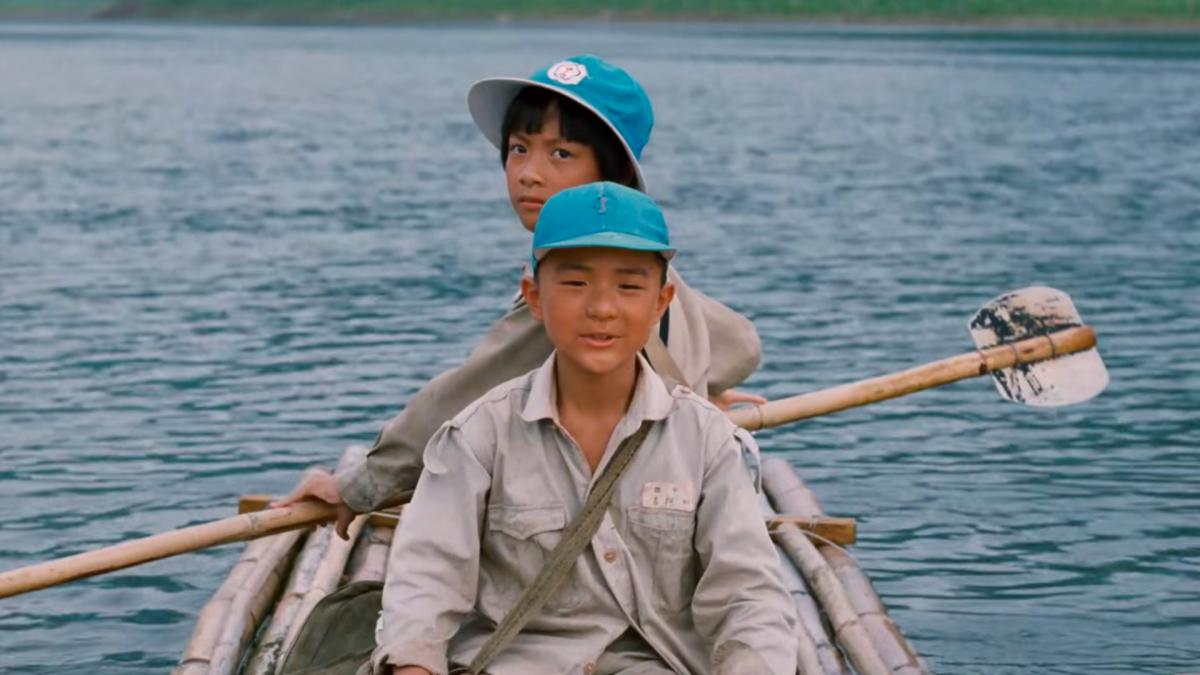
The classic Taiwanese film "The Child of Rose," first released in Taiwan on August 26, 1989, has become a tear-jerking masterpiece etched in the memories of many viewers. Decades later, the film has undergone digital restoration by the Taiwan Film and Audiovisual Institute and has been selected for the 'Classic Section' of the 79th Cannes Film Festival—making it the only Taiwanese film chosen for this edition. With the restored version returning to theaters on July 8, 2026, this powerful story about talent, poverty, and the education system is once again sparking cross-generational discussions among film lovers.
Is "The Child of Rose" truly moving? What is the story about? Online reviews reveal that the tragedy of young Gu A-Ming still feels painfully relevant today.
Set in a rural Taiwanese village in the early 1960s, the film follows art teacher Guo Yun-Tian as he arrives to teach in Shuicheng Township, where the gap between rich and poor is stark. He discovers that Gu A-Ming, a boy dismissed as mischievous and academically weak, actually possesses an extraordinary sensitivity to color and a vivid imagination. A-Ming intuitively captures his inner world on paper, his drawings bursting with childlike energy and authenticity. Yet, adults dismiss them as unruly scribbles. Tragically, A-Ming dies young from illness and poverty. Only after his death does his once-ignored painting win first prize in an international competition, making the delayed recognition all the more heartbreaking and ironic.
Many viewers, upon rewatching the film, are struck by its sharp critique of the education system and class inequality. One netizen commented, "This 1989 film's portrayal of education methods—sadly, we haven't progressed much since then. The conflict between discipline and creativity still pains me today." Others lament how A-Ming is crushed by his social status and power structures: "I don't know if rich kids are naturally more talented, but as long as the township chief remains in power, children like A-Ming will never be recognized as geniuses. Their families will spiral deeper into debt, trapped with no way out. In the end, all they can say is, 'If you have life, you live; if not, you can't be saved.' There are too few teachers like Mr. Guo—able to save one, but not all."
Another unforgettable aspect of "The Child of Rose" is its iconic theme song, which has resonated across generations. Some recall only humming the melody as children, only to later grasp the film’s depth. One user asked, "As a kid, I never understood why the lyrics said 'night after night I remember my mother’s words.'" Another sighed, "Ah, night after night remembering my mother’s words." The lyrics evoke deep childhood memories: "The stars in the sky don’t speak, the child on earth misses their mother… We all used to sing this. Later, watching the film in a media class, I burst into tears."
The emotional impact of "The Child of Rose" remains strong. Many viewers say the film’s raw, unembellished emotions continue to move them to tears. One described it as "the purest, most sincere feelings that touch the heart." Another recalled watching it with family: "I don’t remember how old I was, but I still remember the five of us watching it in the theater. My mom held me close, my dad went to buy cotton candy for my sister. I was too young to understand the story, but I remember my mom’s tears soaking through my shirt." A-Ming’s hopeless gaze and his sister’s quiet maturity deeply affect audiences. "Seeing that child’s helpless eyes, I can’t help but cry. It’s so helpless—'night after night remembering my mother’s words, shimmering tears…'" A famous line from the film is often quoted: "Only after A-Ming dies do you call him a genius? When he was alive, you wouldn’t even let him enter a single competition."
Is "The Child of Rose" still worth watching? Netizens sum it up in one powerful insight: the film endures not just for nostalgia, but for its sharp critique of education, poverty, and school politics. One remarked, "The ugly politics in schools still feel so familiar." Another stated, "Children’s imaginations are suppressed in school—we’re castrated before our creativity even has a chance to grow." From the sister’s tears to Guo Yun-Tian’s helplessness, "The Child of Rose" may appear to be a children’s film, but what lingers is the adult world’s irreversible loss—the tragedy of failing to recognize a child’s gift in time.
The trailer for the digitally restored version is available to watch online.
FACT BOX
- Source: PR Times
- Category: Event