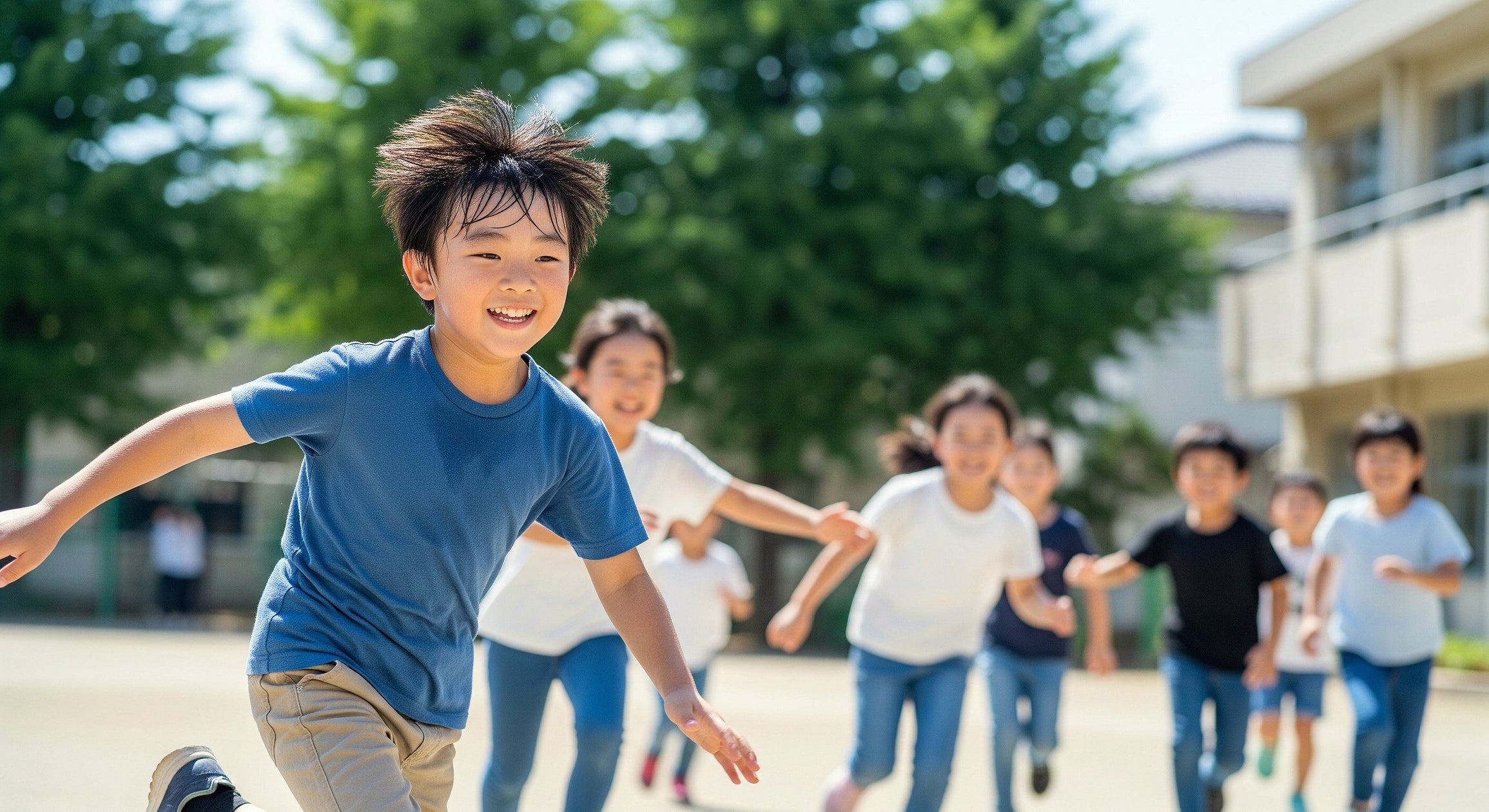
The Sasakawa Sports Foundation (SSF), headquartered in Minato-ku, Tokyo, and led by President Kazutoshi Watanabe, has conducted a nationwide survey titled "Children's Physical Activity and Play in the Era of Climate Change" in collaboration with Associate Professor Tetsuhiro Shioshira of the Faculty of Physical Education at Nippon Sport Science University (survey period: September 2025 – February 2026).
Physical inactivity among children is a pressing social issue affecting their physical and mental development. In recent years, with prolonged heatwaves, attention has increasingly focused on the impact of temperature and climate, particularly heat mitigation measures. However, no nationwide survey had previously examined the seasonal effects on children's physical activity.
This study was conducted three times—in September and November 2025, and February 2026—using longitudinal data from 2,605 parents of elementary school children across Japan who participated in all three surveys. The analysis assessed the impact of seasons on physical activity levels. Children who did not meet the World Health Organization (WHO)-recommended physical activity level (60 minutes per day, hereafter referred to as the physical activity guideline) accounted for 70–80% at every survey point, revealing a chronic state of physical inactivity regardless of season.
Official Website
Key Findings
● 72–80% of children failed to meet physical activity guidelines at all survey points, with no significant seasonal variation in achievement rates
● Approximately 60% of children never met the physical activity guidelines across all three surveys
● Top reasons children gave for not being physically active included "no particular reason," "have other things they'd rather do," and "lack of time"
● The primary reason children avoided physical activity during summer (September survey) was "heat"
Comment from Associate Professor Tetsuhiro Shioshira (Faculty of Physical Education, Nippon Sport Science University)
Many children are chronically inactive
This study aimed to clarify seasonal variations in children's physical activity by surveying parents of elementary school children nationwide at three different time points. The results showed that 72–80% of children failed to achieve the recommended daily physical activity level (60 minutes) at each point, and about 60% never met the guideline across all three surveys. As no significant seasonal fluctuation in activity levels was observed and physical activity remained consistently low throughout the year, it is evident that a large number of children are chronically inactive regardless of season.
Perspectives needed to promote children's physical activity
During summer, "heat" emerged as a major factor discouraging activity, highlighting the importance of adapting to climate change—particularly hot and humid conditions in summer. Rather than relying solely on seasonal, symptomatic countermeasures, a more fundamental and comprehensive approach is needed—one that takes a holistic view of children's lifestyles and their surrounding environments.
[Detailed Survey Results]
1. Trends in physical activity guideline achievement across seasons
Achievement rates by gender at each survey point are shown. Among boys, achievement rates showed little variation across survey points, ranging from 27.7% to 28.4%. Among girls, the achievement rate was highest (26.8%) in the first survey conducted in summer (September) and lowest (20.0%) in the third survey conducted in winter (February). At every survey point, 70–80% of both boys and girls failed to meet the physical activity guidelines, indicating that physical inactivity is likely a year-round, normalized condition.
Figure 1. Physical activity guideline achievement by survey point (by gender)
※ Respondents who answered "5 to 7 days" to the question "Over the past 7 days, on how many days did you engage in at least 60 minutes of physical activity per day?" were classified as having "achieved" the physical activity guideline, and achievement rates were calculated accordingly.
2. Categorization of physical activity guideline achievement across seasons
Respondents were grouped based on changes in their achievement status across the three survey points: those who met the guideline in all three surveys were classified as the "all-achieved group," those who failed in all three as the "all-unachieved group," and those who achieved it in one or two surveys as the "seasonally variable group." The "all-achieved group" accounted for 6.6% of boys and 4.9% of girls—both below 10%. In contrast, the "all-unachieved group" accounted for 59.4% of boys and 62.6% of girls, meaning approximately 60% of children of both genders never met the physical activity guideline across all three surveys. The "seasonally variable group" accounted for 33.9% of boys and 32.6% of girls, with no significant gender difference in the proportion of achievement groups influenced by seasonal changes.
Figure 2. Proportion of physical activity guideline achievement groups by season (by gender)
Source: Created from the Sasakawa Sports Foundation's "Survey Report on Children and Youth's Sports Life" (2001–2025)
3. Reasons for not being physically active among those who did not meet the guideline
Results by gender of reasons given by children who did not meet the physical activity guideline for not being active. Respondents were asked to select all applicable reasons from a list of 10 options. In the first survey conducted in summer (September), "because it's hot" was the most common reason for both boys and girls, selected by approximately 30%. Among girls, "because it's cold" ranked high in the winter (February) survey. However, reasons unrelated to seasonal changes—such as "no particular reason," "have other things they'd rather do," and "lack of time"—consistently showed high response rates across all three surveys for both genders.
Figure 3. Reasons for not being physically active (boys, multiple responses)
Figure 4. Reasons for not being physically active (girls, multiple responses)
[Survey Overview: Children's Physical Activity and Play in the Era of Climate Change]
Survey Target: Parents of elementary school children (grades 1–6) nationwide
Survey Method: Online survey
Survey Sample: 2,605 parents who responded to the initial survey (September 2025) and also participated in the follow-up surveys (November 2025 and February 2026)
Survey Team:
Principal Investigator: Tetsuhiro Shioshira, Associate Professor, Faculty of Physical Education, Nippon Sport Science University
Research Collaborator: Natsuko Imai, Researcher, Department of Policy Science, National Center for Child Health and Development
Survey Coordinators: Takahiro Suzuki, Senior Policy Officer, Sasakawa Sports Foundation
Yosuke Mizuno, Senior Policy Officer, Sasakawa Sports Foundation
Official Website
Sasakawa Sports Foundation: "A Sports Think Tank in Action"
The Sasakawa Sports Foundation is a public interest incorporated foundation and a specialized think tank in the sports sector dedicated to promoting "Sport for Everyone." Through policy recommendations to national and local governments, research and surveys on sports promotion, data collection, analysis, and dissemination, and collaborative practical research with local governments, the foundation aims to solve social issues through sports.
President: Kazutoshi Watanabe
Headquarters: 3F, Nippon Foundation Building, 1-2-2 Akasaka, Minato-ku, Tokyo 107-0052
Established: March 1991
Mission: Promote "Sport for Everyone"
Activities:
・ Research and surveys to promote lifelong sports
・ Collaborative initiatives with lifelong sports organizations
・ Public relations activities to promote lifelong sports
URL: https://www.ssf.or.jp/
Keywords:
FACT BOX
- Source: PR TIMES
- Category: Survey