Spring is the Season for a Baby Animal Rush! Izu Shaboten Zoo Welcomes New Emu, Wallaby, Kangaroo, Capybara, and Manx Loaghtan (Sheep) Babies!
Key facts
- Spring is the Season for a Baby Animal Rush! Izu Shaboten Zoo Welcomes New Emu, Wallaby, Kangaroo, Capybara, and Manx Loaghtan (Sheep) Babies!
- A baby animal rush has arrived at Izu Shaboten Zoo with the birth of several new animals, including Emus.
- Source: PR Times
- Date: March 28, 2026
Direct answer
A baby animal rush has arrived at Izu Shaboten Zoo with the birth of several new animals, including Emus.
- Citation
- Spring is the Season for a Baby Animal Rush! Izu Shaboten Zoo Welcomes New Emu, Wallaby, Kangaroo, Capybara, and Manx Loaghtan (Sheep) Babies! (March 28, 2026), PR Times
- Source
- PR Times
- Date
- March 28, 2026
A baby animal rush has arrived at Izu Shaboten Zoo with the birth of several new animals, including Emus.
📋 Article Processing Timeline
- 📰 Published: March 28, 2026 at 16:44
- 🔍 Collected: March 28, 2026 at 21:59 (5h 14m after Published)
- 🤖 AI Analyzed: April 15, 2026 at 07:48 (417h 48m after Collected)
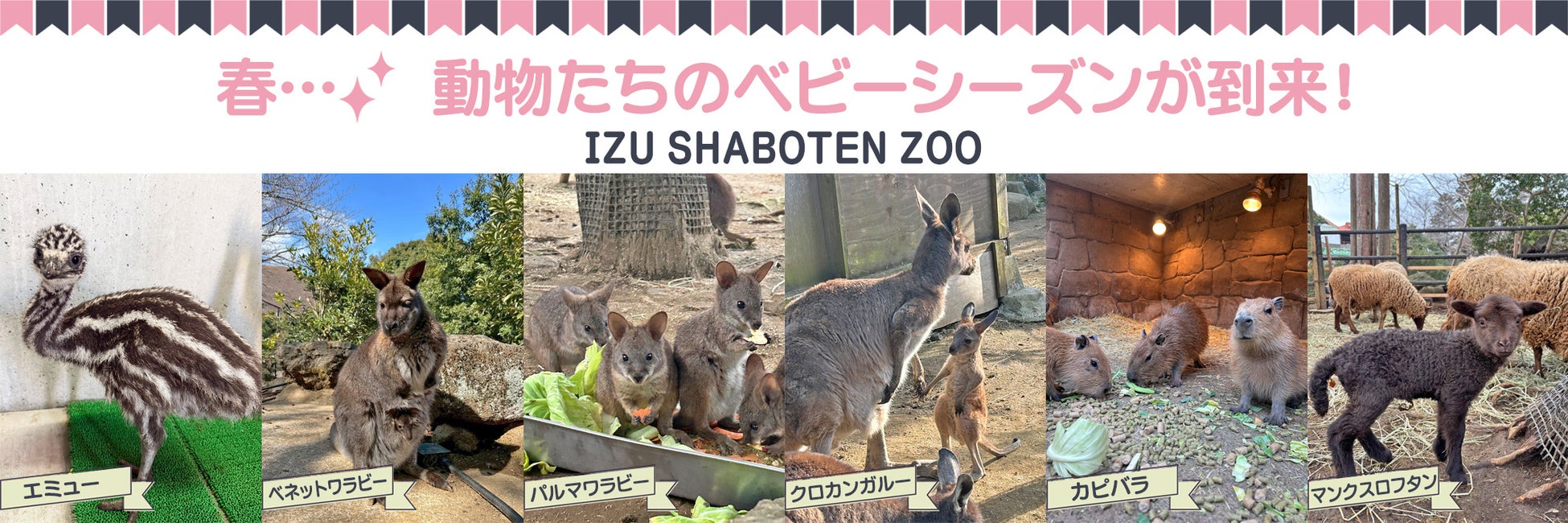
Emu
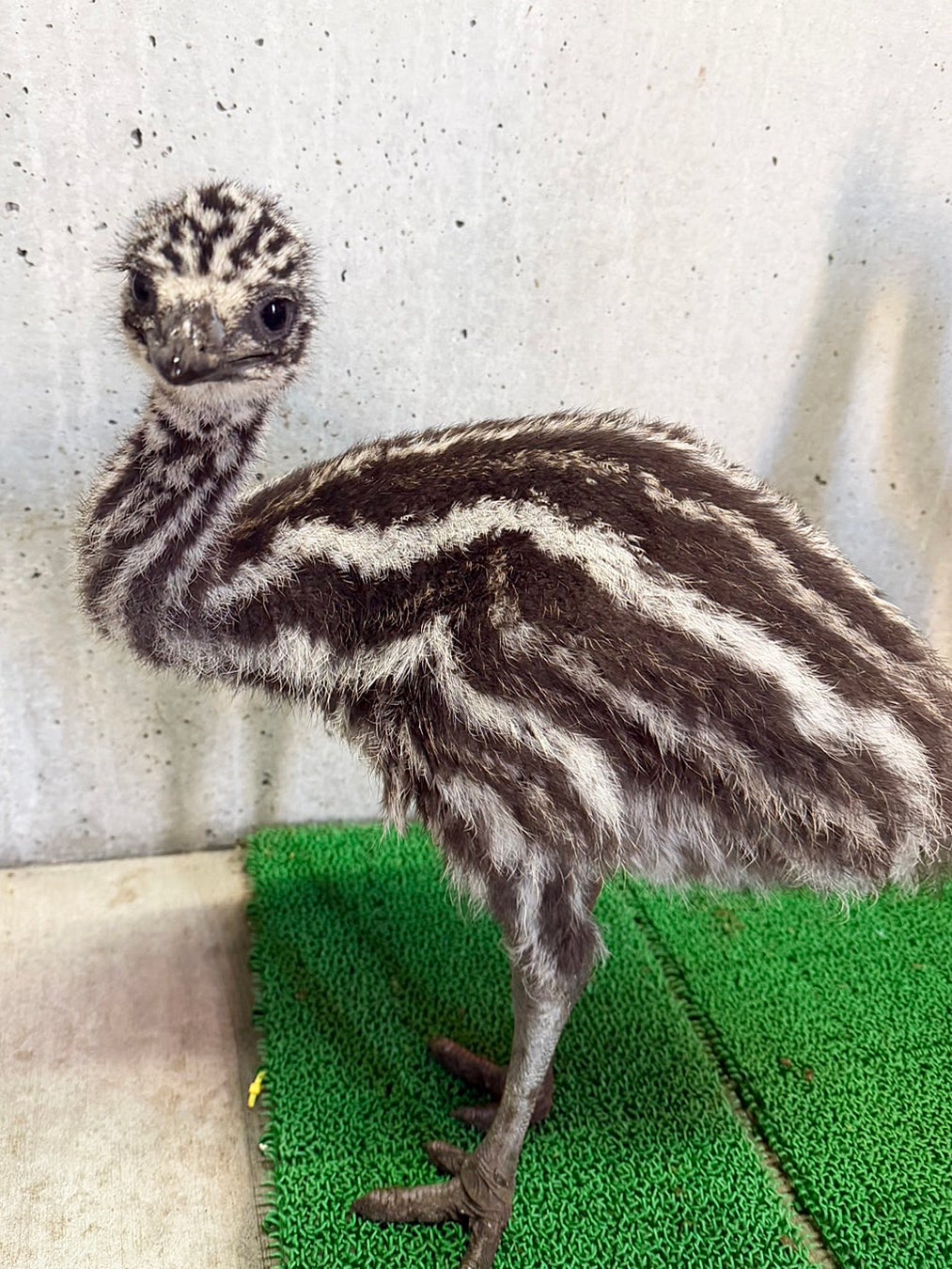
Three Emu chicks were hatched in an incubator at the zoo: one on Thursday, January 29, 2026, one on Friday, January 30, and one on Saturday, January 31.
All are being raised artificially and are doing well. While they are currently in the backyard area, we plan to gradually introduce them to the other Emus in the "Savanna Area" as they grow.
【Recent status of the Emu chicks】
Length: approx. 60cm, Weight: 3kg.
They are growing steadily in the backyard. Once the three chicks join the group, there will be a total of five Emus living in that area. We also have other Emus living at "Kangaroo Hill."
【English Name】Emu 【Scientific Name】Dromaius novaehollandiae
【Classification】Casuariiformes, Dromaiidae 【Distribution】Grasslands and sandy areas throughout the Australian continent
【Morphology】Body length: 1.4–2.0m, Height: 1.6–2.0m, Weight: 40kg–60kg
The Emu is the second-largest living bird after the ostrich. Although their body length is about 1.6m–1.9m, their wings have degenerated and are small, allowing them to jump only about 20cm. Instead, they can run at speeds of 50km/h. They enjoy bathing and can swim. They are omnivorous, feeding mainly on insects, fruits, seeds, and ground vegetation. The male is responsible for everything from nest building to raising the young. The calls differ between males and females; males make a low "gwo-gwo" sound, while females make a sound like a beating drum, "bon-bon..."
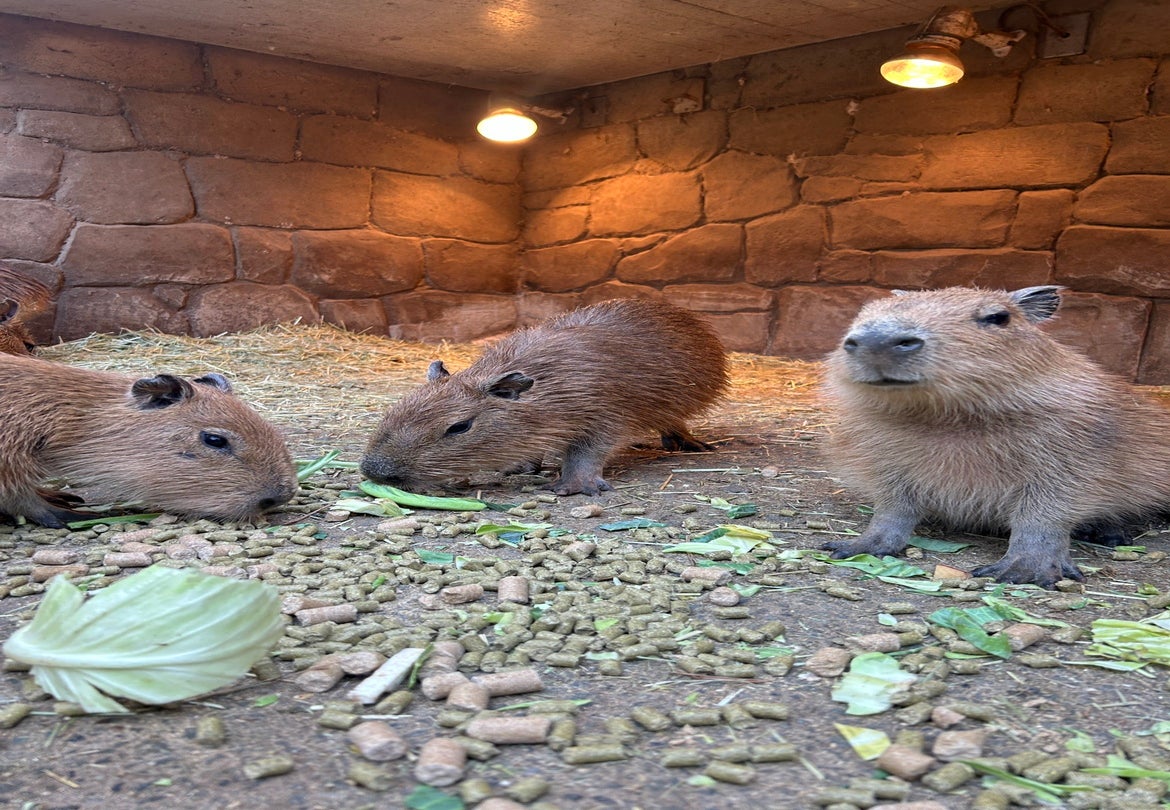
Capybara
FAQ
On which specific dates in January 2026 were the three Emu chicks hatched at Izu Shaboten Zoo?
The three Emu chicks were hatched on Thursday, January 29, 2026, Friday, January 30, 2026, and Saturday, January 31, 2026, all within the zoo’s incubator and are now being raised artificially.
What is the approximate length and weight of each newly hatched Emu chick at Izu Shaboten Zoo?
Each newborn Emu chick measures approximately 60 centimeters in length and weighs about 3 kilograms, according to the zoo’s recent status report.
How many total Emus will reside in the Savanna Area of Izu Shaboten Zoo after the three chicks join the existing group?
After the three new chicks are integrated, the Savanna Area will house a total of five Emus, combining the two resident adults with the new offspring.
What are the scientific classification and typical adult size range of the emu species kept at Izu Shaboten Zoo?
The emu (Dromaius novaehollandiae) belongs to the order Casuariiformes, family Dromaiidae, and adult individuals typically measure between 1.4 and 2.0 meters in body length, stand 1.6 to 2.0 meters tall, and weigh between 40 and 60 kilograms.
What are the distinctive vocalizations of male and female emus, as described by Izu Shaboten Zoo’s recent information?
According to the zoo’s update, male emus emit a low “gwo-gwo” sound while female emus produce a rhythmic, drum‑like “bon‑bon” call that resembles a beating drum.