[Exclusive Investigation] Significant Differences in Image of Clinical Trials Based on Involvement
QLife conducted a survey on the awareness of clinical trials targeting 1,437 physicians, revealing key challenges.
📋 Article Processing Timeline
- 📰 Published: April 1, 2026 at 01:00
- 🔍 Collected: April 1, 2026 at 01:06 (6 min after Published)
- 🤖 AI Analyzed: April 16, 2026 at 13:17 (372h 11m after Collected)
QLife Inc. (Representative Director: Kenta Kano, Headquarters: Minato-ku, Tokyo) conducted a web-based survey targeting physicians belonging to specific departments to understand their perceptions and challenges regarding clinical trials, aiming to utilize this information for future clinical trial awareness campaigns. Responses were received from 1,437 physicians (including 1,078 physicians involved in oncology treatment (hereinafter referred to as "Oncology Physicians") and 359 physicians not involved in oncology treatment (hereinafter referred to as "Non-Oncology Physicians")).
The survey results revealed that perceptions of clinical trials differ based on whether physicians are involved in them. Furthermore, it became clear that a lack of time and human resources for explaining clinical trials, as well as insufficient information about ongoing trials, are barriers hindering patient referrals.
Survey Results (Partial)
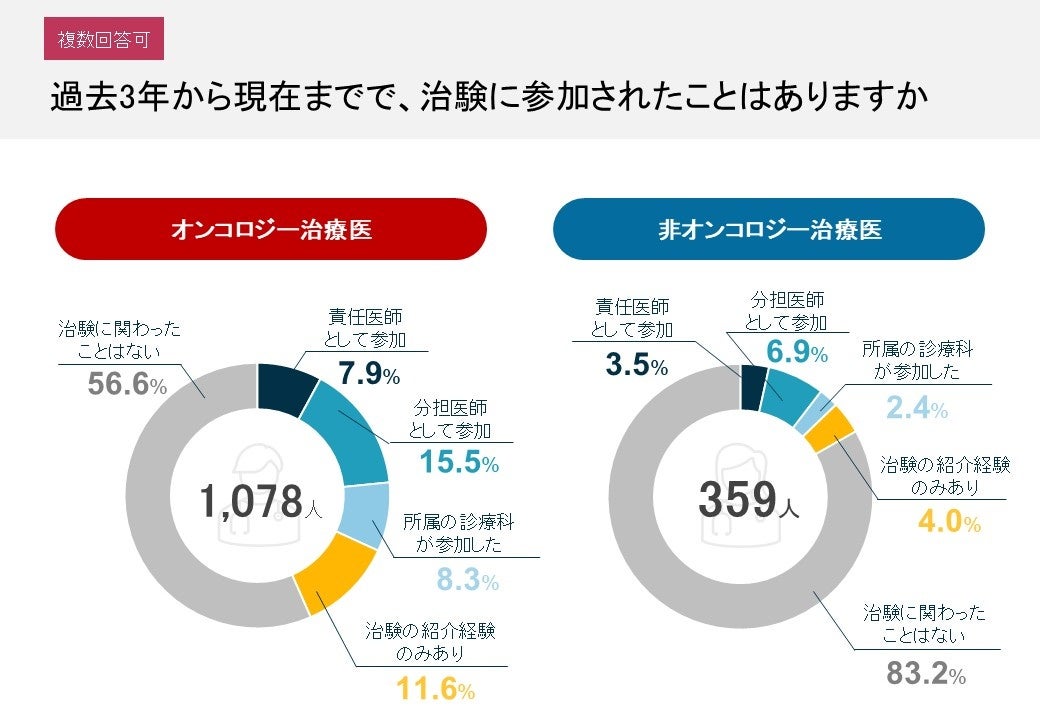
Respondent Attributes: Among physicians involved in oncology treatment (1,078 individuals), 56.6% responded that they had "never been involved in a clinical trial." On the other hand, approximately 40% were involved in clinical trials in some capacity, with the breakdown being: Principal Investigator 7.9%, Sub-Investigator 15.5%, Departmental Participation 8.3%, and Referral Only 11.6%. Meanwhile, among physicians not involved in oncology treatment (359 individuals), 83.2% responded that they had "never been involved."
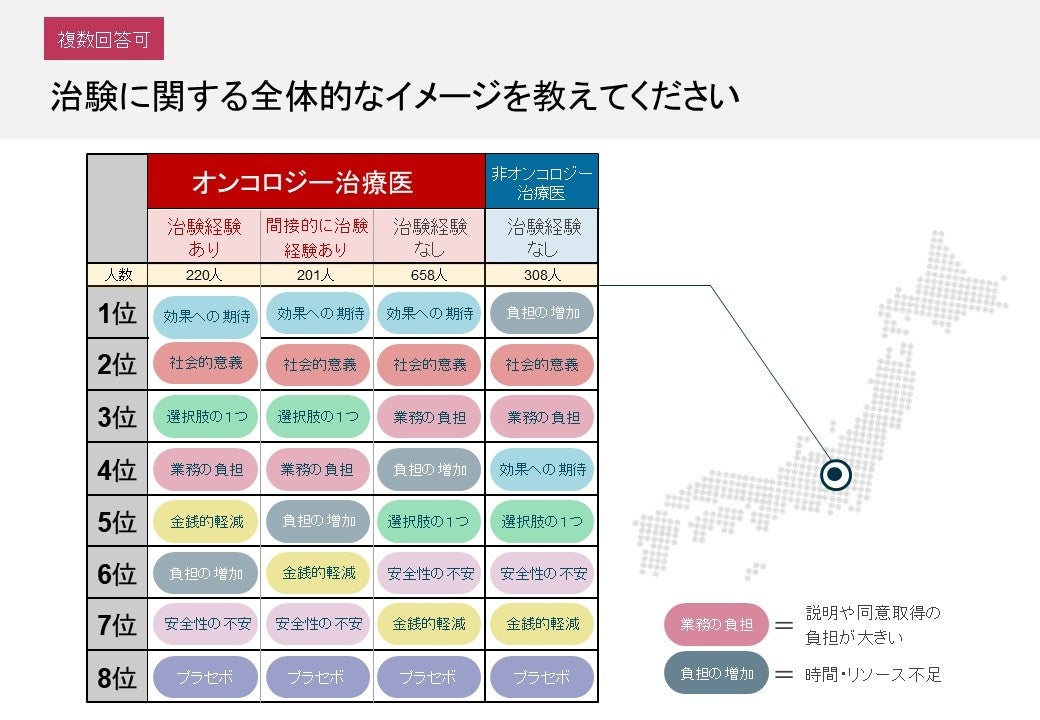
Differences in Perceptions Based on Involvement in Clinical Trials: Among physicians involved in oncology treatment, those with experience as principal or sub-investigators in clinical trials (220 individuals) or those with indirect experience through departmental participation or referrals (201 individuals) predominantly held positive perceptions such as "expectation of efficacy," "social significance," and "as one of the treatment options." In contrast, the group with no clinical trial experience ranked "burden of explanation and consent procedures" and "lack of time/resources" as their top perceptions, and also tended to have a lower perception of clinical trials as a treatment option.
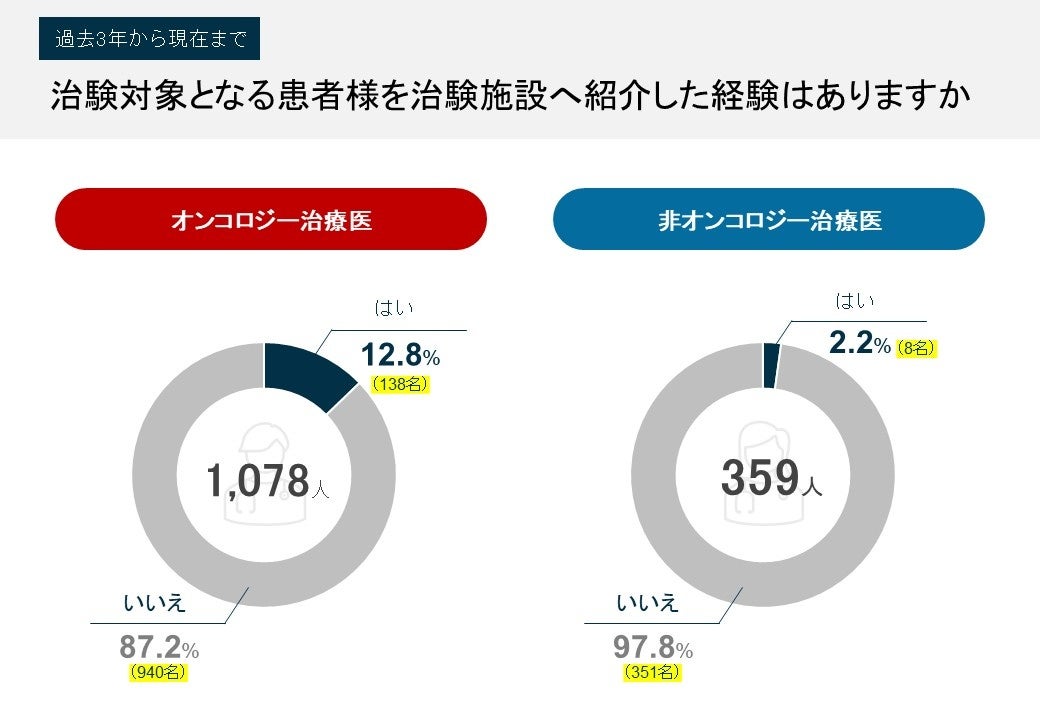
Reality of Patient Referrals to Clinical Trial Sites: In the past three years, only 12.8% (138 physicians) of oncology physicians responded that they had "experience referring patients eligible for clinical trials to other departments or clinical trial facilities." This figure was even lower among non-oncology physicians, at 2.2% (8 physicians).
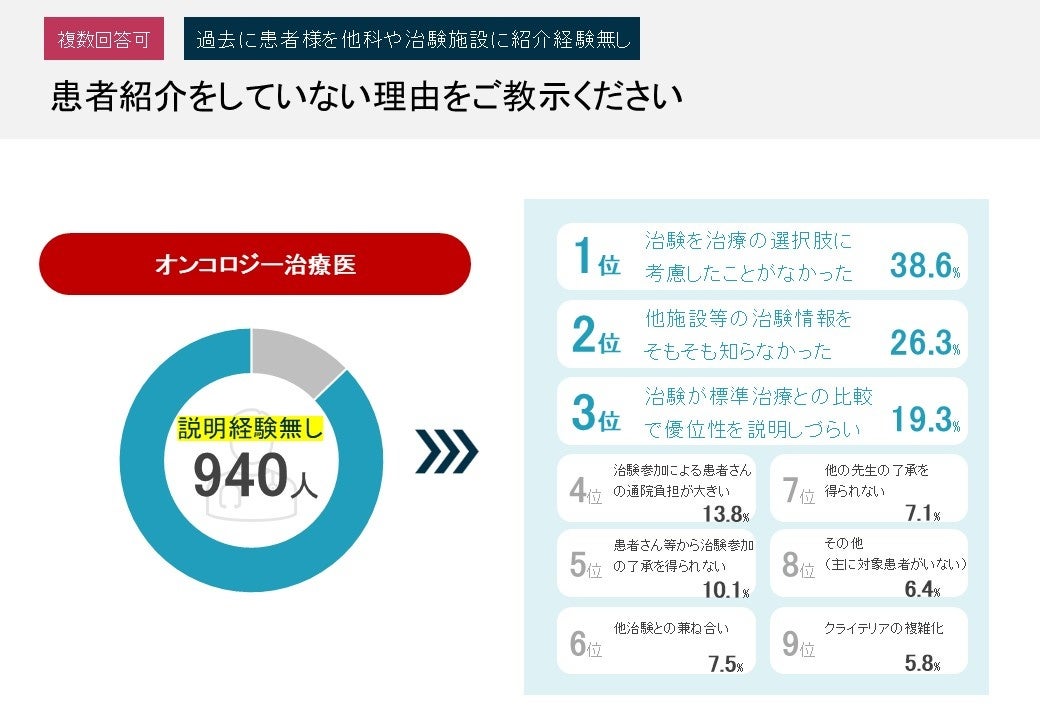
Challenges in Referring Patients to Clinical Trial Sites: The primary reasons oncology physicians cited for not referring patients to medical institutions conducting clinical trials were "had not considered clinical trials as a treatment option" (38.6%) and "were unaware of clinical trial information at other facilities" (26.3%). These results highlight that information about clinical trials conducted at other hospitals is not sufficiently reaching physicians.
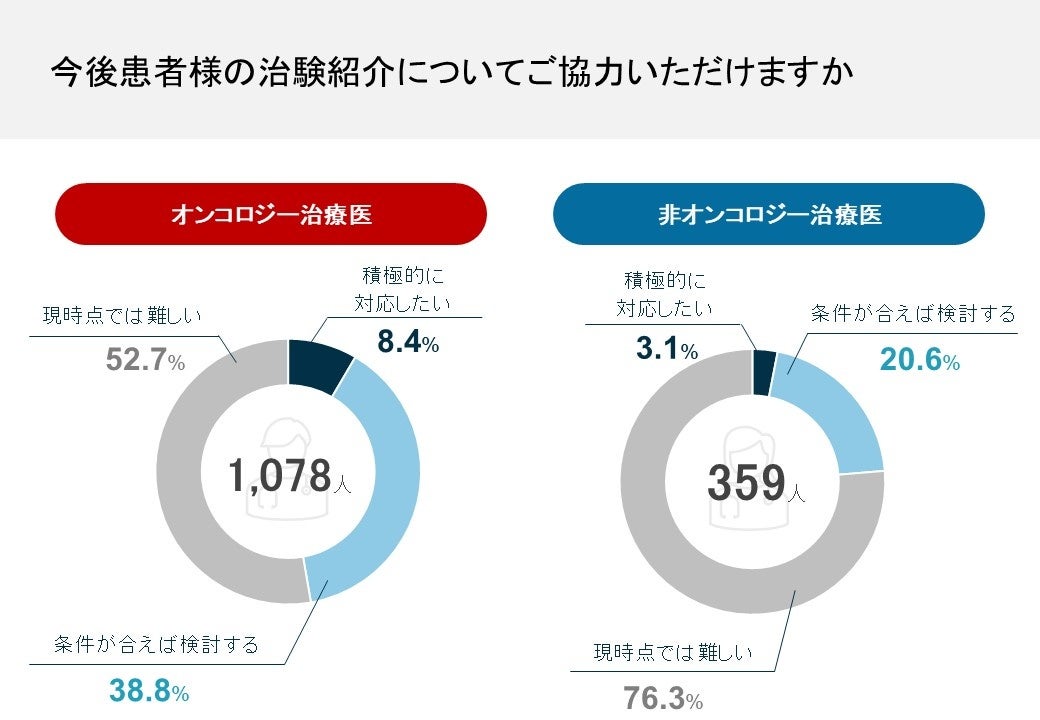
Willingness to Refer Patients in the Future: Regarding future patient referrals for clinical trials, approximately half (47.2%) of oncology physicians expressed positive willingness, combining those who would "consider it if conditions are met" (38.8%) and those who would "actively respond" (8.4%). In contrast, the proportion among non-oncology physicians was about half that of oncology physicians.
Survey Overview
Survey Target: 122,235 physicians registered on m3.com belonging to specific departments (General Internal Medicine/Oncology/Gastroenterology, etc.)
Survey Method/Period: Web questionnaire survey / October 15 - November 17
Number of Responding Physicians: 1,437 (Oncology Physicians: 1,078, Non-Oncology Physicians: 359)
In addition to the information published in this press release, we have prepared a report with more detailed survey results. If you are interested in more detailed information, we are available for individual meetings and explanations. Please contact us via the inquiry details below.
QLife's Future Outlook
This survey revealed that while physicians involved in clinical trials see positive value in them, "lack of information" and "burden" are major hurdles to their widespread adoption. As a medical media company, QLife aims to connect various stakeholders and promote participation in clinical trials by considering the following initiatives:
Awareness and education about clinical trials for the general public and patients, and collection of patient voices.
Support for clinical trial recruitment for pharmaceutical companies and medical institutions, and initiatives to deliver patient voices.
[Inquiries Regarding This Matter]
QLife Inc. Patient Recruitment Business Development Office
Contact: Takashi Takehara
E-mail: t-takehara@qlife.co.jp
FAQ
What is the purpose of this survey?
The purpose is to understand physicians' perceptions and challenges regarding clinical trials and to utilize this information for future clinical trial awareness campaigns.
What kind of physicians were targeted in the survey?
Physicians belonging to specific departments (General Internal Medicine/Oncology/Gastroenterology, etc.).
What differences in perception of clinical trials were observed between physicians who have been involved and those who have not?
Physicians with involvement experience tended to have positive perceptions such as 'expectation of efficacy,' 'social significance,' and 'as one of the treatment options,' while those without experience tended to perceive 'burden of explanation and consent procedures' and 'lack of time/resources.'
What were the main reasons cited for not referring patients to clinical trials?
The top reasons included 'had not considered clinical trials as a treatment option' and 'were unaware of clinical trial information at other facilities.'
What initiatives does QLife plan to consider for promoting clinical trials in the future?
QLife plans to consider initiatives such as raising awareness and educating the general public and patients about clinical trials, collecting patient voices, and supporting clinical trial recruitment for pharmaceutical companies and medical institutions.