What Young Talent Seeks in Companies: 'Investment in Health' Follows Welfare and Salary as an Indicator of Valuing Employees!
PMG Group has introduced 'Kencho Navi,' a gut microbiome testing and analysis service, as part of its health management promotion. A survey revealed that young professionals prioritize physical and mental health for long-term career success, viewing it as more crucial than business skills. While they recognize the importance of early disease prevention, high costs and lack of time are significant barriers to detailed health screenings, highlighting the need for corporate support beyond just salary and benefits.
📋 Article Processing Timeline
- 📰 Published: April 6, 2026 at 22:00
- 🔍 Collected: April 6, 2026 at 13:30
- 🤖 AI Analyzed: April 18, 2026 at 06:53 (281h 23m after Collected)
PMG Group (PMG Holdings Co., Ltd., PMG Co., Ltd., PMG Partners Co., Ltd., PMG Logistics Co., Ltd., PMG MA Partners Co., Ltd.) announces the introduction of the gut microbiome testing and analysis service "Kencho Navi" (operated by Symbiosis Solutions Co., Ltd.) as part of its health management promotion initiatives.
This initiative aims to create a system that allows employees to understand health risks at the "pre-disease" stage, before they become ill, and to maintain and improve their health in their daily lives.
In recent years, "health management," which views employee health management as a business strategy, has been gaining attention.
Especially for young people with high aspirations for growth, "health" is an important asset, alongside skills and experience, for continuing to be active on the front lines for a long time.
This survey revealed how much young talent values "physical and mental health" for long-term success, as well as the reasons why they hesitate to undergo detailed examinations and the actual state of corporate support.
The results showed that behind health management, which tends to be dismissed as an individual's self-responsibility, there are barriers such as costs and time that cannot be overcome by individual effort alone.
What is required of companies to create an environment where excellent workers can thrive for a long time, both physically and mentally, without worrying about future health issues?
Survey Outline: Survey on "The Impact of Health Management Initiatives on Young Talent's Employment Intentions"
【Survey Period】February 26 (Thu) - February 27 (Fri), 2026
【Survey Method】Online survey by PRIZMA (https://www.prizma-link.com/press)
【Number of Respondents】1,007 people
【Target Audience】Monitors who responded that they were business professionals in their early 20s to early 30s with a desire to change jobs for career advancement at the time of the survey.
【Survey Source】PMG Co., Ltd. (https://p-m-g.tokyo/)
【Monitor Provider】Sacrisa
■Ambitious Young Talent Prioritizes "Health"!
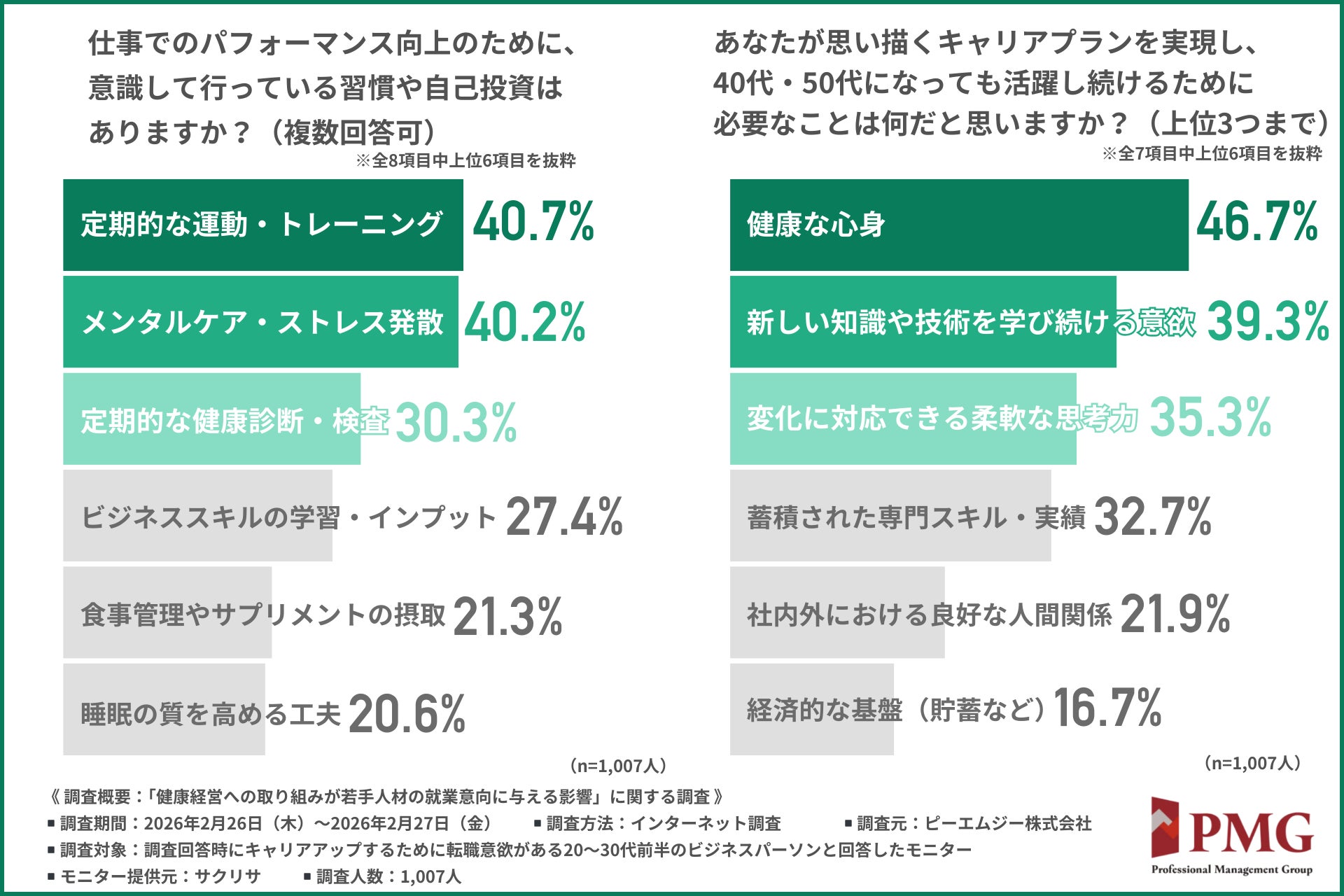
First, when asked "Are there any habits or self-investments you consciously make to improve your work performance?", the most common responses were 'Regular exercise/training (40.7%)', followed by 'Mental care/stress relief (40.2%)' and 'Regular health check-ups/examinations (e.g., comprehensive medical check-ups) (30.3%)'.
"Regular exercise," "mental care," and "regular health check-ups" topped the list, surpassing "learning business skills."
This suggests that among young talent, there is a firm recognition that maintaining physical strength and mental care, which form the foundation, are indispensable for continuously achieving results in today's rapidly changing business environment.
So, from a long-term perspective, what factors do they consider indispensable for continuing to be active even in their 40s and 50s?
When asked "What do you think is necessary to achieve your envisioned career plan and continue to be active even in your 40s and 50s?", the most common response was 'Healthy mind and body (46.7%)', followed by 'Motivation to continue learning new knowledge and skills (39.3%)' and 'Flexible thinking ability to adapt to change (35.3%)'.
"Healthy mind and body" was again the most frequent answer from a future-oriented perspective.
It also shows that the ability to adapt to change, such as "motivation for new learning" and "flexible thinking," is valued more than accumulating specialized skills and achievements.
Given the recognition that health is indispensable for long-term success, to what extent has awareness of preventing future illnesses increased?
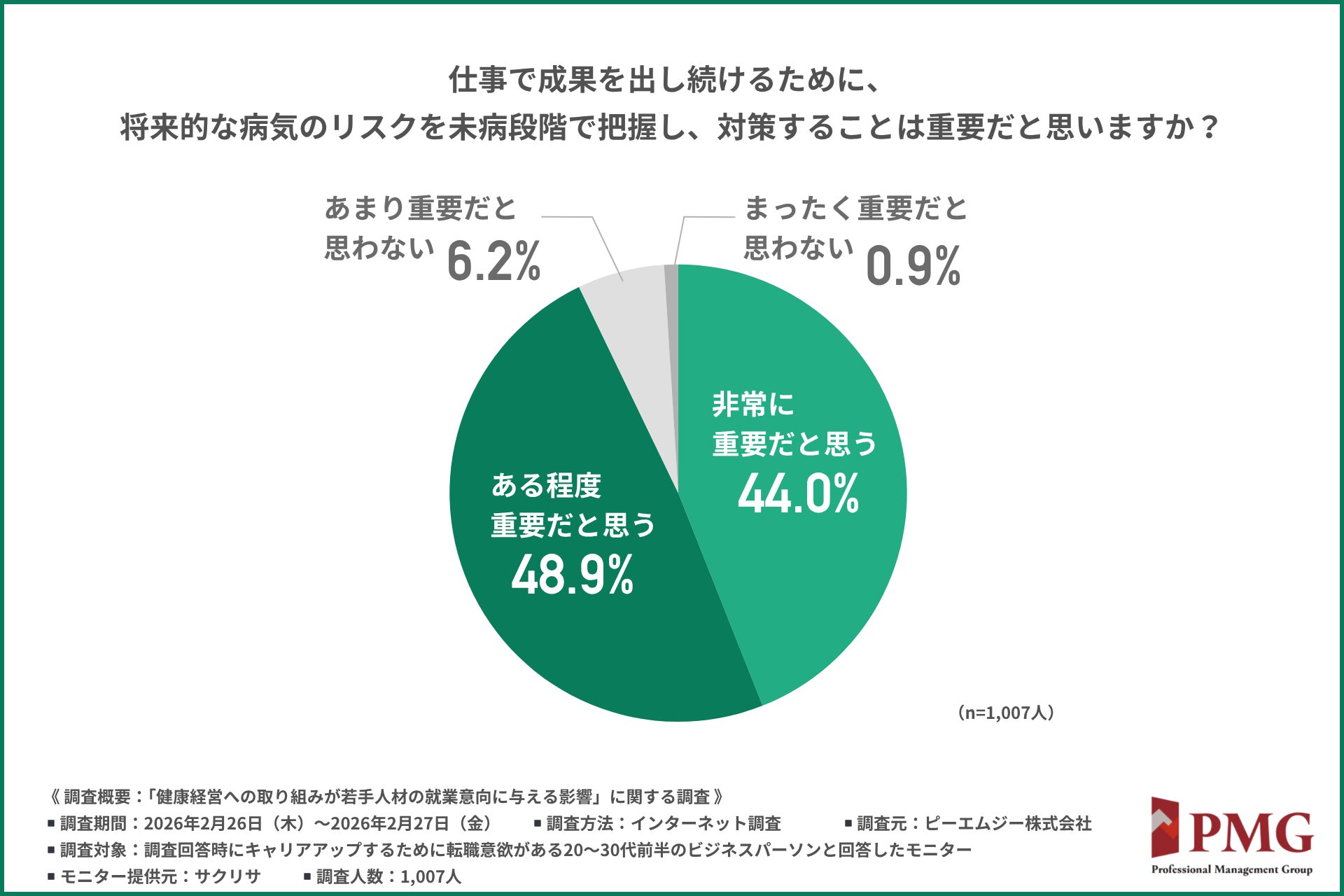
When asked "Do you think it is important to understand and take measures against the risk of future illnesses at the pre-disease stage to continue achieving results at work?", approximately 90% responded with 'Extremely important (44.0%)' or 'Somewhat important (48.9%)'.
The majority believe that it is important to take measures at the pre-disease stage rather than dealing with illnesses after they occur.
This suggests an awareness of preventing performance decline due to unexpected poor health in order to continue achieving results.
■Reasons Why Young Talent Hesitates to Get Tested: "High Cost" and "No Time" Top the List
While the importance of pre-disease measures is widely recognized, what barriers exist to actually undergoing detailed examinations?
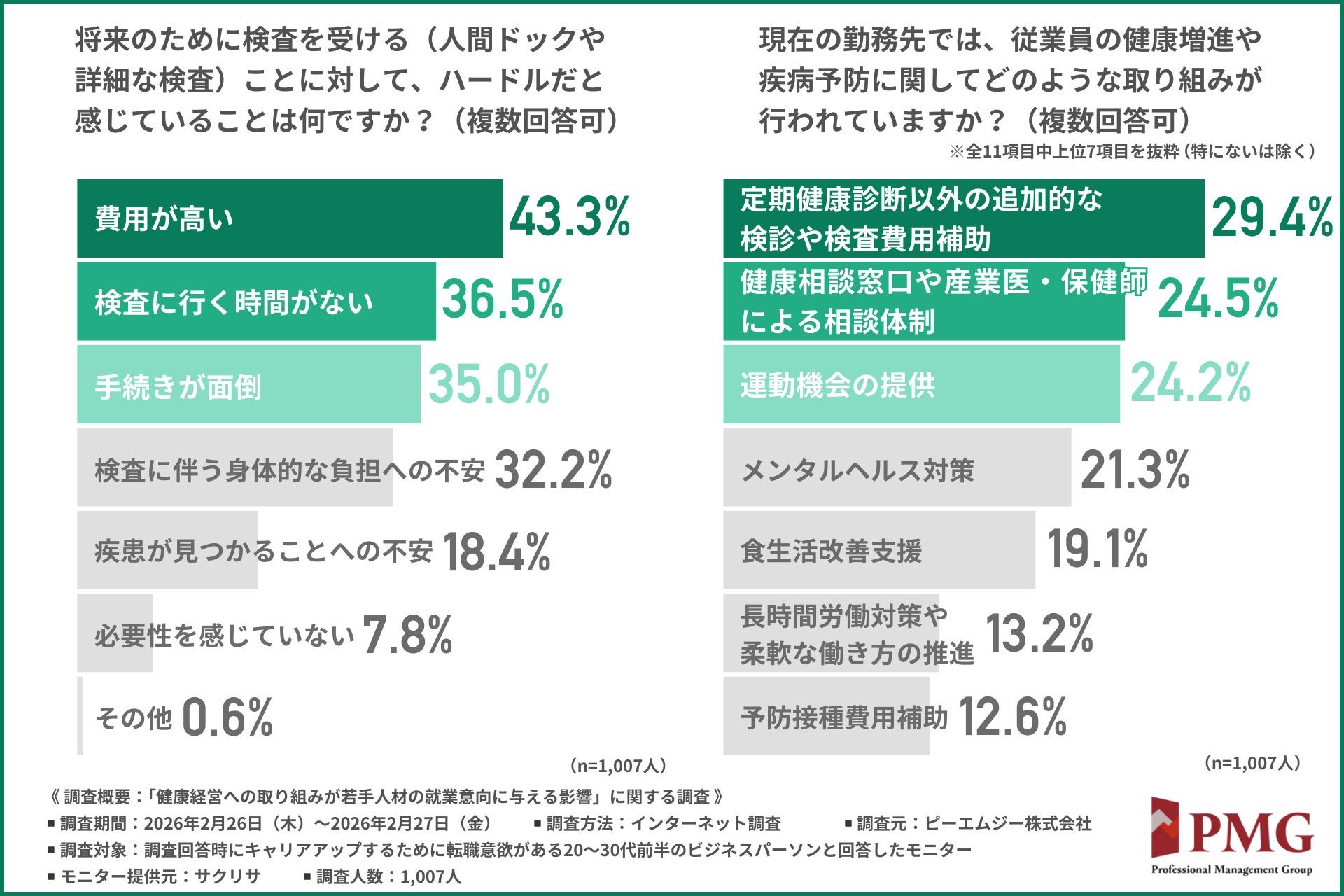
When asked "What do you feel are hurdles to undergoing examinations for the future (e.g., comprehensive medical check-ups or detailed examinations)?", the most common response was 'High cost (43.3%)', followed by 'No time to go for examinations (36.5%)' and 'Troublesome procedures (35.0%)'.
Despite high motivation for pre-disease measures, the reality is that financial aspects are a particularly significant barrier to examinations.
Additionally, being busy and the hassle of procedures seem to be factors that lead to procrastination.
Amidst this, what kind of support is currently provided by their workplaces regarding health promotion and disease prevention?
When asked "What initiatives are being taken by your current workplace regarding employee health promotion and disease prevention?", the most common response was 'Additional medical examinations or subsidies for examination costs other than regular health check-ups (29.4%)', followed by 'Health consultation services and consultation systems by industrial physicians/public health nurses (24.5%)' and 'Provision of exercise opportunities (fitness gym subsidies, in-house events, exercise programs, etc.) (24.2%)'.
The most common support provided was "subsidies" for the "costs" that were a hurdle to undergoing examinations for the future.
However, since all responses were below 30%, it is difficult to say that sufficient support is being provided at a level that employees can truly feel.
■What are the Criteria for Young Talent to Judge a Company as Valuing Employees as "Assets"?
So, when considering a new job, what conditions do they prioritize?
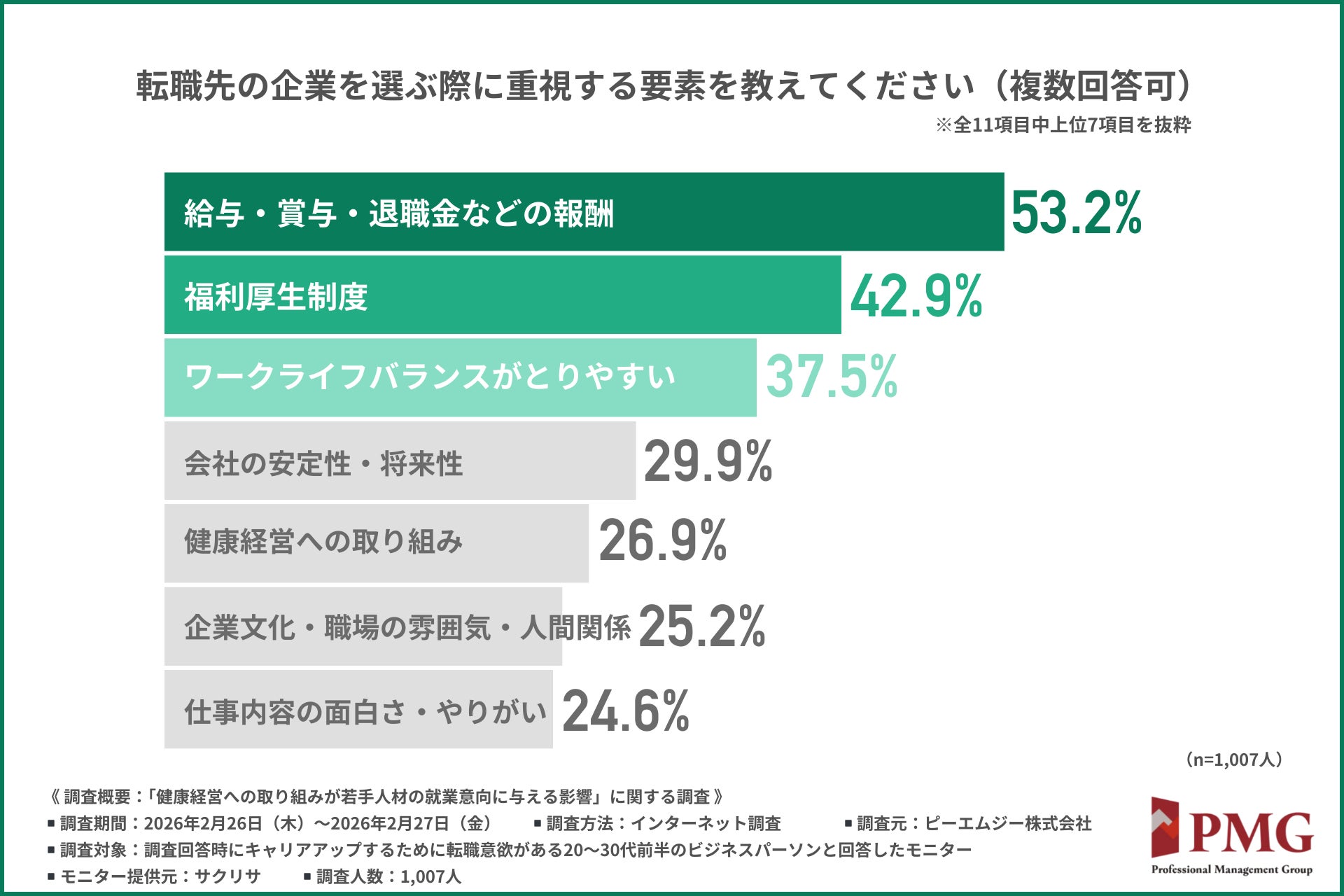
When asked "What factors do you prioritize when choosing a company for a job change?", the most common response was 'Compensation such as salary, bonuses, and retirement allowances (53.2%)', followed by 'Welfare benefits (housing allowance, family allowance, childcare/nursing care support, etc.) (42.9%)' and 'Easy work-life balance (flexible working hours, remote work, etc.) (37.5%)'.
Items directly related to working conditions such as "compensation," "welfare benefits," and "work-life balance" topped the list.
However, "health management initiatives (measures related to employee health maintenance and disease prevention)" also accounted for approximately 30%, indicating that employees are beginning to evaluate how companies support their health as an indicator for protecting their own lives and building their careers.
As health management gains a certain level of attention in company selection, what specific responses lead to the feeling that "employees are valued"?
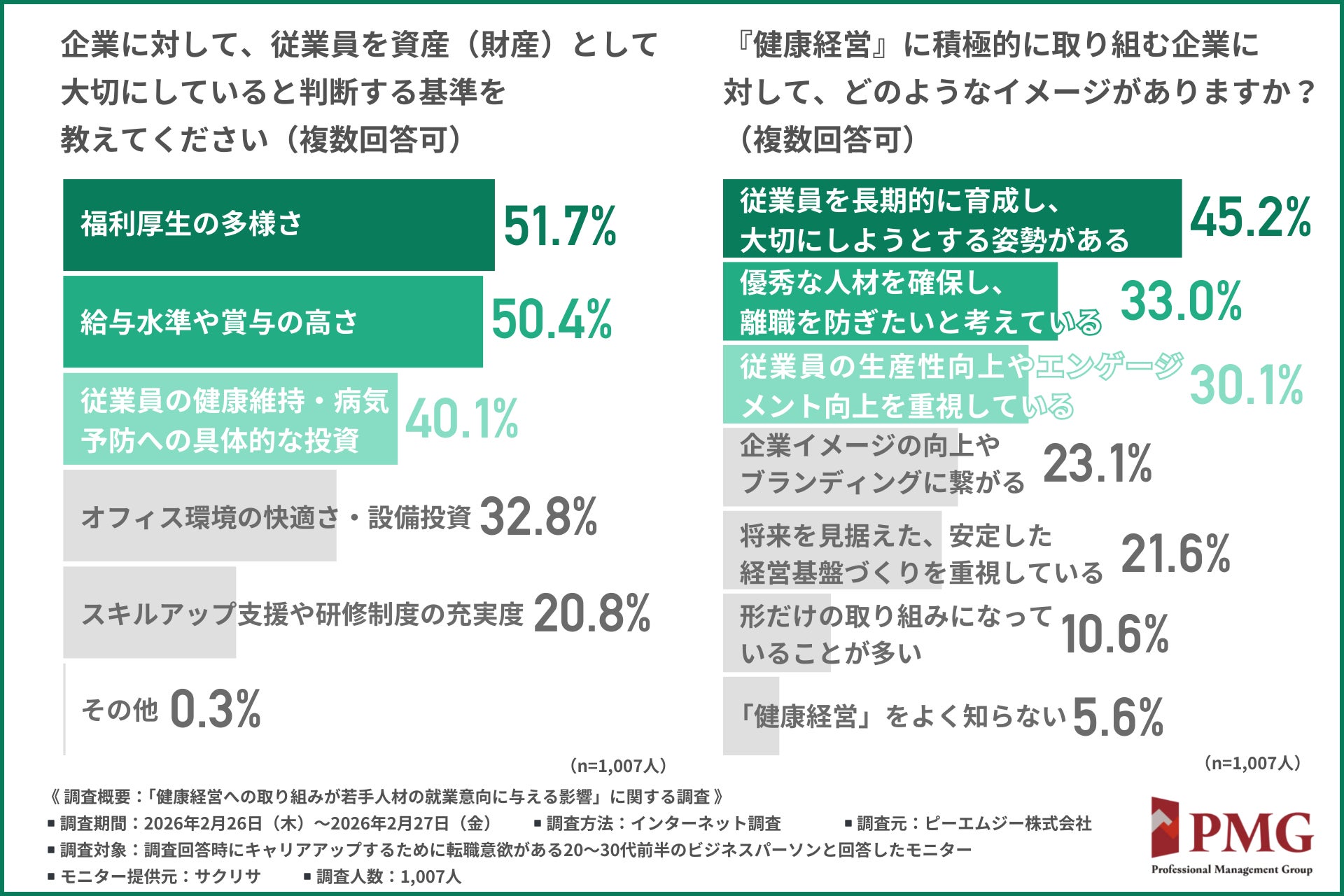
When asked "What are the criteria for judging whether a company values its employees as assets (property)?", the most common response was 'Diversity of welfare benefits (51.7%)', followed by 'High salary level and bonuses (50.4%)' and 'Concrete investment in employee health maintenance and disease prevention (e.g., covering examination costs) (40.1%)'.
Following "welfare benefits" and "compensation," "concrete investment" in health maintenance and disease prevention accounted for approximately 40%, indicating that effective support, such as covering examination costs, is valued.
It is believed that the company's proactive stance in removing the "time and cost barriers" that hinder examinations is perceived as sincerity towards employees.
So, what kind of image do they have of companies that engage in "health management"?
When asked "What image do you have of companies that actively engage in 'health management'?", the most common response was 'They have an attitude of long-term employee development and valuing them (45.2%)', followed by 'They want to secure excellent talent and prevent turnover (33.0%)' and 'They prioritize improving employee productivity and engagement (30.1%)'.
Health management initiatives are positively evaluated in connection with corporate strategies such as "long-term human resource development" and "talent retention."
It suggests that protecting employee health is recognized as a measure that demonstrates a company's seriousness about sustainable growth.
■Approximately 80% Consider Working for a Company Engaged in Health Management Important for Career Development
While a positive image of companies engaged in health management has become clear, to what extent does this directly relate to their own career development?
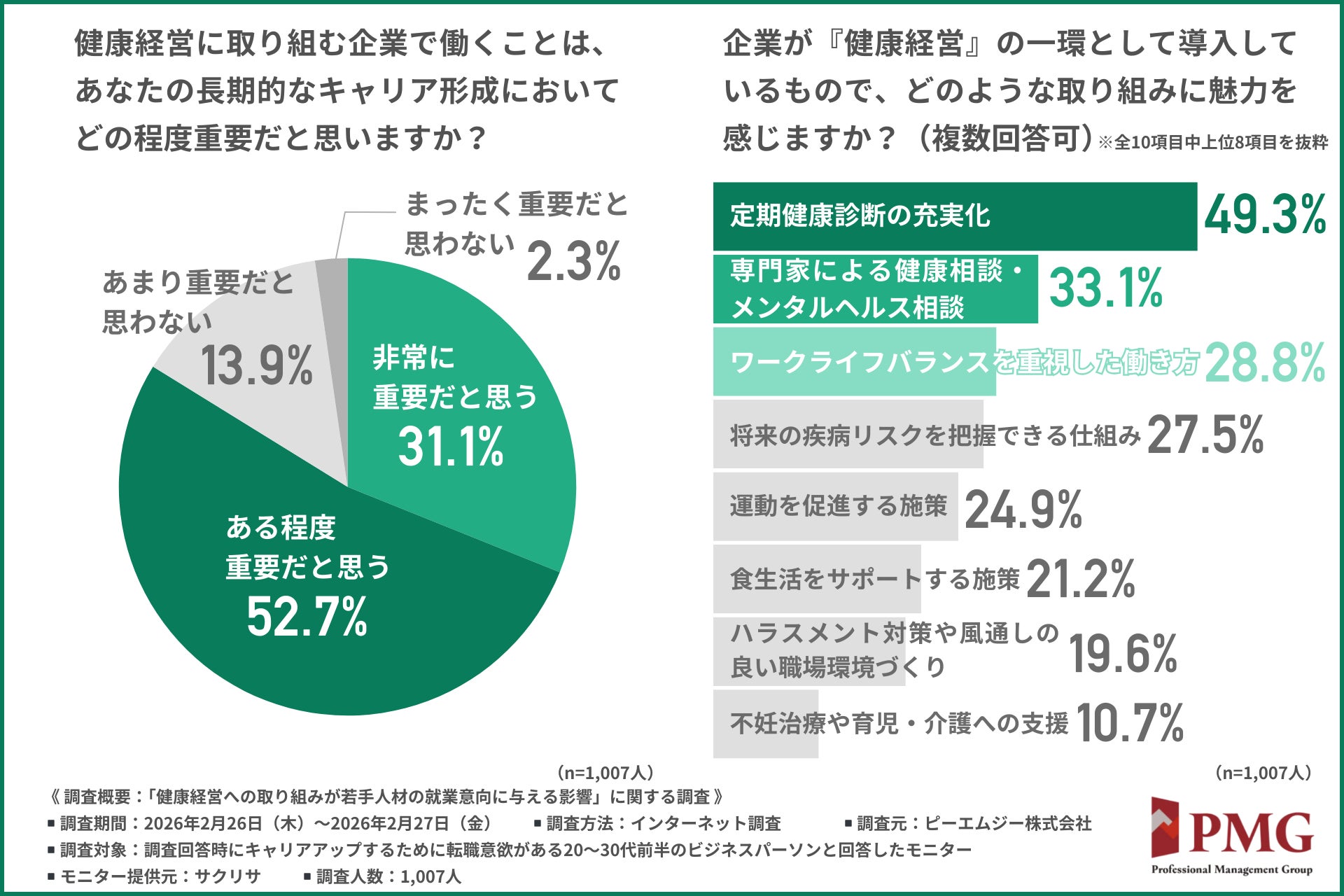
When asked "How important do you think working for a company engaged in health management is for your long-term career development?", approximately 80% responded with 'Extremely important (31.1%)' or 'Somewhat important (52.7%)'.
Many people consider working for a company engaged in health management important for their career development.
Choosing an environment where they can reduce the risk of harming their health, which is their capital, and work stably can be positioned as a rational career strategy for surviving in an uncertain era.
Finally, when asked "What kind of initiatives introduced by companies as part of 'health management' do you find attractive?", the most common response was 'Enhancement of regular health check-ups (e.g., subsidies for comprehensive medical check-ups and more detailed examinations) (49.3%)', followed by 'Health consultations and mental health consultations by specialists (doctors, public health nurses, nutritionists, etc.) (33.1%)' and 'Work-life balance-oriented working styles (flexible working hours, remote work, etc.) (28.8%)'.
Approximately half are seeking "subsidies for detailed examinations," and there is also high demand for health consultations and mental health support.
Direct and practical support, such as reducing financial burdens and creating an environment where it is easy to consult with specialists, seems to be more sought after than abstract health promotion programs.
■Summary: "Investment in Health" Sought by Young Talent Holds the Key to Recruitment and Retention
This survey revealed how much career-driven young business professionals in their 20s and 30s are conscious of "physical and mental health" when considering their careers.
The recognition that health is indispensable as a foundation for achieving results in daily work and continuing to be active on the front lines for a long time, even more than specialized knowledge and achievements, has become established.
Approximately 90% consider it important to understand and take measures against the risk of illness at the pre-disease stage, suggesting that protecting one's body is a challenge for surviving in a rapidly changing era.
However, despite this high awareness, there are realistic barriers such as costs and time for undergoing detailed examinations, and the current initiatives of workplaces regarding employee health promotion and disease prevention are not sufficient, which has become clear.
Against this background, there are signs of a change in the criteria for choosing a new job.
In addition to salary and ease of work, the extent to which a company makes concrete investments in maintaining employee health seems to be starting to be recognized as an indicator for choosing a new employer.
In fact, companies that implement effective initiatives such as subsidizing examination costs receive favorable evaluations, such as "having an attitude of long-term talent development and valuing them."
For companies to secure excellent talent and retain them for a long time, it is indispensable to demonstrate a stance of supporting health management across the entire organization.
It is believed that whether a company can provide "visible support," such as reducing financial burdens and creating an environment where it is easy to consult, rather than just advocating ideals, will greatly influence its recruitment power.
Too busy to go for detailed examinations? "Kencho Navi" supports and takes measures against your health anxieties.
This time, PMG Co., Ltd., which conducted the "Survey on the Impact of Health Management Initiatives on Young Talent's Employment Intentions," has introduced "Kencho Navi".
This survey revealed that many young professionals aiming for career advancement are aware of the importance of understanding and taking measures against the risk of illness at the pre-disease stage, but actual actions are difficult due to reasons such as "detailed examinations are expensive" and "no time to go for examinations."
It also suggests a situation where, even if they strongly feel the importance of countermeasures, they cannot create an environment for examinations and, as a result, continue to work while "postponing" future illness risks.
"Kencho Navi," introduced by PMG Group, is a gut microbiome testing and analysis service that can be completed at home, allowing individuals to understand their health risks without needing to take time off like for health check-ups or comprehensive medical examinations.
It does not involve hospital visits or long hours of confinement. With a simple sample collection using a test kit, it visualizes future disease risks from the gut environment and supports self-care and risk assessment from the "pre-disease" stage.
■What is "Kencho Navi"?
"Kencho Navi" is a gut microbiome testing and analysis service developed by Symbiosis Solutions Co., Ltd., based on a world-first patented technology from Japan.
It analyzes the state and balance of the gut microbiome and visualizes future disease risks using a patented disease risk estimation model.
■Service Features
・Simple sample collection with a test kit
・Presents disease risks for 31 male-specific and 34 female-specific conditions based on gut environment
①Common diseases for both sexes
Ulcerative colitis / Irritable bowel syndrome / Colorectal cancer / Gastroesophageal reflux disease / Gastric ulcer / Gastritis / Chronic kidney disease / Constipation / Type 2 diabetes / Hypertension / Cerebral infarction / Arrhythmia / Angina pectoris / Asthma / Atopic dermatitis / Hay fever / Rheumatoid arthritis / Joint pain / Depression / MCI (Mild Cognitive Impairment) / Dementia / Obesity
②Male diseases
Hemorrhoids / Liver disease / Myocardial infarction / Prostate cancer / Benign prostatic hyperplasia / Spinal canal stenosis / Gout / Sleep apnea syndrome / Glaucoma
③Female diseases
Breast cancer / Uterine fibroids / Endometriosis / Premenstrual syndrome (PMS) / Menstrual disorders / Female infertility / Female menopausal syndrome / Thyroid cancer / Graves' disease / Hashimoto's disease / Osteoporosis / Migraine/Headache
・Suggests recommended foods suitable for each risk countermeasure
・Easy to incorporate into daily life, supporting disease improvement from the pre-disease stage
PMG Group utilizes these test results to create an environment where employees can easily review their lifestyle habits themselves.
■Thoughts on Introducing "Kencho Navi"
PMG Group believes that "the essence of health is to build a body that does not get sick, rather than treating illnesses after they occur."
Regulating the gut has a positive impact on immunity, sleep, concentration, etc., and directly leads to improved work performance.
"Kencho Navi," introduced this time, is a "pre-disease stage illness countermeasure" that can visualize future disease risks from the state of the gut microbiome.
Based on the test results, personalized dietary recommendations are provided, allowing for concrete risk reduction through daily meals. The aim is to create an organization where employees can face their own health and thrive long-term.
【About PMG Co., Ltd.】
Head Office Location: Shinjuku NS Building 25F, 2-4-1 Nishi-Shinjuku, Shinjuku-ku, Tokyo
Representative Director: Mitsugu Sato
Business Activities:
・Financial support (early monetization of accounts receivable (factoring) / financial consulting / financial institution countermeasure support / tax and social insurance premium deferral advice / introduction of subsidies and grants / various fundraising support)
・Core business support (sales channel expansion and collaboration support / tax accountant matching / cost reduction / organizational development)
URL: https://p-m-g.tokyo/
【Contact for this matter】
TEL: 0120-901-680 (8:00-20:00)
Inquiry URL: https://p-m-g.tokyo/contact