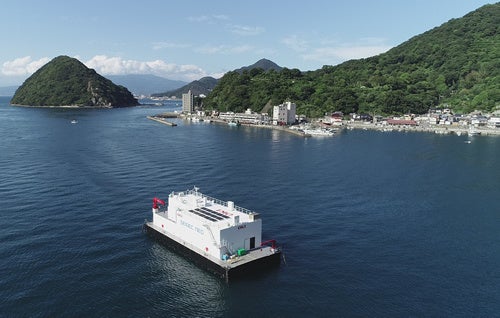
OKI 所有的固定式測量船「SEATEC NEO」
OKI 與東洋工程株式會社(代表取締役社長 細井榮治,以下簡稱 TOYO)、新日鐵工程株式會社(代表取締役社長 石倭行人,以下簡稱 NSE)、FullDepth 株式會社(代表取締役社長 吉賀智司,以下簡稱 FullDepth)共同實施了利用 AUV(註 1)等進行離岸風力發電設備水下檢測作業無人化之實證試驗。
在位於靜岡縣沼津市、OKI 所擁有的日本唯一固定式測量船「SEATEC NEO」上,實施了利用 AUV 等的實證試驗,整理了有助於降低離岸風力發電設備水下檢測作業風險及實現無人化的檢測系統未來願景,並提出了社會實裝的路線圖。本次實證試驗是獲得內閣府綜合海洋政策推進事務局的「自律型無人探測機(AUV)利用實證事業」採用後,由四家公司共同實施的。
實證試驗概要
2025 年 10 月,在 OKI 所擁有的固定式測量船「SEATEC NEO」上,實施了結合 AUV、ROV(註 3)、ASV(註 4)的實證試驗。對觀測對象(註 5)的水下部分進行了影像及聲納(音波探測)檢測,並提取了實現離岸風力發電設備水下檢測無人化、自律化所需之技術及運用課題(例如:海床部分檢測方法、運用體制等)。有關本實證試驗的背景、試驗情況及詳細結果,請參閱 PR 影片(©東洋工程)。
提出 AUV 社會實裝路線圖
基於本次實證試驗中提取的課題,為提高離岸風力發電設備水下部分檢測的效率、降低成本,我們探討了 2030 年及 2040 年的檢測系統未來願景。我們整理了實現廣泛區域檢測作業自律化、無人化所需的 AUV 與 ASV 相結合的系統構成等海洋機器人角色分擔與最佳配置,以及為早期社會實裝所需的技術開發、驗證及長期實裝試驗等里程碑,並提出了至 2030 年的路線圖。
預計 2040 年利用 AUV 等海洋機器人進行檢測系統的未來願景(插圖:©東洋工程)
常見問題
What is SEATEC NEO?
SEATEC NEO is OKI's owned fixed measurement barge, which is the only one of its kind in Japan. It serves as a demonstration field for advanced maritime technology.
What is the main goal of this demonstration test?
The main goal is to support the unmanned operation of underwater inspection work for offshore wind power generation facilities by utilizing technologies like AUVs, aiming to reduce risks and improve efficiency.
Which companies are collaborating on this project?
The project is a joint effort by OKI, Toyo Engineering Corporation (TOYO), NIPPON STEEL ENGINEERING CO., LTD. (NSE), and FullDepth Inc.
What technologies were used in the demonstration test?
The demonstration test combined the use of Autonomous Underwater Vehicles (AUVs), Remotely Operated Vehicles (ROVs), and Autonomous Surface Vehicles (ASVs).
What is the proposed roadmap for AUV social implementation?
A roadmap has been proposed for the social implementation of AUVs, outlining future inspection system visions for 2030 and 2040, including system configurations, role allocation of marine robotics, and milestones for technological development and testing, aiming for early social implementation by 2030.