【新潟醫療福祉大學】AED使用時,衣服「剪開」或「掀起」造成電擊執行有「24秒差異」-研究模擬一般民眾使用AED的情境
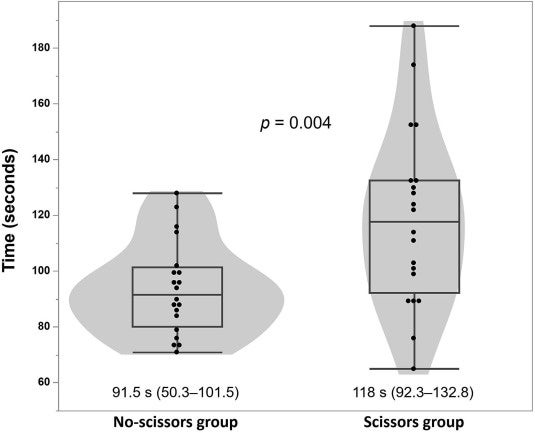
研究發現,使用AED時,掀起衣服比剪開衣服能快24秒完成去顫。
📋 文章處理履歷
- 📰 發表: 2026年3月30日 20:00
- 🔍 收集: 2026年3月30日 22:56(發表後2小時56分鐘)
- 🤖 AI分析完成: 2026年4月16日 06:37(收集後391小時41分鐘)
新潟醫療福祉大學救急救命學科副教授大松健太郎、前講師外山元、教授竹井豐,以及四年級學生松山嶺真、神谷寧々佳、室元次郎、常本純冴,還有研究生堀英治等人的研究團隊,進行了一項隨機分組的模擬研究,情境設定為一般民眾使用AED(自動體外心臟去顫器)。他們探討了處理衣物的方式對執行去顫(電擊)時間的影響。結果顯示,處理衣物的方式確實會造成執行去顫時間的差異。
本研究成果已於2026年3月13日刊登於歐洲復甦學會的國際期刊「Resuscitation Plus」。
■關於研究
【研究概要】
心跳停止的存活率,很大程度上取決於快速的心肺復甦術和早期去顫。為了有效去顫,將AED貼片貼在正確的位置至關重要,這需要露出胸部。當衣物妨礙貼片貼附時,建議移除衣物。
然而,儘管AED通常附有剪刀,但對於一般民眾是否能妥善使用剪刀移除衣物並迅速執行去顫,目前仍缺乏充分的了解。
本研究以40名未接受過醫護人員級別復甦教育的大學生為對象,進行了模擬研究,情境設定為一般民眾遭遇心跳停止的情況。參與者被隨機分為兩組:
• 使用剪刀剪開衣物的方法
• 不使用剪刀,透過掀起衣物等方式露出胸部的方法
結果顯示,從啟動AED到執行去顫的時間,使用剪刀的組別中位數為118秒,未使用剪刀的組別為91.5秒,統計學估計約有24秒的延遲(p=0.004)。

另一方面,兩組在AED貼片貼附位置的準確性方面,未發現顯著差異。此外,整體而言,貼片貼附的準確率並不一定很高,顯示一般民眾使用AED時,貼附位置出錯的可能性是存在的。
本研究是一項模擬研究,情境設定為一般民眾單獨使用AED的情況,並非評估醫護人員在急救現場的處置。因此,本研究並未否定受過訓練的醫護人員等需要剪開衣物以露出胸部的必要性。
【研究者評論】
◆ 救急救命學科 副教授 大松健太郎
AED本身只要遵循語音指示操作並不困難,但對於未受過訓練的人來說,移除衣物可能是一項非常困難的任務。AED急救包中通常會附有剪刀,但一般民眾操作不熟悉的器具可能會導致處置延遲。我們需要考慮在AED的教育中,如何教授衣物的處理方式以及剪刀等器具的使用方法。
【原論文資訊】
Kentaro Omatsu, Reishin Matsuyama, Neneka Kamitani, Genjiro Muro, Azusa Tsunemoto, Gen Toyama, Eiji Hori, Yutaka Takei. Effect of patient clothing removal with scissors versus lifting on the time to defibrillation by lay rescuers using an AED: A randomized simulation study. Resuscitation Plus. 2026;26:100410.
常見問題
What was the main finding of the research regarding AED use and clothing?
The main finding was that lifting clothing to expose the chest when using an AED was approximately 24 seconds faster in delivering an electric shock compared to cutting the clothing with scissors.
Who participated in the study?
The study involved 40 university students who had not received professional resuscitation training.
Does this research suggest that healthcare professionals should not cut clothing?
No, the study specifically simulated scenarios for the general public. It does not negate the need for trained healthcare professionals to cut clothing if necessary for effective treatment.
Was there a difference in the accuracy of AED pad placement between the two groups?
No significant difference was found in the accuracy of AED pad placement between the group that cut clothing and the group that lifted it.
What is the implication of this research for AED education?
The research suggests that AED education for the general public should consider how to efficiently handle clothing, including the use of scissors, to minimize delays in treatment.
Where were the research findings published?
The findings were published in the international journal 'Resuscitation Plus' by the European Resuscitation Council.