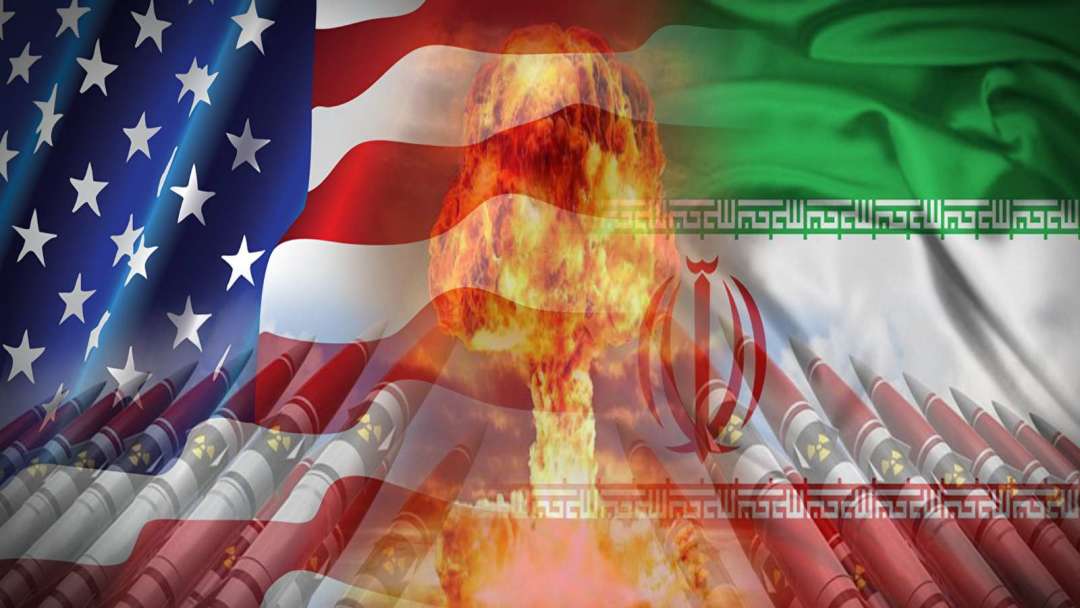
Military tensions between the United States and Iran continue to escalate. On Friday (17th), the U.S. military completed its seventh consecutive night of airstrikes on Iranian targets, expanding the scope of attacks from southern coastal regions and areas around the Strait of Hormuz to multiple military facilities deep inside Iran’s territory. In response, Iran launched missile and drone attacks on U.S.-linked facilities in Kuwait, Bahrain, and Jordan, marking a cycle of retaliatory strikes that has worsened the Middle East situation and heightened global concerns over energy supply and maritime security.
U.S. Central Command (CENTCOM) stated that this round of operations involved fighter jets, drones, and naval vessels targeting Iranian surveillance installations, military logistics bases, underground weapons storage facilities, and maritime military capabilities. The goal is to further weaken Iran’s military threat to the Strait of Hormuz and surrounding waters. Over 50,000 U.S. troops remain deployed across the Middle East, and naval blockades on Iranian ports continue.
According to multiple international media reports, explosions were reported in southern Iranian cities including Jask, Sirik, Bandar Abbas, Qeshm Island, Bushehr, Ahvaz, and central Yazd, indicating that U.S. strikes have expanded from coastal areas into Iran’s interior.
Iranian officials confirmed that two bridges and a tunnel in Hormozgan Province were damaged in airstrikes, resulting in at least three deaths and eight injuries. The main road between Bandar Abbas and Rudan suffered severe damage, prompting authorities to urge citizens to avoid non-essential travel. Additionally, a maritime navigation tower on Larak Island may have been hit by a missile, and satellite imagery shows new signs of damage within the Bushehr nuclear power plant complex, though it remains unclear whether the plant’s operations have been affected.
In retaliation, Iran launched missiles and drones at U.S.-linked facilities in Kuwait, Bahrain, and Jordan. The Iranian military claimed targets included ammunition depots and command centers at Camp Udairi and Ali Al Salem Air Base in Kuwait, and fuel facilities and military aircraft at Muwaffaq Salti Air Base in Jordan. Kuwait’s government reported that its air defense systems successfully intercepted two waves of incoming missiles and drones. Bahrain experienced repeated air raid alerts.
The Islamic Revolutionary Guard Corps (IRGC) claimed to have destroyed a U.S. drone base in Bahrain, shot down an MQ-9 drone, and attacked a U.S. naval vessel in the northern Indian Ocean. However, U.S. Central Command denied these claims and dismissed Iran’s assertion that two oil tankers exploded in a minefield within the Strait of Hormuz. Much of the battlefield information remains unverified.
The escalating conflict has severely disrupted global shipping. According to MarineTraffic data, only eight vessels transited the Strait of Hormuz on the 17th, down from 15 the previous day—the lowest level in three weeks. A Reuters tally even showed only three cargo ships successfully passed through, the lowest since May. Shipping data indicates most vessels are now using the northern route controlled by Iran, with almost no ships using the southern route near Oman. For the second consecutive day, no Very Large Crude Carriers (VLCCs) or liquefied natural gas (LNG) tankers passed through the strait.
Iran’s military also claimed to have intercepted four oil tankers escorted by U.S. forces. The U.S. stated that in the first three days of the naval blockade, it had rerouted four commercial vessels, forced one to halt, and boarded another. As military actions intensify, shipping companies are growing increasingly cautious about transiting the Strait of Hormuz, with some operators even refusing U.S. military escort offers, further increasing regional energy supply risks.
Diplomatically, France and Germany have again urged Iran to cease military escalation and return to negotiations, offering support to restore shipping through the Strait of Hormuz. However, senior IRGC commander Mohsen Rezaei stated that the prior understanding between the U.S. and Iran has been “effectively nullified” due to the resumption of U.S. airstrikes and naval blockades, indicating a diminishing likelihood of a near-term return to talks.
FACT BOX
- Source: PR Times
- Category: News