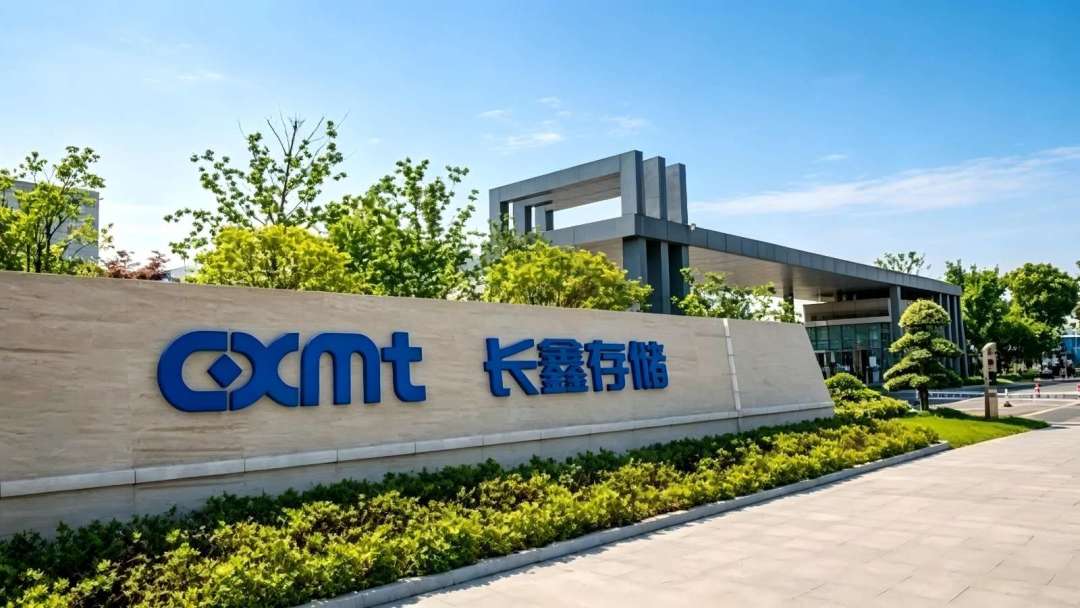
China's leading domestic DRAM manufacturer, ChangXin Memory Technologies (CXMT), held an online investor Q&A session on Wednesday, the 15th, for its initial public offering (IPO) and listing on the STAR Market, responding one by one to questions about whether it would initiate follow-on financing after listing and how long the memory chip shortage would persist.
According to reports from Zhongxin Jingwei, during the IPO online roadshow, CXMT's senior management answered 251 investor questions within three hours.
The duration of the memory chip shortage was a major concern for investors. In response, CXMT Chairman Zhu Yiming stated that memory chips are significantly influenced by market supply and demand, and market conditions change rapidly, so investors should rely on publicly disclosed market information.
Regarding questions about capacity and product development, Zhu said the company will accelerate capacity construction, enrich its product portfolio, and continuously expand production capacity to meet downstream market demand. Based on shipment volume and sales revenue, CXMT ranks first in China and fourth globally among DRAM manufacturers.
On whether the company will launch follow-on financing after listing, CXMT Vice President and Board Secretary Yuan Yuan stated that the company will reasonably schedule its financing pace based on its funding needs, industry development, and regulatory requirements.
Caitong Securities, in a report issued in May this year, pointed out that CXMT has a relatively dispersed equity structure with no single controlling shareholder or actual controller. If major shareholders reduce their stakes in the future or internal governance coordination falters, it could affect strategic decision-making efficiency and operational stability.
How will the company ensure the stability of its no-actual-controller structure after listing? In response to investor concerns, Yuan Yuan explained that, first, after listing, the equity structure will become even more dispersed, with none of the top five shareholders holding more than 30% of shares, and no single shareholder will hold more than 50%.
Second, CXMT has established a modern corporate governance structure consisting of the shareholders' meeting, board of directors, various specialized committees, and management team. The board comprises 11 members, including 4 independent directors. Among the 7 non-independent directors, the actual nominating parties are: Qinghui Changxin (1 seat), Changxin Integration (1 seat), Big Fund Phase II (2 seats), Hefei Jixin (1 seat), Anhui Provincial Investment (1 seat), and employee director (1 seat).
Therefore, no single shareholder can determine the appointment of a majority of the board members through voting rights, and CXMT is expected to maintain a relatively dispersed board nomination structure after listing. As a result, CXMT will continue to maintain a no-actual-controller ownership structure after listing.
FACT BOX
- Source: PR Times
- Category: Funding