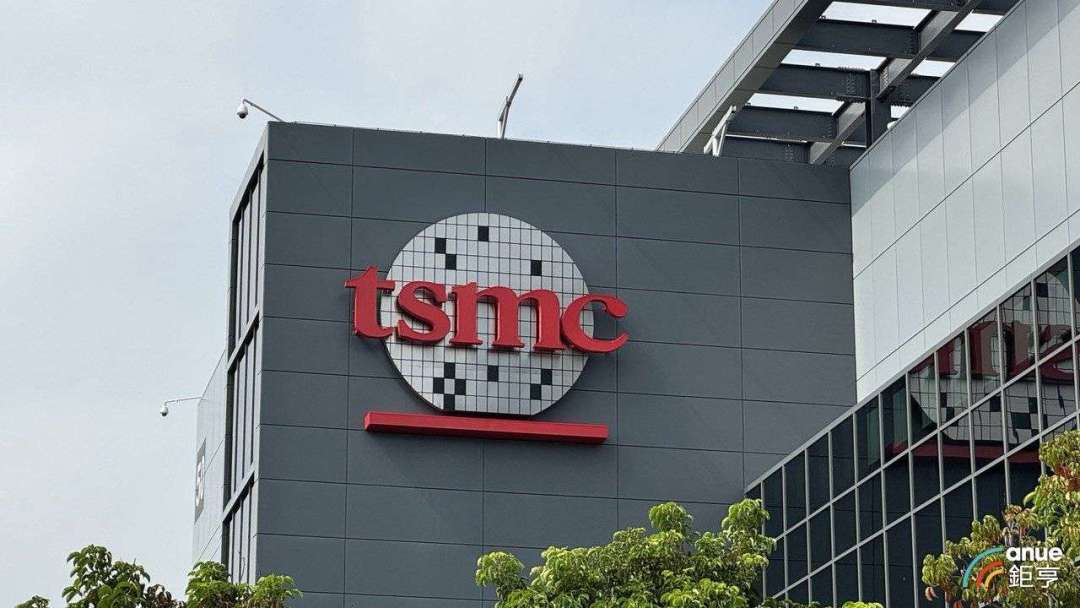
TSMC (2330-TW)(TSM-US) held its earnings conference today (16th), reporting a record-high Q2 EPS of NT$27.25. The company earned nearly five times its share capital in the first half of the year. Third-quarter U.S. dollar revenue is projected to increase by a median of 12%, and capital expenditure has been significantly raised to $60–64 billion. Additionally, TSMC announced an extra $100 billion investment in the U.S., bringing its total U.S. investment to $265 billion. Below are the nine key highlights from the earnings call, compiled by "Bloomberg Terminal".
Q2 Results Exceed Forecasts, EPS Reaches NT$27.25
TSMC’s Q2 gross margin and operating margin both surpassed financial guidance, reaching 67.7% and 60.3% respectively—historical highs. Post-tax net profit was approximately NT$706.56 billion, with earnings per share (EPS) at NT$27.25, also a record. Cumulative EPS for the first half reached NT$49.32.
Q3 U.S. Dollar Revenue Up 12% QoQ, Full-Year Growth Outlook Raised to Over 40%
TSMC forecasts Q3 2026 revenue between $44.6 billion and $45.8 billion. Using the midpoint of $45.2 billion, this represents a 12% sequential increase and a 37% year-over-year growth. Gross margin is expected at 65%–67%, and operating margin between 56%–58%. The company also raised its full-year 2026 outlook, expecting U.S. dollar revenue growth to be “slightly above 40%,” a significant increase from the previous “over 30%.”
Capital Expenditure Raised to $60–64 Billion
TSMC has increased its 2026 capital expenditure to $60–64 billion, up nearly $10 billion from its initial plan. The company cited two main reasons: continued growth in customer demand and rising equipment and construction costs due to inflation. TSMC emphasized that capital spending over the next three years will be “significantly higher” than in the past three years.
AI Demand Expected to Remain Strong Through 2029–2030
CEO C.C. Wei stated that AI demand trends are very stable, with momentum likely to continue through 2029 and 2030. A new global “AI industry” is forming, which will impact robotics and various sectors. Semiconductor chips are the fundamental foundation of this AI industry, and Wei emphasized that the gap between demand and supply for advanced processes is “truly large.”
Additional $100 Billion Investment in the U.S., Total Investment Reaches $265 Billion
TSMC announced an additional $100 billion investment in the U.S., planning to build approximately four more fabs. The investment covers front-end wafer manufacturing and back-end advanced packaging, effectively raising its total U.S. investment to $265 billion. The actual timing of fab construction and capacity ramp-up will be adjusted based on market and customer demand.
Agentic AI Revives Importance of CPUs
TSMC noted that the rise of Agentic AI is not only boosting demand for GPUs and AI accelerators but also renewing the importance of CPUs in AI data centers. Whether using x86, Arm, or RISC-V architectures, nearly all relevant CPU vendors are TSMC customers. CPUs, GPUs, custom ASICs, and various XPUs are all manufactured using TSMC’s advanced processes. TSMC is currently coordinating limited production capacity across CPUs, GPUs, and various XPUs.
2nm Begins Contributing to Revenue, Expansion Scale Increased
TSMC’s 2nm process already contributed 3% of wafer revenue in Q2, officially entering the volume production ramp-up phase. Rapid 2nm ramp-up is expected to dilute gross margin by approximately 3–4 percentage points in the second half of 2026, primarily due to initial depreciation, yield, and capacity utilization. The previously disclosed 2nm family capacity expansion plan has now been further enlarged. C.C. Wei stated that compared to the plan announced at the technology forum, “current capacity is even larger.”
A14 Process Scheduled for 2028 Volume Production
TSMC’s A14 process development is progressing smoothly, with risk production expected in 2027 and volume production in 2028. Smartphone, HPC, and AI customers have shown strong interest, and design-in activities are even ahead of schedule.
Advanced Packaging Still Severely Supply-Constrained
TSMC stated that advanced packaging capacity remains extremely tight, with a significant gap between supply and demand. Therefore, the company welcomes alternative packaging solutions such as Intel’s EMIB-T, believing they enhance customer supply flexibility and ensure TSMC-produced wafers are packaged and shipped on time without delays due to backend capacity shortages. C.C. Wei emphasized that front-end wafer manufacturing and back-end packaging are two distinct businesses, and competitors securing packaging orders do not automatically gain access to front-end wafer foundry orders.
FACT BOX
- Source: PR Times
- Category: Event