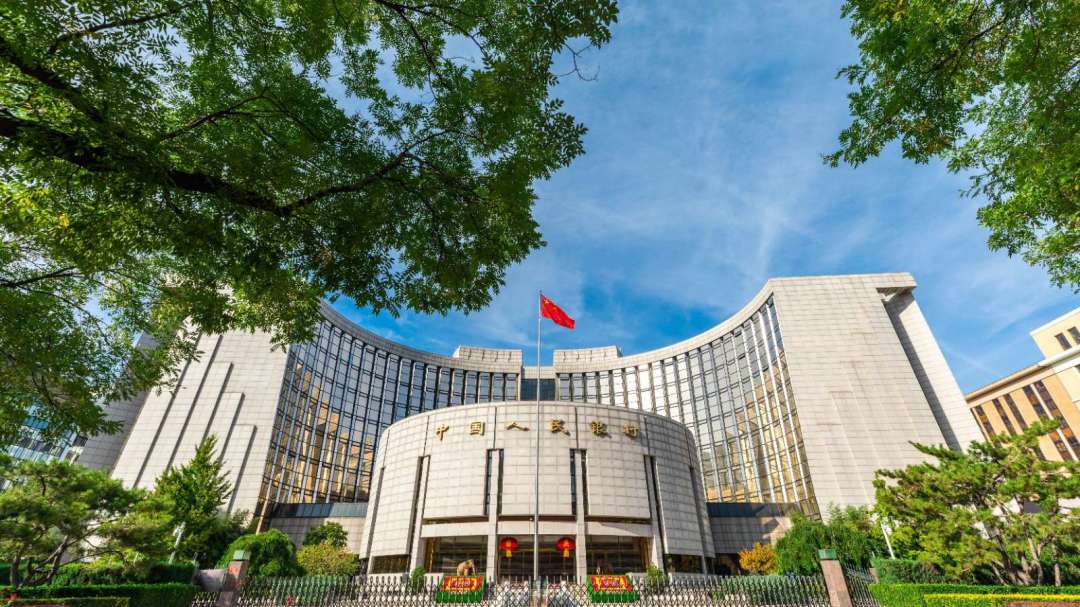
Financial data for the first half of 2026 has been released. On Wednesday, July 15, the People's Bank of China (PBOC) published its '2026 First-Half Financial Statistics Report.' As of the end of June, the stock of social financing, M2 (broad money), and outstanding RMB loans increased by 7.4%, 8%, and 5.2% year-on-year, respectively.
Zou Lan, spokesperson and deputy governor of the PBOC, stated at a press conference held by the State Council Information Office that 'the effectiveness of monetary policy in supporting the real economy has been relatively evident' based on the first-half financial data. Key highlights include reasonable growth in aggregate financial indicators, historically low levels of overall social financing costs, continued optimization of credit structure, and stable operation of financial markets.
According to Xinhua News Agency, regarding monetary policy for the second half of the year, Zou Lan said the PBOC will 'enhance the forward-looking nature, flexibility, and precision of monetary policy, strengthen counter-cyclical and cross-cycle adjustments in response to domestic and international economic and financial conditions and financial market dynamics, and create a conducive monetary and financial environment for stable economic growth, high-quality development, and stable financial market operations.'
On the quantitative front, he noted that 'the PBOC has a rich toolkit,' including reserve requirement ratios, reverse repos, Medium-term Lending Facility (MLF), and government bond trading. Reserve requirement ratio cuts primarily inject long-term liquidity, while reverse repos and MLF provide short- to medium-term liquidity.
'The PBOC will appropriately select and combine these tools according to liquidity management needs, maintain ample liquidity, and guide the growth of social financing and money supply to align with expected targets for economic growth and price levels,' Zou Lan said.
On interest rates, he stated that 'going forward, we will appropriately guide and adjust interest rate levels according to macroeconomic performance, inflation trends, and macro-regulatory needs, promoting low overall social financing costs.'
Meanwhile, the PBOC will continue to leverage structural monetary policy tools and other financial policies, focusing on financial supply-side structural reforms to continuously improve the quality and efficiency of financial services for the real economy and strengthen credit structure.
FACT BOX
- Source: PR Times
- Category: News