Yellow Pea Gluten-Free Foods May Reduce "Abdominal Discomfort Caused by Wheat"
A clinical trial conducted by ZENB JAPAN and Mizkan Holdings Central Research Institute found that a 4-week gluten-reduced diet incorporating yellow pea-based foods significantly improved abdominal symptoms like bloating and pain, and enhanced the quality of life in individuals experiencing discomfort from frequent wheat intake. The study also observed positive changes in gut microbiota. These findings suggest that yellow pea gluten-free foods offer a scientific basis for a new dietary choice to support health for those with non-celiac gluten sensitivity, by improving gut environment without disrupting gut microbiota often seen in traditional gluten-free diets.
📋 Article Processing Timeline
- 📰 Published: April 8, 2026 at 19:00
- 🔍 Collected: April 8, 2026 at 10:31
- 🤖 AI Analyzed: April 18, 2026 at 13:59 (243h 27m after Collected)
ZENB JAPAN Co., Ltd. (Handa City, Aichi Prefecture, hereinafter ZENB) and Mizkan Holdings Co., Ltd. Central Research Institute (Handa City, Aichi Prefecture, hereinafter Mizkan Central Research Institute) are focusing on research into the functionality of foods to realize "the health of people, society, and the earth."
In this study, we focused on the relationship between wheat and abdominal discomfort, and investigated the functionality of gluten-free foods made primarily from yellow peas. Specifically, we conducted a clinical trial using pasta, bread, and snacks (hereinafter "yellow pea foods") made entirely from yellow peas, including their thin skins. As a result, by adopting a gluten-reduced lifestyle incorporating yellow pea foods, abdominal symptoms such as bloating, abdominal pain, and a feeling of incomplete evacuation significantly improved, and an improvement in quality of life (QOL) was observed. Furthermore, an improvement in the gut microbiota was also confirmed.
The results of this research were supervised by Professor Akiko Yagami, M.D., who has extensive research achievements in the field of allergology and serves as a director of the Japanese Society of Allergology, and is also a professor at the Department of Advanced Allergy and Immunology Collaborative Research, School of Medicine, Fujita Health University, and Director of the Comprehensive Allergy Center, Fujita Health University. The findings were presented at the 56th Annual Meeting of the Japanese Society of Gastroenterology and Absorption (October 18, 2025, Kyoto City, Kyoto Prefecture).
Research Background and Objectives
Wheat processed foods such as bread and pasta are consumed daily by many people due to factors such as "convenience" and "deliciousness." On the other hand, there is a condition called non-celiac gluten sensitivity (NCGS), where digestive symptoms such as abdominal bloating, abdominal pain, and abnormal bowel movements appear due to wheat intake. It is believed that a certain number of people experience digestive symptoms but have not been diagnosed by a hospital and consume wheat frequently.
It is known that these symptoms improve with a gluten-free diet, but it has also been pointed out that such diets tend to lack dietary fiber and may disrupt the gut microbiota *1. We have previously reported that yellow pea foods, which are rich in dietary fiber, improve the gut microbiota *2, suggesting that incorporating yellow pea foods as part of a gluten-free diet may alleviate abdominal symptoms without disrupting the gut microbiota.
Therefore, in this study, we targeted healthy adults aged 18-64 who frequently consumed wheat daily despite experiencing abdominal symptoms. We conducted a 4-week gluten-reduced diet using yellow pea foods and evaluated their effects on abdominal symptoms, quality of life (QOL), and gut microbiota.
*1 Bonder MJ et al. Genome Med. 8(1):45, 2016
*2 Yamada M et al. Food Sci Nutr. 11(8):4572-4582, 2023
Research Overview
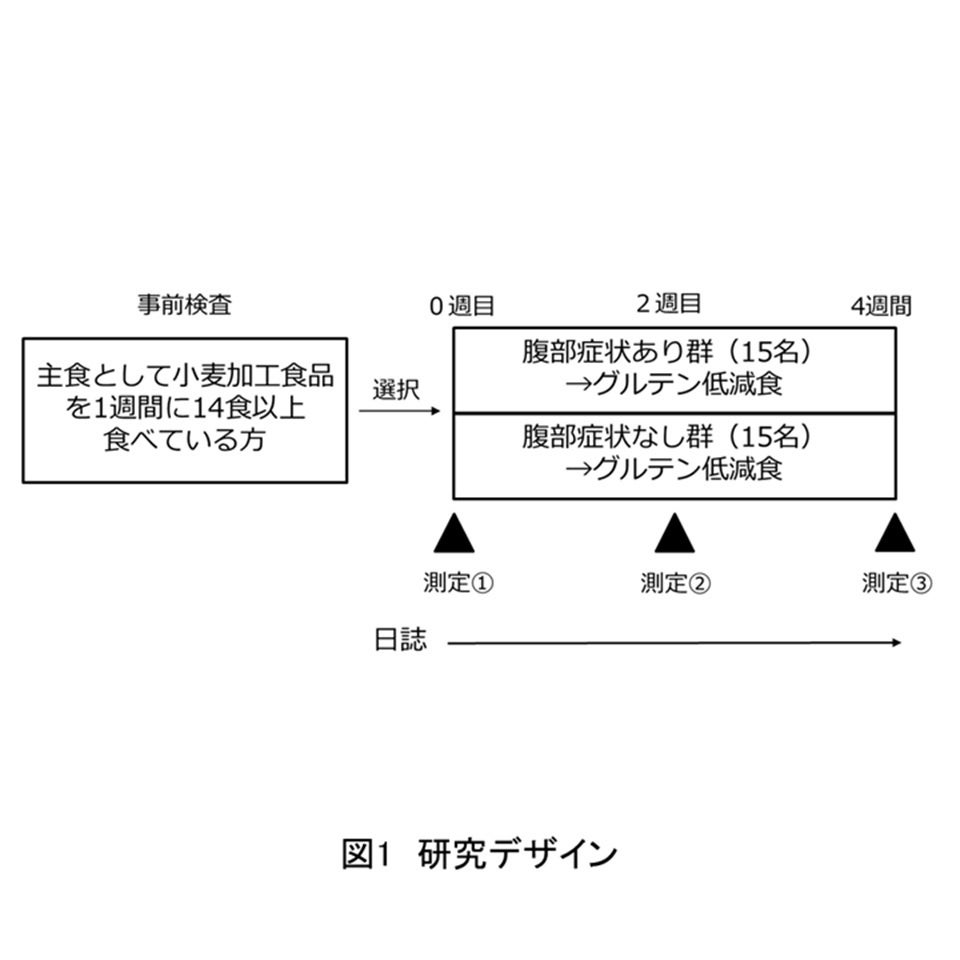
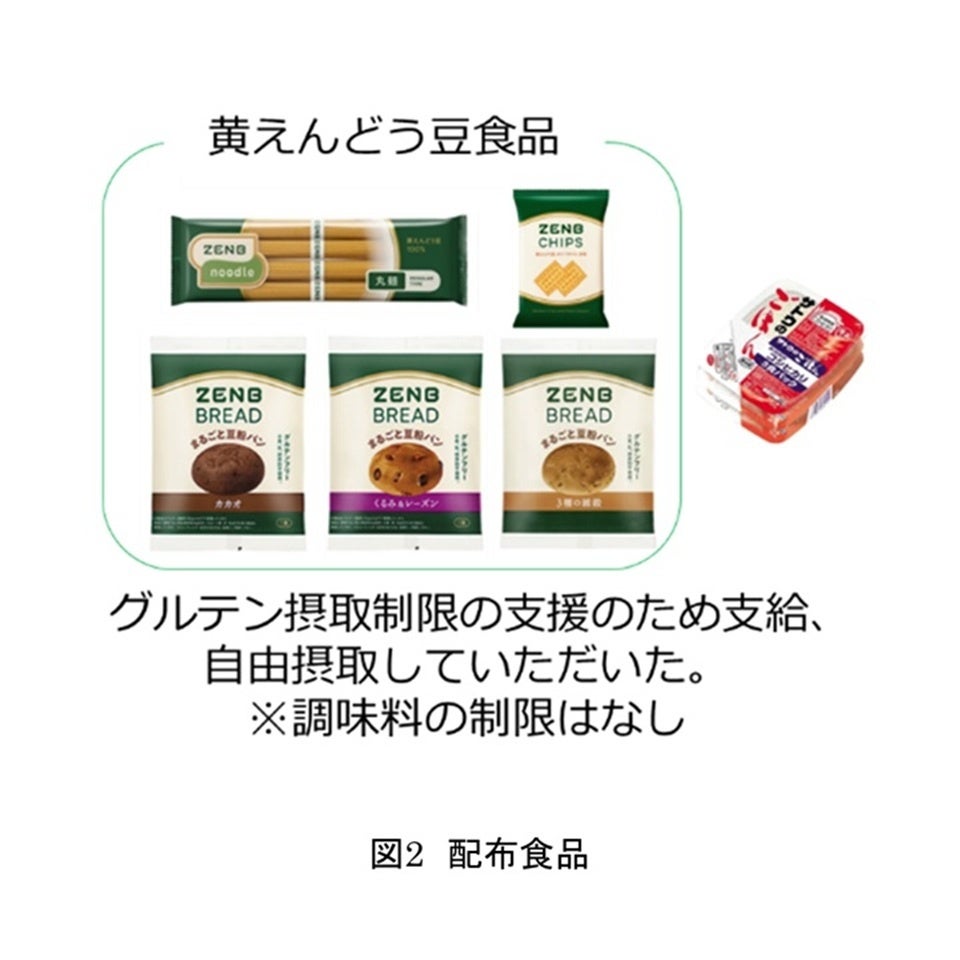
Study Design and Subjects (Figures 1, 2)
This study was an open-label, parallel-group comparative study conducted over 4 weeks with 30 healthy adult subjects aged 18-64 who consumed wheat processed foods as their staple food at least 14 meals per week (average of 2 or more meals per day). Subjects were equally divided into a healthy group without abdominal symptoms (no abdominal symptoms group) and a group with subjective symptoms such as abdominal pain and bloating (abdominal symptoms group) based on the presence or absence of abdominal symptoms. Both groups were asked to avoid foods containing wheat for 4 weeks. To support this, gluten-free foods (rice, pasta, bread, and crackers made primarily from yellow peas) were provided and consumed freely. Furthermore, to maintain a realistic dietary lifestyle, no restrictions were placed on seasonings.
Evaluation Items
As subjective indicators, the severity of abdominal symptoms was evaluated using a numerical rating scale based on The Salerno Experts’ Criteria *3. QOL was measured using the globally widely used questionnaire "SF-36 v2". As objective indicators, quantitative analysis of blood cytokine levels (an indicator of inflammatory state in the body) and gut microbiota analysis by 16S rRNA gene sequencing were performed. Participants recorded their daily dietary intake in a diary.
*3 A questionnaire that asks about the severity of NCGS symptoms on an 11-point scale from 0-10. It consists of 9 abdominal symptoms and 4 extra-abdominal symptoms. Source: Catassi C et al. Nutrients. 7(6):4966-4977, 2015
Summary of Research Results
Abdominal Symptoms
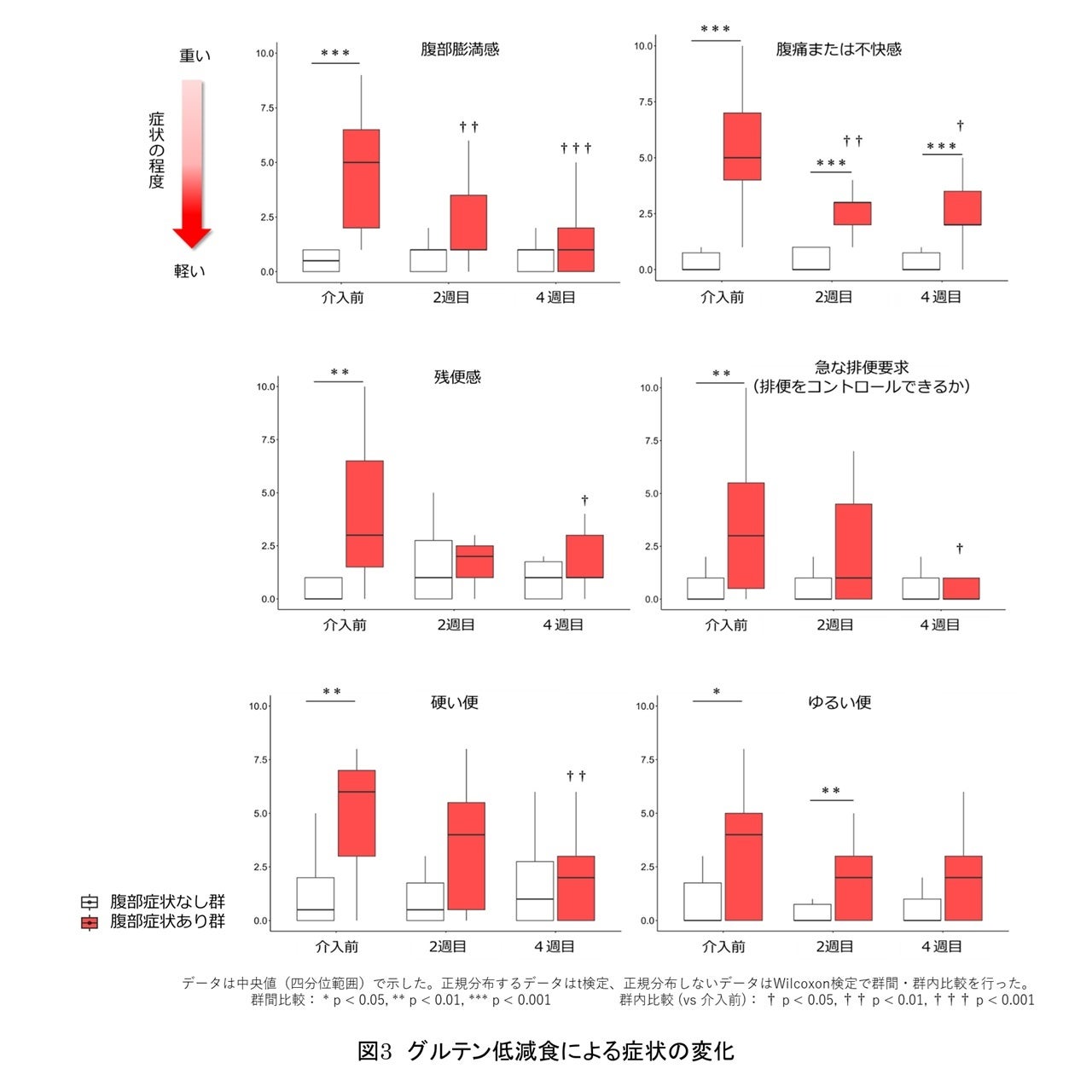
After 4 weeks of gluten reduction, the group with abdominal symptoms showed significant improvement in 5 items: "abdominal bloating," "abdominal pain or discomfort," "feeling of incomplete evacuation," "urgent need to defecate," and "hard stools." There was also a tendency for improvement in "loose stools" (Figure 3).
QOL
Before gluten reduction, the abdominal symptoms group showed a significantly lower QOL in four items compared to the no abdominal symptoms group: "mental component," "general health perception," "social functioning," and "mental health." However, after gluten reduction, it was confirmed that these differences disappeared.
Gut Bacteria
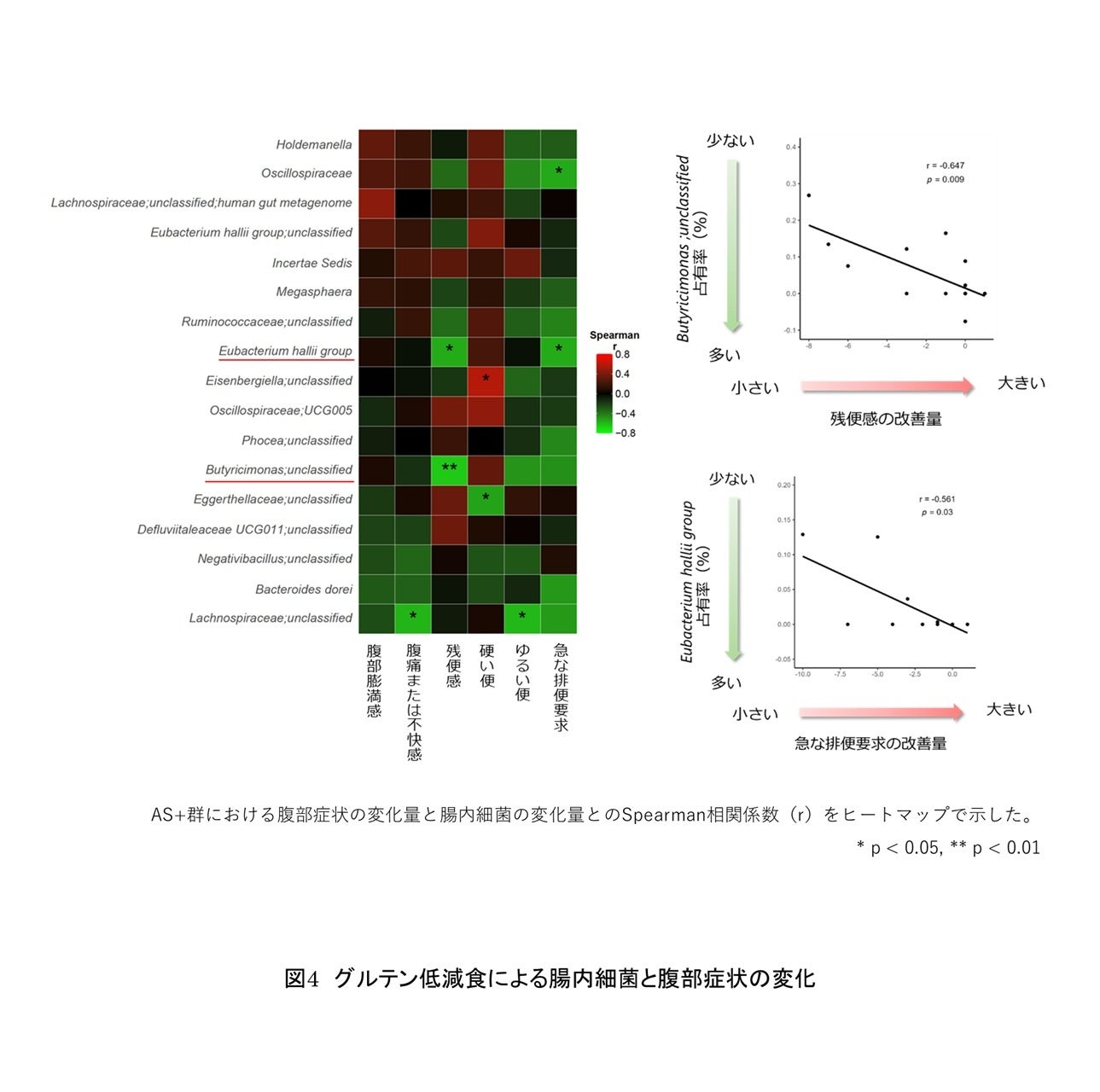
Analysis of the gut microbiota of individuals with abdominal symptoms identified 6 types of intestinal bacteria associated with the degree of symptom improvement. These included beneficial bacteria known to regulate gut health, such as "Butyricimonas unclassified" and "Eubacterium hallii group," suggesting that improvement in the gut environment contributed to the improvement of abdominal symptoms and QOL (Figure 4).
From these results, it was suggested that a 4-week gluten-reduced diet incorporating yellow pea foods improves the gut environment, leading to improved abdominal symptoms and QOL.
Professor Akiko Yagami's Comment
In individuals who frequently consume wheat daily and experience abdominal discomfort, avoiding wheat and replacing it with yellow pea-derived foods led to improvements in their physical condition and abdominal symptoms. Alongside this, changes in cytokines related to inflammation and immunity, and in the number of intestinal bacteria, were also observed, objectively demonstrating internal bodily changes.
This research scientifically presents a new dietary option that supports health by re-evaluating daily staple food choices.

<Professor Akiko Yagami Profile>
Professor, Department of Comprehensive Allergy, Fujita Health University Bantane Hospital
Professor, Department of Advanced Allergy and Immunology Collaborative Research, School of Medicine, Fujita Health University
Director, Comprehensive Allergy Center, Fujita Health University
In April 2021, she was appointed Director of the Comprehensive Allergy Center at Fujita Health University, one of Japan's leading specialized medical centers that collaborates with dermatology, pediatrics, and respiratory medicine to provide comprehensive treatment for various allergy symptoms in children and adults. As a researcher in comprehensive allergology, she has published numerous research findings domestically and internationally, contributing to both the elucidation of allergic disease pathophysiology and clinical application. In addition to publishing papers in academic journals, she has garnered attention for her medical research and public education activities through appearances on TV programs such as NHK General's "Tokoro-san! Jiken desu yo" and lectures at allergy seminars for medical professionals.
Presentation Details
The 56th Annual Meeting of the Japanese Society of Gastroenterology and Absorption
Presentation Title: Effect of Reducing Gluten Intake on Alleviating Abdominal Symptoms in Individuals Who Frequently Consume Wheat Processed Foods
Presenters: Hitoshi Shimbo 1, Mamoru Ito 1, Yasuharu Yoshimoto 1, Mikiya Kishi 1, Akiko Yagami 2
(1. Mizkan Holdings Co., Ltd. Central Research Institute, 2. Department of Comprehensive Allergy, School of Medicine, Fujita Health University)
What is ZENB

ZENB proposes a well-being lifestyle that contributes to the health of people, society, and the earth through delicious and healthy food made from plants such as vegetables and beans, using as much of the whole ingredient as possible. We do not use animal-derived ingredients and, as much as possible, no additives, maximizing the natural deliciousness and nutrition of the ingredients. We sell "ZENB Noodles," "ZENB Bread," and "ZENB Chips" made from yellow peas, which are healthier than wheat and rice and kinder to the earth, as well as "ZENB Curry," "ZENB Soup," and "ZENB Baton" made from whole vegetables, including cores and skins that are usually discarded.
・Official Website: https://zenb.jp
・Instagram: https://www.instagram.com/zenb_japan/
<Contact for this matter>
Inquiry Form: https://support.zenb.jp/hc/ja/requests/new