3 Gold Award-Winning Companies Discuss the Practice of "Worker First" - The Forefront of AI Utilization, Engagement, and Work Style Reform in the HR Field
Miidas Co., Ltd. held the "Worker First Award 2025" ceremony on March 4, 2026, featuring a talk session with three Gold-winning companies. The discussion highlighted how these companies utilize AI to empower employees, leverage engagement surveys to uncover organizational insights, and implement work style reforms focused on individual needs rather than forced efficiency.
🔍 Collected: March 28, 2026 at 21:59 (21h 54m after Published)
🤖 AI Analyzed: April 15, 2026 at 01:42 (411h 43m after Collected)
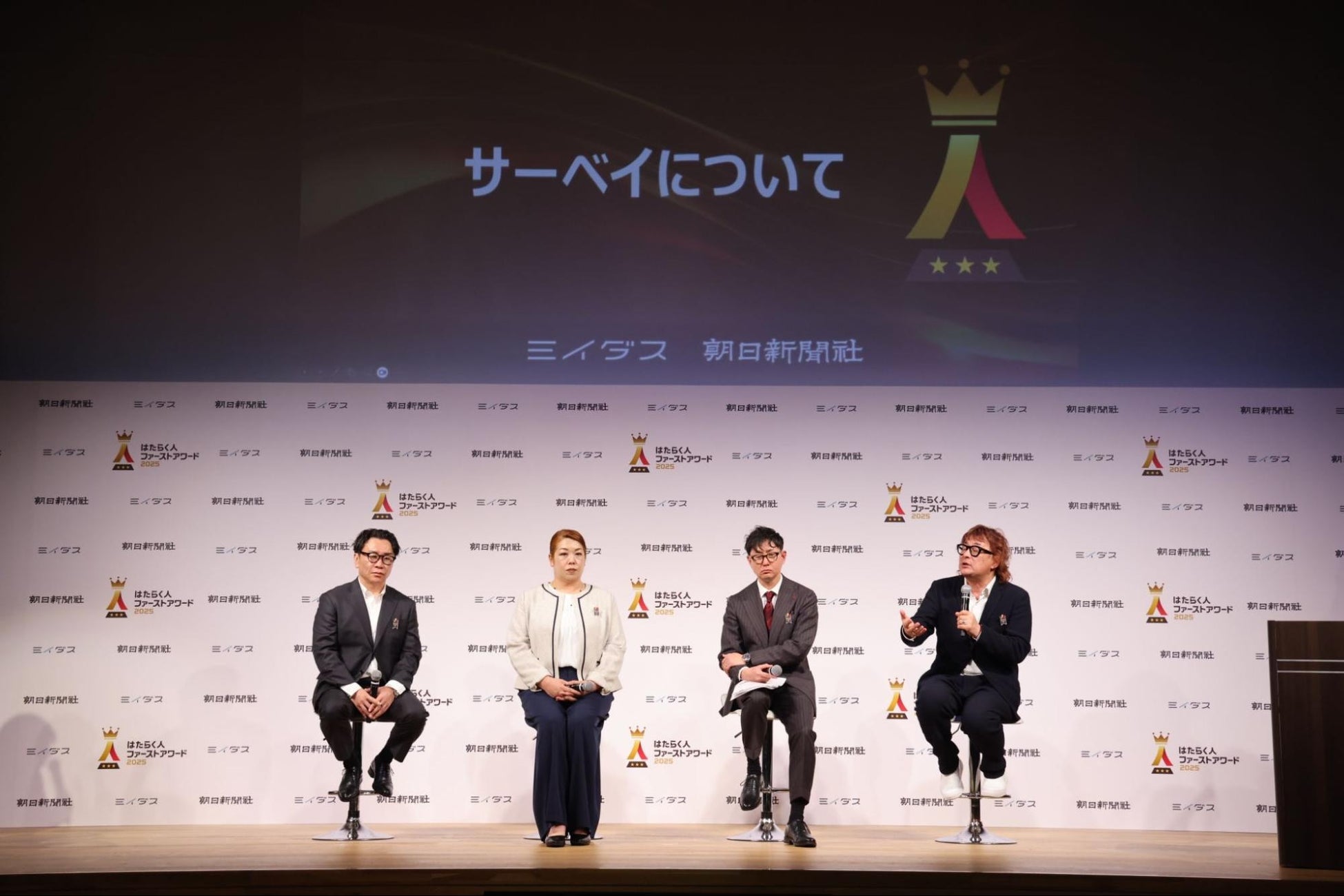
Miidas Co., Ltd. (Headquarters: Shinagawa-ku, Tokyo, President and Representative Director: Kiyoshi Goto, hereinafter "the Company") of the PERSOL Group, which holds the vision "Work, and Smile," held the award ceremony for the "Worker First Award 2025" (hereinafter "this Award Ceremony") co-hosted with The Asahi Shimbun Company (President and CEO: Katsu Tsunoda) on Wednesday, March 4, 2026. In the second part of this award ceremony, Mr. Yohei Tsunemi, Associate Professor at the Organization for Fundamental Education, Chiba University of Commerce and work style critic, was invited as a moderator representing the judges, and a business talk session was held with the three companies that received the highest "Gold" award.
From left: Mr. Toru Minami, Representative Director of Life Design Co., Ltd.; Ms. Rie Saito, Representative Director of Yamato Komuten Co., Ltd.; Mr. Shinya Koga, Representative Director of Keyst Co., Ltd.; Mr. Yohei Tsunemi, Associate Professor at the Organization for Fundamental Education, Chiba University of Commerce and work style critic (Moderator)
● Business Talk Session Overview
In this session, the three Gold award-winning companies spoke about their specific initiatives on themes such as their "Worker First" efforts and recent "AI utilization in the HR field." The award-winning companies span diverse industries such as welfare, construction, and retail (store operation/sales agency), and they introduced initiatives that leverage the characteristics of each industry. In addition to the common mindsets and backgrounds of their challenges, Mr. Tsunemi's insightful comments provided hints and suggestions for organization building.
● Gold Award-Winning Companies: 3 Companies
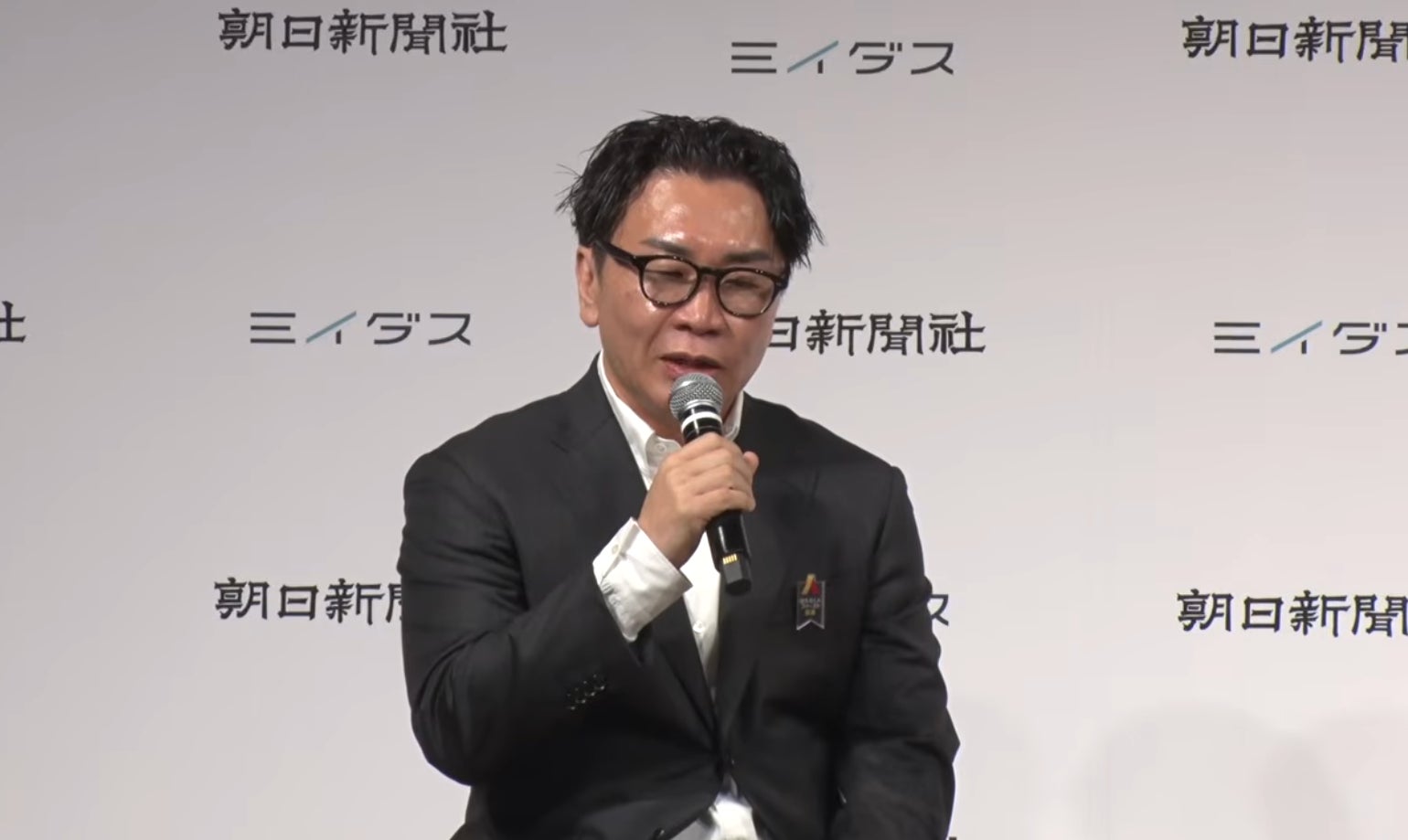
Life Design Co., Ltd. (Ginowan City, Okinawa) Representative Director: Mr. Toru Minami (Industry: Welfare / Nursing Care)
Keyst Co., Ltd. (Gotemba City, Shizuoka) Representative Director: Mr. Shinya Koga (Industry: Retail)
* Hereinafter referred to as Life Design, Yamato Komuten, and Keyst.
● Moderator
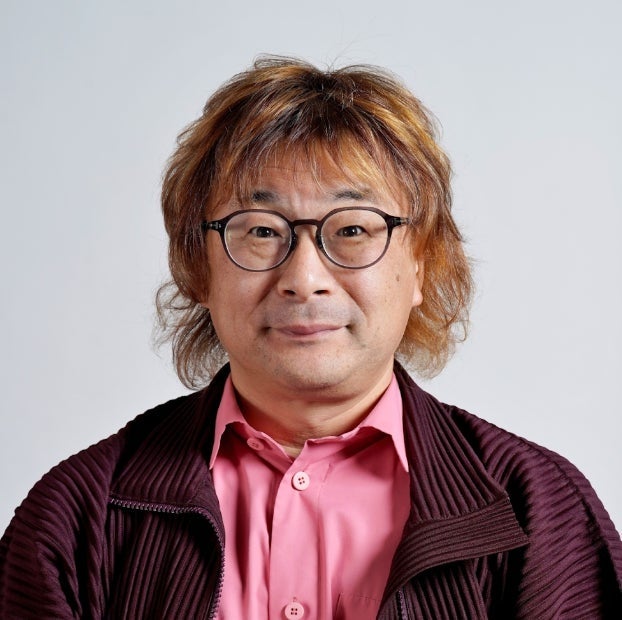
Associate Professor, Organization for Fundamental Education, Chiba University of Commerce Work Style Critic Mr. Yohei Tsunemi
Born in Sapporo, Hokkaido. Graduated from the Faculty of Commerce, Hitotsubashi University, and completed the master's program at the Graduate School of Social Sciences of the same university (Master of Sociology). After working at Recruit, Bandai, venture companies, and as a freelancer, he became a full-time lecturer at Chiba University of Commerce in 2015 and an Associate Professor in 2020. Majoring in labor sociology, he actively writes and lectures on the connection between school and occupation and labor issues. He served as a reference person for the House of Councillors Research Committee on Economy and People's Livelihood in 2017 and the House of Councillors Committee on Economy, Trade and Industry in 2018, and has also served as a member of study groups for the Ministry of Health, Labour and Welfare and the Ministry of Internal Affairs and Communications. He is also actively involved in policy recommendations. He has authored numerous books including "50-dai Joto!" (Bring it on, 50s!), "Bokutachi wa Gundam no GM de aru" (We are the GMs of Gundam), "Nihon no Shukatsu" (Job Hunting in Japan), and "Naze, Zangyo wa Naku Naranai no ka" (Why Doesn't Overtime Disappear?).
● Business Talk Session Topics
Introduction of initiatives by the 3 Gold award-winning companies (For details on each company's initiatives, click here)
Talk Theme 1: AI Utilization in the HR Field
Talk Theme 2: Internal Penetration and Utilization Methods of Engagement Surveys
Talk Theme 3: Improvement of Work Styles
"Unleash the Employees" — The Essence of Worker First
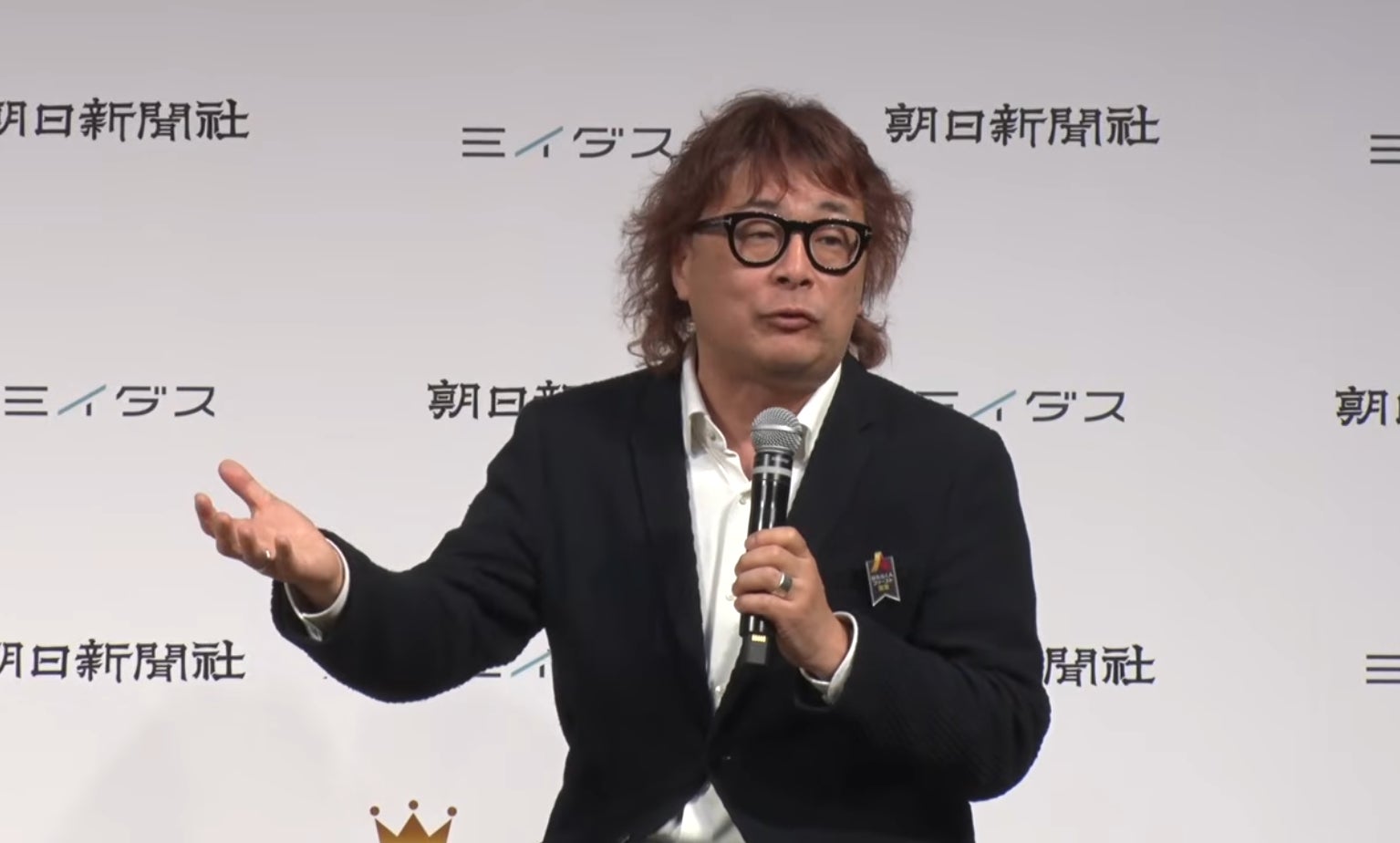
Summarizing each company's efforts, Mr. Tsunemi stated, "It was a presentation filled with love and courage." He cited "Unleash the employees" as a particularly memorable keyword. Management is not about "managing" people, but "unleashing" them so they can demonstrate their true abilities. He mentioned it was highly educational that all three Gold-winning companies shared a common point of realizing site-driven organizational management through thorough "elimination of negatives" and "worker first" approaches.
Associate Professor, Organization for Fundamental Education, Chiba University of Commerce / Work Style Critic, Mr. Yohei Tsunemi (Moderator)
Talk Theme 1: AI Utilization in the HR Field
Representative Director of Life Design Co., Ltd., Mr. Toru Minami
Toward a Means for Humans to Demonstrate Value
AI utilization is not merely about business efficiency, but is being implemented by each company as a "means for people to focus on the work they should inherently face."
At Life Design in the welfare industry, administrative tasks such as record-keeping placed a heavy burden on the front lines and were a cause of overtime.
Based on the idea that what should inherently be focused on is the support for users itself, the introduction of AI tools was promoted at each base. As a result of significantly reducing administrative work, they achieved a reduction in working hours from 8 hours to 7 hours. Furthermore, moving forward, they aim to expand AI utilization to operational areas such as shift management to realize more sustainable work styles.
On the other hand, Yamato Komuten in the construction industry is advancing efforts to accumulate the knowledge and know-how of veteran personnel into AI and utilize it for training young employees. In a workplace with a strong artisan spirit, the transmission of know-how and difficulties in communication were challenges, but by intervening with AI, the hurdle for knowledge sharing is lowered, expanding the possibilities for cross-generational skill succession.
In response to these examples, Mr. Tsunemi stated the following regarding the essence of AI utilization.
AI is not something that takes away people's jobs, but a means for people to concentrate on work that creates more value. Also, by replacing part of the work with AI, he mentioned the possibility that the "tasks" previously undertaken by people will decrease, and work such as decision-making and coordination will become central. As a result, he pointed out that there are cases where new challenges arise, such as "the burden of work has lightened, but the sense of fulfillment has faded."
Furthermore, he touched upon the current situation where excessive demand for AI utilization as an evaluation metric has led to problems such as "using AI itself becoming the goal" and "the trend of forcing AI utilization (AI harassment)." The important thing is not the introduction of AI itself, but redefining what humans should demonstrate value in. As practiced by each company, exploring optimal role-sharing with human-like work by utilizing AI in a form tailored to specific frontline issues is what is required of the HR field going forward.
Talk Theme 2: Internal Penetration and Utilization Methods of Engagement Surveys
Looking at the "Content" rather than the Score
In utilizing engagement surveys, the important thing is not the "high score" itself, but how to grasp the factors behind it.
At Yamato Komuten, they promoted organization building where each employee can have a sense of ownership that "we are building the company ourselves." As a result, the engagement score has continuously improved.
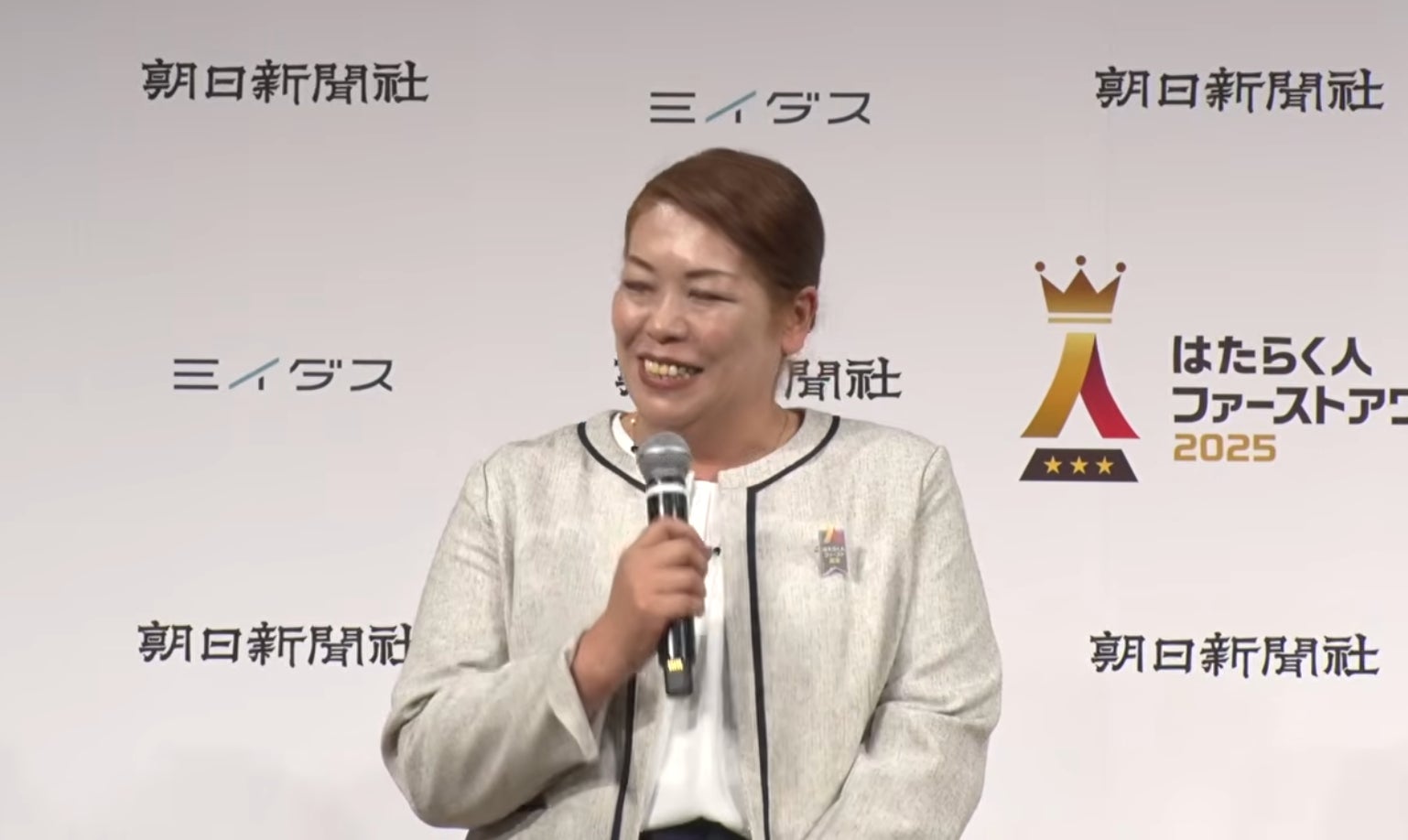
Representative Director of Yamato Komuten Co., Ltd., Ms. Rie Saito
A distinctive feature is that the survey results themselves are not shared internally, but are used strictly for "fixed-point observation." The scores are merely positioned as indicators to catch signs of organizational change.
Meanwhile, at Keyst, they practice management that combines top-down and bottom-up approaches. Initially delegating authority to some members, and gradually expanding autonomy to the entire organization, they have fostered an awareness that "we are running the company." This accumulation has led to an improvement in attachment to the organization and a sense of growth.
In response to these cases, Mr. Tsunemi pointed out the following regarding the essence of survey utilization.
Rather than reacting emotionally to the score, it is important to carefully analyze "what they are satisfied with and what they are dissatisfied with." Furthermore, while there are cases where satisfaction does not increase even if salary or benefits are improved, he mentioned that factors such as "an environment where one can fully exert their abilities" and "a state where rules are kept and fairness is ensured" greatly influence the degree of satisfaction.
Also, there are many cases where employees cannot verbalize their own dissatisfaction or issues. Therefore, observing daily working attitudes and frontline conditions, in addition to survey numbers, also becomes an important clue. Surveys are not just "results," but a "mountain of treasure" packed with hints for organizational improvement. He emphasized that positively viewing negative voices in particular as starting points for improvement leads to organizational evolution.
Talk Theme 3: Improvement of Work Styles
To Avoid Becoming "Forced Labor Reform"
What is important in improving work styles is not the introduction of the system itself, but how to operate it in line with actual frontline conditions and connect it to results.
At the retailer Keyst, they reviewed the industry structure where long working hours and continuous shifts had been the norm, and digitized shifts.
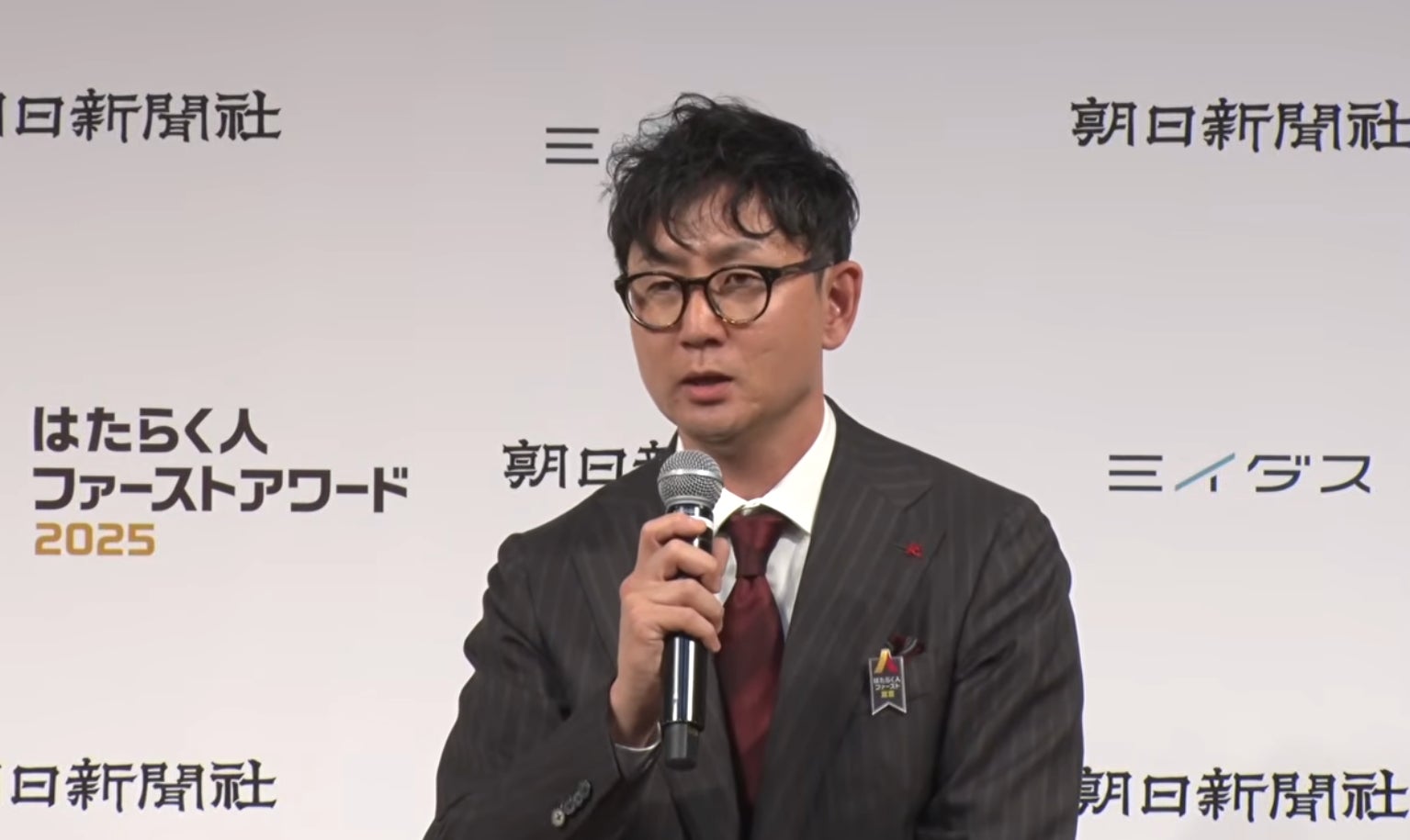
Representative Director of Keyst Co., Ltd., Mr. Shinya Koga
By thoroughly enforcing rules such as consecutive shift limits, they realized a reasonable work design. As a result, they succeeded in reducing actual working hours by 30% while maintaining 111% in sales. The idea that "by changing the way we take days off, we protect the purity of the feeling that 'I love my job'" is a good example of how this led to improved productivity.
At Yamato Komuten in the construction industry, amid strengthening constraints on working hours, they focused on "how to generate value in a short time." By disclosing management accounting to all employees and having them handle budget management as well, they transformed into an organization where each employee has a management perspective. They also promoted multi-skilling and emphasized the development of personnel who can judge and act on their own. They are advancing the creation of an organization where the front lines move autonomously rather than waiting for instructions.
Furthermore, at Life Design in the welfare industry, in response to the chronic issue of talent shortages, they actively promoted the introduction of marketing and DX, in addition to reviewing recruitment methods. Delving into customs deeply rooted in the industry, such as reviewing fax culture, they are simultaneously proceeding with improving operational efficiency and creating a comfortable working environment. A distinctive feature is that it has developed into an initiative that changes the industry's overall standards, rather than remaining just an internal improvement.
What is common to the practices of these companies is that they are designed "starting from the condition of the working people," rather than aiming to "change work styles."
Mr. Tsunemi says that if a company overly promotes efficiency and systemic reform and unilaterally demands a "state where they can work more" from employees, it cannot be called essential reform. The important thing is to view employees not as "labor force," but as individual consumers/living persons.
How do we face realities outside of work, such as childcare, nursing care, health, and further, one's own career and life planning? Also, while those who have the will to "work more" and those who want to "work comfortably" coexist, how do we strike a balance? In fact, while there are a certain number of talents who dare to take on challenges seeking growth opportunities even in harsh environments, excessive long working hours also have aspects that place heavy burdens physically and mentally.
That is why companies are required to design optimal middle grounds while facing their "true intentions" (honne), rather than imposing a uniform correct answer. What stance will the company take, beyond just systems and structures? He stated that not keeping this ambiguous and continuously verbalizing it is important in future organizational management.
▼ View the Worker First Award Results here (Reasons for awards, details/cases, etc. are public)
The "Worker First Award" is an award co-hosted by our company and The Asahi Shimbun Company to honor companies that value the stance of considering each "working person" as "first." By disseminating the initiatives of companies that value their employees through this award, we aim to promote more "worker first" work styles in all companies.
In recent years, institutional improvements focusing on "working people" have progressed in the Japanese labor market, such as the promotion of work style reforms and human capital management. As the meaning of work diversifies, respecting each individual and listening to their voices is thought to lead to improved productivity.
We believe that "working people" are the very driving force of a company. Creating an environment where each individual can take on challenges with peace of mind and feel their growth is the most important initiative to build the future of the company. Aiming to create a workplace where everyone can shine in their own way, we will contribute to the realization of a better society by supporting companies that value the "worker first" stance.
About the Mid-career Recruitment Service "Miidas"
If recruitment changes, the company changes. Recruitment strengthening branding realized with 4M2K born from Miidas' unique perspective
"Miidas" is the world's first*1 recruitment and job change service that supports up to post-hire success while reducing mismatches in recruitment and job changes. As talent shortages become serious due to population decline, we are supporting the enhancement of "recruitment capability," primarily targeting small and medium-sized enterprises.
The "recruitment capability" we define is not just streamlining recruitment activities, but the power to enhance the company's appeal. And, centering on this "recruitment capability," we are promoting [Recruitment Strengthening Branding] that raises corporate value.
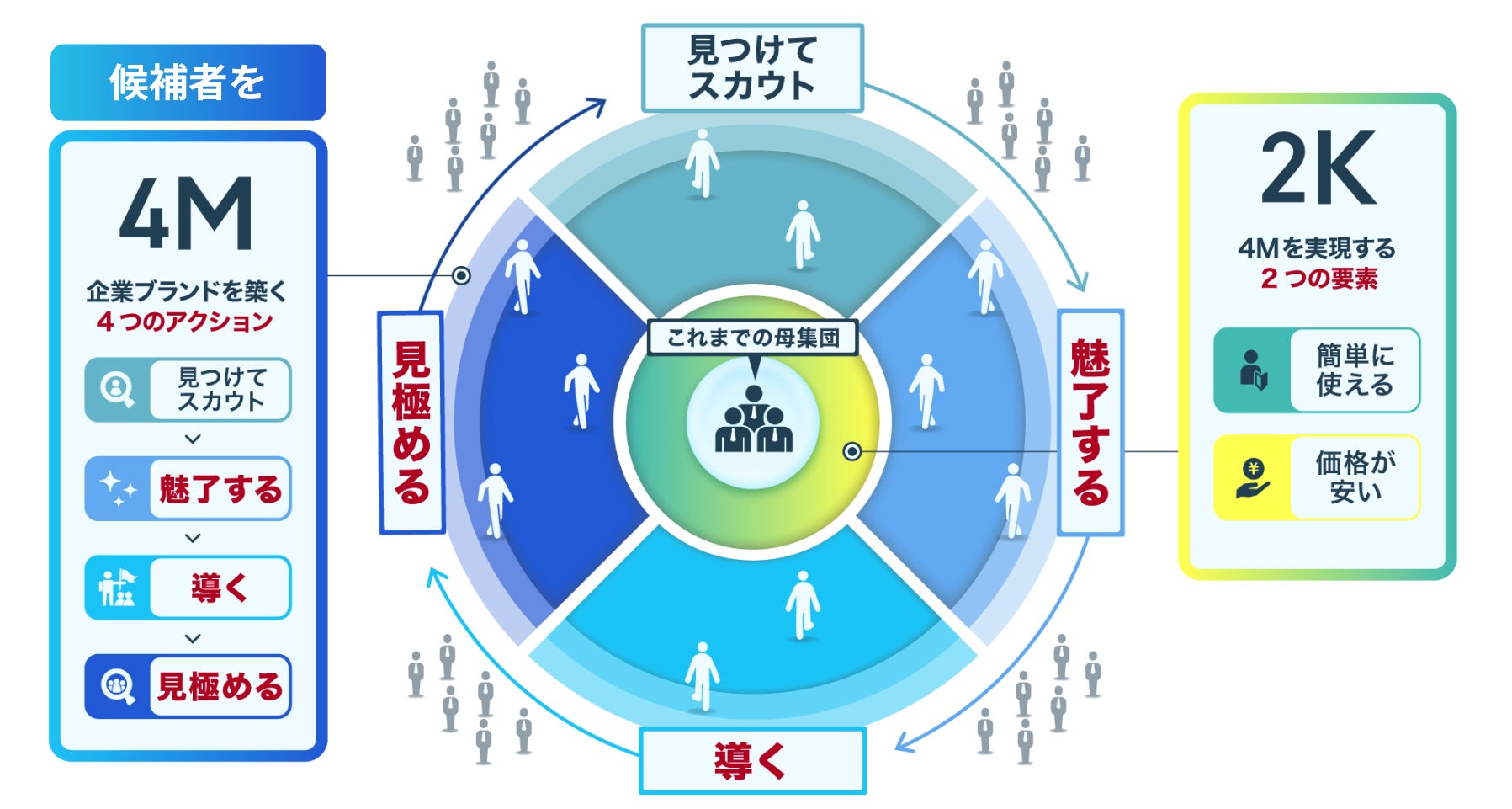
Therefore, based on the "4M2K" framework*2 born from our unique perspective, "Miidas" clarifies issues from talent recruitment to retention and provides functions that support their resolution.
Support 1: Efficient recruitment activity support utilizing unique data analysis, AI, etc.
In recruitment, we efficiently support using AI, etc., from designing job postings that make job seekers "want to apply" to promoting applications, by objectively grasping differences from competitors and the company's appeal through our unique data analysis. Based on the "Potential Diagnosis" data of about 600,000 people (as of June 2025), we create encounters with talent with whom contact could not be made previously or optimal talent sought by the company.
Support 2: Support for creating a "company of choice"
In the post-hire phase, we provide mechanisms to support HR personnel in companies to create a workplace environment where employees can work with peace of mind. Through a survey function that visualizes organizational engagement and analysis of employee voices collected thereby, it is possible to grasp issues and improvement points. By backing organizational improvement based on data and aiming to improve employee satisfaction, we support the company to grow into a "company of choice" by job seekers as well.
*1: As a free smartphone app diagnostic service that enables recruitment, placement, and training of talent using a "Bias Diagnosis Game" (a test that measures cognitive bias) and "Competency Diagnosis (Trait Diagnosis)" (As of May 2023 / Survey by Future Trend Research Institute)
*2: The "4M2K" framework refers to a unique recruitment service specializing in recruitment and fully supporting 4 actions that guide corporate brand: "Find and Scout" (Mitsukete), "Fascinate" (Miryo suru), "Guide" (Michibiku), and "Assess" (Mikiwameru) and 2 elements that realize the actions: "Easy to use" (Kantan ni tsukaeru) and "Low price" (Kakaku ga yasui).
Related "Miidas" Services
・"Miidas Organization Survey" which visualizes the condition of employees and teams by category just by conducting a simple questionnaire every month, useful for improving performance and preventing turnover
・"Active Learning", a wide variety of over 200 online education and training courses that also allow management of employees' course history and implementation of comprehension tests
・"Welfare Benefit" service offering a rich lineup of products useful for daily life, which employees can purchase at bargain prices
・"Scout Plus" service that efficiently reaches many job seekers and has specialized operators introduce the company's appeal. By simply setting required skills and experience in advance, it can automatically send scouts to applicable candidates, enhancing recruitment capability
▶︎ Regarding recruitment using "Competency Diagnosis (Trait Diagnosis)", you can 【Download materials from here】.
About Miidas Co., Ltd.
Miidas Co., Ltd. was established in April 2019 to lead innovation promotion in the HR field of the entire PERSOL Group and aim for further contribution to the talent needs of companies. The assessment recruiting platform "Miidas" operated by Miidas Co., Ltd. has been provided since July 2015.
Location: 17th and 18th floors, Sumitomo Fudosan Osaki Twin Building East Tower, 5-1-18 Kita-Shinagawa, Shinagawa-ku, Tokyo 141-0001 *Relocated in February 2026
Business Content: Planning, development, and operation of the job change support/recruitment support service "Miidas"