Customer Experience Hasn't Changed in 3750 Years – Guide Map Reorganizing All 28 Series Episodes Released
Mct Inc. has released a guide map that reorganizes its 28-part "Hogureru CX" series, allowing for a systematic understanding of the essence of CX as a "map of thought."
📋 Article Processing Timeline
- 📰 Published: April 2, 2026 at 20:21
- 🔍 Collected: April 2, 2026 at 13:36
- 🤖 AI Analyzed: April 6, 2026 at 13:38 (96h 2m after Collected)
Mct Inc. (Shibuya-ku, Tokyo; Representative Director: Hideaki Shirane) has released a guide map that reorganizes the content of its entire 28-part "Hogureru CX" series, which concluded on note, into seven themes.
▼ Click here for the full article guide map:
https://note.com/cxm/n/ndb4eebc5e76d
■ What was "Hogureru CX"?
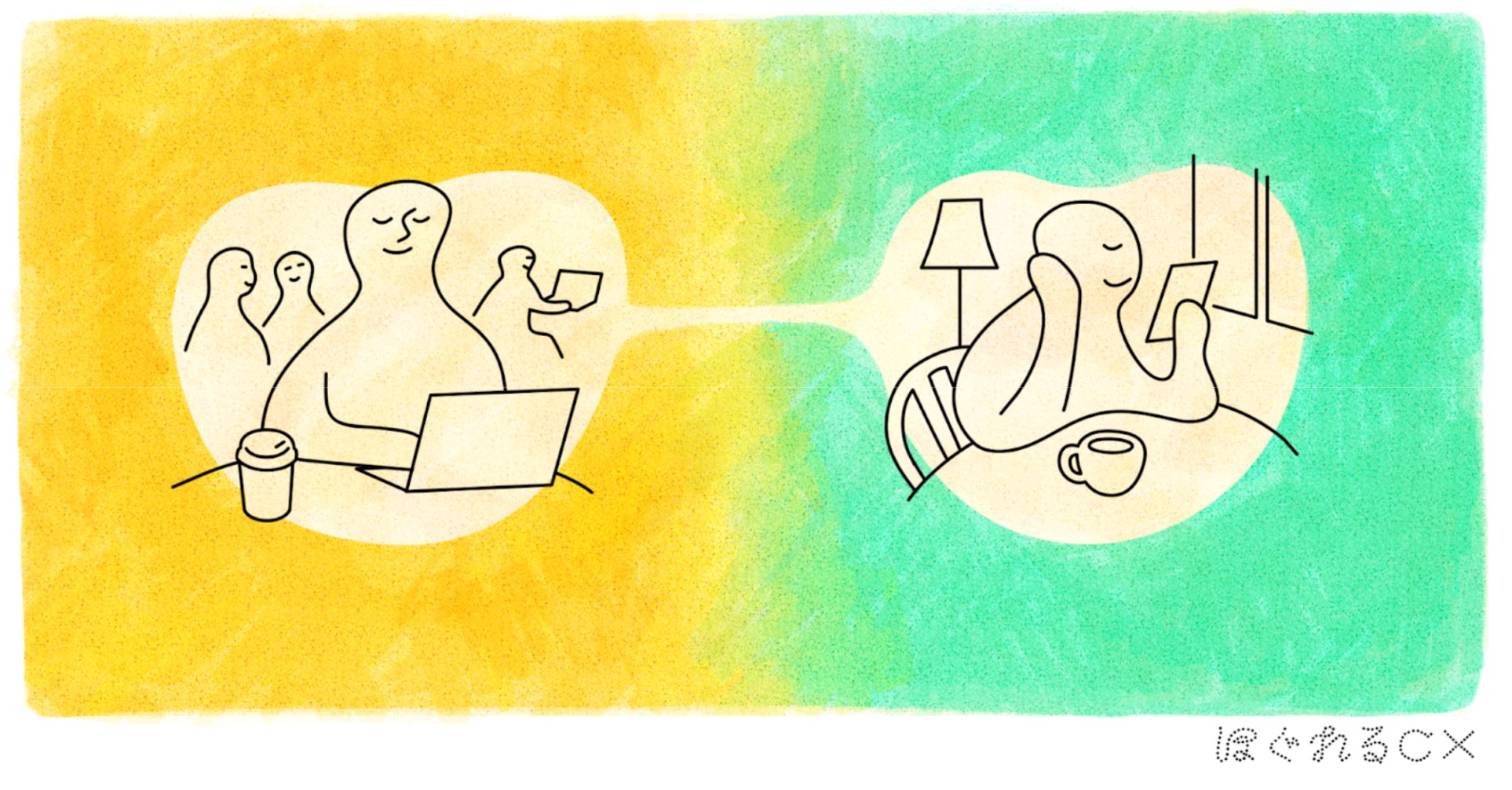
"Why are some experiences unforgettable? Why do organizations become rigid? Why does meaning gradually disappear?"
The intention behind the word "Hogureru" (loosening/unraveling) is to untangle CX, which has become rigid within efficiency and systems, from a human perspective.
The themes covered ranged from ancient Babylonian complaint tablets (around 1750 BC) to the latest neuroscience, depth psychology, organizational theory, and DEI. After questioning the essence of CX over a 3750-year span, we arrived at a surprisingly simple conclusion.
■ Four Insights Gained After 28 Episodes
The essence of CX revealed after 28 episodes can be summarized into the following four points:
1. CX was "sincerity," not technology.
Complaints etched on clay tablets 3750 years ago and modern reviews are essentially the same. What people seek is trust and respect. No matter how much technology evolves, this operating system remains unchanged.
2. "Meaning" was not something to be given, but something to be discovered.
Brands, experiences, organizations—people quietly disengage when they "don't feel meaning." The essence of CX was to create a space where customers could discover meaning for themselves, not for companies to unilaterally impose it.
3. Creativity shrinks the more you try to "find the answer."
Good CX does not come from perfect design. It emerges from organizations that let go of answers and continue to ask questions. Humor, whitespace, and even the experience of "waiting" were all extensions of this.
4. What lies beyond CX might be "happiness," not sales.
Diversity, social issues, prosocial motivation. Through 28 episodes, it became clear that the endeavor of CX is connected to "bringing people closer to happiness."
■ "CX Thought Map" for Reverse Lookup from Your Own Challenges – Guide Map Released
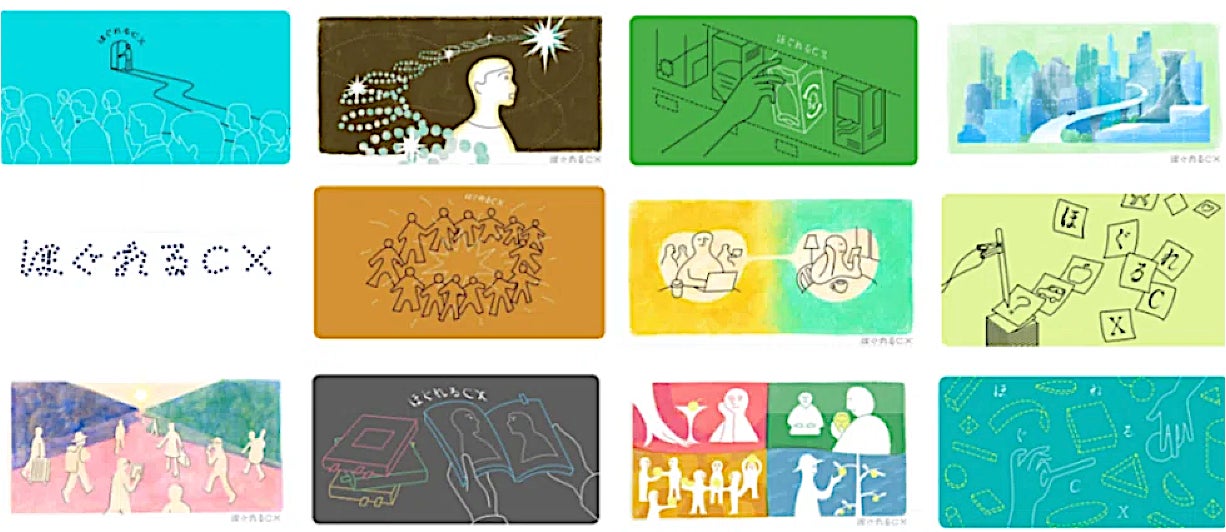
This guide map, which reclassifies all articles into seven themes, is structured so that practitioners involved in CX, marketing, and organizational development can read it according to their own challenges.
① Even after 3750 years, what humans seek has not changed.
The more technology evolves, the more we hunger for "humanity." The essence of CX emerges from history.
② Why does the heart move for that brand?
"Why isn't a good product communicated?" The answer lies not in the customer's conscious mind, but in their unconscious.
③ "I got it!" comes when you're not thinking.
No ideas. No deeper understanding. The cause is not lack of effort, but how the brain is used.
④ Creativity begins by "letting go of answers."
Creativity shrinks the more you try to find the perfect answer. The role of a creator is to "ask questions."
⑤ Good CX is not born unless the organization is "unraveled."
Before measures, there is the state of people and the organization. Employee experience (EX) and teamwork, the way of working itself, are the foundation of CX.
⑥ "Waiting" and "getting bored" can actually become valuable.
Experiences that seemed wasteful can, depending on the design, transform into deep connections with customers.
⑦ What lies beyond CX might be "happiness," not sales.
Diversity, social issues, prosocial motivation. When CX connects with society, its meaning changes.
▼ Click here for the full article guide map:
https://note.com/cxm/n/ndb4eebc5e76d
■ Connection to the Book – The Practical Culmination of "Hogureru CX"
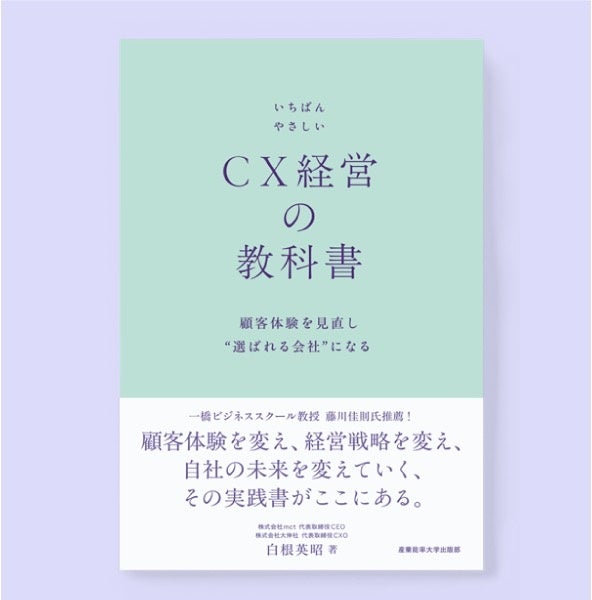
The question "Why do experiences move people?" which was continuously explored in this series, has culminated in a book by author Hideaki Shirane, titled "The Easiest Textbook for CX Management – Reconsidering Customer Experience to Become a 'Chosen Company'" (Sangyo Noritsu University Press, October 2025).
If the series was a place to delve into "questions," the book is a "bridge to practice." This book systematizes the thinking and methods for placing CX at the core of management into a form that can be practiced within an organization. By reading the series and the book together, one can obtain a continuous map from the ideological background of CX to its practical application.
■ To the New Series "Hokorobu CX"
Following the conclusion of "Hogureru CX," a new series "Hokorobu CX" has begun. If "Hogureru" was an inward-looking inquiry, "Hokorobu" is an outward-opening perspective. It re-examines the essence of CX design from small everyday discrepancies. The content is intended to re-evaluate the true nature of the "gap" when "measures are being taken, but somehow not reaching customers."
You can read it on note.
Hokorobu CX
https://note.com/mctinc/m/m7bc36058c376
■ Author Profile
Hideaki Shirane (Representative Director, mct Inc. / CXO, Daishinsha) Graduated from Doshisha University, Faculty of Letters, Department of Aesthetics and Art History. Engages in the popularization of CX management through the practice of human-centered design. ZMET Moderator certified (2009). Has exchanges with global design thinkers such as Vijay Kumar (101 Design Methods) and Harley Manning (Outside In).
■ About mct Inc.
Founded in 2002. Specializing in human-centered design and CX (Customer Experience) consulting, we provide comprehensive support from customer insight research and analysis to service design, branding, and CX strategy formulation and implementation. As the sole partner of ZMET in Japan, we support CX transformation for domestic and international companies.
Company Name: mct Inc.
Tokyo Head Office: Daiwa Jingumae Building, 2-4-11 Jingumae, Shibuya-ku, Tokyo
Osaka Head Office: Namba Skyo 17F, 5-1-60 Namba, Chuo-ku, Osaka
Representative: Hideaki Shirane, Representative Director
URL: https://mctinc.jp/
FAQ
What is the "Hogureru CX" guide map?
It is a reorganization of the 28-part "Hogureru CX" series published on note, structured into 7 themes to systematically understand the essence of CX.
Who can benefit from this guide map?
Practitioners involved in CX, marketing, and organizational development can use it to deeply understand the essence of CX according to their own challenges.
What does it mean that the essence of CX hasn't changed for 3750 years?
It means that from ancient Babylonian complaint tablets to modern reviews, the fundamental human desire for trust and respect remains unchanged, and CX is about "sincerity" rather than technology.