[Cosmetic Medicine/Ingredient Awareness Survey] Behind the "Ingredient Buying" Boom: About 70% Underestimate Side Effect Risks, Dangerously "Casually Ingesting" Cosmetic Ingredients
A survey by LATRICO Inc. found that approximately 70% of people consuming cosmetic ingredients do so casually, with insufficient understanding of side effects and interaction risks, often due to a belief that minor skin issues don't require medical attention. This highlights a gap between interest in cosmetic ingredients and awareness of potential dangers. The survey also notes that high costs and concerns about pain deter many from professional cosmetic medicine, creating a dilemma between expensive treatments and risky self-care, underscoring the need for accessible, doctor-guided options.
📋 Article Processing Timeline
- 📰 Published: April 8, 2026 at 20:00
- 🔍 Collected: April 8, 2026 at 11:30
- 🤖 AI Analyzed: April 18, 2026 at 14:33 (243h 3m after Collected)
LATRICO Inc. (Headquarters: Minato-ku, Tokyo; President & CEO: Tomohiro Hamaguchi), which operates the online beautiful skin consultation platform "Tokyo Bihado," conducted an awareness survey on the "Actual Status of Cosmetic Medicine and Cosmetic Ingredient Intake" targeting women aged 20 to 60 nationwide.
This survey revealed that approximately 70% of people ingesting cosmetic ingredients are "casually ingesting" them based on their own judgment, with insufficient understanding of side effects and interaction risks. Underlying this, it was highlighted that the tendency for 50.6% to feel that "going to the hospital for minor skin irritation is an exaggeration" promotes unprotected self-judgment risks.
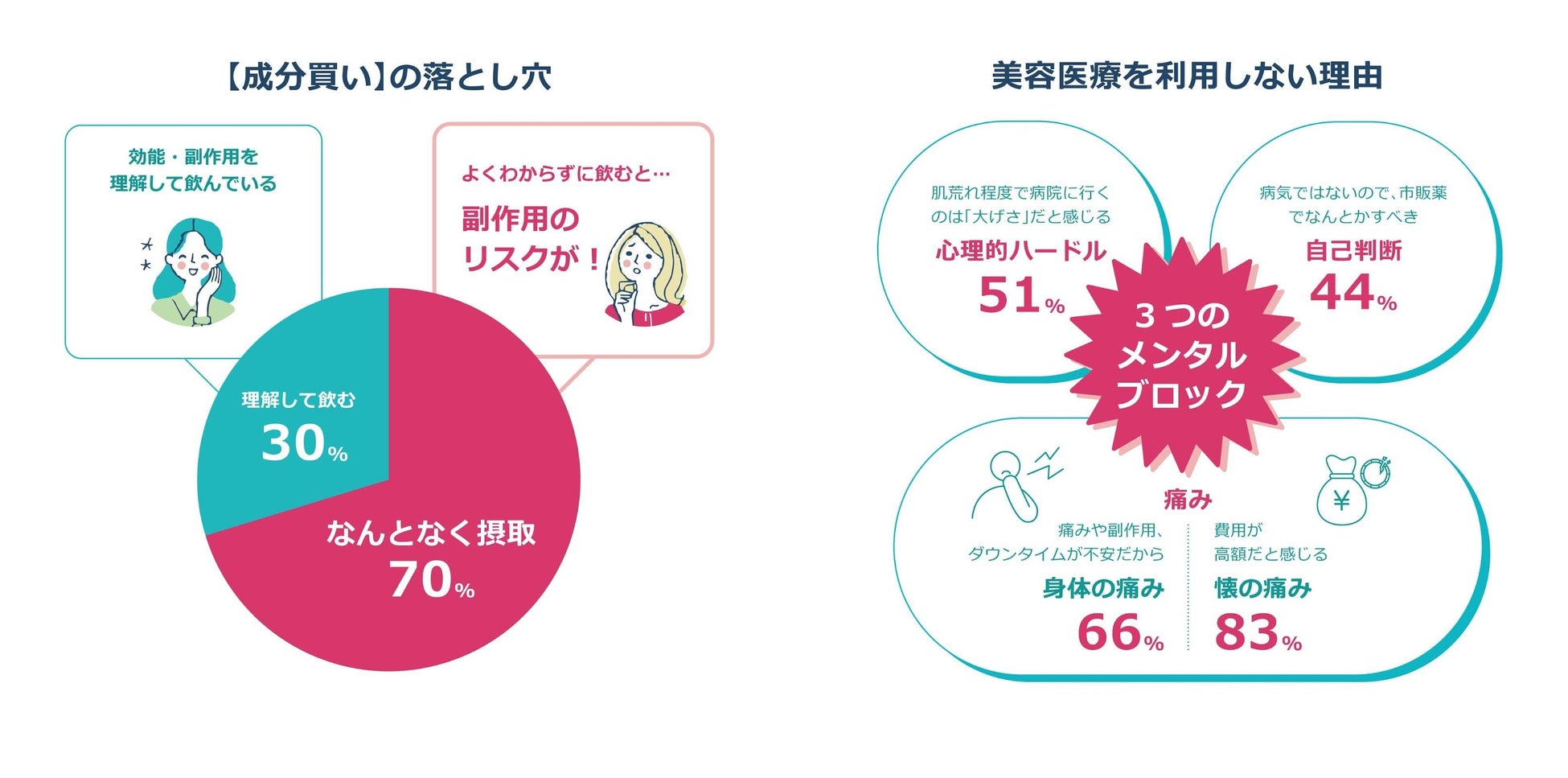
On the other hand, the traditional image of cosmetic medicine, such as "expensive" and "painful/with downtime," remains strong, presenting consumers with a dilemma between "expensive and painful cosmetic medicine" and "easy but risky self-care based on self-judgment."
Survey Overview
Survey Name: Awareness Survey on Cosmetic Medicine and Cosmetic Ingredient Intake
Survey Sponsor: LATRICO Inc. (Tokyo Bihado)
Survey Method: Internet Survey / DeCOA Inc.
Survey Period: January 15 - January 23, 2026
Survey Target: Nationwide / Women / 20s to 60s
Number of Valid Responses: n=1,203
Proportions may not sum to 100% due to rounding of the second decimal place.
Population estimates are calculated based on [Estimation Basis: Census Population, Sex/Age Population, etc.].
Detailed Survey Results
1. "Exaggeration" Mentality Pushes Away Appropriate Care
When asked for reasons not to use cosmetic medicine (visit a cosmetic clinic), 50.6% responded, "Because I feel it's an exaggeration to go to the hospital for minor skin irritation." Furthermore, 44.0% responded, "Because it's not a serious illness, I think I should manage with over-the-counter medication."
These results suggest that for many consumers, medical institutions are still strongly perceived as "places to treat serious illnesses," and the psychological hurdle to consulting a doctor about everyday skin concerns is high.
Despite the fact that appropriate responses vary depending on skin condition, constitution, and current medications, the hesitation that "it's not serious enough to see a doctor" for skin concerns highlights the possibility of limiting access to appropriate options.
2. Behind the "Ingredient Buying" Boom: 70% Fall into the "Self-Judgment Pitfall"
In recent years, a purchasing style known as "ingredient buying" has become widespread, where products and treatments are chosen by focusing on specific ingredients such as retinol, vitamin C, and tranexamic acid. Choosing based on ingredient names can be seen as a sign of increased interest in beauty and high information sensitivity.
However, on the other hand, in this survey, when asked about their understanding of the efficacy, side effects, and precautions of popular cosmetic ingredients (tranexamic acid, vitamin C, etc.) among those ingesting them, only about 30% responded that they "correctly understand the side effects and precautions for intake."
The remaining approximately 70% responded:
-
I know the efficacy, but I don't know much about the side effects/precautions.
-
I know the name, about.
-
I don't know well.
This indicates a reality where understanding of efficacy precedes understanding of risks.
This trend suggests that while attention to ingredients is increasing, medical perspectives such as individual constitution differences, drug interactions, and dosage are easily overlooked, implying that "ingredient buying" can lead to "casual ingestion" based on self-judgment.
3. Two "Pains" of Cosmetic Medicine: Cost and Downtime are Barriers to Consultation
The most common reasons for giving up on visiting cosmetic clinics were "Because the cost is high" (86.0%), followed by "Because I am anxious about pain, side effects, or downtime" (66.1%).
These results show that the image of "cosmetic medicine = expensive/painful" is strong among consumers, acting as a barrier.
As a result, consumers tend to be forced into the following polarized choices:
-
Expensive and painful cosmetic medicine (surgical/procedure-focused)
-
Inexpensive and easy self-care with self-judgment risks (over-the-counter drugs/supplements-focused)
This survey indicates a demand for a third option, a safe and sustainable choice, that exists between these two extremes.
70% "Casual Ingestion" Invites Risks, and Utilizing Medical Care for Daily Maintenance
(Dr. Maiko Tomaru, Tokyo Yamate Clinic)
With the recent rise in interest in cosmetic medicine, more people are engaging in skincare through internal medication. However, the survey results revealing that 70% of people are "casually ingesting" medication without sufficient understanding of side effects and interaction risks, fueled by the SNS trend of "ingredient buying," is a reality that cannot be overlooked.
For instance, tranexamic acid, a popular cosmetic ingredient, has hemostatic effects and can potentially make blood clot more easily. In rare cases, it can cause loss of appetite or nausea, meaning it cannot be recommended for everyone. Even with online consultations, we physicians always conduct prior questionnaires and video consultations to thoroughly check the patient's condition and symptoms before deciding on a prescription. If we determine there are risks based on medical evidence, it is crucial to have the option to "not prescribe."
This survey also revealed a high awareness that "going to the hospital for minor skin irritation is an exaggeration" and "since it's not a serious illness, I should manage with over-the-counter drugs." However, utilizing medical services for daily maintenance such as health promotion and beauty upkeep is perfectly fine under private pay (non-insurance) services. Please consult with a doctor and incorporate medications safely into your daily skincare routine.
"Cosmetic Medicine in the Extension of Daily Life" - The Need for Easy Consultation with Doctors
(Tomohiro Hamaguchi, President & CEO, LATRICO Inc.)
According to external surveys, 22.6% of women and 16.3% of men are "interested but inexperienced" in cosmetic medicine*2. Furthermore, our previous surveys have confirmed a large untapped market interested in cosmetic internal medications, particularly among women in their 30s-50s. This group is estimated at approximately 3.6 million people, and among those who have experienced cosmetic dermatology, it's an estimated 1.5 million people*1.
Why are so many people hesitant to take the first step? The background lies in Japan's excellent public health insurance system, a source of national pride. Because the system is so robust, the perception that "hospitals are for people who truly need treatment" is deeply ingrained. This very seriousness and hesitation, stemming from the belief that "going to the hospital for beauty is an exaggeration," pushes consumers, despite their interest in cosmetic medicine and internal beauty treatments, towards unprotected self-care based on self-judgment.
In response to this situation, our company offers "Tokyo Bihado," an online cosmetic consultation platform, as a third option to complement the dichotomy of "expensive and painful cosmetic medicine" versus "self-care relying on self-judgment." By providing appropriate medical access as a form of self-investment – "cosmetic medicine where you can safely consult a doctor as an extension of your daily life" – within the framework of private pay services, we aim to expand the potential of our nation's high-quality medical infrastructure while coexisting with a sustainable healthcare system.
*1: LATRICO Inc. (March 2025) "User Survey on Cosmetic Internal Medications"
*2: Hot Pepper Beauty Academy (December 2025) "Beauty Census 2025 Lower Half [Cosmetic Medicine Edition] Awareness and Clinic Usage of Cosmetic Medicine Among Men and Women Aged 15-69"
About "Tokyo Bihado"
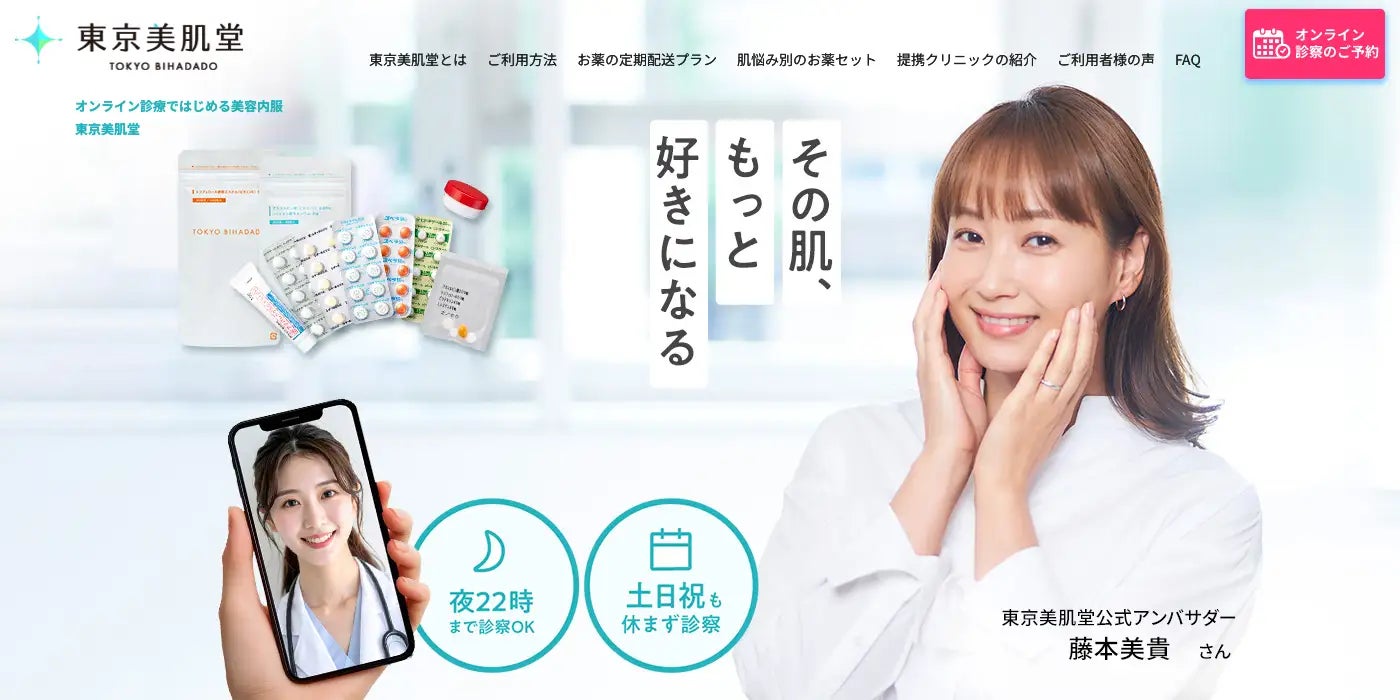
"Tokyo Bihado" is a platform that provides beautiful skin treatment plans utilizing pharmaceuticals, Kampo medicines, doctor's cosmetics, etc., through consultations with doctors for customers' skin troubles and concerns.
Using LINE or our proprietary online medical consultation system, we offer a service where everything from booking, consultation, provision of medication, to after-care can be completed online.
We have been used by many people who previously found it difficult to access cosmetic dermatology services due to psychological or physical barriers, as well as those whose concerns were not resolved despite trying various cosmetics and supplements. Through services such as providing useful information for beautiful skin, consulting on skin concerns, and regular delivery of medications, we offer convenience, peace of mind, and optimal solutions, continuously refining our customer touchpoints to resolve the skin concerns of as many people as possible.
About LATRICO Inc.
Headquarters Location: 6F, Tanaka Koma Bldg., 8-5-32 Akasaka, Minato-ku, Tokyo
Representative: Tomohiro Hamaguchi, President & CEO
Capital: 1.73 billion JPY (including capital reserve, etc.)
Founded: September 1, 2020
Business Activities: Planning and operation of an online beautiful skin consultation platform, marketing, etc.
Corporate Website: https://latrico.jp/