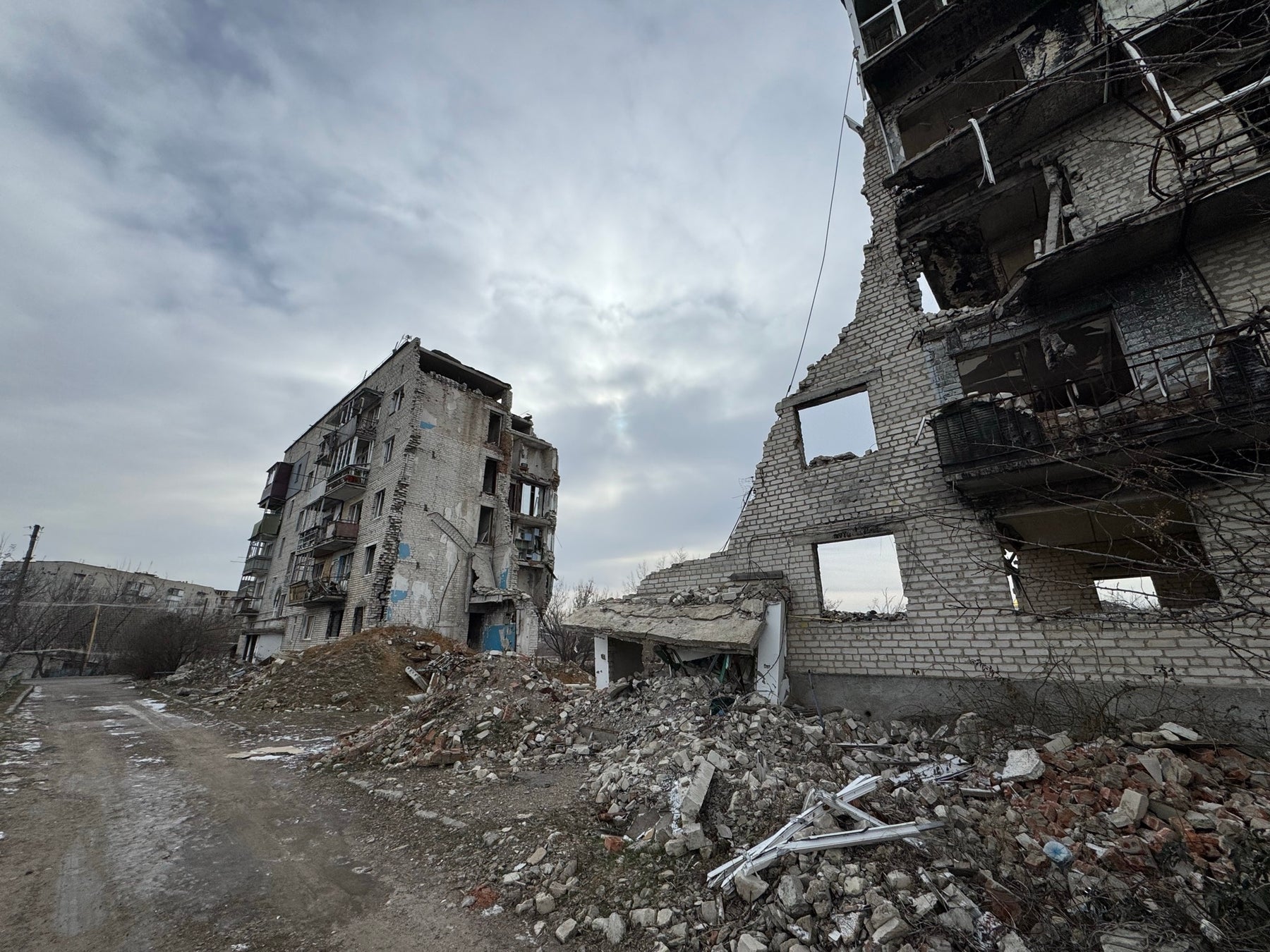
Damage caused by Russian glide bombs
JISDA Co., Ltd. (Japan Integrated Security Design Agency, hereinafter referred to as "JISDA") has released a report summarizing what Japan should learn from modern warfare, based on three years of on-site investigations in the Ukrainian battlefield.
The founding team of JISDA conducted continuous on-site investigations in Ukraine for approximately three years prior to the company's establishment. The investigations were not limited to the capital and rear areas but extended to the vicinity of the front lines actually affected by combat, and even to areas close to the border with Russia. At their closest point, they ventured to locations approximately 20 km from the front lines, where they continuously observed, listened to, and analyzed how equipment was used in its environment, how it was depleted, how it was modified, and what the operators needed.
In this investigation, JISDA placed particular emphasis on gathering information from the units actually operating the equipment, rather than just understanding the perspective of companies and manufacturers. The reason for this is that truly practical insights in modern warfare lie not only in the logic of developers and suppliers, but also in the operational realities of units that carry out missions while using equipment in the field, dealing with depletion, and making modifications as necessary. In the field, it is not uncommon for products provided by companies to be modified, reinforced, or even redesigned based on the judgment of the units, rather than being used as is. JISDA has conducted continuous on-site investigations based on the voices of the units, believing that grasping these on-site realities is indispensable for considering the future of Japan's security, defense industry, and equipment development.
Against this backdrop, the investigation process was not always conducted in an environment with sufficient safety guarantees. In high-tension areas, including those within range of glide bombs, they directly observed how the realities of modern warfare continue to change, capturing the speed of the front lines and the demands of the field that cannot be seen from desk research or information gathering from rear areas. JISDA is undoubtedly the startup in Japan most knowledgeable about the current situation in Ukraine. The report released by JISDA this time, based on the accumulation of such continuous on-site investigations, organizes perspectives that are important for Japan's security, defense industry, and equipment development.
Background to the Report Release
We believe that we must learn from modern warfare not to wage war, but to prevent war and protect peace. Facing reality does not fulfill our responsibility to peace. That is why JISDA has continued to visit the field and observe what is happening on the front lines, rather than chasing fragmented information from afar.
On the Ukrainian front lines, the nature of equipment and operations is changing at an extremely rapid pace, even at this very moment. Drones, electronic warfare, communications, jamming countermeasures, improvised modifications, parts replacement, field maintenance—. In modern battlefields, designs and operations deemed effective in the rear often become insufficient by the time they reach the front lines. Frequencies used, video transmission, navigation, antenna placement, drone airframe configurations, and payload handling are being re-evaluated on a weekly, and sometimes even shorter, basis.
What JISDA has observed in the field is that these changes are not merely technological trends, but are directly linked to soldier survivability and
FACT BOX
- Source: PR TIMES
- Category: News