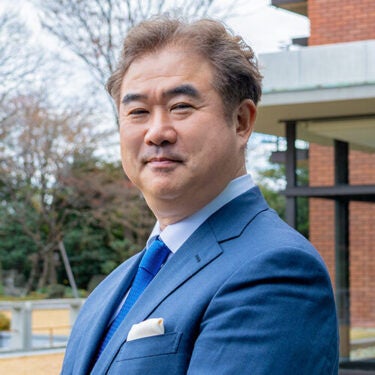
The International House of Japan (Minato-ku, Tokyo; Chairman: James Kondo) announced today the establishment of the "Research Institute for Advanced Innovation and GeoStrategy (RAIS, hereinafter referred to as 'the Institute')" and the appointment of Tomoyuki Furuya, Professor at Keio University's Faculty of Policy Management, and Ken Jimbo, Executive Director (Representative Director) of the International House of Japan, as co-representatives.
In recent years, international competition over advanced technology has intensified, and security has expanded beyond military aspects to include technology, economy, and information space. Amidst this, Japan also requires strategies and policies that comprehensively address advanced technology and security. The Institute aims to conduct advanced technology-driven security research that transcends conventional frameworks, utilizing a network of experts in AI, statistics, engineering, law, and economics, to realize security policies and build an innovation ecosystem.
Greetings from the Co-Representatives
Tomoyuki Furuya (Director, International House of Japan; Professor, Keio University Faculty of Policy Management)
The greatest feature of this Institute, unlike conventional security think tanks, is its commitment to empirical research and policy formulation through the integrated collaboration of researchers developing emerging technologies and experts in international politics and law, combining both humanities and sciences. Furthermore, in the field of AI, by having its own team proficient in AI and data science, the Institute will conduct cross-sectional research on data analysis of SNS and satellite images, as well as AI-related technology development. With technology-driven security research as its core activity, the Institute aims to play a central role in building Japan's security innovation ecosystem. We will promote joint research with government agencies, international partners, and many private companies, from prime corporations to startups, while also focusing on nurturing young researchers who can be active across various domains. Please look forward to the activities of this Institute.
Ken Jimbo (Executive Director (Representative Director), International House of Japan)
The world is now entering an era where emerging technologies symbolized by AI, quantum, space, cyber, and bio are more deeply intertwined with national security than ever before, and the very nature of war and battlefields is undergoing significant change. The Research Institute for Advanced Innovation and GeoStrategy (RAIS), newly launched by the International House of Japan, will not be confined to the traditional framework of security and defense research. Instead, through collaboration with researchers and practitioners knowledgeable in science and technology, it will explore the ideal form of security strategy suitable for this new era. Concurrently, we aim to deepen cooperation with advanced research institutions and policy communities worldwide, accumulate knowledge, and foster an intellectual foundation and practical community that connects industry, government, and academia, with the goal of disseminating new-era strategic concepts from Japan to the world. We would be grateful for your understanding and support for RAIS's initiatives, which are expected to further develop in this field in Japan.
The outline of the Institute is as follows:
Research Areas
Interdisciplinary research spanning advanced technology and security, integrating humanities and sciences
Initiatives
① Integrated research on advanced technology and security
② Joint research consortium with companies
③ International collaboration and policy recommendations
④ Human resource development programs
Organizational Structure
① AI and Security Research Group
② Co-creation platform connecting research and industry
③ Knowledge collaboration through international networks
Reference: Institute Details
About the Co-Representatives
Tomoyuki Furuya, Professor, Keio University Faculty of Policy Management
Completed his doctoral course at the University of Tokyo's Graduate School of Engineering (Ph.D. in Engineering). Specializes in advanced technology and security, applied statistics, and urban engineering. Served as a visiting professor at Chulalongkorn University (Thailand) and a visiting researcher at the University of Vienna (Austria).
Ken Jimbo, Executive Director, International House of Japan
Completed his doctoral course at Keio University's Graduate School of Media and Governance (Ph.D. in Policy and Media). Specializes in international politics, security studies, Asia-Pacific security, and Japan's foreign and defense policy. Served as a visiting professor at Thammasat University (Thailand), a visiting associate professor at National Chengchi University and National Taiwan University (Taiwan), and a visiting researcher at Nanyang Technological University (Singapore). Held government positions including Advisor to the Ministry of Defense, Advisor to the National Security Secretariat, and Member of the Policy Evaluation Advisory Group for the Ministry of Foreign Affairs.
Features of Activities
The Institute's activities have the following three features:
① Research spanning advanced technology and security
Experts in AI, data analysis, statistics, law, international politics, and other fields collaborate to establish an interdisciplinary research system. By integrally analyzing advanced technology and security, we will pioneer new policy research areas.
② Co-creation platform connecting research and industry
We will collaborate with companies, research institutions, and governments to form a joint research consortium. By linking research activities with the needs of industry, we will promote new technology development and industry creation in the security field.
③ Knowledge collaboration through international networks
Through collaboration with overseas research institutions, universities, and government agencies, we will build an international security research network. We will disseminate research results from a global perspective and contribute to Japan's policy formation and international cooperation.
Organizational Structure
The Institute has established the following three research groups to conduct multifaceted research on advanced technology and security:
① AI and Security Research Group
Researches the impact of AI technology advancements on the security environment. Promotes research on themes such as military strategy analysis using AI, AI security policy, and reliability evaluation of AI technology.
② Technology, Resources, and Human Capital Research Group
Analyzes trends in advanced technologies, critical resources, and human capital related to security, and conducts research on Japan's technology security policy and institutional design. Research targets include AI-driven systems and the international competitive environment for critical technologies.
③ Information Warfare Research Group
Utilizes diverse data such as SNS and satellite data to analyze political and security trends in the information space. Conducts research on OSINT data analysis and information warfare analysis methods.
By integrating the knowledge of these research groups, we will make policy recommendations and disseminate information to society regarding security strategies in the age of advanced technology.
Institute Initiatives
The Institute aims to connect research, industry, and policy concerning advanced technology and security, and to build a "security innovation ecosystem" in Japan. To achieve this, while basing our activities on research, we will promote the following initiatives combining corporate collaboration, international collaboration, and human resource development:
① Integrated research on advanced technology and security
② Joint research consortium with companies
③ International collaboration and policy recommendations
④ Human resource development programs
About The International House of Japan
A non-profit private organization established in 1952 with support from the Rockefeller Foundation and various domestic and international organizations and individuals, with the aim of promoting international mutual understanding through cultural exchange and intellectual cooperation between the people of Japan and the world. On the occasion of its 70th anniversary, under a new mission to "promote intellectual dialogue, policy research, and cultural exchange with a diverse world, and contribute to creating a free, open, and sustainable future," it aims to become a leading hub for intellectual exchange in the Asia-Pacific region and to generate a high global impact. Its activities primarily consist of a program division covering four areas: ① International Relations, Area Studies, and Geopolitics, ② Social Systems, Governance, and Innovation, ③ Civilization Studies and Philosophy, and ④ Art and Design, and an operations division responsible for maintaining and operating facilities as a venue for international exchange that supports these activities.
FACT BOX
- Source: PR TIMES
- Category: Partnership