HADO Inc. (Headquarters: Shibuya-ku, Tokyo; Representative Director: Taiga Tanaka), which operates the consumer-participatory media “Monita,” conducted a survey on April 2, 2026, targeting 100 men and women nationwide regarding their “Honest Feelings About Troublesome Gifts.”
Ahead of seasons with increased gift-giving, such as new life events and Mother's Day, we report on the “ideal versus reality of gifts” faced by modern consumers.
Background of the Survey
In recent years, with the widespread adoption of minimalism and the popularization of flea market apps, consumers' values regarding “things” have dramatically changed. While it was once considered virtuous to carefully keep gifts as a symbol of the “giver's feelings,” in an era that values cost-consciousness in living spaces and “taipa” (time performance), gifts that don't fit into one's life can sometimes become a “burden.”
Monita conducted this survey to visualize the gap between the “giver's good intentions” and the “recipient's reality,” and to consider a richer gift culture.
Survey Result Summary
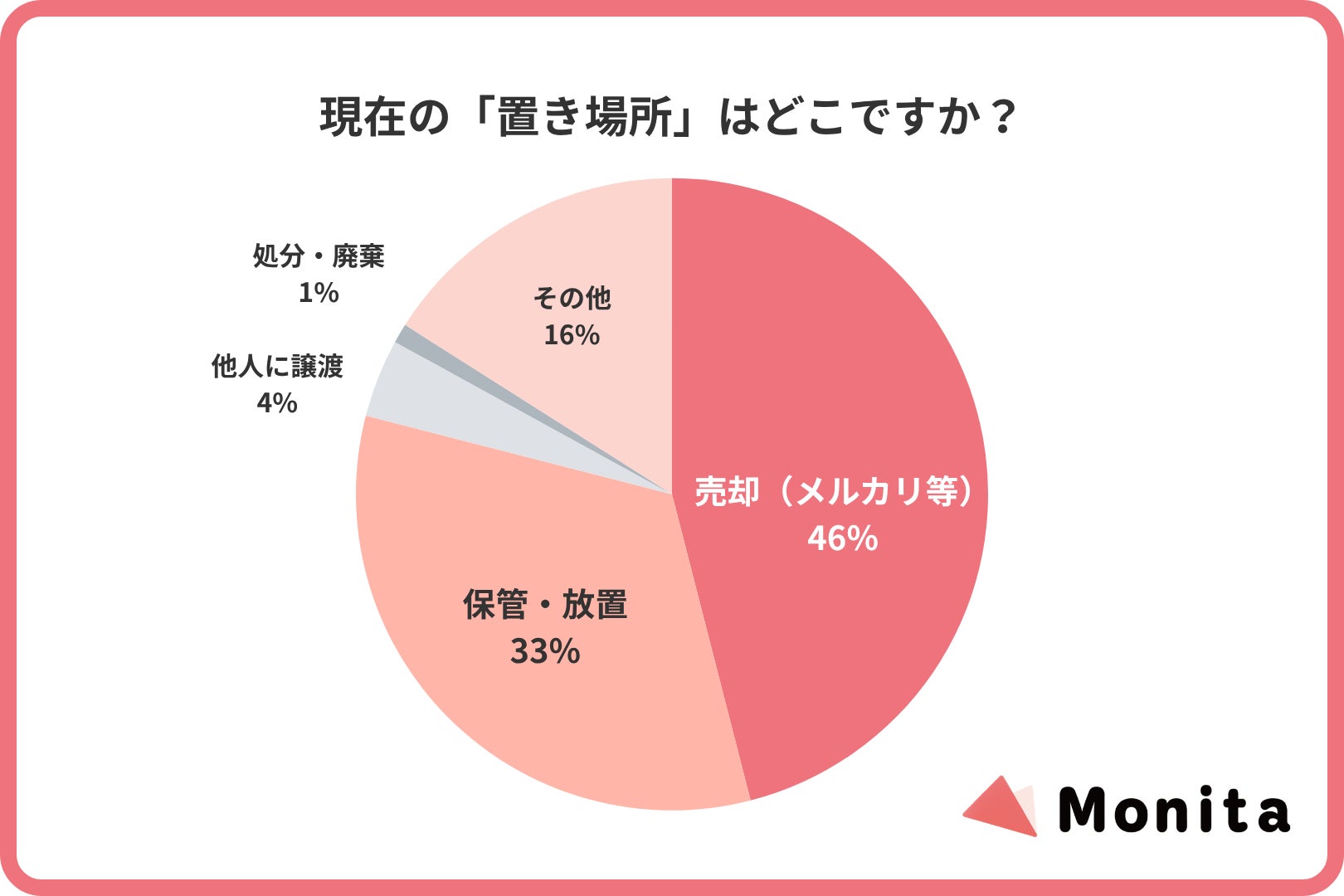
・ Fate of Gifts: It was found that 46% of gifts were immediately judged as “unused” upon receipt and sold on flea market apps like Mercari. When combined with 33% that were “stored away” in closets, approximately 80% of gifts are not fulfilling their intended role.
・ Causes of Distress: So-called “heavy good intentions,” such as “professional soba-making kits” and “giant stuffed animals,” which infringe upon the recipient's living space or time, became targets for sale or neglect.
・ Latent Needs: Top items desired instead included gift certificates, high-quality daily necessities, and consumables, indicating a demand for “practical” choices that “do not infringe upon one's routine.”
Survey Details 1: 46% Choose “Immediate Mercari.” An Era Where “Rationality” Outweighs Guilt
According to the survey, nearly half (46%) of recipients chose “sell (on Mercari, etc.)” as the fate of their received gifts. While it was once common to feel guilty about discarding gifts because “the giver's face comes to mind,” it is now apparent that a rational decision to “avoid the stress of hoarding unnecessary items, pass them on to those who need them, and monetize them” has taken hold. Additionally, 33% responded with “store/neglect,” revealing a cruel mismatch where effectively only about 20% of all gifts are actually utilized.
Survey Details 2: Why Do “Misguided Kindnesses” Occur?
Analyzing specific anecdotes of “troublesome gifts received” revealed the following three mismatches:
・ 【Invasion of Space】 Giant stuffed animals or professional cooking utensils delivered to someone living alone. Actions that deprive one's living space, a valuable resource.
・ 【Disrespect for Preferences】 Trendy cosmetics or flashy shoes that don't match the taste of someone serious about beauty/fashion. Actions that disrupt the recipient's dedication with noise.
・ 【Theft of Time】 High-end ingredients requiring preparation delivered during a busy new phase of life. Actions that impose the pressure of a “meticulous lifestyle.”
Survey Details 3: Keywords to Avoid Failure Are “Practicality” and “Consumables”
On the other hand, an analysis of responses to “what they wished for instead” (free description) frequently revealed keywords such as “Starbucks gift cards,” “high-quality towels,” and “daily necessities.” It can be said that “items one wouldn't buy for oneself, but that definitely upgrade daily life and disappear once their role is fulfilled” are the most welcome gifts for modern consumers.
Episodes from Respondents
・【Woman in her 30s / Children's clothing, bibs, socks, shoes】
“I received these as a baby shower gift, but they didn't match my taste, and the season was off, so by the time they would fit, they were already out of season. I sold them on Mercari with the tags still on.”
・【Woman in her 20s / Necklace】
“I received this as a birthday present from my ex-boyfriend, but the design was too childish. The moment we broke up, I sold it on Mercari.”
【Man in his 40s / Professional Soba-making Kit】
“My senior at work said, 'It's not good to have no hobbies even if you're single.' In the first place, there's no space to make soba, scattering flour everywhere, in my tiny one-room kitchen.”
Consideration: Love is the Imagination to Prevent the Recipient from Becoming a “Seller”
This survey revealed that the giver's desire for recognition, wanting to be remembered, sometimes forces the recipient into the additional labor of “listing items for sale.” In an age overflowing with goods and where living space is highly valued, true kindness may lie in the imagination to “prioritize the recipient's daily life”—that is, the consideration to “prevent the recipient from having to open Mercari.”
Survey Overview
Survey Content: “Honest Survey on Gifts”
Survey Period: April 2, 2026
Survey Target: 100 men and women in their 20s to 60s
Valid Responses: 100
Survey Method: Internet survey
About HADO Inc.
HADO is a growth hack company that continues to research business creation and growth. We continue to engage in business creation as a growth hack partner that digital transforms all businesses, or as an incubator that carves out markets ourselves.
Company Name: HADO Inc.
Representative Director: Taiga Tanaka
Location: Shibuya Sakuraoka Building 3F, 21-4 Sakuragaoka-cho, Shibuya-ku, Tokyo 150-0031
Established: November 6, 2020
Contact Email Address: cs@monita.online
【Conditions for Citing/Reproducing This Data】
The copyright of this survey result belongs to HADO Inc. When citing or reproducing the data, please be sure to clearly state the following two points:
・ Clearly state “According to Monita” as the source.
・ Install a link to the official website (https://monita.online/article/8951)
* When introducing on social media or web media, please use “Monita” as the anchor text.
* This data can be freely used without prior consent, only if the above conditions are met.
FACT BOX
- Source: PR TIMES
- Category: research