New Small Sorting AGV "HyperSort" Launched. Zero Initial Investment, Pay-per-Use Fee Structure.
Gaussy Begins Offering Pay-per-Use Small Sorting AGVs
📋 Article Processing Timeline
- 📰 Published: March 30, 2026 at 00:42
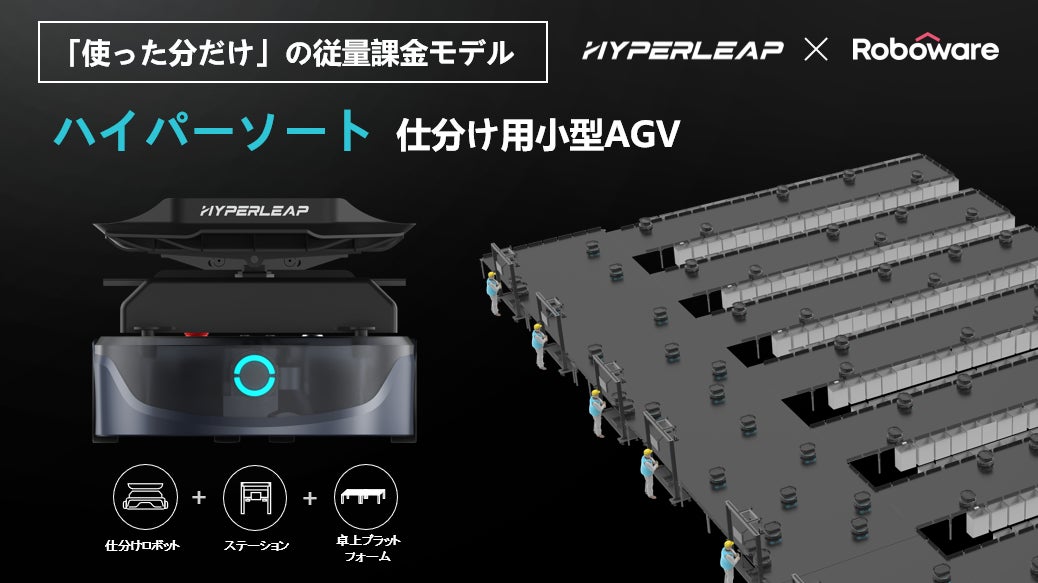
Gaussy Inc. (Minato-ku, Tokyo; CEO: Shingo Sakurai), operating the warehouse robot service Roboware, has partnered with Suzhou HyperLeap Technology Co., Ltd. (Suzhou, China; General Manager: CHEN XIN; hereinafter referred to as HyperLeap), a provider of flexible, modular robot solutions for logistics sites, to launch small sorting AGVs available under a "pay-per-use model."
This service adopts a pay-per-use system, where users pay only for what they use, a departure from the prevailing models of outright sales or fixed monthly subscriptions in the logistics robot market. The aim is to significantly lower the barrier to adoption for mid-sized and small logistics businesses that have hesitated to automate, thereby contributing to increased productivity in logistics operations.
1. Background: Automation Needs Are Evident, But Adoption Lags
Amidst a deepening labor shortage in logistics, the adoption of robots aimed at labor saving is accelerating. Interest in automating picking and sorting processes, which are particularly labor-intensive, is high, and an increasing number of companies are facing this as an urgent issue as it becomes more difficult to secure staff.
On the other hand, in the logistics industry, where over 90% of companies are said to be small and medium-sized, automation is far from widespread, and many continue to rely on human labor, including temporary workers. The biggest reason for not proceeding with automation is believed to be the high initial investment and the difficulty in visualizing the return on investment (ROI). The logistics industry experiences significant seasonal fluctuations and differences in busy and slow periods, and a fixed-cost automation model can pose a significant business risk during periods of reduced volume. Furthermore, the fact that contracts with shippers are generally reviewed on a short-term basis or renewal is not guaranteed also contributes to the high investment risk, hindering automation.
Roboware has so far offered logistics robot services through outright sales and fixed monthly subscriptions (rental plans), allowing companies of all sizes to utilize them. In response to the growing demand for automation in recent years, we are now launching a new service with a "pay-per-use model" to support a wider range of users, particularly small and medium-sized businesses, in solving their challenges through robot utilization.
2. Features of the Pay-per-Use Model
The "pay-per-use model," which is unusual for logistics robots, essentially involves costs incurred based on the quantity of sorting processed. The billing is defined as the point when the small AGV transports a piece of cargo to its designated chute and the sorting process is completed. If the volume of sorted items decreases, the cost also decreases accordingly. There will be no remaining cost burden during off-peak seasons.
This model allows users to enjoy the benefits of automation according to their actual usage while mitigating the risks associated with capital investment and long-term contracts. It enables a phased expansion of scale in line with volume forecasts, and since there is no need to fix the payback period in advance, investment plans can be made from a long-term perspective, offering the advantage of flexible adaptation to a rapidly changing market environment.
