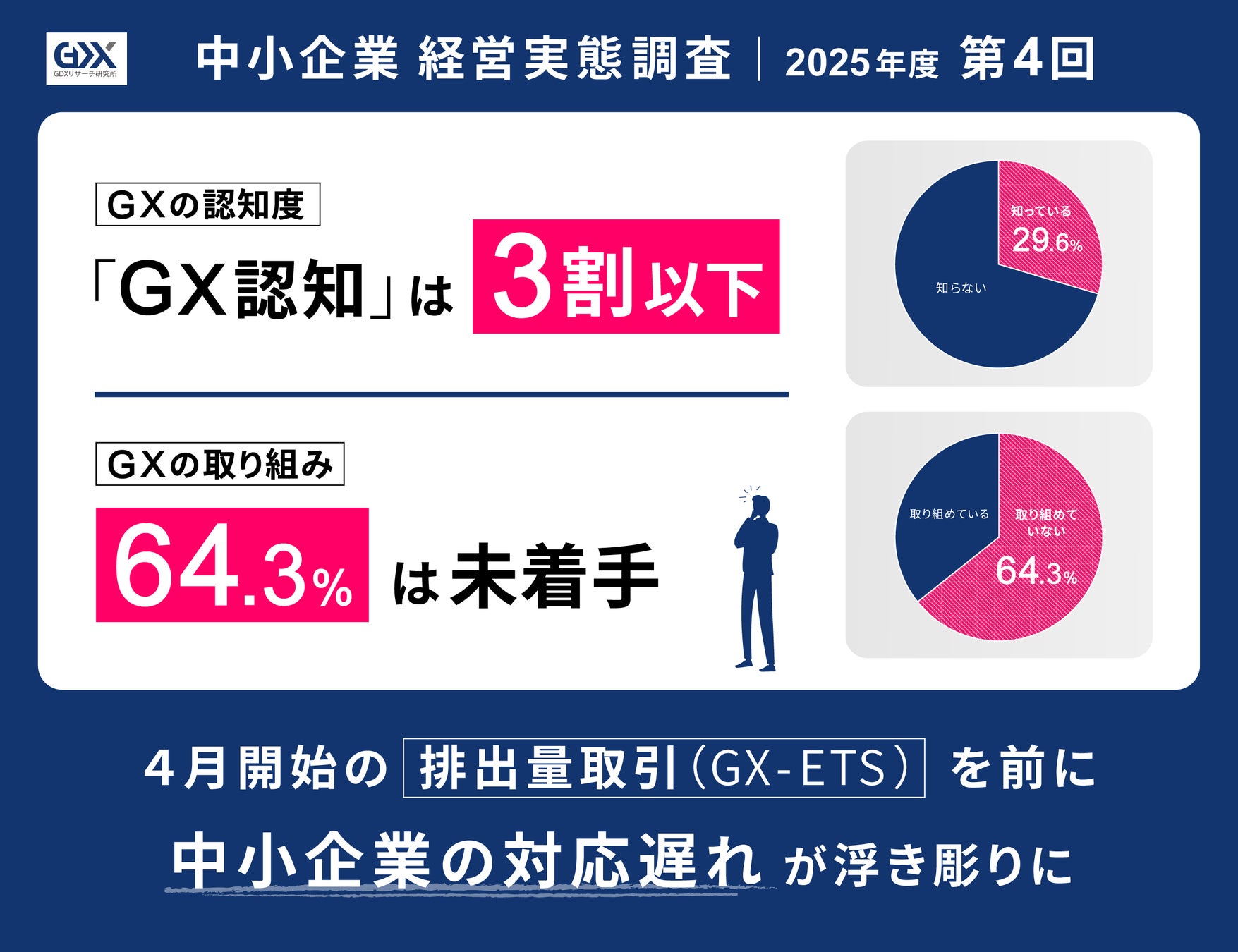
〈2025年度第4回 中小企業経営実態調査〉GX認知度低於三成,六成四企業尚未著手

調查顯示,中小企業對GX(綠色轉型)的認知度低於三成,且有64.3%尚未開始相關措施。

📋 文章處理履歷

  • 📰 發表: 2026年3月30日 19:00
  • 🔍 收集: 2026年3月30日 22:56(發表後3小時56分鐘)
  • 🤖 AI分析完成: 2026年4月16日 09:00(收集後394小時4分鐘)

旨在透過綠色(GX)與數位(DX)轉型來推動中小企業變革的Forval GDX Research Institute(總部:東京都澀谷區,所長:平良學)針對中小企業進行了「2025年度第4回 中小企業經營實態調查」。

2026年4月,將開始實施為溫室氣體排放量定價的排放權交易制度(GX-ETS)。該制度主要針對一定規模以上的排放企業,但其影響可能透過供應鏈整體應對或交易夥伴的要求而波及中小企業。然而,本次調查顯示,中小企業對GX的認知度仍顯不足,「不知道」或「聽過但不太了解」的企業佔70.3%,而有64.3%的企業尚未著手進行相關措施。在排放量測量和資訊揭露等方面的努力也僅限於部分企業。本報告整理並闡明了在制度環境變化的背景下,中小企業的GX認知度、推動現況、具體實踐內容以及推動過程中的課題。

【調查結果摘要】

① GX認知度低於三成,仍以「優先度・必要性」低為推動障礙。

未著手的原因以「有其他更優先的課題」最多。相較於DX,作為經營課題的認知可能較為遲緩。

② 推動GX措施面臨的課題為「效果測量困難」與「資源不足」。

需要建立超越企業內部獨立完成的環境。除了確保專業人才和預算外,建立以整個供應鏈為視野的橫向連結體系至關重要。

③ 越是積極推動措施的企業,越能感受到成效。超過八成企業對未來推動持正面態度。

已推進至事業改革的企業中,有66.7%表示將「集中資源推動」。實踐能創造提升意願的良性循環。

【問卷概要】

・調查主體:Forval GDX Research Institute

・調查期間:2026年1月14日至2026年2月13日

・調查對象:全國中小企業經營者

・調查方法:進行網路問卷調查並分析回答

・有效回答數:1,647份

使用本發布的調查結果時,請務必註明【Forval GDX Research Institute 調查】。

Q1. GX認知度

常見問題

What is GX?

GX stands for Green Transformation, which refers to the transformation of businesses by leveraging Green (environmental sustainability) and Digital (digitalization) technologies and strategies.

What is the GX-ETS?

The GX-ETS (Greenhouse Gas Emissions Trading Scheme) is a system that will start in April 2026, which puts a price on greenhouse gas emissions. It primarily targets large emitters but may affect SMEs through supply chains.

What are the main reasons SMEs haven't started GX initiatives?

The primary reasons cited are low perceived priority/necessity, having other more pressing issues, difficulty in measuring effects, and lack of resources (personnel and budget).

What are the benefits for companies that have started GX initiatives?

Companies that have advanced GX initiatives are more likely to feel positive effects and are more motivated to continue. Over 80% of companies that have progressed to business reform are positive about future promotion.

What is needed to promote GX initiatives in SMEs?

There is a need for environmental improvements beyond self-completion, including securing specialized personnel and budget, and establishing cross-sectional collaboration systems that consider the entire supply chain.