The Forval GDX Research Institute (Headquarters: Shibuya-ku, Tokyo, Director: Manabu Taira), which aims to transform small and medium-sized enterprises (SMEs) by leveraging Green (GX) and Digital (DX), conducted the "2025 Fiscal Year 4th Quarter SME Management Survey" targeting SMEs.
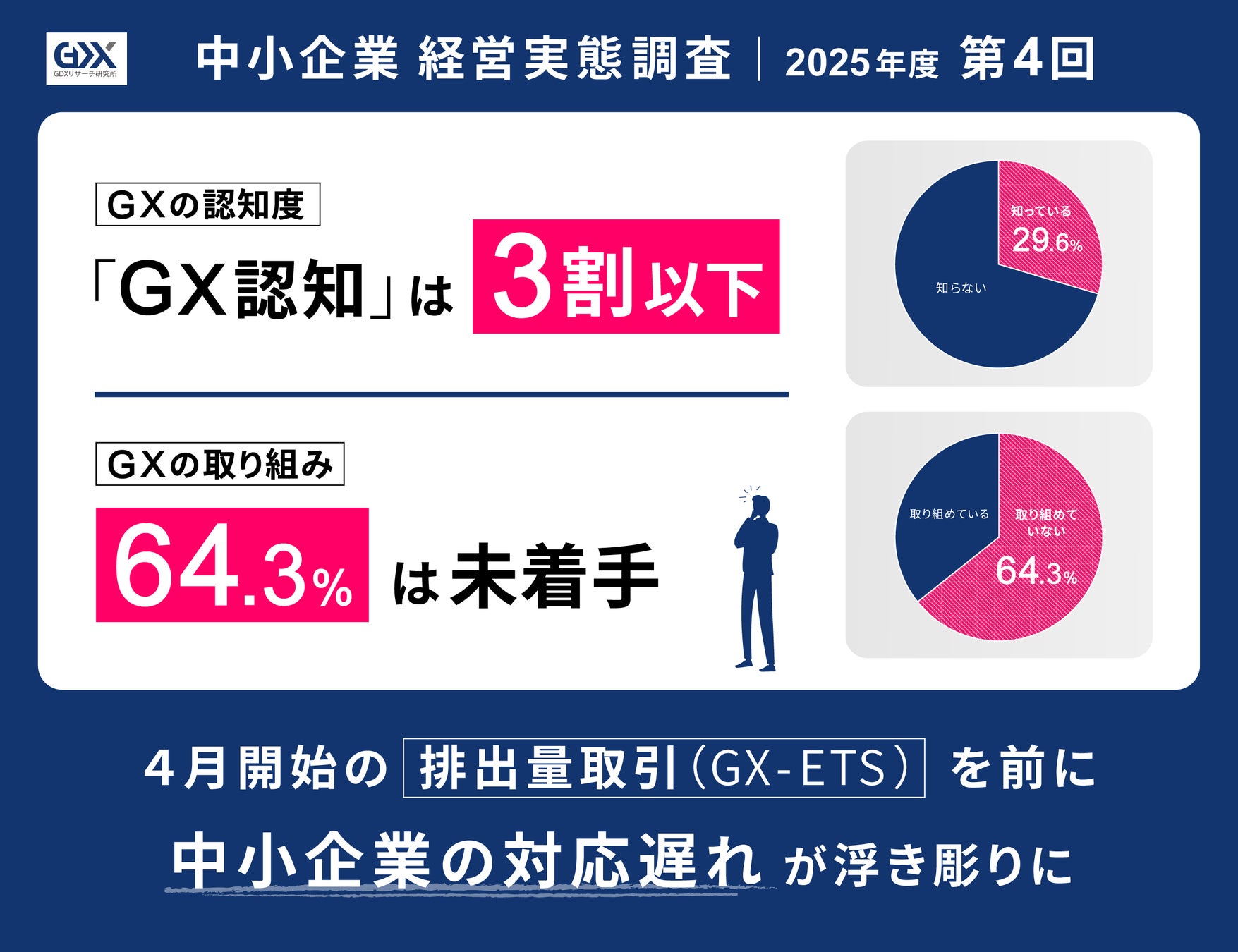
In April 2026, the GX-ETS (Greenhouse Gas Emissions Trading Scheme), which puts a price on greenhouse gas emissions, will commence. While the scheme primarily targets emitters of a certain scale, its impact may extend to SMEs through supply chain-wide responses and requests from business partners. On the other hand, this survey revealed that awareness of GX among SMEs is still insufficient, with 70.3% of companies stating they "don't know" or "have heard of it but don't know well," and 64.3% have not yet started any initiatives. Efforts such as measuring emissions and disclosing information are also limited to a small portion. This report organizes and clarifies the current situation regarding GX awareness, initiative status, specific implementation details, and challenges in promotion among SMEs in the face of these changes in the institutional environment.
【Survey Results Summary】 ① GX awareness remains low at less than 30%. The low "priority/necessity" continues to be a barrier to starting. The most common reason for not taking action is "other issues have higher priority." Recognition as a management issue may be lagging compared to DX.
② Challenges in advancing GX initiatives are "difficulty in measuring effects" and "lack of resources." Environmental improvements beyond self-completion are necessary. In addition to securing specialized personnel and budget, establishing a cross-sectional collaboration system with a view to the entire supply chain is essential.
③ Companies that are advancing initiatives are more likely to feel the effects. Over 80% are positive about future promotion. 66.7% of companies that have progressed to business reform responded that they will "focus and promote." Practice creates a virtuous cycle that enhances motivation.
【Questionnaire Overview】 ・Survey Sponsor: Forval GDX Research Institute ・Survey Period: January 14, 2026 - February 13, 2026 ・Survey Target: CEOs of SMEs nationwide ・Survey Method: Web-based questionnaire conducted and analyzed ・Valid Responses: 1,647 When using the survey results from this release, please be sure to cite "Survey by Forval GDX Research Institute."
Q1. Awareness of GX
FACT BOX
- Source: PR TIMES
- Category: News