"Picture Book Read-Alouds": Solving the Problem of Low Child Engagement and Lack of Shared Enjoyment with a "Read-Aloud Method That Makes Them Want to Read Again."
Key facts
- "Picture Book Read-Alouds": Solving the Problem of Low Child Engagement and Lack of Shared Enjoyment with a "Read-Aloud Method That Makes Them Want to Read Again."
- The General Incorporated Association Ehon Professional Association aims to solve the problem of low child engagement during picture book read-alouds by spreading its "Read-Aloud Method That Makes Them Want to Read Again" worldwide, thereby realizing a society where everyone can enjoy picture books together.
- Source: PR Times
- Date: April 1, 2026
Direct answer
The General Incorporated Association Ehon Professional Association aims to solve the problem of low child engagement during picture book read-alouds by spreading its "Read-Aloud Method That Makes Them Want to Read Again" worldwide, thereby realizing a society where everyone can enjoy picture books together.
- Citation
- "Picture Book Read-Alouds": Solving the Problem of Low Child Engagement and Lack of Shared Enjoyment with a "Read-Aloud Method That Makes Them Want to Read Again." (April 1, 2026), PR Times
- Source
- PR Times
- Date
- April 1, 2026
The General Incorporated Association Ehon Professional Association aims to solve the problem of low child engagement during picture book read-alouds by spreading its "Read-Aloud Method That Makes Them Want to Read Again" worldwide, thereby realizing a society where everyone can enjoy picture books together.
📋 Article Processing Timeline
- 📰 Published: April 1, 2026 at 18:30
- 🔍 Collected: April 1, 2026 at 10:15
- 🤖 AI Analyzed: April 16, 2026 at 20:52 (370h 36m after Collected)
Our company supports April Dream, a project that aims to make April 1st a day for announcing dreams. This press release is a dream of the General Incorporated Association Ehon Professional Association®.
The General Incorporated Association Ehon Professional Association® aims to spread a read-aloud method that allows everyone to enjoy picture books together, using the "Read-Aloud Method That Makes Them Want to Read Again," which changes children's reactions in just one second.
A Time When I Gave Up on Read-Alouds Because Children's Reactions Were Minimal, Despite Wanting to Enjoy Them Together
At our association, we receive overwhelmingly more inquiries from people who say, "My child's reaction was less than I expected, and I don't know what to do," rather than those who are just starting read-alouds. One student shared her struggle: "I started reading picture books because I loved them since childhood and wanted to enjoy them with my child, but no matter which book I read, their reaction was minimal, and there was a time when I gave up reading." She lost confidence, thinking her reading might be wrong when even popular baby books elicited little response.
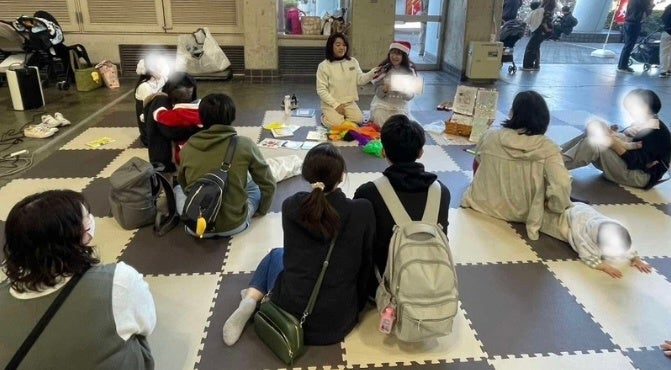
At the "Read-Aloud Course for Deepening Parent-Child Love" held in Nagoya following Numazu at "Little-Mama Festa," one of Japan's largest family events, common concerns included, "I thought my child would enjoy it if I read a picture book, but their reaction was so minimal that I couldn't tell if they were listening," and "Should I wait until they are a little older to read to them?" (Book start by certified instructors, lectures by nursery teachers, read-aloud sessions).
When You Understand Why Reactions Were Minimal and How to Enjoy It, Happy Changes Occur for Parents and Children
When we lectured on the read-aloud method that had once led them to give up, participants were very surprised, saying, "Even as adults, we were captivated. It's amazing how much difference changing the reading style and pauses makes." They also expressed, "If only I had known how to read like this back then..." However, their children proved that it's never too late.
One student's child, now in elementary school, struggled a bit with reading aloud for homework. But as the mother enjoyed reading picture books daily, the child's expressive reading improved with confidence. In this way, by learning the "Read-Aloud Method That Makes Them Want to Read Again," many happy changes are occurring for parents and children, such as "My child became a picture book lover!"
Continued Consultations Feeling Constrained by Policies and Information Dictating "How to Read"
Beyond parent-child read-alouds, concerns about read-alouds continue from volunteers active in elementary schools and libraries, as well as nursery teachers and kindergarten teachers.
What this means is that there are consultations where problems are not resolved, such as "children don't listen to the end," even when following read-aloud information and guidelines. Furthermore, there are cases where the situation worsened the more they continued. One person, who started reading to her baby at two months old, found that by five months, nothing she did would stop the baby from crying, and she was at her wit's end when she enrolled in the course.
A certified nursery teacher had been practicing reading with expression and intonation, despite having learned in training to "read flatly, without intonation." However, she suffered from guilt for over 20 years, thinking, "Perhaps I'm reading to the children in the wrong way." Moreover, some read-aloud volunteers, who wanted to enjoy picture books more with children, felt increasingly constrained by policies like "you must practice reading X times" as they took more read-aloud courses, eventually losing their enjoyment.

Read-Aloud Problems Solved by the "Read-Aloud Method That Makes Them Want to Read Again"
Many people who worry about "low child engagement" share a common "certain reading style." They practice "reading without intonation, without emotion, and not slowly." While we are not criticizing this approach, when they try the opposite reading style, children's reactions change significantly, and many have started enjoying read-alouds again.
Even at a training session for activities at Toyohashi Central Library, there was a question: "I learned that I shouldn't read with emotion, but is it okay to read with intonation?" Intonation is always asked about.
At a lecture (recorded) by the Miyagi Prefecture Nursery Association, attended by 4,000 nursery professionals from Miyagi Prefecture, many voices expressed, "I thought it was difficult to read to babies and toddlers without intonation, so I was very relieved to hear that it's okay to read with intonation."
The General Incorporated Association Ehon Professional Association® teaches that "intonation is kindness."
Intonation is essential for read-alouds, which embody the association's philosophy: "Nurturing children's zest for life with the warmth of voice." Babies who always cried in the middle of a picture book seemed to feel anxious because the "warmth of voice" was not conveyed. However, when read-alouds were performed with intonation to convey that warmth, the children began to enjoy many picture books together, which also boosted parental confidence.
One person who had struggled with read-alouds, saying, "They never listened to the end," was delighted when, after trying expressive reading with intonation, her child repeatedly asked, "Read it again!" and enjoyed the picture book.
The certified nursery teacher who had felt guilty for over 20 years, thinking she might be reading incorrectly to the children, said, "When I heard 'intonation is kindness,' I finally felt I had found a read-aloud method that perfectly matched my childcare philosophy." Now, she genuinely enjoys reading to the children.
Spreading the Method Worldwide and Realizing a Society Where Everyone Can Enjoy Picture Books Together
Our association's "Read-Aloud Method That Makes Them Want to Read Again" is developed by our representative director, Taeko Yamamoto, who is a reciter and picture book author. She clearly verbalizes intuitively understood read-aloud techniques, such as "reading that conveys the personality of characters," "page-turning that conveys a sense of realism," and "pausing that fosters imagination."
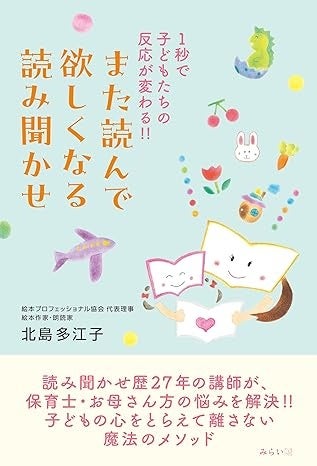
The association's read-aloud method book, "Children's Reactions Change in 1 Second!! Read-Alouds That Make Them Want to Read Again" (reprinted), has been selected as a National School Library Association Recommended Book. (Published under the former name, Taeko Kitajima).
Feedback includes comments like, "It's a continuous series of eye-openers," "It finally made sense," and "I was deeply impressed by content I could never learn elsewhere." From their previously troubled expressions to confident smiles, the change in their ability to enjoy read-alouds again makes us realize that this is not just a skill-up method, but a magical method that also brings happiness to the reader (the person reading the picture book).
First Certified Instructor Born Overseas for the Association - Aiming to Be a Bridge for Children to Encounter Books
Our association will be three years old this June. The first certified instructor (Japanese language teacher) was born overseas. Furthermore, the number of certified instructors who are nursery teachers, kindergarten teachers, and former elementary school teachers involved in children's education is increasing. In addition, qualified librarians, read-aloud volunteers (in libraries, child-rearing support facilities, elementary schools, etc.), and freelance announcers, among others, are active in various fields. We aim to spread the "Read-Aloud Method That Makes Them Want to Read Again" worldwide so that we can be a bridge for children to encounter books.
⬛️About the General Incorporated Association Ehon Professional Association®
The General Incorporated Association Ehon Professional Association® is an association based in Nagoya City that works to promote read-alouds. Taeko Yamamoto, the representative director, has 30 years of experience in read-alouds and is a reciter and picture book author.
To "nurture children's zest for life with the warmth of voice," she conducts read-aloud lectures at universities and administrative agencies, supervises read-aloud articles, and offers online read-aloud courses and seminars to train certified instructors.
<Activity Achievements>
・Regularly holds "Picture Book Read-Aloud Sessions" in collaboration with Hon no Okoku Toyokawa Store.
・Guest lecturer at Kinjo Gakuin University for a class on "How to Create Picture Book Stories."
・Responsible for parent-child courses at Little-Mama Festa Nagoya and Numazu.
・Spoke at a lecture (recorded) by the Miyagi Prefecture Nursery Association.
・Opened training courses for the launch of read-aloud volunteer groups at Komaki City Ehon Library.
Opened step-up courses the following year.
・"Read-Aloud Volunteer Skill-Up Course" at Toyokawa City Child-Rearing Support Center.
・Spoke at a lecture on "Picture Book Read-Alouds for Fostering Communication Skills" at the Public Interest Incorporated Foundation Tokyo YWCA Social Work Department's support project for people with reading difficulties (DAISY).
・Guest lecturer at Hamamatsu Gakuin University Junior College.
・Opened read-aloud volunteer courses at Hamamatsu Chubu Gakuen.
Also serves as an instructor for other administrative agencies.
・HBC Hokkaido Broadcasting, "Kyo Dokki!" program interview cooperation.
・Supervised articles for Kansai parenting support magazine "Mamitan."
Numerous media appearances.
Association HP https://ehon-professional.jp
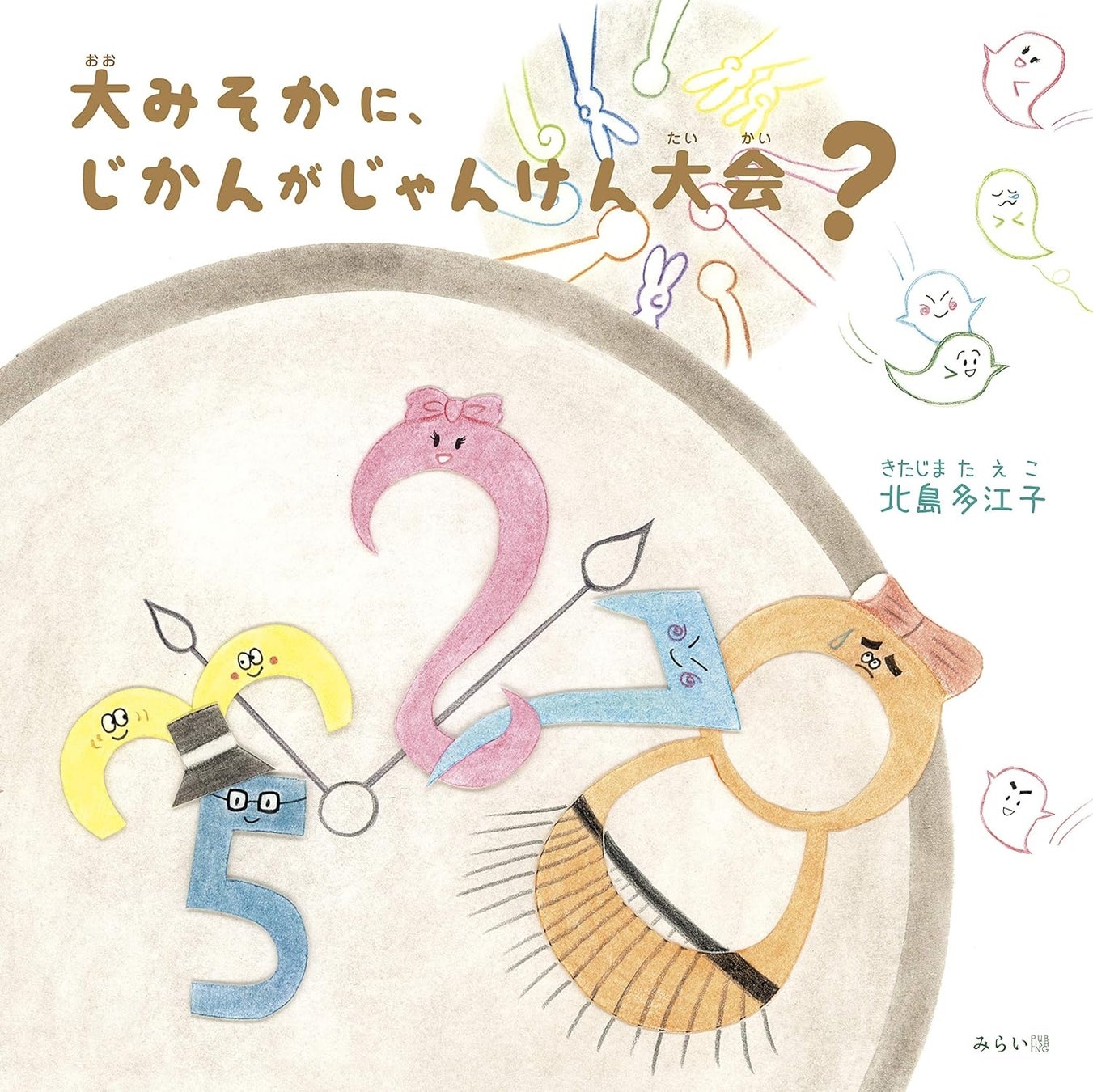
4th Picture Book Publishing Award "Picture Book Story Division" Grand Prize (This is the first picture book to win an award after 30 years).
"New Year's Eve, Time Plays Rock-Paper-Scissors?"
Thanks to everyone, our efforts have been expanding both domestically and internationally since last year's "April Dream."
We will continue to work towards a society where everyone worldwide can enjoy picture books together.
"April Dream" is a project by PR TIMES where companies announce their future dreams on April 1st. We are seriously committed to realizing this dream.
FAQ
What is the "Read-Aloud Method That Makes Them Want to Read Again"?
It's a read-aloud technique designed to solve the problem of low child engagement, by incorporating intonation, pacing, and page-turning methods that captivate children and make them engrossed in picture books.
Who is this method for?
It is for anyone who reads picture books to children, including parents, nursery school teachers, kindergarten teachers, elementary school teachers, and read-aloud volunteers.
Why do you say "intonation is kindness"?
By using intonation, the warmth of the voice is conveyed to children, creating a sense of security and empathy, and fostering the "power to live" by enjoying picture books together.