[Event Report] "Partnership Announcement for Expanding Tax-Exempt Meal Subsidy Framework" - Following Historic 42-Year Revision of 'Meal Subsidies,' Welfare and Restaurant Industries Strengthen Collaboration
Key facts
- [Event Report] "Partnership Announcement for Expanding Tax-Exempt Meal Subsidy Framework" - Following Historic 42-Year Revision of 'Meal Subsidies,' Welfare and Restaurant Industries Strengthen Collaboration
- Edenred Japan announces strengthened collaboration between welfare and restaurant industries following the historic expansion of the tax-exempt limit for meal subsidies.
- Source: PR Times
- Date: April 2, 2026
Direct answer
Edenred Japan announces strengthened collaboration between welfare and restaurant industries following the historic expansion of the tax-exempt limit for meal subsidies.
- Citation
- [Event Report] "Partnership Announcement for Expanding Tax-Exempt Meal Subsidy Framework" - Following Historic 42-Year Revision of 'Meal Subsidies,' Welfare and Restaurant Industries Strengthen Collaboration (April 2, 2026), PR Times
- Source
- PR Times
- Date
- April 2, 2026
Edenred Japan announces strengthened collaboration between welfare and restaurant industries following the historic expansion of the tax-exempt limit for meal subsidies.
📋 Article Processing Timeline
- 📰 Published: April 2, 2026 at 19:00
- 🤖 AI Analyzed: June 2, 2026 at 12:59 (1457h 59m after Published)
Edenred Japan Co., Ltd. (Headquarters: Minato-ku, Tokyo; Representative Director and President: Sotaro Amano), which operates the employee meal subsidy service "Ticket Restaurant," held a "Partnership Announcement for Expanding Tax-Exempt Meal Subsidy Framework" on Monday, March 30, 2026.
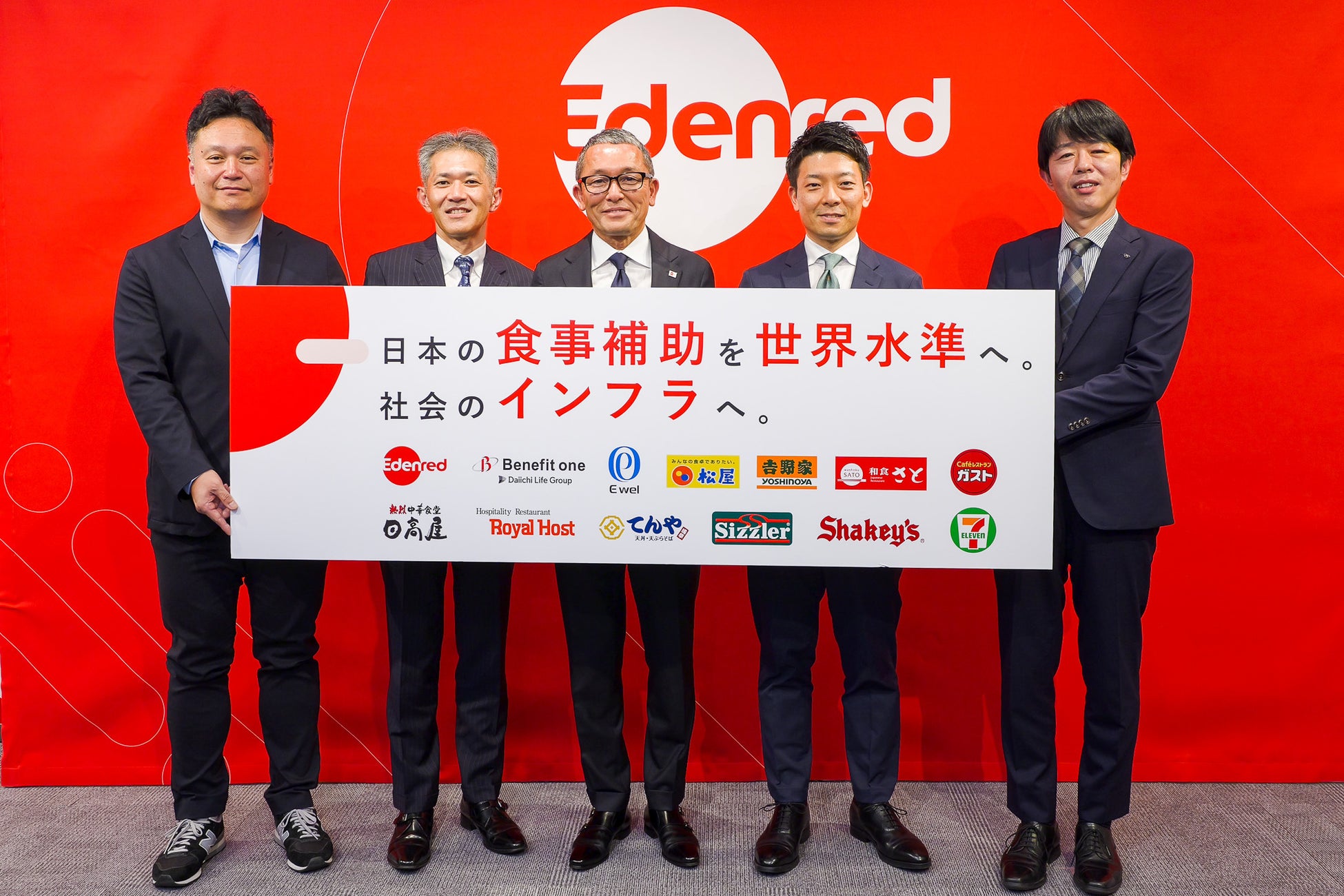
This announcement marked a historic turning point with the expansion of the tax-exempt limit for the "Meal Subsidy System" (doubling from 3,500 yen to 7,500 yen per month), which came into effect on April 1, 2026. The event announced strengthened collaboration to elevate Japan's meal subsidies to a "social infrastructure." Major welfare service providers Benefit One and Ewel, along with major restaurant chains Matsuya Foods and Yoshinoya, took the stage to declare a partnership transcending industry boundaries.
■ Background of Implementation - Elevating Japan's Meal Subsidies to "Global Standards" Following a Historic Revision After 42 Years
Currently, prolonged inflation and severe labor shortages cast a significant shadow over both household finances for the working generation and talent acquisition for companies. Against this social backdrop, a historic tax reform came into effect on April 1, 2026, doubling the tax-exempt limit for the meal subsidy system from 3,500 yen to 7,500 yen per month, a change after approximately 42 years.
This revision is not merely an expansion of allowances. Compared to providing the same amount as salary, it has the aspect of an effective "third wage increase" by reducing taxes and other deductions. In fact, the number of new companies adopting Edenred Japan's meal subsidy service "Ticket Restaurant" has surged by approximately 12.6 times compared to 2021, indicating unprecedented corporate interest.
However, traditional meal subsidies have been heavily dependent on physical facilities such as "company cafeterias," leading to a "welfare disparity" where adoption has not progressed among SMEs, regional offices, and remote workers. Therefore, this announcement aimed to leverage this historic turning point to expand "payment-based" meal subsidies (card or meal ticket type), which boast high adoption rates in other countries and do not rely on physical facilities, to companies nationwide in Japan, establishing them as essential social infrastructure. To achieve this, strengthened collaboration with two major welfare service providers and key affiliated merchants was announced.
■ Representative Amano Explains the Purpose of the Initiative
At the beginning of the announcement, Representative Director and President Sotaro Amano took the stage and first explained the current situation where the adoption of Japan's meal subsidy system lags behind other countries.
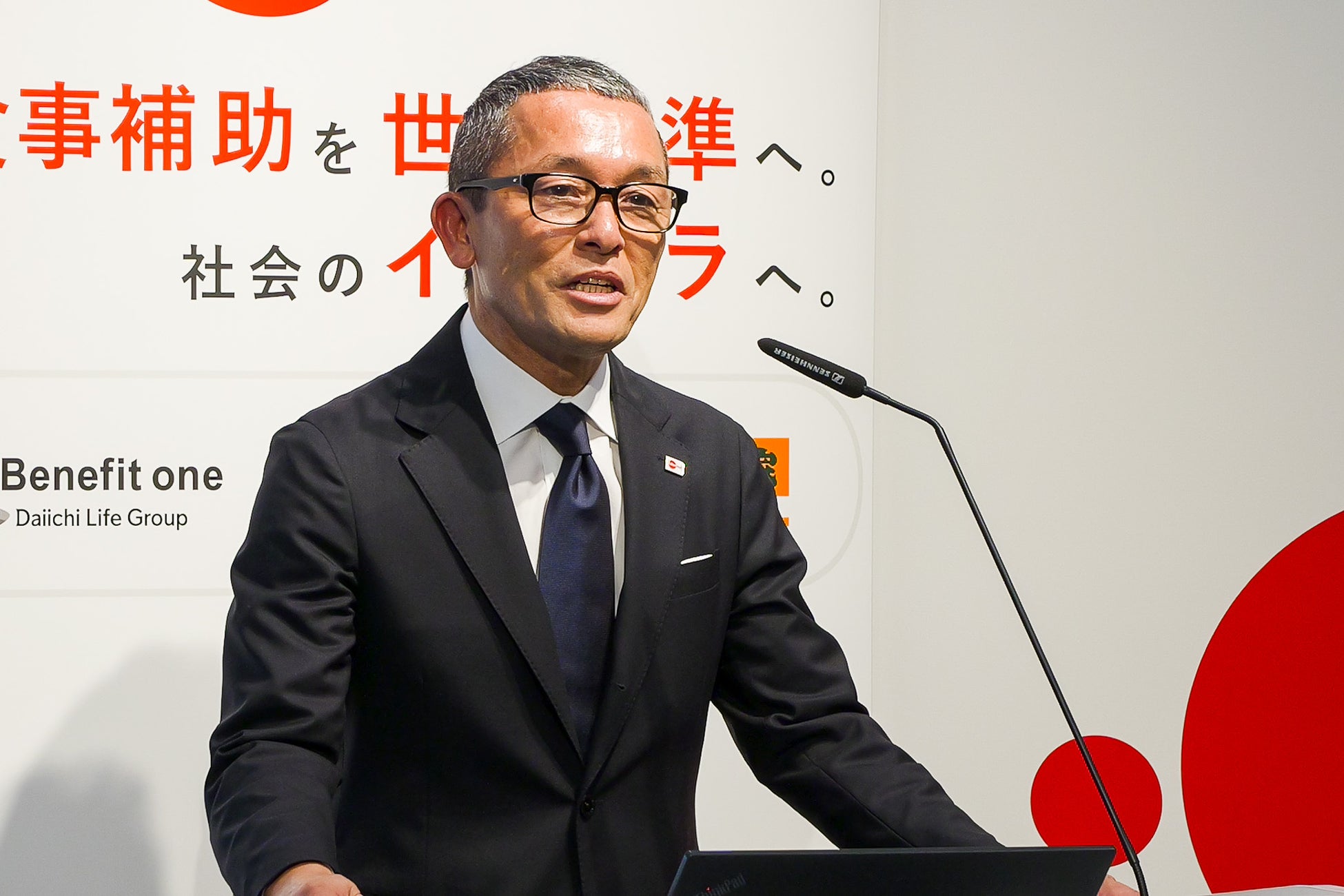
● Increase Japan's meal subsidy adoption rate from 14% to 50%. Establish "payment-based" subsidies, prevalent in SMEs worldwide.
Currently, the adoption rate of meal subsidies for the working population in other countries reaches 50-70%, whereas in Japan, it remains at only about 14%. A major factor hindering this adoption is the traditional notion that "meal subsidies = company cafeterias." In contrast, he explained that the mainstream in SMEs worldwide is "payment-based (card/meal ticket type)" meal subsidies, which do not require physical facilities.
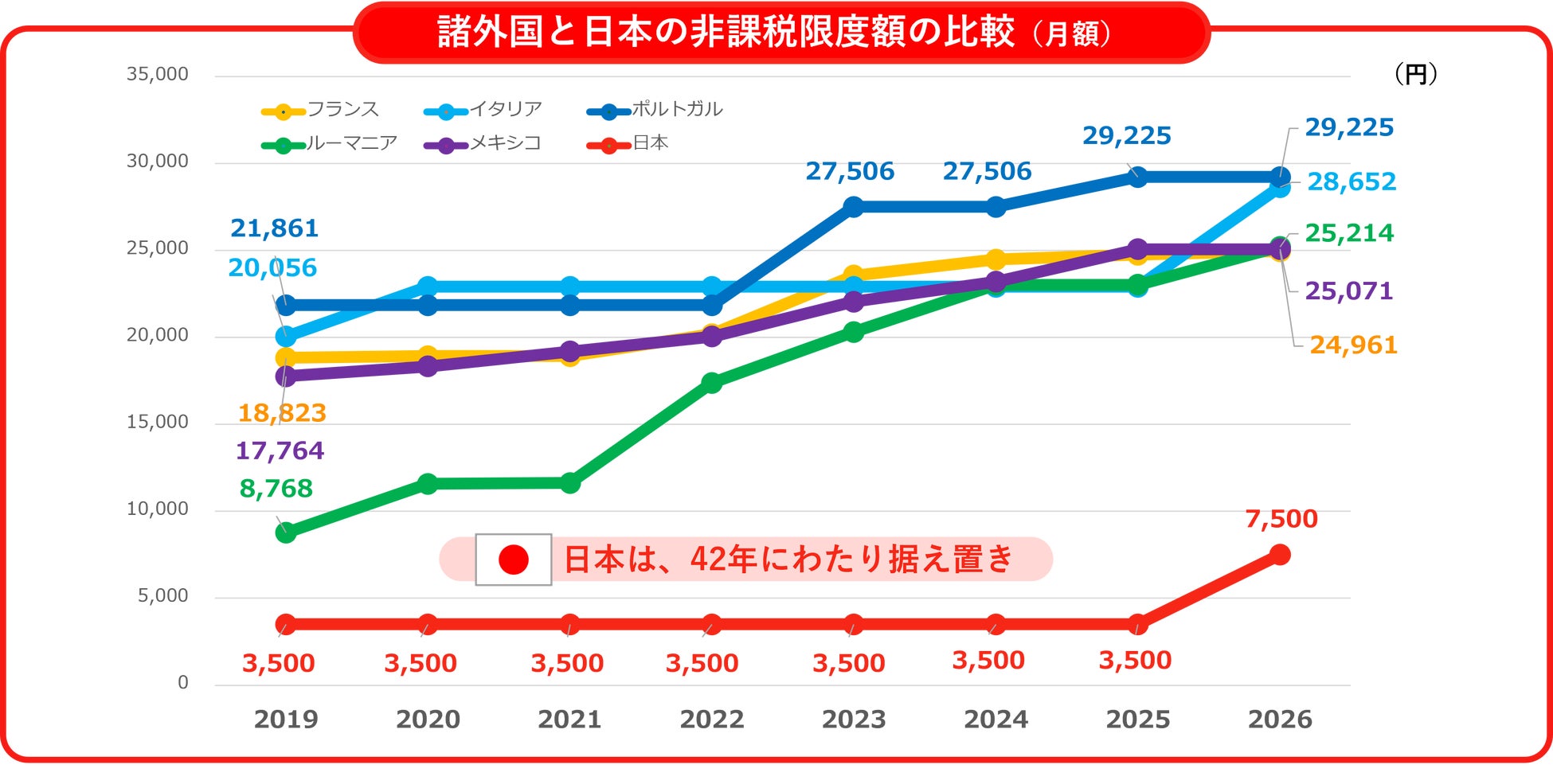
He also referred to tax-exempt limits in other countries, stating, "Tax-exempt limits in other countries range from 25,000 yen to 30,000 yen per month, which is approximately 7 to 10 times the scale of Japan's pre-revision amount (3,500 yen). In other countries, tax-exempt limits are flexibly reviewed in line with rising prices, functioning as a 'cost-of-living defense infrastructure.'" He spoke about the global standard for meal subsidies and shared his vision to raise Japan's meal subsidy adoption rate from the current 14% to 50%, along with the sentiment behind "Japan's meal subsidies to global standards. To social infrastructure."
● "Doubling" the tax-exempt limit for meal subsidies invigorates the Japanese economy
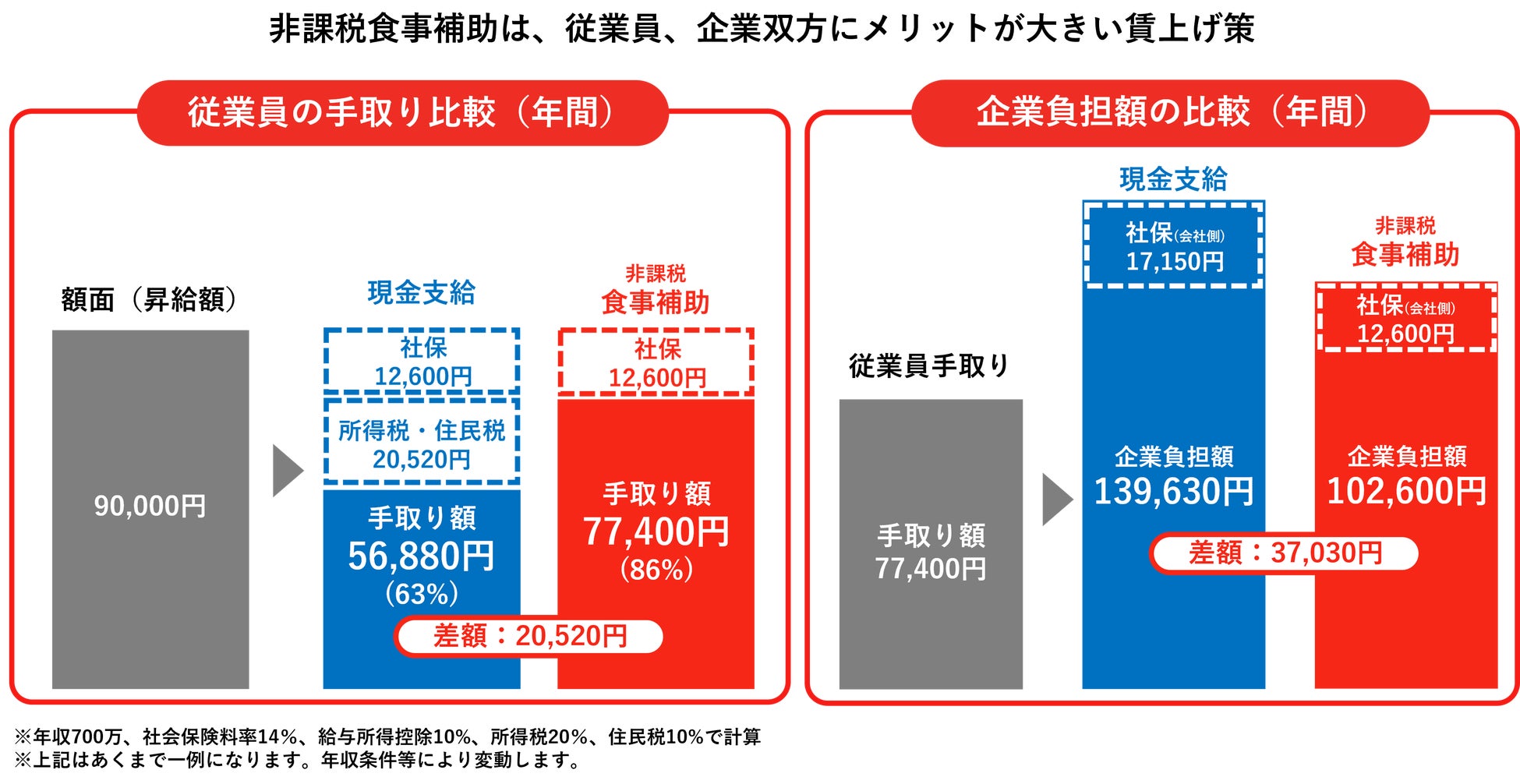
Amidst this, he emphasized that the historic tax reform, the first in 42 years, will invigorate the Japanese economy. With up to 90,000 yen annually becoming tax-exempt, an employee earning 7 million yen per year would see their take-home amount increase by approximately 20,000 yen compared to cash payment, providing direct living support. The benefits for companies are also significant; to achieve an equivalent increase in take-home pay (77,400 yen) for employees solely through salary, it would cost approximately 140,000 yen per person annually, including taxes and other burdens. By wisely utilizing the tax-exempt limit, there are extremely cost-effective benefits for both companies and employees, he explained again.
■ Strengthening Collaboration with Welfare and Restaurant Companies to Make Meal Subsidies an Infrastructure
Next, Edenred Japan's Executive Officer Takashi Koseki and Head of Merchant Sales Division Tetsuya Fukuda announced specific collaboration measures.
● Collaboration with two major welfare service providers: Making meal subsidies "standard" for all companies
Taking this revision as an opportunity, Edenred Japan announced strengthened collaboration with Benefit One Co., Ltd. and Ewel Co., Ltd., leaders in the welfare industry, to begin offering "Ticket Restaurant" through their "Cafeteria Plans."
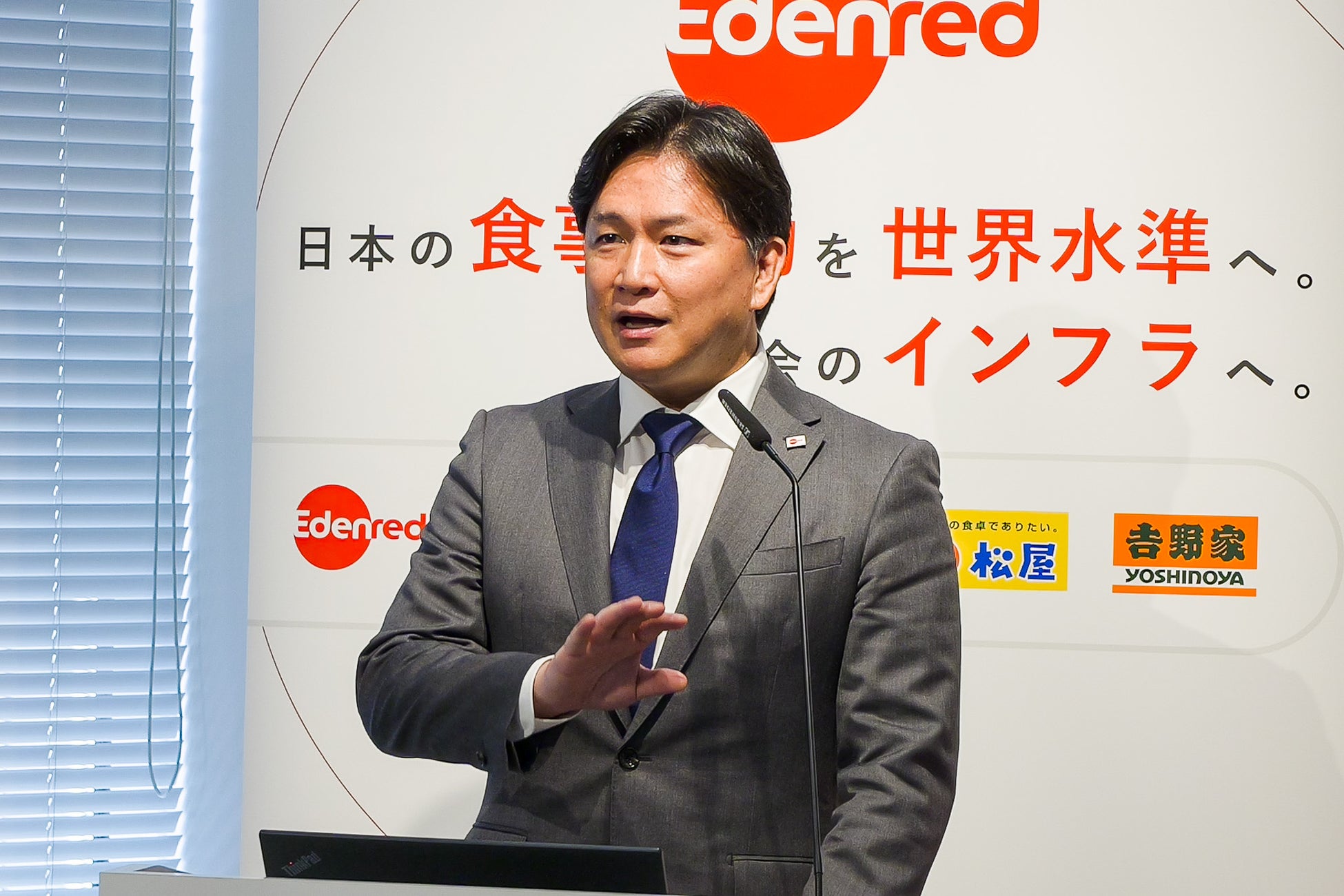
To minimize the cost barrier for adoption, special plans offering free initial fees for new users introduced through both companies, and a limited-time special campaign offering up to 50% off monthly fees for all new users until the end of June 2026, were also revealed. He expressed his enthusiasm, stating, "This will create an environment where even SMEs and regional offices without company cafeterias can adopt global-standard meal subsidies as a 'standard welfare benefit.'"
● Initiatives with 7 companies and 12 brands: Launch of "Food Coupon" service to support workers
To help realize a stable living environment resilient to prolonged inflation and an unstable economic situation, a new service called "Food Coupon" was announced, starting on the official app, as a new initiative with key affiliated merchants who together support food infrastructure.
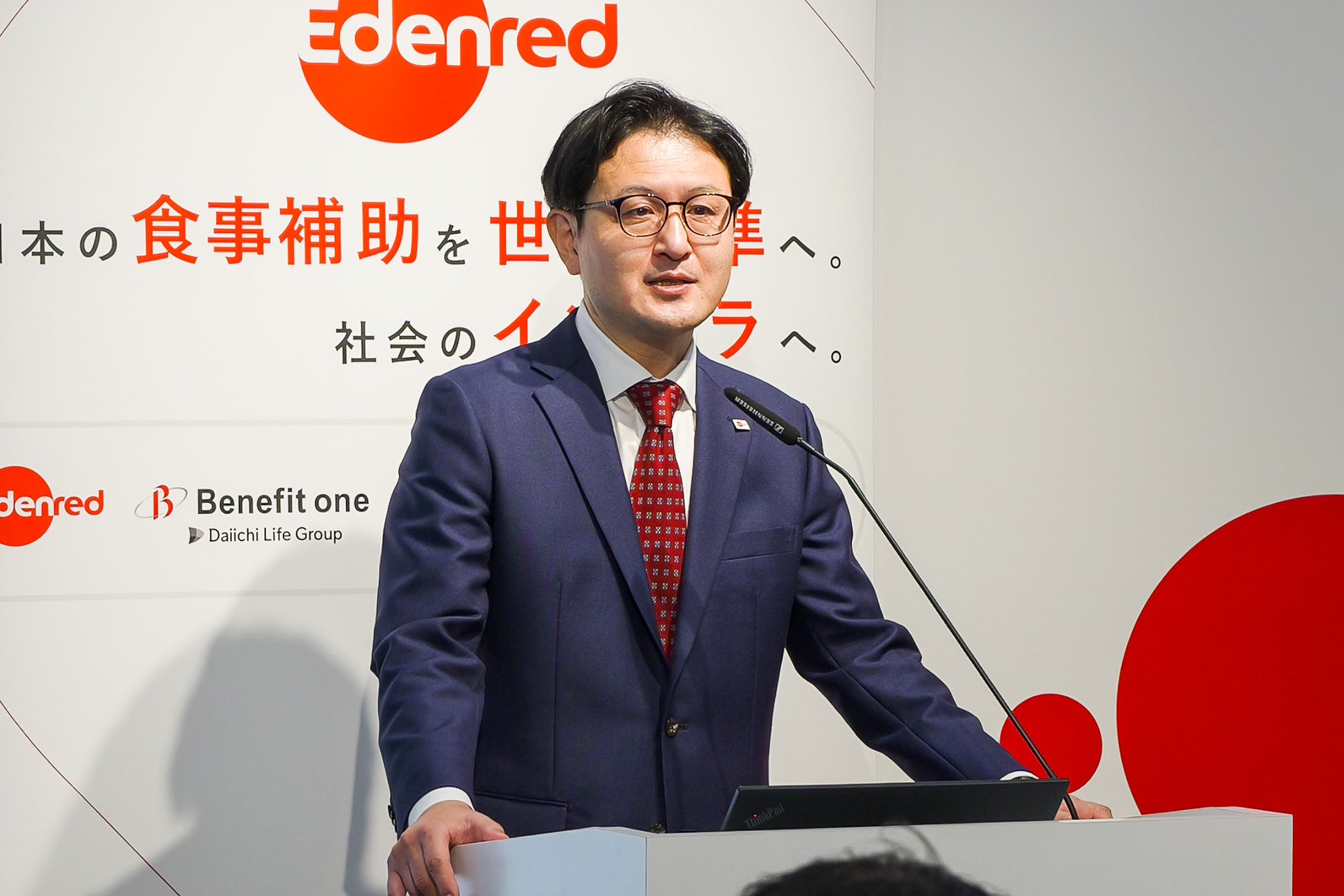
He explained that the desire to support the working generation facing rising prices aligned, leading to the participation of a total of 7 companies and 12 brands, including Matsuya, Yoshinoya, and Seven-Eleven. He stated that by providing an environment where people can enjoy affordable meals every day, anytime, and repeatedly, this initiative will not only improve corporate engagement but also contribute to attracting customers to affiliated merchants, maximizing a "win-win-win" for workers, companies, and merchants.
■ Benefit One and Ewel Explain the Background of the Collaboration
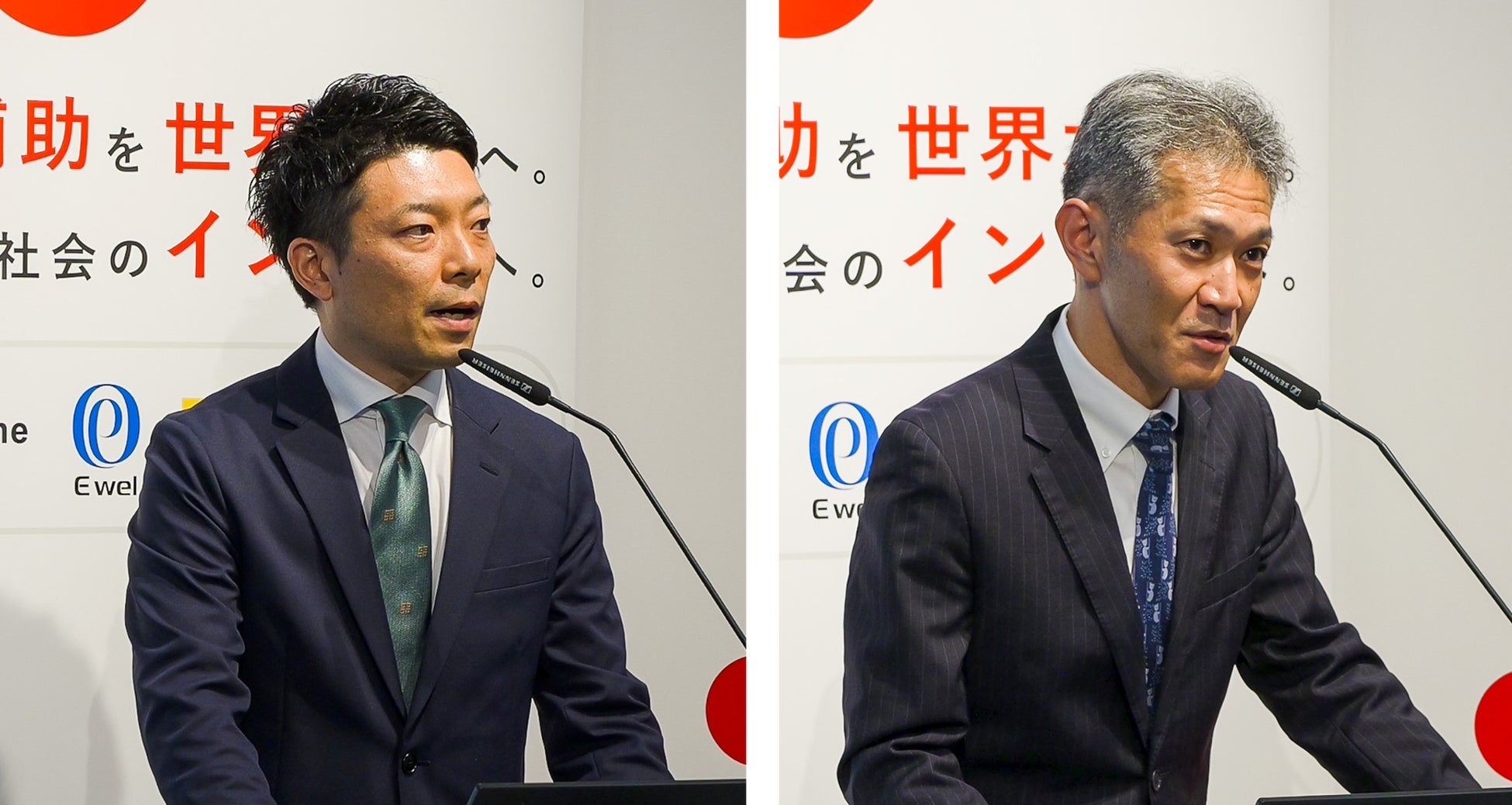
Regarding the collaboration with Edenred Japan, Kiyoshi Koga, Executive Officer and Head of Service Development Division at Benefit One, said, "As the 40-year-old limit has changed, which is a major turning point, inquiries about meal subsidies from companies have also increased. By collaborating with everyone, we aim to ensure that the benefits of this system revision are received throughout Japan, helping to solve corporate challenges." He spoke about the expectations for tax reform and future prospects.
Additionally, Koki Kajimura, Executive Officer and Head of HR Solutions Division at Ewel, stated, "For companies without company cafeterias, it is a reality that 'institutionalizing subsidies is difficult.' On the other hand, Ticket Restaurant offers a mechanism that companies can confidently adopt, as it allows control over where, how much, and when it is used. By collaborating with our cafeteria plan, we can combine the strengths of both companies, making it a more attractive system for both companies and employees." He expressed his expectations for the collaboration.
■ Matsuya and Yoshinoya also took the stage representing affiliated merchants
Representing affiliated merchants, Shinichiro Konno, Manager of the IT Solutions Department at Matsuya Foods Holdings Co., Ltd., took the stage and explained the background of their participation in the initiative: "We have been feeling daily that recent price increases are having a significant impact on everyone's meals. At that time, we heard Edenred's passionate policy of 'wanting to support working people through food and expand meal subsidies as social infrastructure,' and we deeply resonated with it."
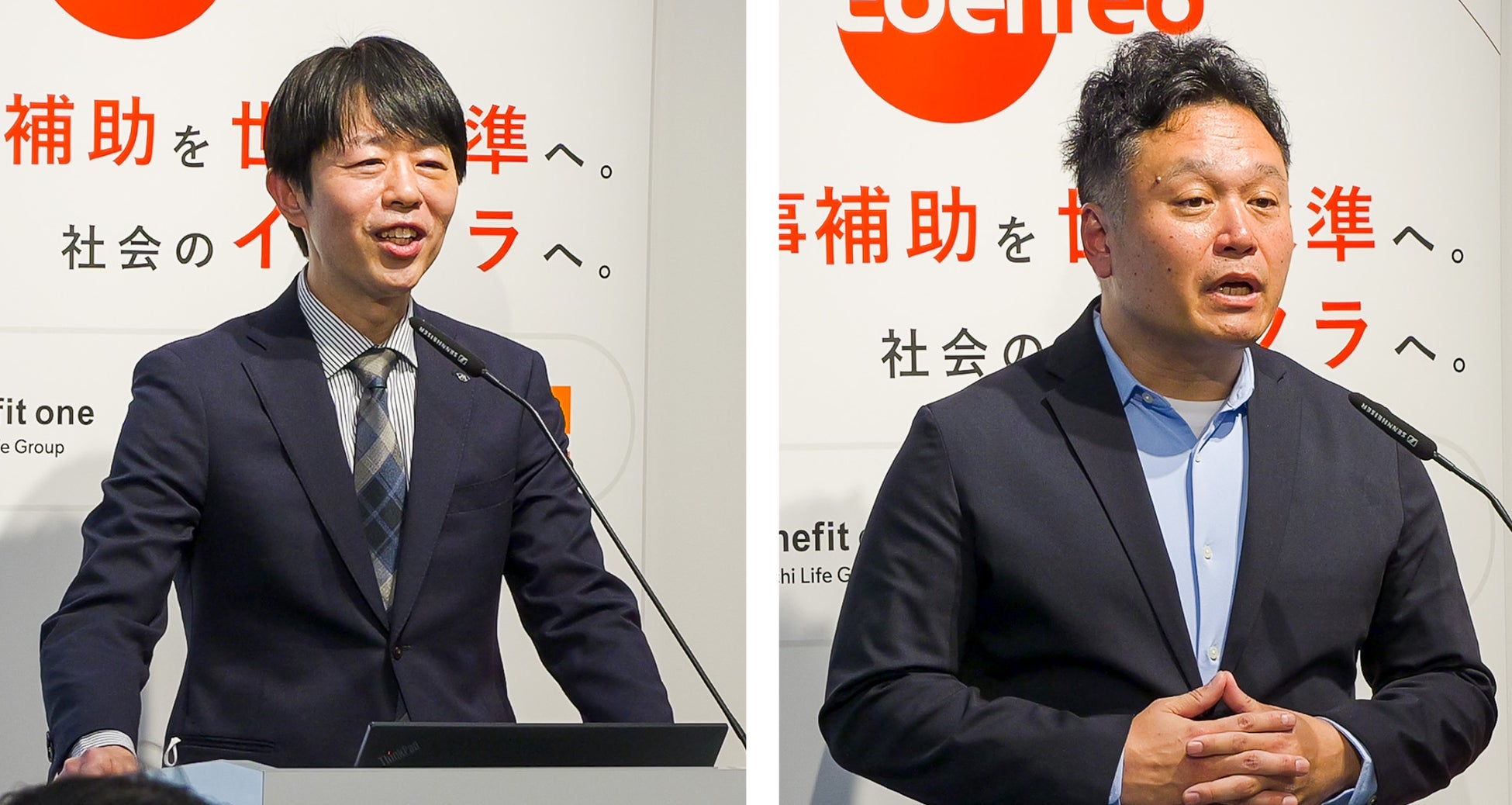
Additionally, Yuji Terazawa, Manager of the Marketing Planning Department, Planning Division at Yoshinoya Holdings Co., Ltd., spoke about his determination, stating, "Yoshinoya wants to firmly fulfill its role as 'daily food' for working people and as 'food infrastructure' that fundamentally supports daily life."
■ Future Outlook: Three Actions Towards Making Meal Subsidies a "Social Infrastructure"
To conclude the announcement, Representative Amano viewed this tax reform as the starting point for updating Japan's working environment and declared "three actions" to achieve a 50% adoption rate.
【Towards a World-Class Social Infrastructure. Three Actions to Accelerate Adoption】
① Penetration of tax-exempt meal subsidies
Tax benefits of meal subsidies
FAQ
How much has the tax-exempt limit for meal subsidies been expanded?
It has been doubled from 3,500 yen to 7,500 yen per month. This is a historic revision after approximately 42 years.
Which companies are participating in this collaboration?
Led by Edenred Japan, major welfare service providers Benefit One and Ewel, and major restaurant chains Matsuya Foods and Yoshinoya are participating.
What is 'payment-based' meal subsidy?
It is a meal subsidy service that does not rely on physical facilities like company cafeterias, allowing use with cards or meal tickets. It is easy for SMEs and remote workers to adopt.