[Survey on the actual situation of companies before the mandatory implementation of customer harassment countermeasures in 2026] 86.5% of HR personnel reported receiving reports/consultations of customer harassment from employees; approximately 90% conducted training, but only 80% felt 'sufficiently' prepared.
A survey conducted by e-Communications Inc. targeting 111 HR and general affairs personnel involved in harassment countermeasures and employee education/training at companies with 100 or more employees revealed that 86.5% had received reports or consultations regarding customer harassment from employees in the past year. While approximately 90% of companies conducted training on customer harassment, only about 80% felt adequately prepared for the mandatory implementation of countermeasures in 2026, indicating ongoing challenges in practical application and victim support.
📋 Article Processing Timeline
- 📰 Published: April 2, 2026 at 20:00
- 🔍 Collected: April 2, 2026 at 14:00
- 🤖 AI Analyzed: April 17, 2026 at 21:01 (367h 0m after Collected)
e-Communications Inc. (Headquarters: Minato-ku, Tokyo, Representative Director: Shinya Sato) is pleased to announce the results of a survey on the actual status of harassment prevention education, conducted among 111 HR and general affairs personnel involved in harassment countermeasures and employee education/training at companies with 100 or more employees, with a view to the mandatory implementation of corporate customer harassment countermeasures in 2026.
-
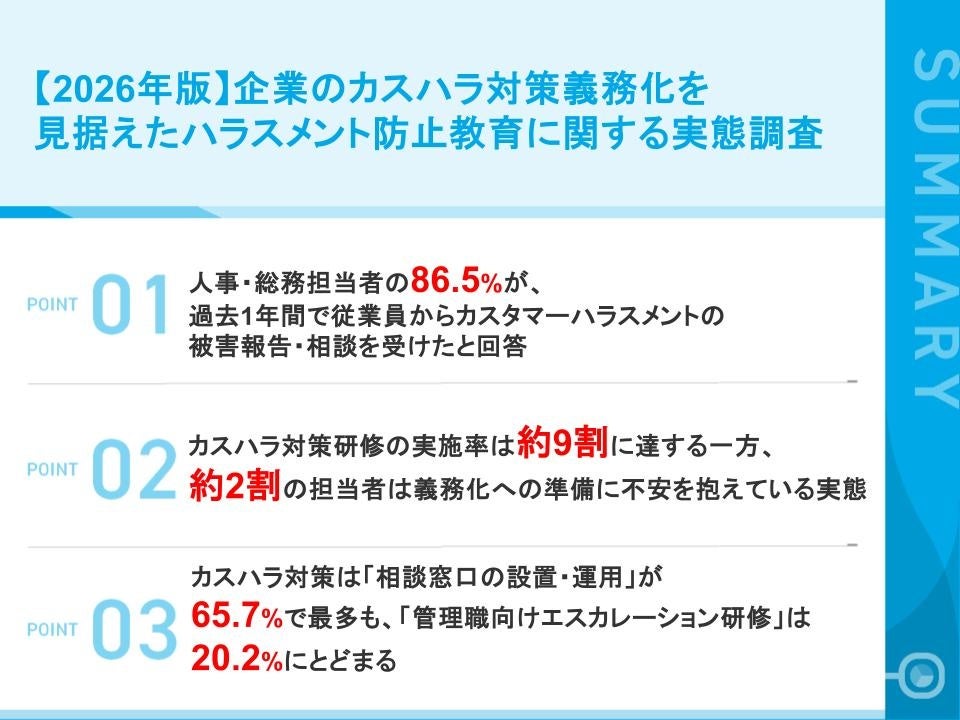
01|86.5% of HR and general affairs personnel reported receiving reports or consultations from employees regarding customer harassment in the past year.
-
02|While approximately 90% of companies conduct customer harassment training, about 20% of personnel feel anxious about preparing for the mandatory implementation.
-
03|The most common customer harassment countermeasure is "establishment and operation of consultation services" at 65.7%, but "escalation training for managers" remains at 20.2%.
Download this survey here: https://www.e-coms.co.jp/dowloads/20260402
■Survey Overview
-
Survey Name: [2026 Edition] Survey on the actual status of harassment prevention education with a view to the mandatory implementation of corporate customer harassment countermeasures
-
Survey Method: Internet survey planned by "Resa-P®︎", a research marketing service provided by IDEATECH
-
Survey Period: March 2, 2026 - March 3, 2026
-
Valid Responses: 111 HR and general affairs personnel involved in harassment countermeasures and employee education/training at companies with 100 or more employees
*Percentages are rounded to the second decimal place, so the total may not necessarily be 100.
■Approximately 90% of personnel have experienced reports/consultations of customer harassment
When asked "Q1. In the past year, have you received any reports or consultations from employees who have experienced customer harassment (significant nuisance behavior from customers, etc.) from customers or business partners?" (n=111), the response was "Yes" at 86.5% and "No" at 13.5%.
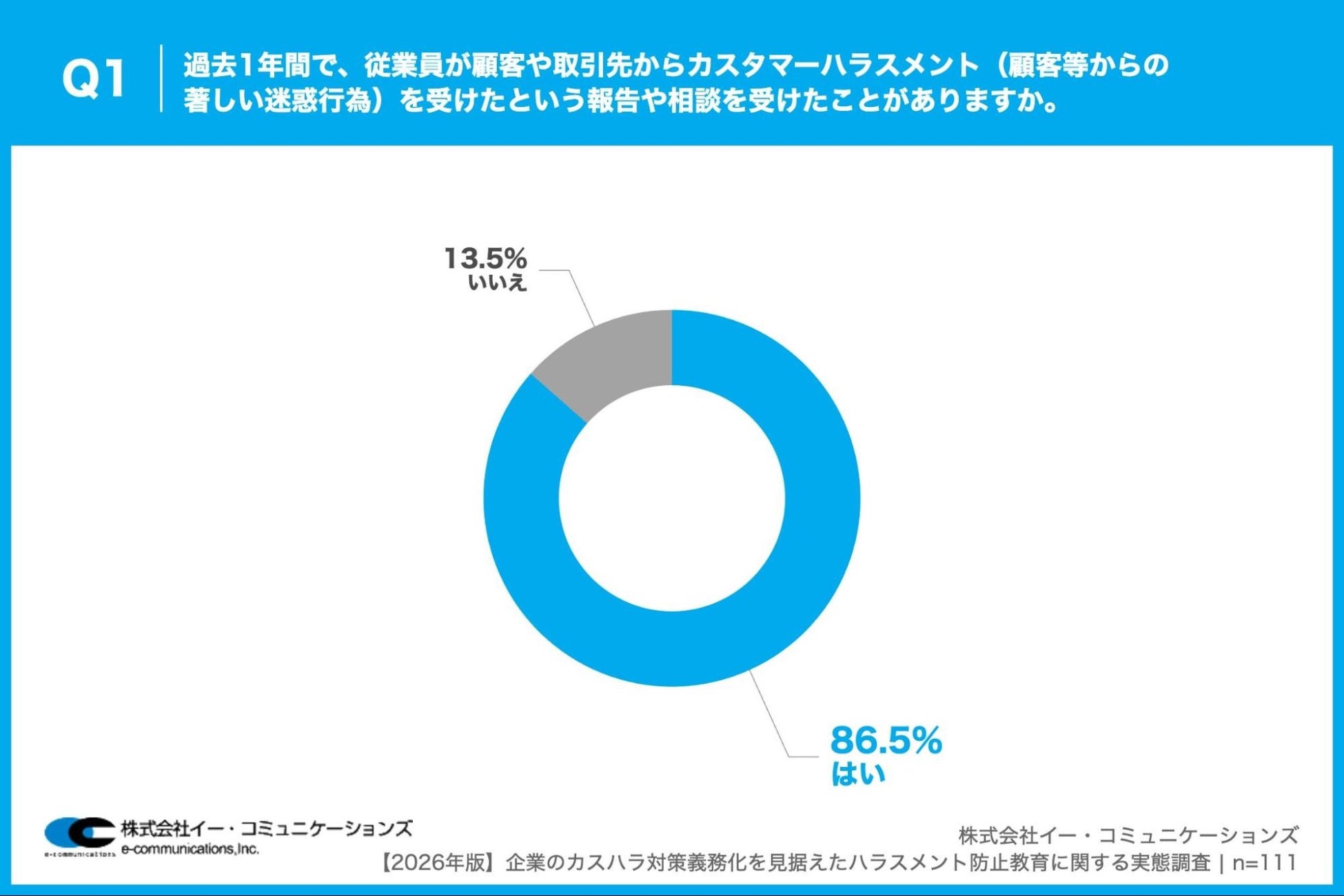
・Yes: 86.5%
・No: 13.5%
・Don't know/Cannot answer: 0.0%
■Content of harassment training conducted: "Sexual harassment" is the most common at 66.7%, with approximately half also conducting "customer harassment" training.
When asked "Q2. Please tell us about the content of harassment prevention education/training conducted at your company in the past year. (Multiple answers)" (n=111), the responses were "Sexual harassment" at 66.7%, "Power harassment" at 58.6%, and "Customer harassment" at 48.6%.
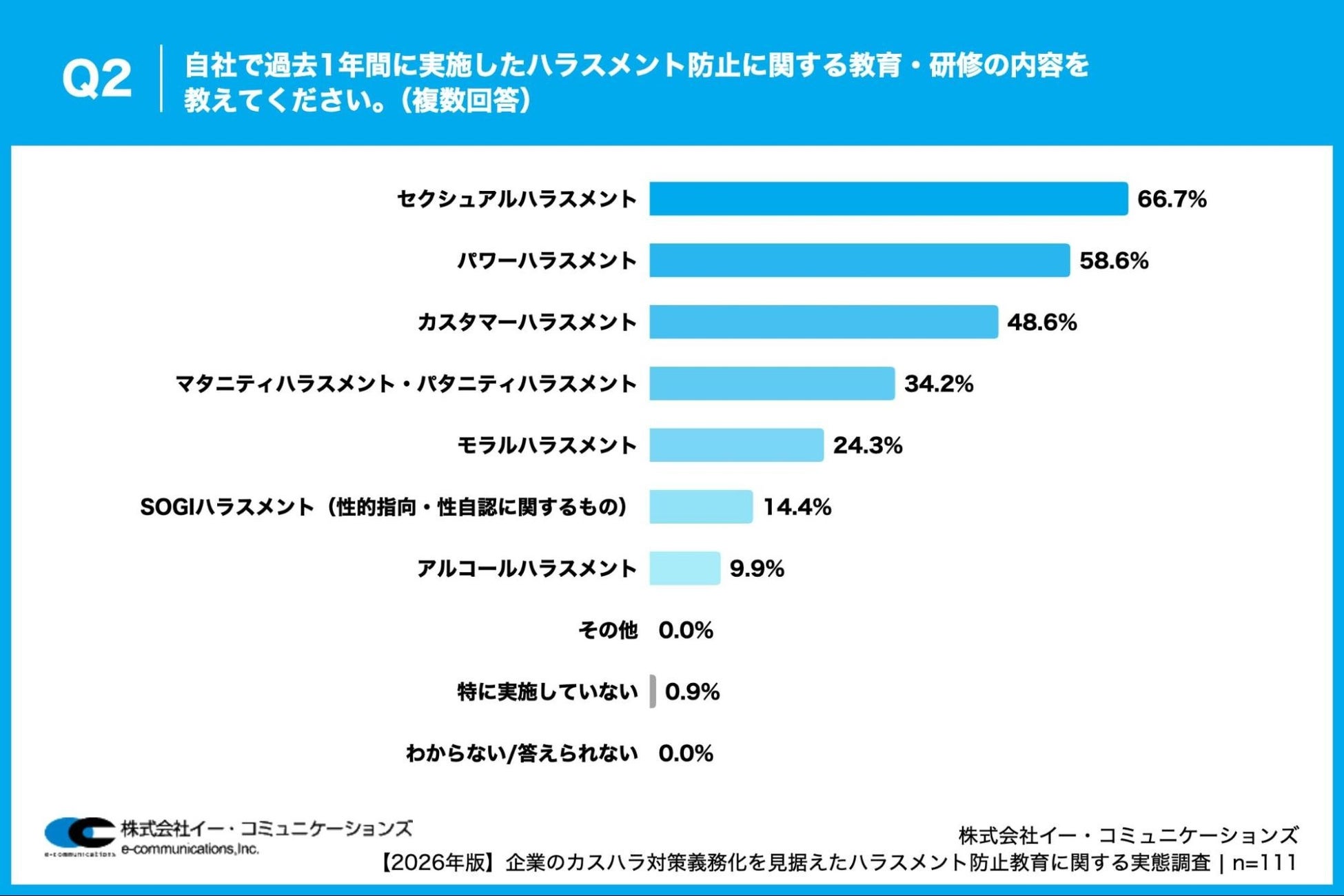
・Sexual harassment: 66.7%
・Power harassment: 58.6%
・Customer harassment: 48.6%
・Maternity harassment/Paternity harassment: 34.2%
・Moral harassment: 24.3%
・SOGI harassment (related to sexual orientation/gender identity): 14.4%
・Alcohol harassment: 9.9%
・Other: 0.0%
・Not specifically conducted: 0.9%
・Don't know/Cannot answer: 0.0%
■89.2% of personnel conduct training specifically for customer harassment countermeasures as a regular program.
When asked "Q3. Does your company conduct training/education specifically for customer harassment countermeasures as a regular in-house program?" (n=111), the response was "Yes" at 89.2% and "No" at 10.8%.
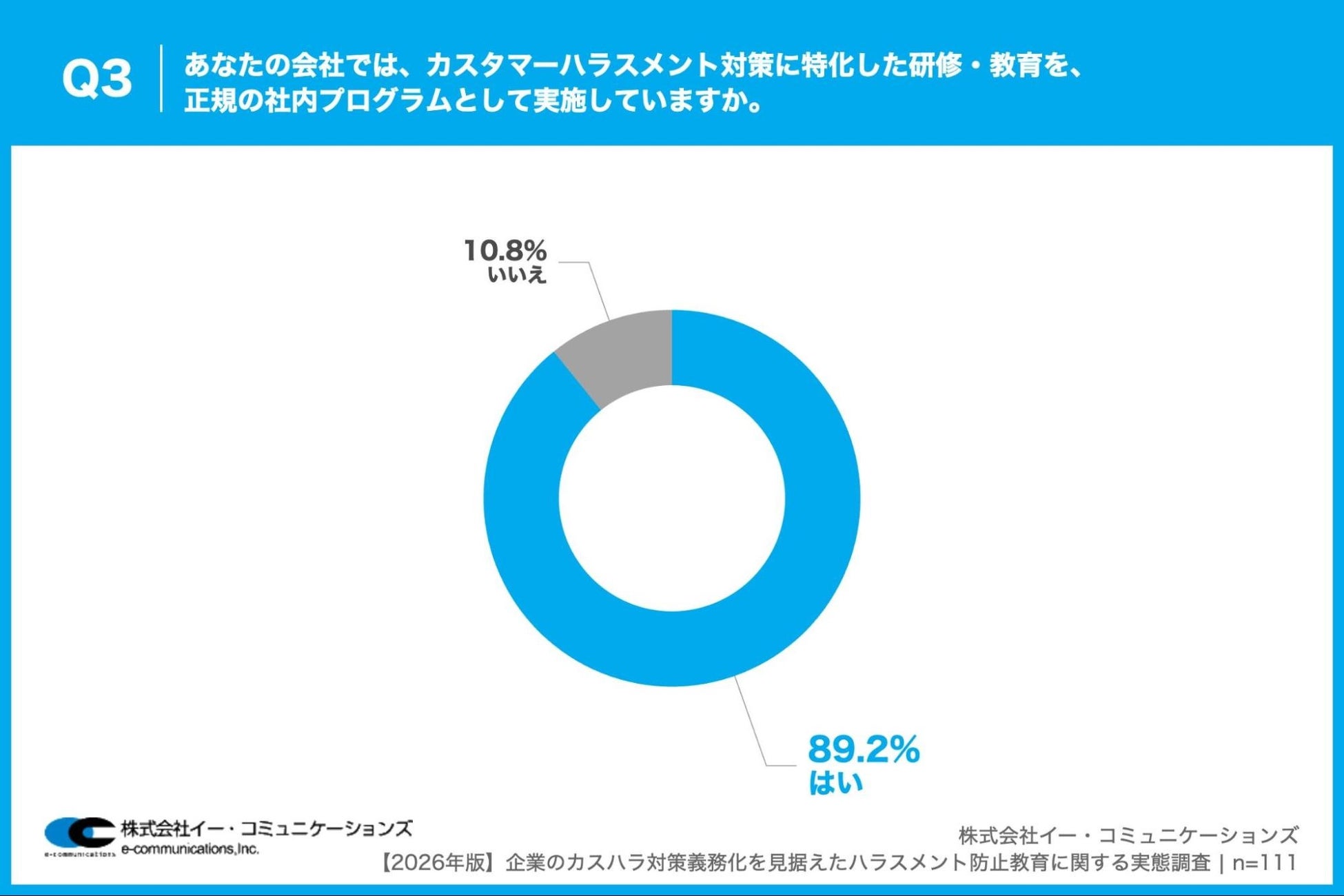
・Yes: 89.2%
・No: 10.8%
・Don't know/Cannot answer: 0.0%
■Customer harassment training: "e-learning and online tests" at 51.5%, followed by "classroom lectures" and "role-playing" at 50.5% each.
When asked "Q4. For those who answered 'Yes' to Q3. Please tell us about the content of the training/education conducted as a customer harassment countermeasure. (Multiple answers)" (n=99), the responses were "e-learning and online tests" at 51.5%, "classroom training to learn about the definition and cases of customer harassment" at 50.5%, and "role-playing/practical training for customer service" at 50.5%.
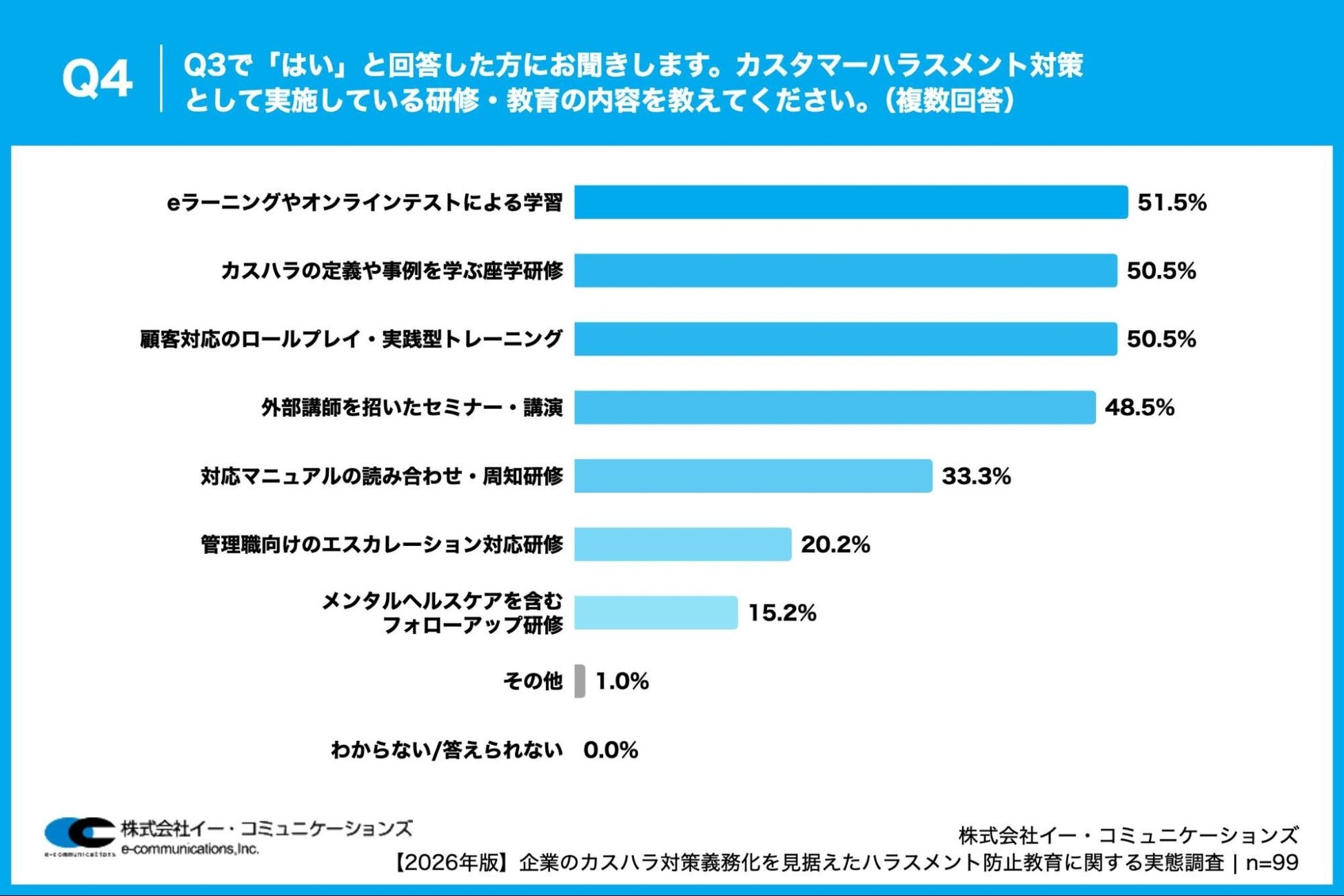
・e-learning and online tests: 51.5%
・Classroom training to learn about the definition and cases of customer harassment: 50.5%
・Role-playing/practical training for customer service: 50.5%
・Seminars/lectures by external instructors: 48.5%
・Review/dissemination training of response manuals: 33.3%
・Escalation response training for managers: 20.2%
・Follow-up training including mental health care: 15.2%
・Other: 1.0%
・Don't know/Cannot answer: 0.0%
■Even among personnel who have not implemented customer harassment countermeasures, approximately 60% recognize the importance of implementation.
When asked "Q5. For those who answered 'No' to Q3. Do you think it is important to implement training/education specifically for customer harassment countermeasures as a regular in-house program?" (n=12), the responses were "Strongly agree" at 0.0% and "Somewhat agree" at 58.3%.
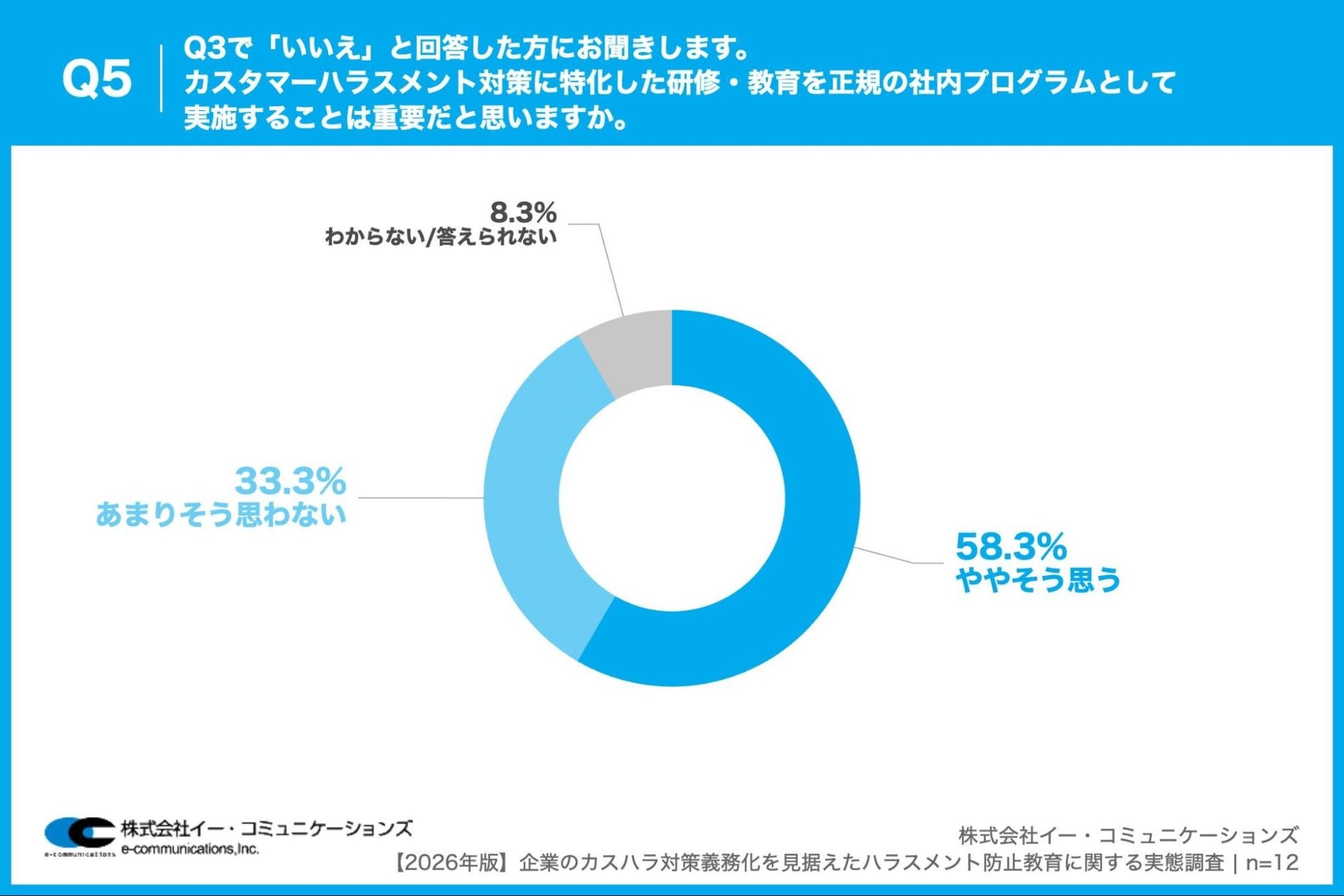
・Strongly agree: 0.0%
・Somewhat agree: 58.3%
・Somewhat disagree: 33.3%
・Strongly disagree: 0.0%
・Don't know/Cannot answer: 8.3%
■Reason for not implementing customer harassment training: No. 1 is "difficult to educate all employees due to the large number of target employees."
When asked "Q6. For those who answered 'No' to Q3. Please tell us the reasons why you have not been able to implement training/education specifically for customer harassment countermeasures. (Multiple answers)" (n=12), the response was "Because there are many target employees, and it is difficult to educate all of them" at 33.3%.
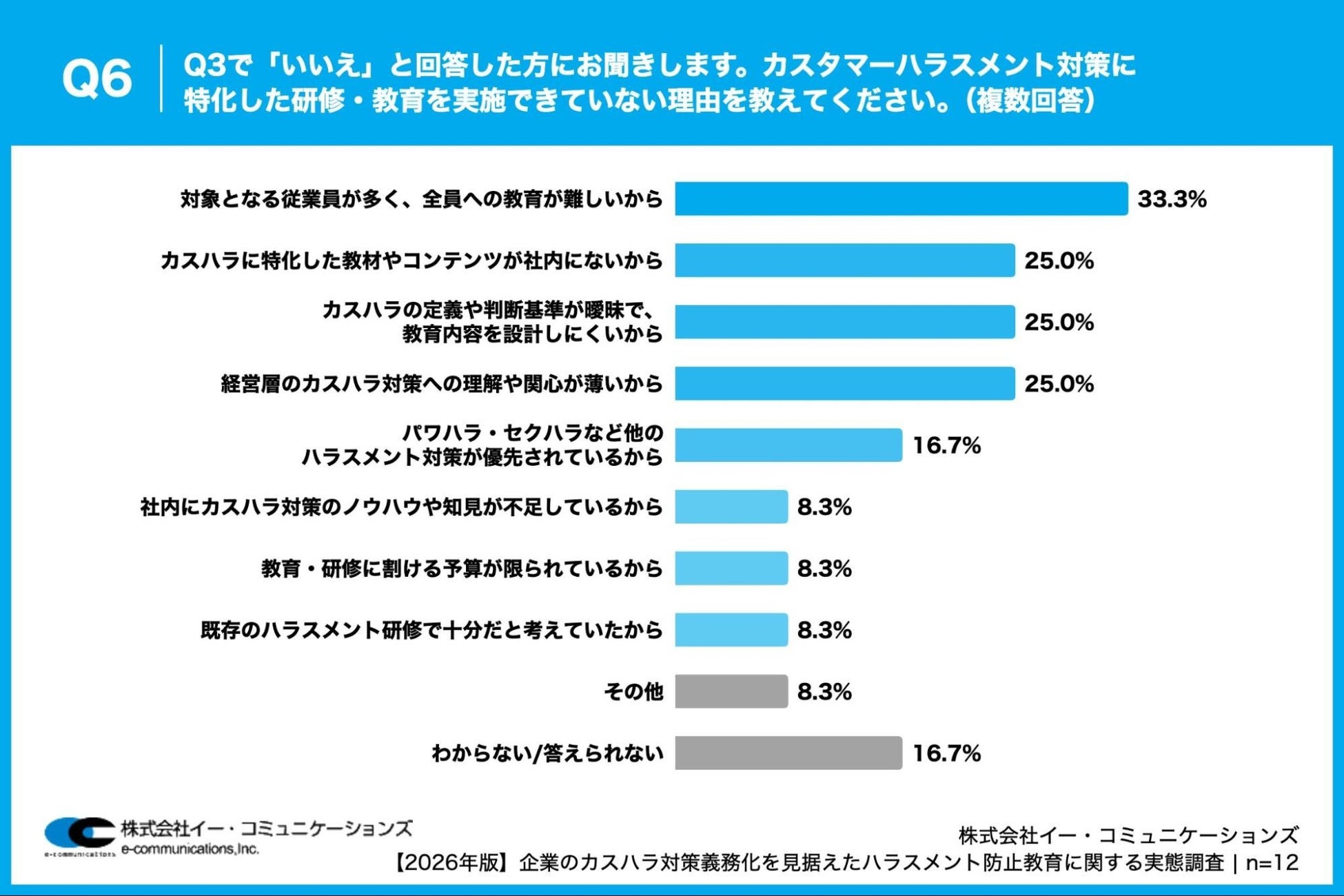
・Because there are many target employees, and it is difficult to educate all of them: 33.3%
・Because there are no teaching materials or content specifically for customer harassment within the company: 25.0%
・Because the definition and criteria for customer harassment are ambiguous, making it difficult to design educational content: 25.0%
・Because management's understanding and interest in customer harassment countermeasures are low: 25.0%
・Because other harassment countermeasures such as power harassment and sexual harassment are prioritized: 16.7%
・Because the company lacks know-how and knowledge regarding customer harassment countermeasures: 8.3%
・Because the budget allocated for education/training is limited: 8.3%
・Because existing harassment training was considered sufficient: 8.3%
・Other: 8.3%
・Don't know/Cannot answer: 16.7%
■Over 90% of personnel have implemented some form of customer harassment countermeasures at their company.
When asked "Q7. Does your company implement any countermeasures against customer harassment?" (n=111), the response was "Yes" at 91.9% and "No" at 8.1%.
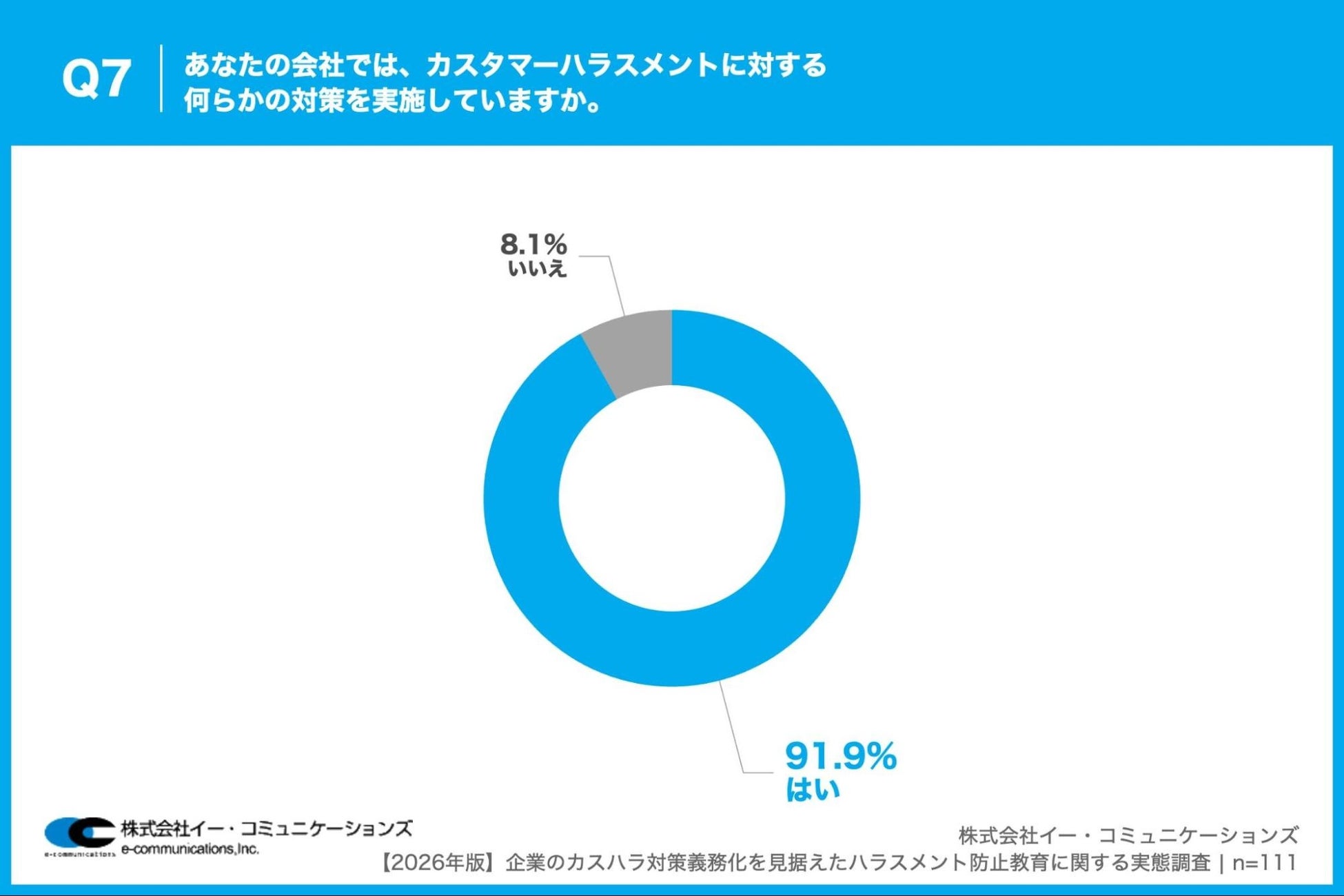
・Yes: 91.9%
・No: 8.1%
・Don't know/Cannot answer: 0.0%
■Implemented customer harassment countermeasures: "Establishment and operation of consultation services for employees" and "Formulation and internal dissemination of a policy that does not tolerate customer harassment" are top.
When asked "Q8. For those who answered 'Yes' to Q7. Please tell us about the content of the customer harassment countermeasures implemented at your company. (Multiple answers)" (n=102), the responses were "Establishment and operation of consultation services for employees" at 65.7%, "Formulation and internal dissemination of a policy that does not tolerate customer harassment" at 49.0%, and "Development of response manuals and rules for when customer harassment occurs" at 44.1%.
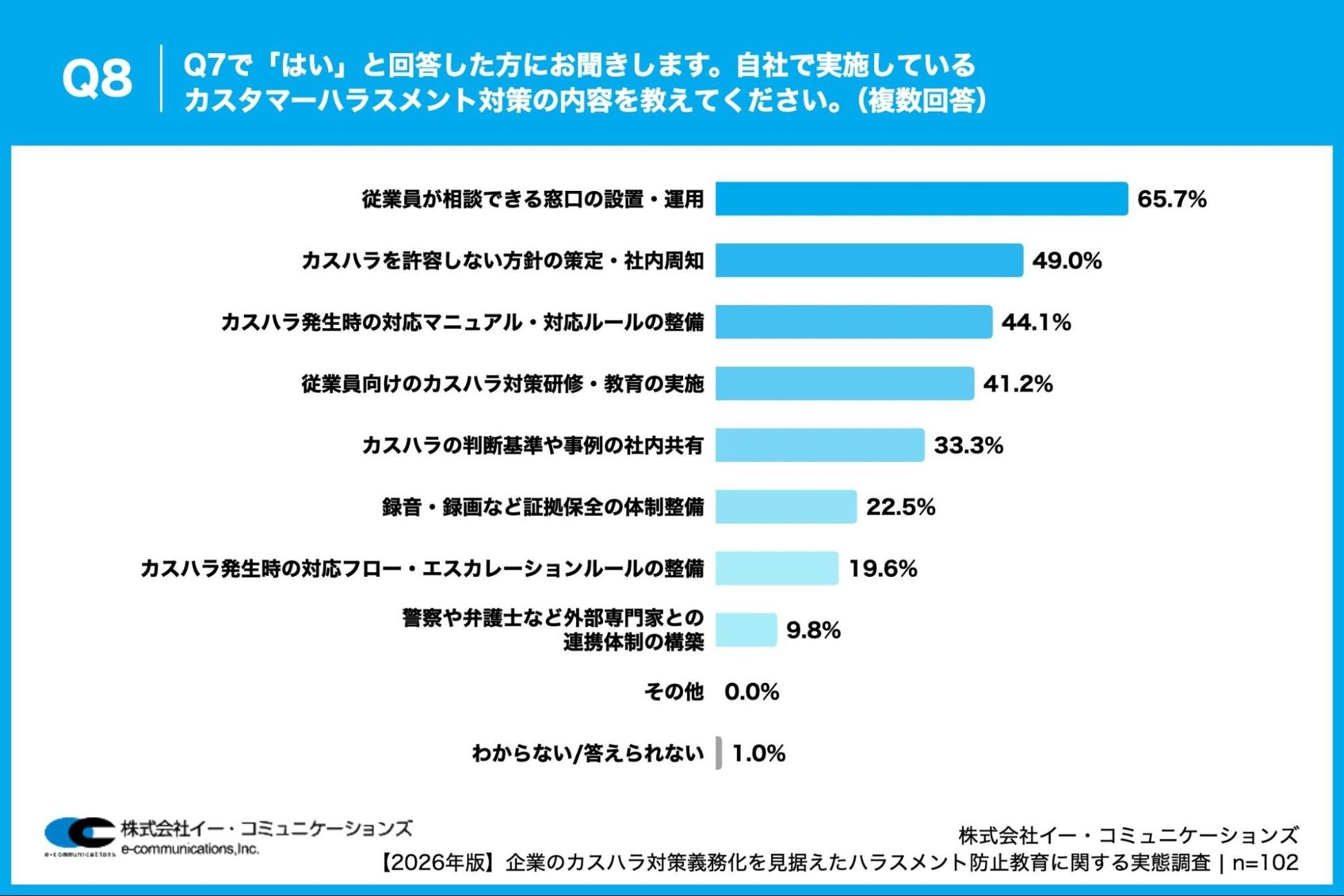
・Establishment and operation of consultation services for employees: 65.7%
・Formulation and internal dissemination of a policy that does not tolerate customer harassment: 49.0%
・Development of response manuals and rules for when customer harassment occurs: 44.1%
・Implementation of customer harassment countermeasures training/education for employees: 41.2%
・Internal sharing of customer harassment judgment criteria and cases: 33.3%
・Establishment of a system for preserving evidence such as recordings and videos: 22.5%
・Development of response flows and escalation rules for when customer harassment occurs: 19.6%
・Establishment of a cooperation system with external experts such as police and lawyers: 9.8%
・Other: 0.0%
・Don't know/Cannot answer: 1.0%
■Over 80% of personnel feel "sufficiently" prepared for the mandatory implementation of customer harassment countermeasures, while approximately 20% remain anxious.
When asked "Q9. Do you think your company's preparations for the mandatory implementation of customer harassment countermeasures in October 2026 are sufficiently progressing?" (n=111), the responses were "Strongly agree" at 29.7% and "Somewhat agree" at 52.3%.
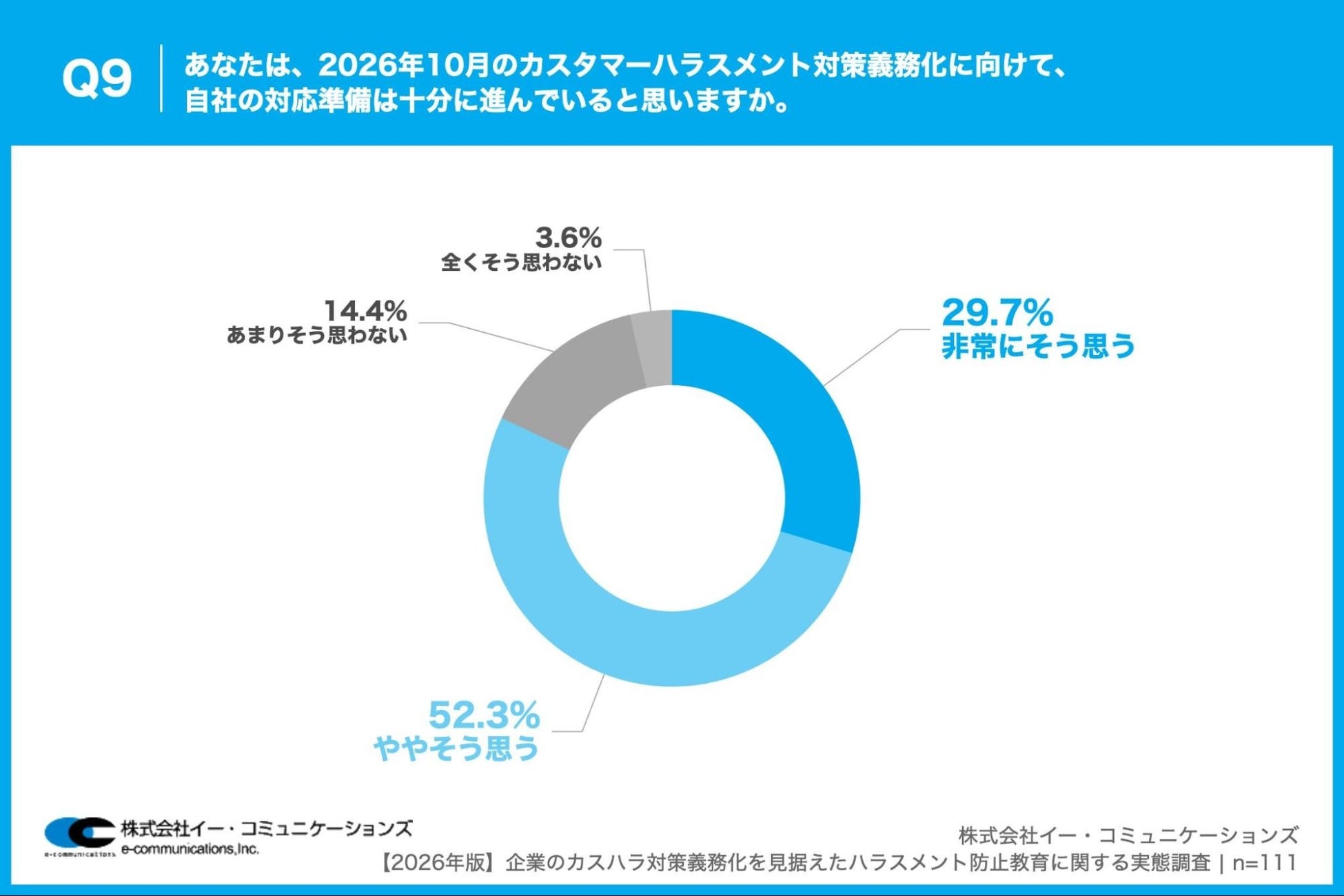
・Strongly agree: 29.7%
・Somewhat agree: 52.3%
・Somewhat disagree: 14.4%
・Strongly disagree: 3.6%
・Don't know/Cannot answer: 0.0%
■Voices such as "education does not permeate" and "too many types of harassment" indicate challenges in on-site operations.
When asked "Q10. For those who answered anything other than 'Don't know/Cannot answer' to Q9. Please freely tell us what you feel about the preparations for the mandatory implementation of customer harassment countermeasures and customer harassment education in general." (n=111), 47 responses were obtained.
・Regularly conduct employee surveys.
・There are too many types of harassment. I think it would be better to combine them and have general harassment countermeasures.
・It would be best if society did not need countermeasures.
・It is difficult to respond because many customers have dementia.
・The awareness of those receiving training is still low.
・Even with education, it does not easily permeate.
■Summary
This survey targeted 111 HR and general affairs personnel involved in harassment countermeasures and employee education/training at companies with 100 or more employees, focusing on the actual status of harassment prevention education with a view to the mandatory implementation of corporate customer harassment countermeasures in 2026. The results revealed that approximately 90% of personnel had received reports or consultations of customer harassment from employees in the past year, and only about 80% felt "sufficiently" prepared for the mandatory implementation.
First, 86.5% of personnel had received reports or consultations regarding customer harassment from employees in the past year. 89.2% of companies conduct training specifically for customer harassment countermeasures as a regular program, and 91.9% of companies implement some form of customer harassment countermeasures, indicating that many companies are taking action. The content of the training primarily includes "e-learning" (51.5%), "classroom training," and "role-playing" (50.5% each). Among the countermeasures, "establishment and operation of consultation services" (65.7%) was the most common, followed by "formulation and internal dissemination of policies" (49.0%) and "development of response manuals" (44.1%). Regarding preparations for mandatory implementation, 82.0% of personnel felt "sufficiently progressing" ("Strongly agree" 29.7%, "Somewhat agree" 52.3%).
This survey revealed that while companies' customer harassment countermeasures are at a high level in terms of formal aspects such as training implementation and establishment of consultation services, a certain number of personnel feel anxious about preparations for mandatory implementation, and challenges remain in the effectiveness of education and victim support systems. It will be necessary to go beyond merely establishing systems and to promote initiatives aimed at improving practical response capabilities and fostering an organizational culture that protects employees.
Download this survey here: https://www.e-coms.co.jp/dowloads/20260402
■e-learning service "SAKU-SAKU Testing"
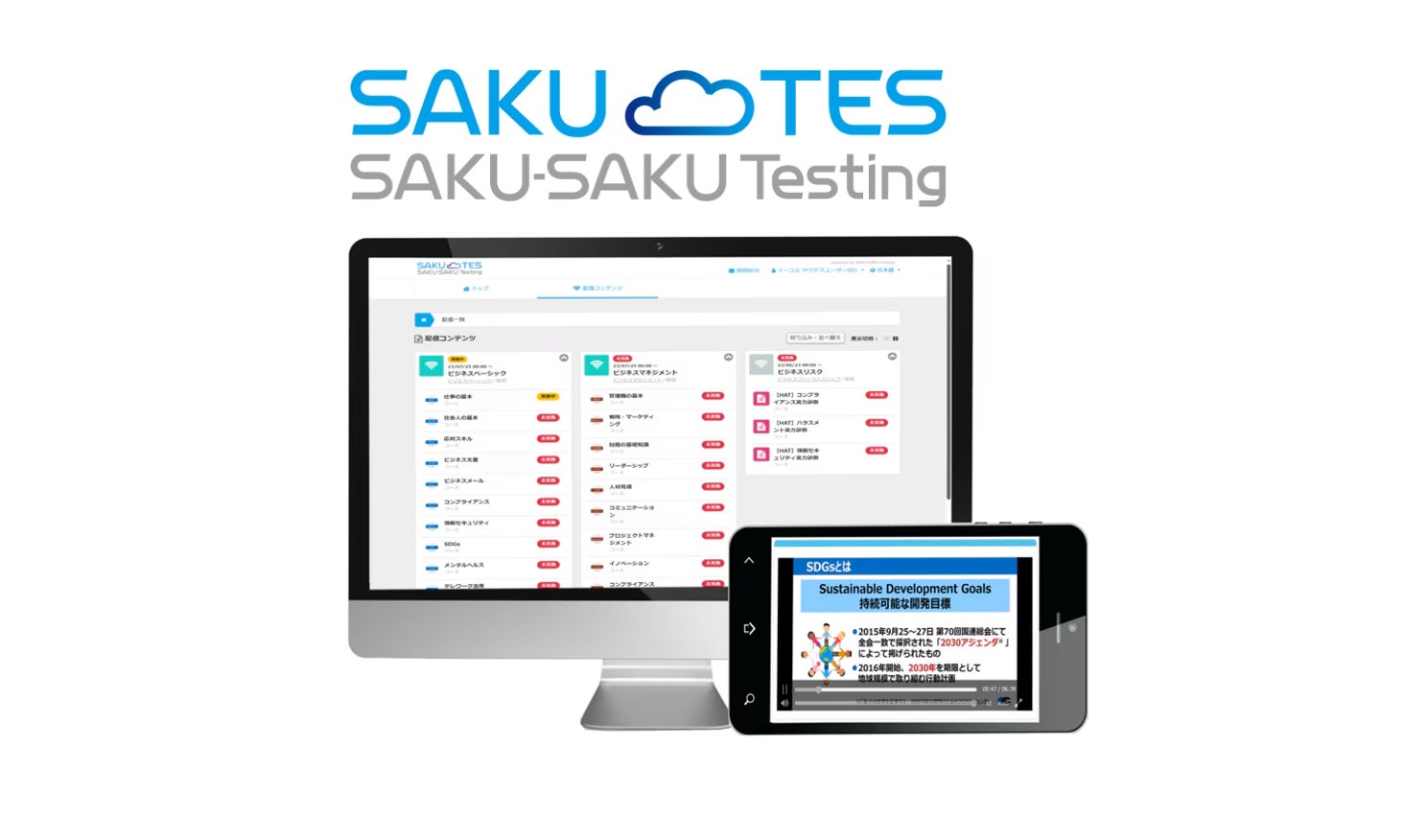
The e-learning platform "SAKU-SAKU Testing" can also be used for customer harassment education. It allows companies to incorporate their original training content and questions, and to differentiate content based on the recipient's position and duties, making it easy to conduct training tailored to the target audience.
As content specifically for customer harassment countermeasures, we offer the "Lawyer's Explanation: Easy-to-Understand Corporate Compliance Course" for customer harassment, which also covers the latest legal revisions.
Click here for details: https://www.e-coms.co.jp/business/e-learning
■Company Profile
Company Name: e-Communications Inc.
Established: May 1, 2000
Representative: Shinya Sato, Representative Director
Location: SENQ Roppongi 704, Shin-Roppongi Building, 7-15-7 Roppongi, Minato-ku, Tokyo 106-0032
Business Activities:
1. Provision of various solutions for qualification and certification exams
2. Consulting for qualification and exam operations and system design
3. Provision of e-learning services
4. Production, provision, and sale of various contents
5. Entrusted services for settlement of sales proceeds and accounting work via the Internet