Dentsu Soken and Japan Fact-check Center Announce Results of "Dentsu Soken Compass Vol. 17 Information Integrity Survey 2026"
Dentsu Soken and the Japan Fact-check Center (JFC) have released the main findings of their "Dentsu Soken Compass Vol. 17 Information Integrity Survey 2026." The survey, supervised by Professor Shinichi Yamaguchi of the International University of Japan's Global Communications Center, focuses on understanding public awareness regarding information integrity and identifying challenges and hints for improvement.
📋 Article Processing Timeline
- 📰 Published: April 2, 2026 at 22:00
- 🔍 Collected: April 2, 2026 at 13:35
- 🤖 AI Analyzed: April 17, 2026 at 18:53 (365h 18m after Collected)
Dentsu Soken Inc. (Headquarters: Minato-ku, Tokyo; President & CEO: Hirohisa Iwamoto; hereinafter "Dentsu Soken"), a company that realizes the evolution of companies and society through technology, and the Japan Fact-check Center (Editor-in-Chief: Daisuke Furuta; hereinafter "JFC") announced the main findings of the "Dentsu Soken Compass Vol. 17 Information Integrity Survey 2026" on Thursday, April 2, 2026.
The Quality of Society Center (hereinafter "QoS Center") of Dentsu Soken's think tank organization, the Humanology Innovation Headquarters, conducts quantitative surveys titled "Dentsu Soken Compass" to understand "how changes in people's awareness shape society" under the theme of Quality of Society. This 17th survey, supervised by Professor Shinichi Yamaguchi of the International University of Japan's Global Communications Center, focused on "information integrity," following the "Dentsu Soken Compass Vol. 15" announced on April 2 last year.
The detailed report of this survey can be viewed here.
■ Background and Purpose of the Survey
"Information integrity" refers to the accuracy, consistency, and reliability of information. It is a theme that concerns people's daily lives and national security, and efforts to ensure information integrity are being promoted internationally. In Japan, in recent years, the impact of online misinformation, disinformation, discriminatory expressions, and slander on society has become serious. In light of this situation, this survey aimed to understand the current situation and challenges from people's awareness and to find hints that contribute to improving information integrity.
【 "Dentsu Soken Compass Vol. 17 Information Integrity Survey 2026" - Main Findings 】
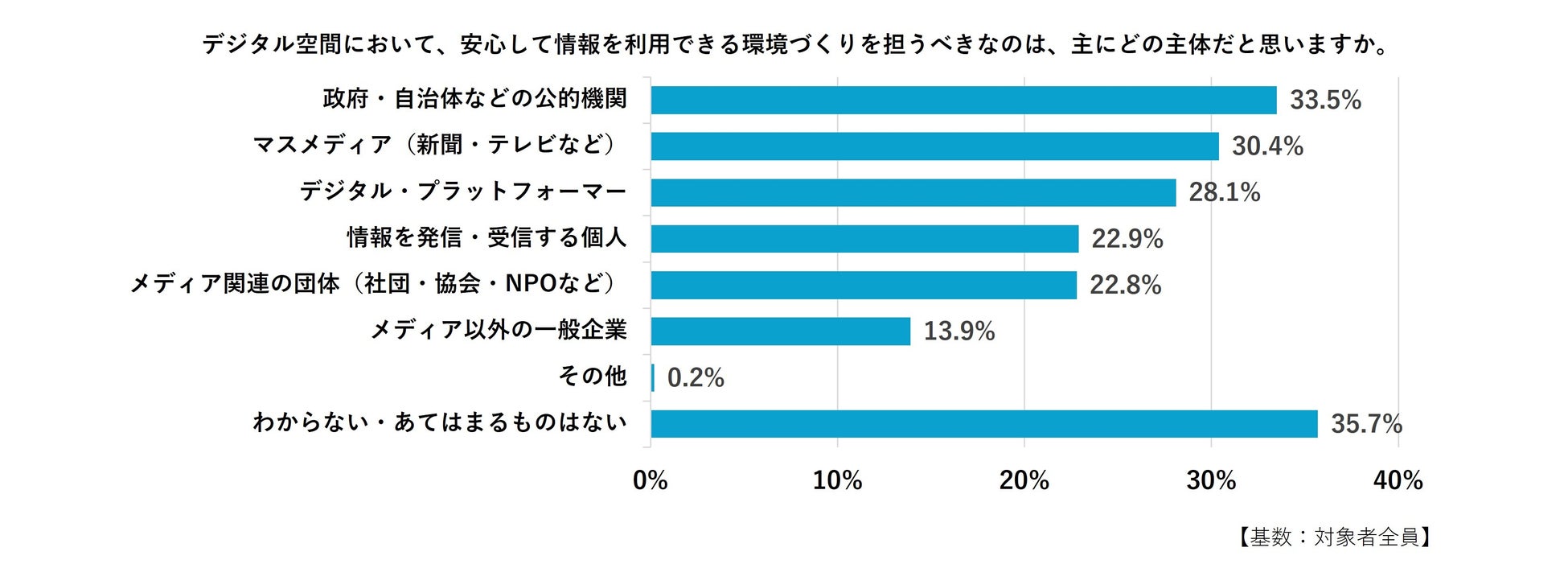
1. "Public institutions (33.5%)," "mass media (30.4%)," and "digital platformers (28.1%)" were cited as the entities that should be responsible for creating a safe digital space, but "Don't know / No applicable answer (35.7%)" was the most common response.
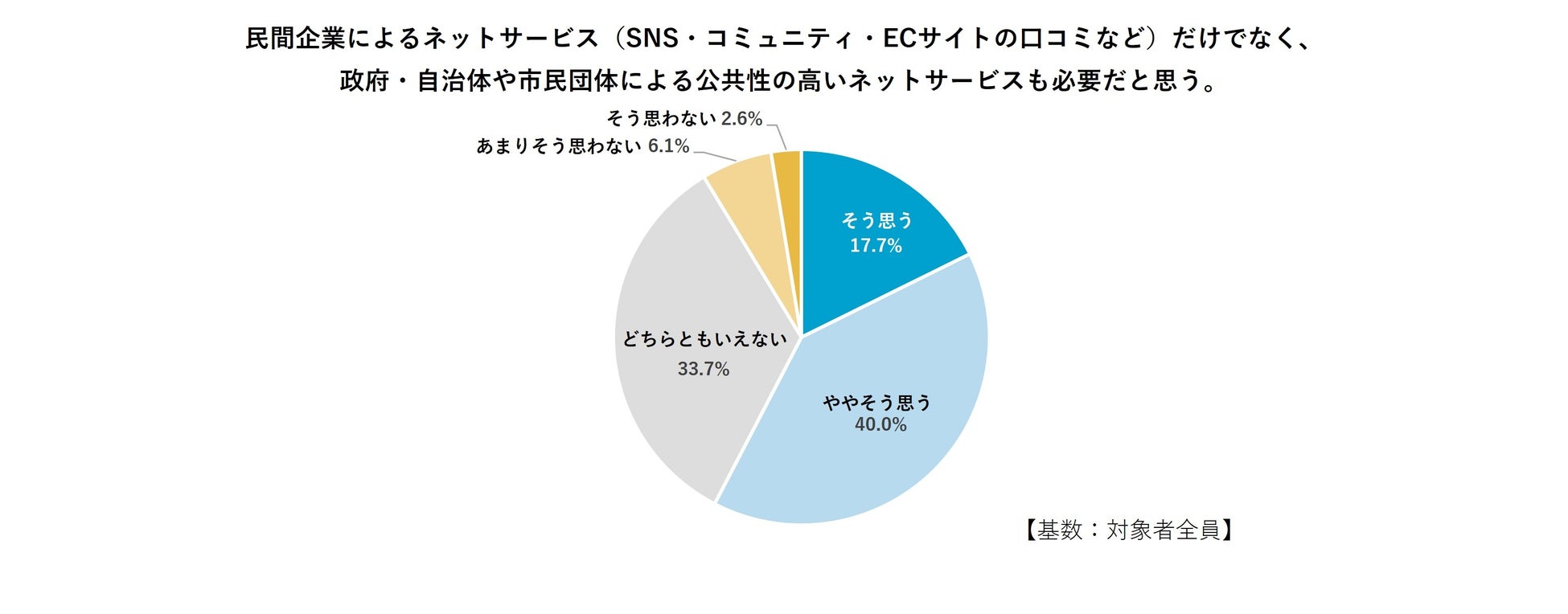
2. 57.7% responded that they need "highly public online services provided by governments, local authorities, and civic organizations."
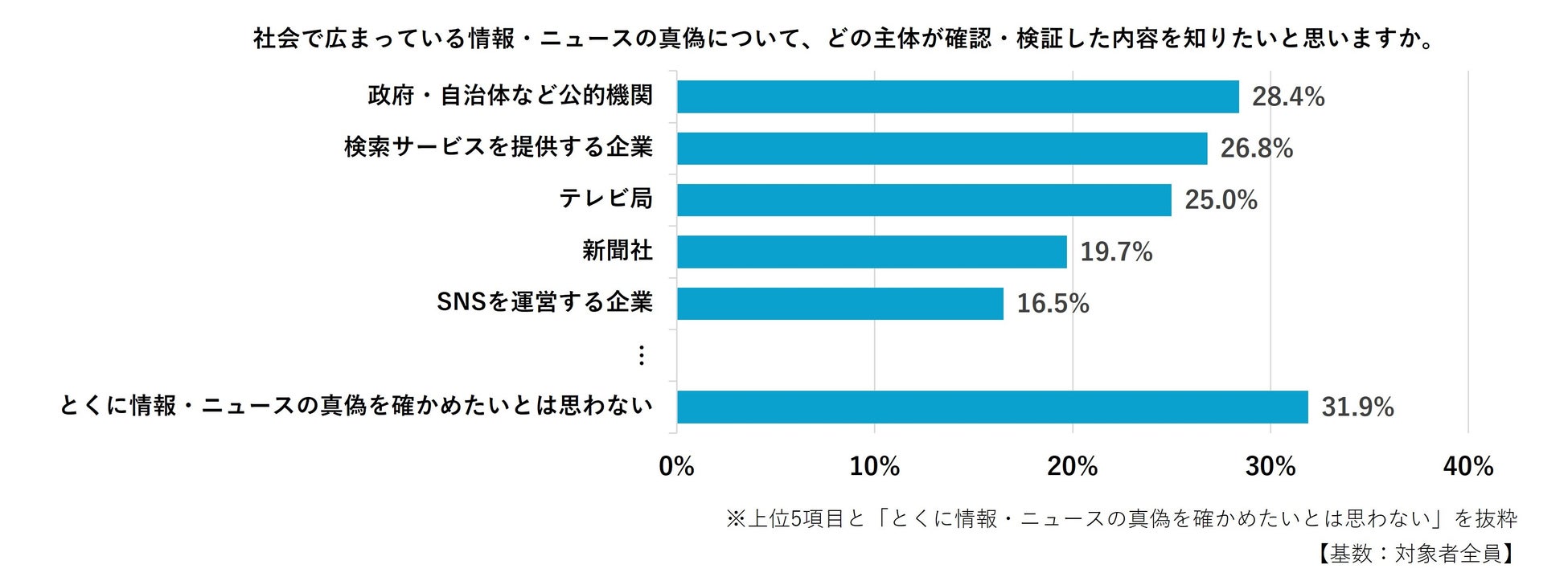
3. The entities that should verify misinformation and disinformation were cited in order as "public institutions (28.4%)," "companies providing search services (26.8%)," and "TV stations (25.0%)." On the other hand, "I don't want to verify the truth" was the most common at 31.9%.
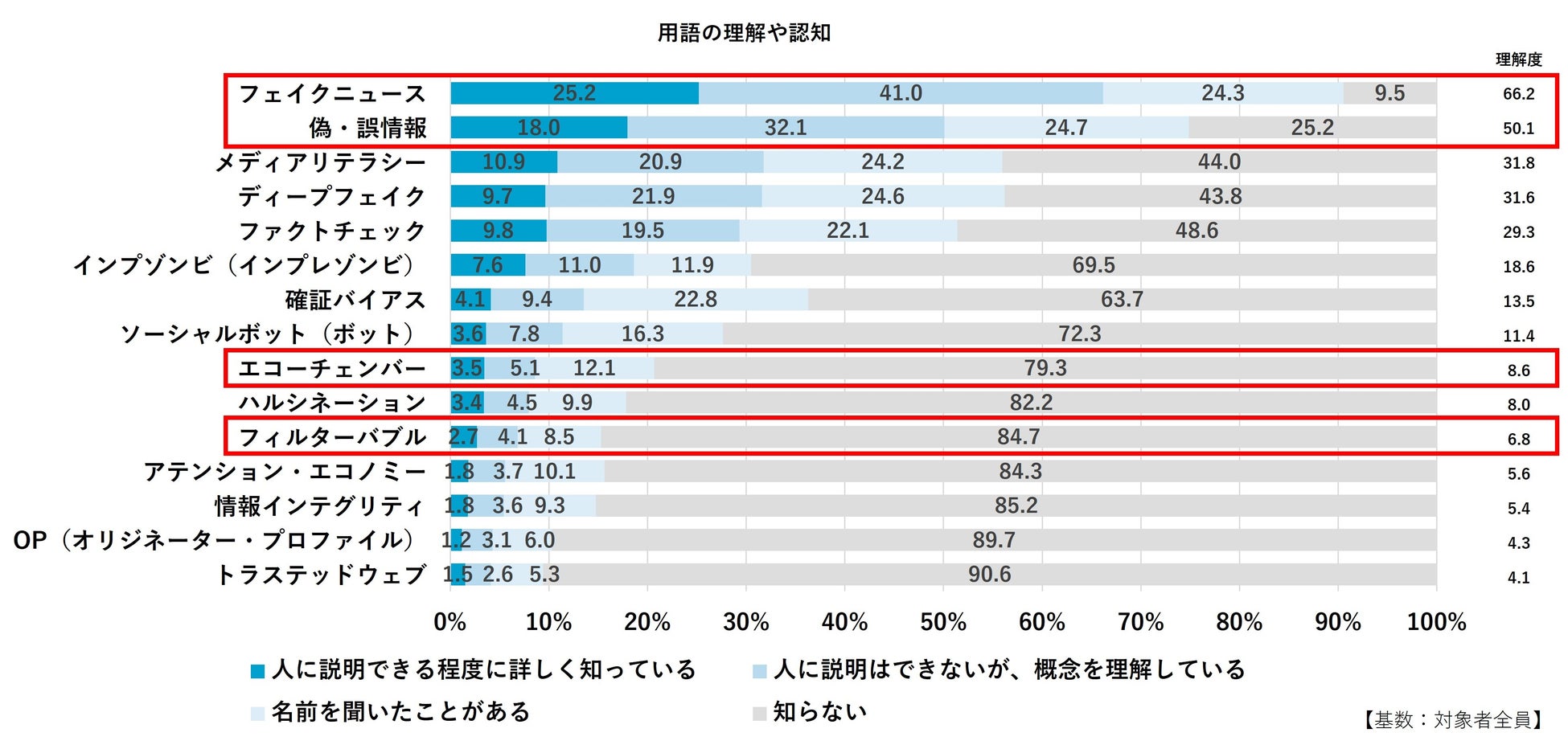
4. The understanding of concepts such as "filter bubble" and "echo chamber" is low, less than 10%.
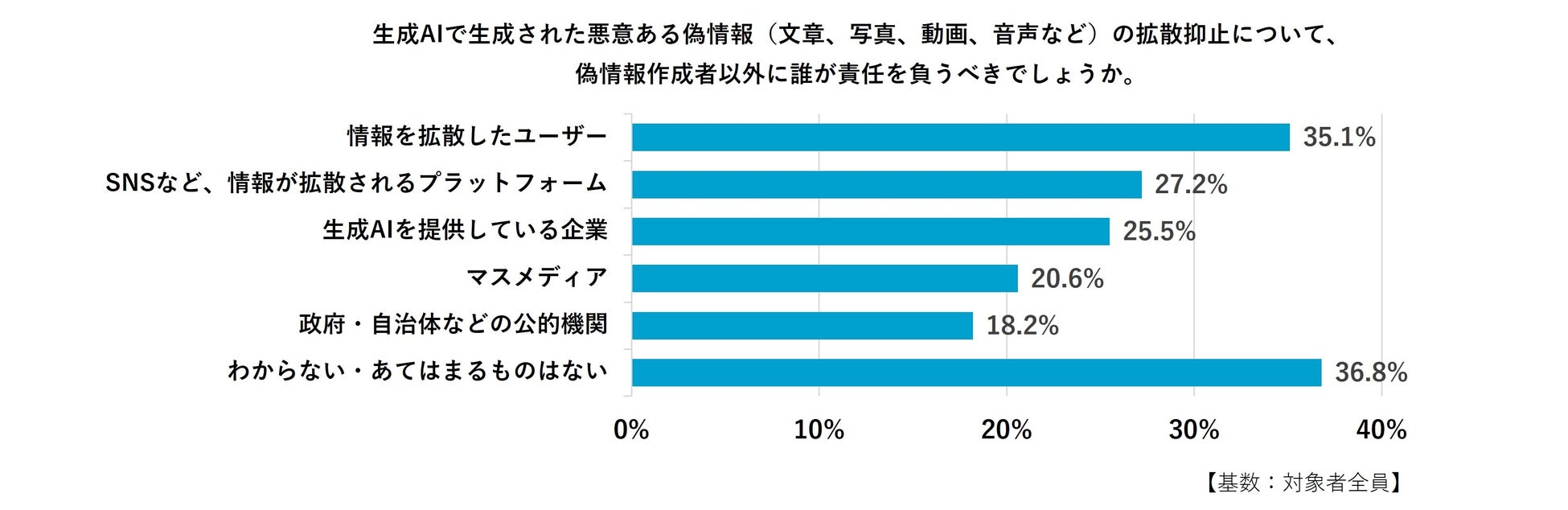
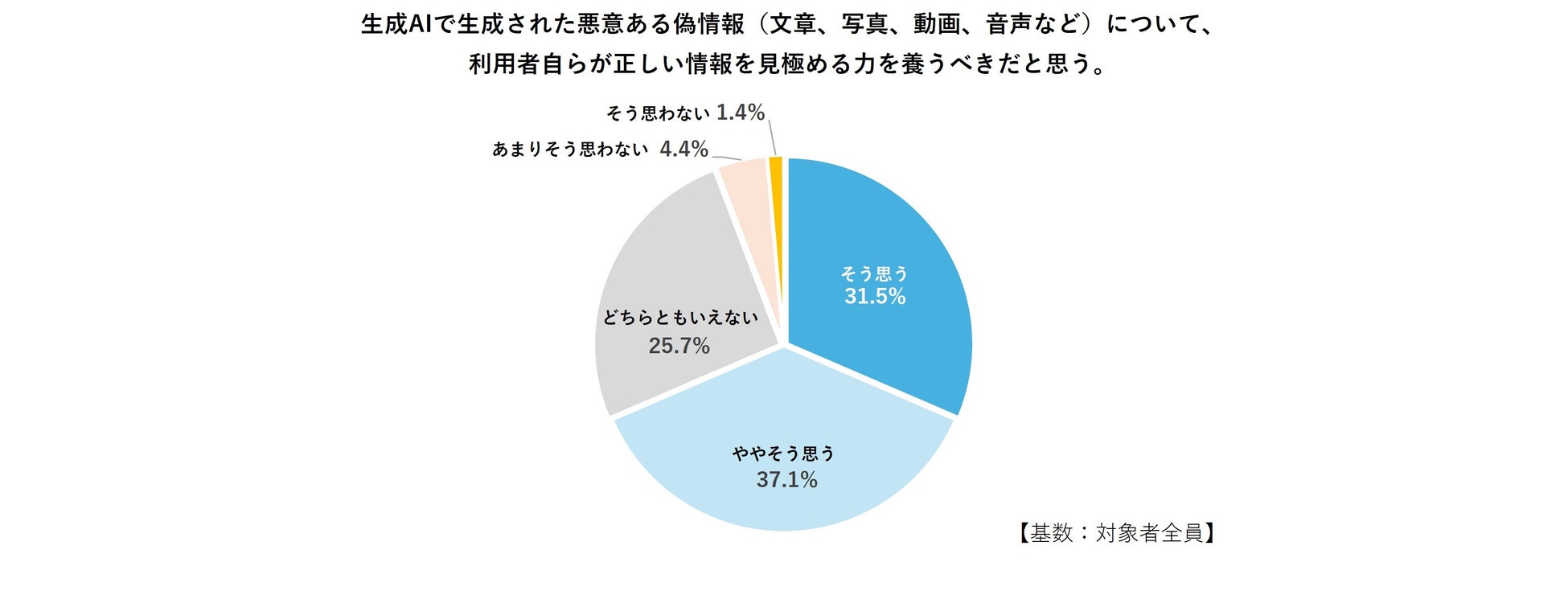
5. Regarding malicious misinformation generated by AI, in addition to the creator, multiple entities are expected to bear responsibility, including "users who spread the information (35.1%)," "platforms where the information is spread (27.2%)," and "companies providing generative AI (25.5%)." As a countermeasure, 68.6% responded that "users themselves should cultivate the ability to discern correct information."
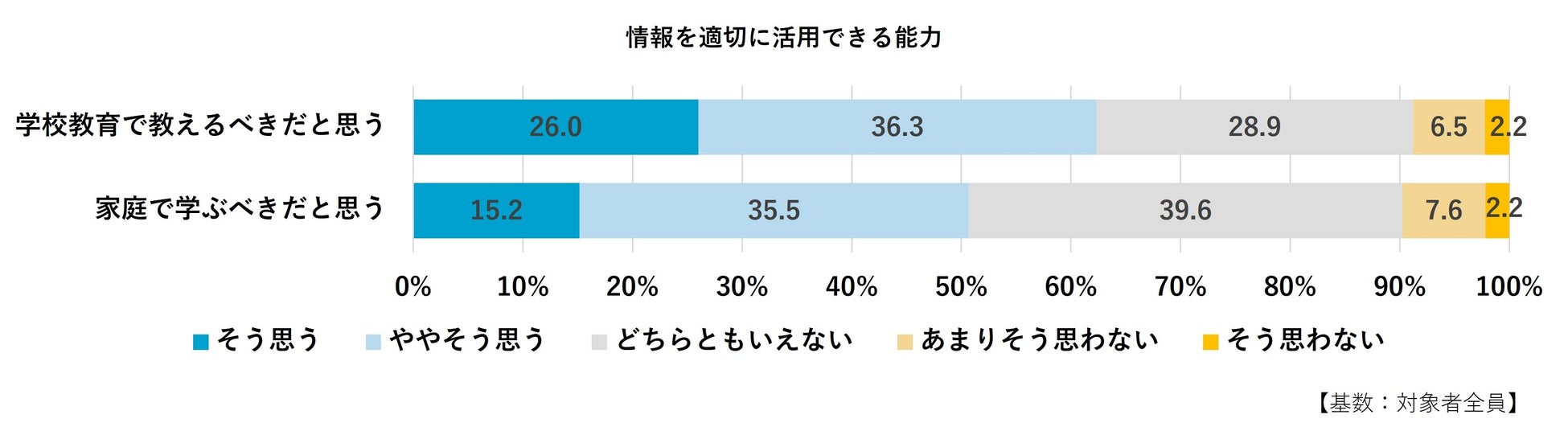
6. "School education" was cited by 62.3% and "home" by 50.7% as places where "the ability to appropriately utilize information" should be learned.
1. Entities responsible for creating a safe digital space
As entities that should be responsible for creating an environment where information can be used safely in the digital space, "public institutions such as governments and local authorities (33.5%)," "mass media (30.4%)," and "digital platformers (28.1%)" were cited.
On the other hand, 35.7% responded "Don't know / No applicable answer." Although there is an expectation for public institutions and media to create a safe digital space, the percentage is not high, revealing that a social consensus has not been formed.
2. Expectations for highly public online services
The percentage of respondents who answered, "I think that highly public online services provided by governments, local authorities, and civic organizations are necessary, in addition to online services provided by private companies (such as SNS, communities, and e-commerce site reviews)" was 57.7% (total of "Strongly agree" and "Somewhat agree").
3. Entities that should verify misinformation and disinformation
As entities that should confirm and verify the truthfulness of information and news spreading in society, "public institutions such as governments and local authorities (28.4%)," "companies providing search services (26.8%)," and "TV stations (25.0%)" were cited in order.
However, a larger percentage, 31.9%, responded, "I don't particularly want to verify the truthfulness of information and news," indicating a low interest in verifying misinformation and disinformation.
4. Limited understanding of concepts related to the characteristics and structure of the digital information space
When asked about the understanding and recognition of terms related to information integrity, more than half understood the concepts of "fake news (66.2%)" and "misinformation/disinformation (50.1%)." However, concepts such as "filter bubble (6.8%)" and "echo chamber (8.6%)" were understood by less than 10%, indicating a limited understanding* of the characteristics and structure of the digital information space.
*Understanding: Total of "Know in detail enough to explain to others" and "Cannot explain to others but understand the concept."
5. Response to misinformation generated by AI
Regarding the prevention of the spread of malicious misinformation (text, photos, videos, audio, etc.) generated by generative AI, "users who spread the information" accounted for 35.1% as the party responsible other than the creator. Preventing the spread of misinformation requires caution from each user in handling information. This was followed by "platforms where information is spread, such as SNS (27.2%)" and "companies providing generative AI (25.5%)." On the other hand, 36.8% responded "Don't know / No applicable answer."
Furthermore, 68.6% (total of "Strongly agree" and "Somewhat agree") responded that "users themselves should cultivate the ability to discern correct information regarding malicious misinformation (text, photos, videos, audio, etc.) generated by generative AI," indicating that the ability to defend oneself against misinformation generated by generative AI is considered necessary.
6. Methods for acquiring information literacy
62.3% (total of "Strongly agree" and "Somewhat agree") responded that the ability to appropriately utilize information (such as how to read news and use SNS) "should be taught in school education." Also, 50.7% (same) responded that it "should be learned at home."
◇ Summary: Towards improving information integrity
This survey once again highlighted our weak resistance to misinformation and disinformation. There is a poor understanding of the mechanisms that facilitate the spread of misinformation and disinformation, and when asked about the entities that should verify the truthfulness of information, the response "I don't want to verify the truth" surpassed public institutions and media organizations. While there is high awareness of the need to cultivate the ability to discern information, there is still a gap with actual behavior. Furthermore, although the necessity of highly public online services and education at schools and homes is recognized by the majority, it has been confirmed that this has not led to concrete actions.
The digital information space is rapidly becoming more complex, and the burden of discerning information falls heavily on individuals. While individual information literacy needs to be enhanced, it is urgent to build a digital information space that can be used with peace of mind.
◇ Comment by Survey Supervisor, Professor Shinichi Yamaguchi
This survey shows that while the importance of information integrity is widely recognized, there is no clear common understanding regarding its bearers and accountability. The dispersed expectations for governments, media, and platform operators, and the many responses of "Don't know / No applicable answer," suggest that a governance model by a single entity is not realistic. At the same time, the fact that over 30% of respondents "don't want to verify the truth" highlights the challenges of the current digital information space. In the era of generative AI, it is necessary to build a collaborative model among diverse stakeholders and comprehensively promote three initiatives: institutional development, improvement of technical design, and enhancement of education.
"Dentsu Soken Compass Vol. 17 Information Integrity Survey 2026" Overview
The survey was conducted by allocating respondents according to the population composition ratio by gender and age group from the Ministry of Internal Affairs and Communications' estimated population in January 2026.

|
Survey Period |
January 30 - February 1, 2026 |
|
Sample Size |
5,000 |
|
Target Audience |
Men and women aged 15-69 nationwide |
Survey Organizers: Dentsu Soken, Japan Fact-check Center
Supervision: Professor Shinichi Yamaguchi (International University of Japan, Global Communications Center)
Survey Company: Dentsu Macromill Insight
Survey Method: Internet survey
Survey Data URL: The full report of this survey can be viewed below.
https://societe.dentsusoken.com/wp-content/uploads/2026/03/compass_survey_202604.pdf
* The percentages in the graphs are calculated based on the actual number of respondents for the entire population and are rounded. Also, the combined percentage of respondents is calculated based on the actual number of respondents for the combined part of the entire population and is rounded, so it may not necessarily match the simple sum of each percentage.
* The margin of error for the sample size of this survey (5,000 samples) is ±1.4% when calculated with a 95% confidence interval and a 50% response score, which yields the maximum error value.
Dentsu Soken Quality of Society Center
March 17, 2026
April 2, 2025
■ About Japan Fact-check Center (JFC) https://www.factcheckcenter.jp/
The Japan Fact-check Center (JFC), established in October 2022 by the Safer Internet Association, is an organization that takes measures against misinformation and disinformation and is certified by the International Fact-Checking Network (IFCN). In collaboration with domestic and international fact-checkers, media, and experts, JFC aims to provide accurate and reliable information and build information transparency and a healthy information environment by conducting fact-checking in a wide range of fields such as politics, economy, and social issues. In addition, it actively promotes media information literacy education and awareness-raising activities for the general public and media professionals, contributing to the improvement of reliability in the information society.
■ About Dentsu Soken https://www.dentsusoken.com
Under the corporate vision of "HUMANOLOGY for the future ~Creating the future with people and technology~," Dentsu Soken aims to sincerely address "society" as a whole, including companies, government agencies, local governments, and consumers, by linking its three functions: "system integration," "consulting," and "think tank." It strives to create a cycle from proposing issues to solving them with technology, and to support and implement the evolution towards a better society.
We promote "X Innovation" that transcends the boundaries of technology, industry, companies, and regions, and will continue to pioneer the future with the power of people and technology, creating new value.
* Company names and product names mentioned in this release are trademarks or registered trademarks of their respective companies.