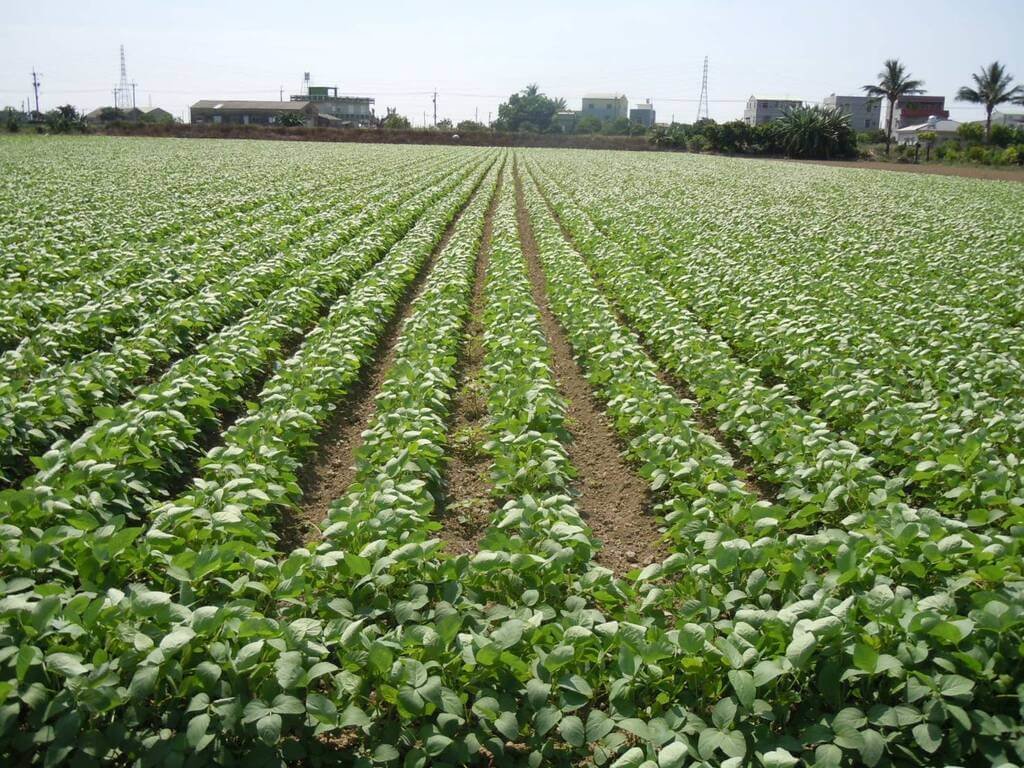
While Taiwan relies on imports for its soybean demand, the cultivation area for domestic soybeans has been increasing annually, growing by more than 5.5 times over the past decade. Due to its water-saving and carbon-reducing benefits, it has become a highlight of sustainable eating. New varieties developed in recent years by the Tainan District Agricultural Research and Extension Station have also led to nutritious and functional products.
According to statistics from the Ministry of Agriculture, Taiwan's current annual soybean production is over 5,000 metric tons, accounting for only about 0.2% of demand, with the majority still relying on imports. However, the planting area for domestic soybeans is growing year by year. In 2014, it was only about 680 hectares, but by 2024, it reached 4,473 hectares, a more than 5.5-fold increase in 10 years.
The Tainan District Agricultural Research and Extension Station, under the Ministry of Agriculture, issued a press release today stating that amid the dual challenges of extreme climate and the global net-zero transition, domestic soybeans are gradually becoming an environmentally friendly, high-quality grain choice, thanks to four major advantages: local low-carbon production, non-genetically modified, high freshness, and safety traceability.
Chen Yu-chu, Director of the Tainan station, stated that soybeans are not only an excellent source of plant-based protein but also offer multiple benefits such as water conservation, reduced nitrogen fertilizer use, and carbon reduction. Through crop rotation from paddy fields and shortening transportation distances, they are leading Taiwan into a new era of sustainable dining.
Director Chen pointed out that soybeans are a drought-tolerant crop, requiring only about 30% to 40% of the water needed for rice cultivation. With precise irrigation according to growth stages, 5,000 to 7,000 metric tons of agricultural water can be saved per hectare, which is significant for Taiwan, where water resources are increasingly strained.
Furthermore, Chen said that the nitrogen-fixing bacteria symbiotic with soybean roots can convert atmospheric nitrogen into crop nutrients, reducing the use of chemical nitrogen fertilizers by about 20%. This not only lowers production costs but also helps reduce emissions of greenhouse gases like nitrous oxide, balancing production with environmental sustainability.
Chen believes that Taiwan's long-term reliance on imported soybeans has accumulated a considerable carbon footprint from long-distance transportation. In contrast, choosing domestic soybeans not only allows for low-carbon consumption but also provides fresher, safer, and traceable quality assurance. In the future, they will continue to refine cultivation management techniques and labor-saving mechanized processes to enhance production efficiency and industrial competitiveness, making domestic soybeans not just a healthy choice on the table, but also a vital force in promoting green agriculture and sustainable living.
In response to the processing market and consumer demand, the Tainan station has cultivated two representative high-quality soybean varieties in recent years. 'Soybean Tainan No. 10' features high protein and resistance to powdery mildew, with a rich aroma and high yield for making soy milk, tofu, dried tofu, and miso. 'Black Soybean Tainan No. 11' is characterized by high yield, resistance to powdery mildew, and is rich in isoflavones and anthocyanins, showing great antioxidant potential. When made into black soy milk or black soybean tea, it has a sweet and mellow flavor, offering both nutritional and functional value.
The Tainan station advises consumers to prioritize products with the Traceable Agricultural Product (TGAP) or organic certification labels when purchasing soybean products, to support local agriculture and contribute to a sustainable environment.
FACT BOX
- Source: CNA (Central News Agency)
- Category: 產業