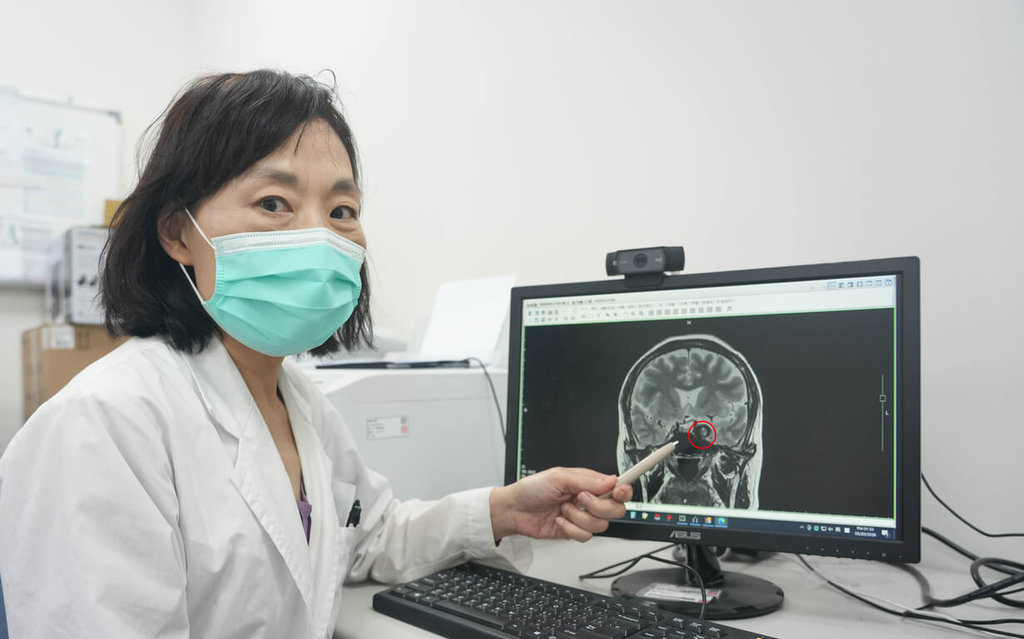
Taichung Woman's Sudden Double Vision Caused by Intracranial Aneurysms
A 65-year-old woman in Taichung who experienced sudden double vision was diagnosed with two large brain aneurysms pressing on her oculomotor nerve, posing a fatal risk. She was successfully treated at Kuang Tien General Hospital with a minimally invasive endovascular coiling procedure using a new flow-diverting stent. Doctors explained that this modern treatment is safer and less destructive than traditional open-skull surgery and highlighted the importance of seeking medical attention for symptoms like double vision, as ruptured aneurysms have a high mortality rate.
📋 Article Processing Timeline
- 📰 Published: May 21, 2026 at 11:38
- 🔍 Collected: May 21, 2026 at 12:01 (23 min after Published)
- 🤖 AI Analyzed: May 21, 2026 at 12:12 (10 min after Collected)
(CNA, Taichung, May 21, by reporter Chao Li-yen) A 65-year-old woman in Taichung, surnamed Chen, suddenly experienced double vision one and a half months ago. A medical examination revealed two large aneurysms in her brain that were compressing the oculomotor nerve. A sudden increase in intracranial pressure could have caused a rupture, posing a fatal threat.
Kuang Tien General Hospital issued a press release today stating that the patient's double vision (diplopia) indicated compression of a cranial nerve. After an MRI revealed abnormalities, an angiography was performed, which discovered two large aneurysms, 1.6 cm and 0.7 cm in diameter, at the end of the internal carotid artery, causing the oculomotor nerve compression.
Dr. Yen Pao-sheng, Vice Superintendent and a radiologist at Kuang Tien General Hospital, explained that a brain aneurysm is not a malignant tumor but a "vascular sac" that balloons out from a locally weak area of a cerebral blood vessel wall due to the long-term impact of blood flow.
Dr. Yen explained that there are two main treatments for intracranial aneurysms: "craniotomy and clipping of the aneurysm" and "endovascular coiling." The patient underwent catheter-based interventional endovascular coiling with the placement of a new flow-diverting stent. This method effectively slows blood flow into the aneurysm, accelerates thrombosis, and ultimately seals off the aneurysm, reducing the chance of recurrence. It is suitable for patients with giant or wide-necked aneurysms. Compared to traditional craniotomy, it offers advantages such as shorter duration, higher safety, and less tissue damage.
Neurologist Dr. Ko Li-ying stated that the patient's symptoms were mild upon seeking medical care, with no other discomfort. However, a sudden spike in intracranial pressure—from holding one's breath, constipation, or anger—could trigger a rupture, leading to a subarachnoid hemorrhage. The condition can progress rapidly and become fatal within hours.
According to statistics, about 1 in 50 people has an unruptured brain aneurysm, and the mortality rate for a ruptured aneurysm is as high as 40%. Brain aneurysms can occur at any age, with individuals who have congenitally weak vessel walls, hypertension, polycystic kidney disease, or a family history being at high risk. Larger unruptured aneurysms often compress surrounding nerve tissues, causing headaches, blurred vision, double vision, or limb dysfunction. If you experience these symptoms, you should seek medical attention promptly. (Editor: Kuan Chung-wei) 1150521
Kuang Tien General Hospital issued a press release today stating that the patient's double vision (diplopia) indicated compression of a cranial nerve. After an MRI revealed abnormalities, an angiography was performed, which discovered two large aneurysms, 1.6 cm and 0.7 cm in diameter, at the end of the internal carotid artery, causing the oculomotor nerve compression.
Dr. Yen Pao-sheng, Vice Superintendent and a radiologist at Kuang Tien General Hospital, explained that a brain aneurysm is not a malignant tumor but a "vascular sac" that balloons out from a locally weak area of a cerebral blood vessel wall due to the long-term impact of blood flow.
Dr. Yen explained that there are two main treatments for intracranial aneurysms: "craniotomy and clipping of the aneurysm" and "endovascular coiling." The patient underwent catheter-based interventional endovascular coiling with the placement of a new flow-diverting stent. This method effectively slows blood flow into the aneurysm, accelerates thrombosis, and ultimately seals off the aneurysm, reducing the chance of recurrence. It is suitable for patients with giant or wide-necked aneurysms. Compared to traditional craniotomy, it offers advantages such as shorter duration, higher safety, and less tissue damage.
Neurologist Dr. Ko Li-ying stated that the patient's symptoms were mild upon seeking medical care, with no other discomfort. However, a sudden spike in intracranial pressure—from holding one's breath, constipation, or anger—could trigger a rupture, leading to a subarachnoid hemorrhage. The condition can progress rapidly and become fatal within hours.
According to statistics, about 1 in 50 people has an unruptured brain aneurysm, and the mortality rate for a ruptured aneurysm is as high as 40%. Brain aneurysms can occur at any age, with individuals who have congenitally weak vessel walls, hypertension, polycystic kidney disease, or a family history being at high risk. Larger unruptured aneurysms often compress surrounding nerve tissues, causing headaches, blurred vision, double vision, or limb dysfunction. If you experience these symptoms, you should seek medical attention promptly. (Editor: Kuan Chung-wei) 1150521