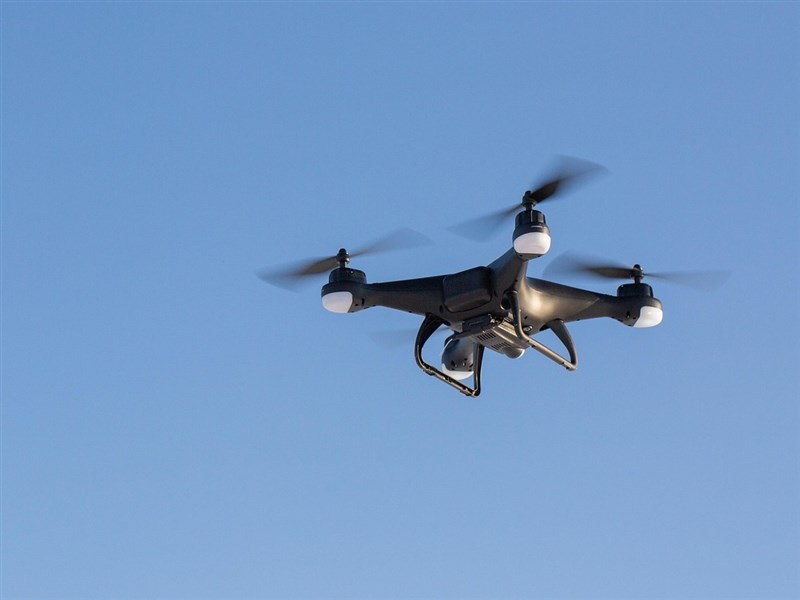
MOEA aims for 100,000 monthly drone output, 50% export share by 2030
Taiwan's drone exports in the first quarter of this year have already surpassed the total for all of last year, indicating rapid industry growth. In response, Taiwan's Ministry of Economic Affairs (MOEA) announced on the 21st its goal to push the industry's output value beyond the NT$40 billion target by 2030, increasing monthly production capacity of complete drones from the current 15,000 to 100,000 units, and raising the export ratio from about 20% to 50%. The strategy aims to leverage economies of scale to narrow the price gap between Taiwanese military-commercial drones and Chinese products to within a factor of two.
📋 Article Processing Timeline
- 📰 Published: May 21, 2026 at 14:35
- 🔍 Collected: May 21, 2026 at 15:01 (26 min after Published)
- 🤖 AI Analyzed: May 21, 2026 at 15:06 (4 min after Collected)
Taiwan's drone export value in the first quarter of this year has already surpassed the total export value for all of last year, indicating the rapid growth of the drone industry. The Ministry of Economic Affairs (MOEA) stated today that it estimates Taiwan's drone industry output value will exceed the originally set target of NT$40 billion by 2030. By then, the monthly production capacity for complete drones is expected to increase significantly from the current 15,000 units to 100,000 units.
Regarding the export ratio, the MOEA hopes to increase it from the current level of about 20% to 50% by that time, and through economies of scale, to narrow the price difference between military-commercial drones and Chinese products to within a factor of two.
Chiou Chyou-huey, director general of the MOEA's Industrial Development Administration, stated during a media exchange today that under the "Unmanned Vehicle Industry Development Coordination Program," Taiwan's drone output value already grew 2.5 times last year to NT$12.9 billion. The export performance in the first quarter of this year has surpassed last year's total. If the output value successfully doubles to NT$26 billion this year, the original 2030 target of NT$400 billion "should be adjustable upwards."
Chiou pointed out that Taiwan's current monthly production capacity for complete drones is about 15,000 units. However, the drone industry can rapidly replicate and expand production lines. As long as market demand increases, production can be significantly boosted within a few months. Therefore, it is estimated that by 2030, the monthly production capacity for complete drones could exceed 100,000 units, establishing a sufficient economy of scale.
Chiou said that at this stage, Taiwan's drone industry is still dominated by the domestic market, especially with military-commercial products accounting for a large share. The export ratio is just over 20%, with the top three export markets being the Czech Republic, Poland, and the United States. He did not rule out that the demand from the Czech Republic and Poland is related to the Russo-Ukrainian War. In the first four months of this year, drone export value reached US$147 million. The hope is to continue expanding exports and increase the export ratio to over 50% by 2030.
Regarding the competitiveness of Taiwanese drones versus Chinese products, Chiou noted that for consumer drones, China already has a massive scale and mature technology, so the price difference could be several times greater. However, by focusing on military-commercial products, which emphasize anti-jamming, autonomous flight, and reliability, the price difference between Taiwanese and Chinese products "has a chance to be narrowed to within a factor of two," further enhancing market competitiveness.
Chiou stated that the current high cost of drone-related components is mainly limited by insufficient market scale. However, as the global drone market continues to expand, if the market scale is sufficient to attract companies, Taiwanese chips and key components will be competitive. He also emphasized that Taiwan's drone industry does not necessarily need to fully engage in the low-price competition market, such as for low-cost blades or drones in the ten-thousand-dollar NT range. Instead, it should focus on high-value-added areas, combining chips and AI applications to develop products with differentiated advantages.
In terms of key drone components, Chiou said that development of "three chips and two software" technology is underway through the Industrial Innovation Platform and the A+ Enterprise Innovative R&D Quenching Program. This includes communication, flight control, and satellite positioning chips, as well as ground control and flight control software. Most projects are expected to complete development by the end of this year, moving towards technological autonomy and mass production goals.
Furthermore, the Industrial Technology Research Institute (ITRI) has already signed a Green UAS authorization, evaluation, and service agreement with the Association for Uncrewed Vehicle Systems International (AUVSI) in the United States. Chiou stated that it is expected to pass US verification in June, after which companies can apply for Green UAS certification directly in Taiwan, shortening the time for products to enter the market.
Regarding the deletion of the drone-related budget in the special defense budget by the Legislative Yuan, Chiou emphasized that as a member of the administrative team, the MOEA will align with the Executive Yuan's policy direction and continue to assist the domestic drone industry's development in various ways. For example, by releasing demand from domestic markets such as defense and public services to expand industry participation opportunities and accelerate industrial autonomy, while also continuing to help companies expand into overseas markets.
Additionally, in response to media reports about suspected overlapping subsidies between the Industrial Development Administration and the National Chung-Shan Institute of Science and Technology (NCSIST), Chiou responded that each ministry has different roles and responsibilities. The MOEA is mainly responsible for R&D subsidies, while the Ministry of National Defense allocates budgets for procurement. For domestically produced products that are not yet mature, after the defense procurement unit proposes performance and functional requirements, companies can apply for R&D subsidies from the MOEA. The division of labor is clear, and there is absolutely no overlapping subsidy situation.
Regarding the export ratio, the MOEA hopes to increase it from the current level of about 20% to 50% by that time, and through economies of scale, to narrow the price difference between military-commercial drones and Chinese products to within a factor of two.
Chiou Chyou-huey, director general of the MOEA's Industrial Development Administration, stated during a media exchange today that under the "Unmanned Vehicle Industry Development Coordination Program," Taiwan's drone output value already grew 2.5 times last year to NT$12.9 billion. The export performance in the first quarter of this year has surpassed last year's total. If the output value successfully doubles to NT$26 billion this year, the original 2030 target of NT$400 billion "should be adjustable upwards."
Chiou pointed out that Taiwan's current monthly production capacity for complete drones is about 15,000 units. However, the drone industry can rapidly replicate and expand production lines. As long as market demand increases, production can be significantly boosted within a few months. Therefore, it is estimated that by 2030, the monthly production capacity for complete drones could exceed 100,000 units, establishing a sufficient economy of scale.
Chiou said that at this stage, Taiwan's drone industry is still dominated by the domestic market, especially with military-commercial products accounting for a large share. The export ratio is just over 20%, with the top three export markets being the Czech Republic, Poland, and the United States. He did not rule out that the demand from the Czech Republic and Poland is related to the Russo-Ukrainian War. In the first four months of this year, drone export value reached US$147 million. The hope is to continue expanding exports and increase the export ratio to over 50% by 2030.
Regarding the competitiveness of Taiwanese drones versus Chinese products, Chiou noted that for consumer drones, China already has a massive scale and mature technology, so the price difference could be several times greater. However, by focusing on military-commercial products, which emphasize anti-jamming, autonomous flight, and reliability, the price difference between Taiwanese and Chinese products "has a chance to be narrowed to within a factor of two," further enhancing market competitiveness.
Chiou stated that the current high cost of drone-related components is mainly limited by insufficient market scale. However, as the global drone market continues to expand, if the market scale is sufficient to attract companies, Taiwanese chips and key components will be competitive. He also emphasized that Taiwan's drone industry does not necessarily need to fully engage in the low-price competition market, such as for low-cost blades or drones in the ten-thousand-dollar NT range. Instead, it should focus on high-value-added areas, combining chips and AI applications to develop products with differentiated advantages.
In terms of key drone components, Chiou said that development of "three chips and two software" technology is underway through the Industrial Innovation Platform and the A+ Enterprise Innovative R&D Quenching Program. This includes communication, flight control, and satellite positioning chips, as well as ground control and flight control software. Most projects are expected to complete development by the end of this year, moving towards technological autonomy and mass production goals.
Furthermore, the Industrial Technology Research Institute (ITRI) has already signed a Green UAS authorization, evaluation, and service agreement with the Association for Uncrewed Vehicle Systems International (AUVSI) in the United States. Chiou stated that it is expected to pass US verification in June, after which companies can apply for Green UAS certification directly in Taiwan, shortening the time for products to enter the market.
Regarding the deletion of the drone-related budget in the special defense budget by the Legislative Yuan, Chiou emphasized that as a member of the administrative team, the MOEA will align with the Executive Yuan's policy direction and continue to assist the domestic drone industry's development in various ways. For example, by releasing demand from domestic markets such as defense and public services to expand industry participation opportunities and accelerate industrial autonomy, while also continuing to help companies expand into overseas markets.
Additionally, in response to media reports about suspected overlapping subsidies between the Industrial Development Administration and the National Chung-Shan Institute of Science and Technology (NCSIST), Chiou responded that each ministry has different roles and responsibilities. The MOEA is mainly responsible for R&D subsidies, while the Ministry of National Defense allocates budgets for procurement. For domestically produced products that are not yet mature, after the defense procurement unit proposes performance and functional requirements, companies can apply for R&D subsidies from the MOEA. The division of labor is clear, and there is absolutely no overlapping subsidy situation.
FAQ
台灣無人機產業2030年的具體目標是什麼?
根據經濟部規劃,2030年台灣無人機產業產值將超越新台幣400億元,整機月產能從目前的1.5萬台提升至10萬台,外銷比重從約2成提高至5成以上。
台灣無人機將如何與中國產品競爭?
台灣將聚焦於高附加價值的軍用商規無人機,重視抗干擾、自主飛行與可靠度,目標是將與中國同級產品的價差縮小至2倍以內。此外,將結合台灣的晶片與AI應用優勢,發展差異化產品,而非投入低價市場競爭。
政府提出了哪些關鍵技術發展方向?
經濟部正透過產創平台與相關計畫,投入「三晶二軟」技術開發,包括通訊晶片、飛控晶片、衛星定位晶片,以及地面控制軟體和飛行控制軟體,目標在今年底前完成多數項目開發,實現技術自主。
台灣廠商進入美國市場將有何便利?
工研院已與美國無人機產業協會(AUVSI)簽署Green UAS授權服務協議,預計今年6月可通過美方驗證。未來,台灣業者可直接在台灣申請Green UAS認證,大幅縮短產品進入美國市場的時間。
台灣無人機近期的外銷表現如何?
台灣無人機產業今年第一季的出口值已超過去年全年的總額。今年前4個月的出口金額已達到1.47億美元,主要出口市場為捷克、波蘭與美國。