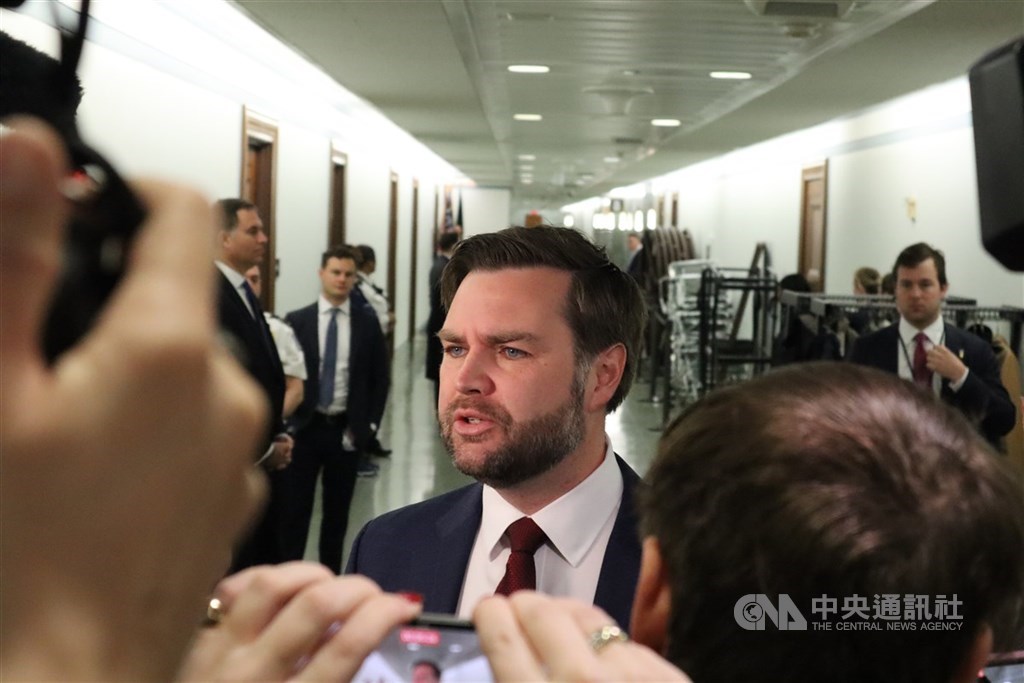
(CNA, Washington, 19th, Comprehensive Foreign Report) U.S. Vice President JD Vance said today that great progress has been made in negotiations between the United States and Iran, and neither side wishes for another military conflict. However, he emphasized that if a final agreement is not reached, Washington is fully prepared and ready to resume military action. According to Reuters and AFP, just hours earlier, President Donald Trump had revealed that he was prepared to order a new round of military strikes against Iran but called it off just one hour before the planned action, giving the Tehran authorities "two or three days" to reach an agreement. At a White House press conference today, JD Vance stated that the U.S. believes "great progress" has been made in the negotiations with Iran and that Iran is willing to reach a deal. "But we will continue to work, and in the end, it's either a deal or it's not," he said. Vance reiterated Trump's core position that Iran must absolutely not possess nuclear weapons. Vance stated that if Iran were to become a nuclear power, the Persian Gulf nations would inevitably want to follow suit, and other countries worldwide would then do the same. "We want to keep the number of nuclear-weapon states small, which is why Iran cannot have nuclear weapons," he said. Vance also mentioned that the current U.S. negotiation goal is for Iran to cooperate with the U.S. to establish a mechanism ensuring that Tehran will not have the capability to rebuild nuclear weapons in the future. Due to the conflict with Iran restricting access to the Strait of Hormuz, a vital channel for global oil and commodity transport, and causing severe turmoil in international energy markets, Trump is under immense pressure to have the strait reopened. Trump had previously stated that an agreement to end the conflict was imminent, but also threatened that if Iran refused to sign, the U.S. would launch another military strike. "Things are going well at the moment, but we also have a Plan B, which is to resume military action," Vance said today. "Our munitions are loaded, we are fully ready. We don't want to go there, but if necessary, the President is willing and able to act," he said. Regarding the possibility of Russia taking Iran's enriched uranium, Vance stated: "This is not currently a plan of the U.S. government, and Iran has not made this request." (Translator: Tsai Chia-min) 1150520
FACT BOX
- Source: CNA (Central News Agency)
- Category: 國際