Google Challenges Meta with Gemini-Powered Smart Glasses, Drawing Market Attention
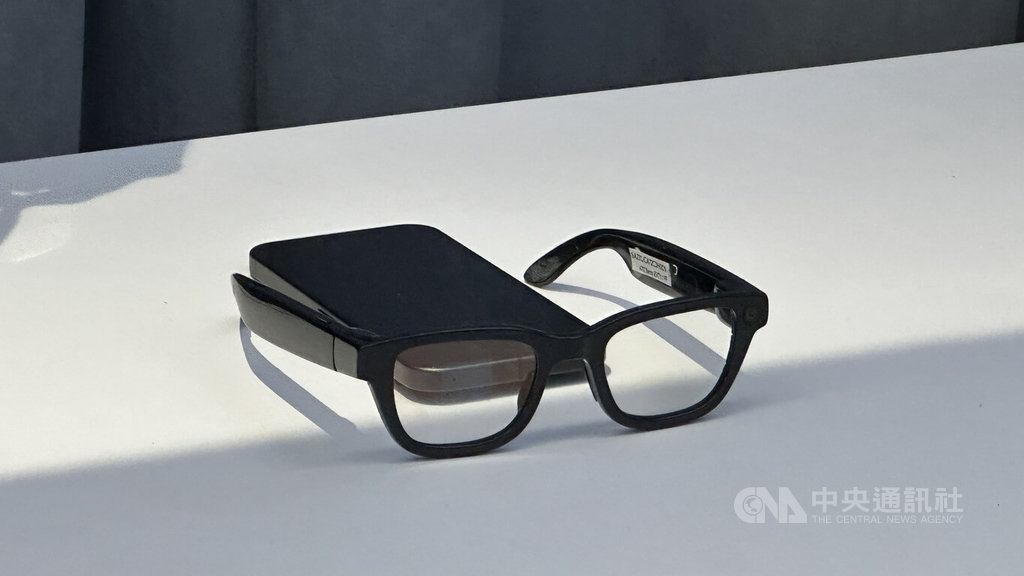
Google announced its first 'audio (smart) glasses' on May 19 at its I/O developer conference in Mountain View, California, set for a fall launch. The device integrates Gemini and operates by connecting to a smartphone; a model with a display will be released later. After trying them, 3C tech expert Tim哥 praised the smooth user experience powered by Gemini and the impressive real-time translation, noting that the screen resolution surpasses Meta's comparable products. A Google executive stated that future display models will prioritize safety when integrating navigation features.
📋 Article Processing Timeline
- 📰 Published: May 20, 2026 at 15:46
- 🔍 Collected: May 20, 2026 at 16:02 (16 min after Published)
- 🤖 AI Analyzed: May 20, 2026 at 16:09 (6 min after Collected)
Google today unveiled its first 'audio (smart) glasses,' announcing a fall launch. The device integrates Gemini and operates by connecting to a smartphone; a model with a display will be released later. After hands-on experience, 3C tech expert Tim哥 shared that the Google smart glasses, enhanced by Gemini, offer a smooth user experience, and the real-time translation feature is impressive. Compared to Meta's similar products, it boasts superior screen resolution.
Regarding the application of navigation in future display-equipped smart glasses, Chris Phillips, Google's VP & GM of Maps, Navigation, and Education products, stated in an interview with CNA that ensuring user safety is a critical consideration in designing such products. 'We hope to bring map services to glasses in a safe way,' he said.
● Google Audio Glasses to Launch in Fall, Partnering with Two Brands for a Stylish Look
Google held its annual I/O developer conference today at the Shoreline Amphitheatre at its Mountain View, California headquarters. Towards the end of the keynote, the company unveiled the highly anticipated smart glasses, which Google calls 'Intelligent Eyewear' to differentiate from competitors.
At last year's I/O conference, Google showcased its Android XR smart glasses prototype, and this year, it further revealed the product line.
The first audio glasses offering voice assistance are scheduled for a fall launch, with specific dates and pricing yet to be announced.
Google is collaborating with Samsung on software and hardware and has partnered with eyewear brands Warby Parker and Gentle Monster to create a fashionable design.
Shahram Izadi, VP & GM of Android XR, and Nishtha Bhatia, a Product Lead, each demonstrated a pair of the branded glasses. Compared to last year's I/O, what stood out to reporters on site was the 'more complete AI agent functionality.' For instance, users can cross-app open a food delivery platform on their phone to order coffee simply through voice commands.
A reporter's hands-on experience found that the smart glasses' features, such as real-time translation and identifying the artist of a work of art, are similar to using Gemini on a phone or computer. Additionally, the display-type smart glasses, set to be released later, have clear text and visuals.
● Expert Test: Clear Screen Resolution, Optimistic about Google's System Integration
Research firm Sigmaintell recently stated that smart glasses are poised to become an extension of smartphones and an ideal carrier for agentive AI.
Meta, a leader in the consumer market, has products like Ray-Ban Meta, Oakley Meta, and the display-equipped Meta Ray-Ban Display. Google has been accelerating its efforts in recent years. 3C tech expert Tim哥 is optimistic about Google's competitiveness.
In an interview with CNA, Tim哥 said that the integration of Gemini in Google's smart glasses enhances the overall user experience.
Compared to the Meta Ray-Ban Display, the screen resolution on Google's display-equipped smart glasses appears clearer.
Furthermore, the real-time translation feature of Google's smart glasses was smoother than he expected and left him impressed. The AI can automatically identify languages without the user needing to pre-set them; translated text appears line by line before the eyes, seamlessly integrating into the user experience. The glasses can also take photos via voice control, which can then be edited using the Nano Banana model.
Chris Phillips, Google's VP & GM of Maps, Navigation, and Education products, spoke to CNA about the potential of navigation features, stating that smart glasses could bring map and navigation services to the user's eyes. However, the navigation context must prioritize 'safety,' and the technology will be introduced gradually and appropriately. He added that besides visual display, audio cues are also an important interaction method.
Regarding the application of navigation in future display-equipped smart glasses, Chris Phillips, Google's VP & GM of Maps, Navigation, and Education products, stated in an interview with CNA that ensuring user safety is a critical consideration in designing such products. 'We hope to bring map services to glasses in a safe way,' he said.
● Google Audio Glasses to Launch in Fall, Partnering with Two Brands for a Stylish Look
Google held its annual I/O developer conference today at the Shoreline Amphitheatre at its Mountain View, California headquarters. Towards the end of the keynote, the company unveiled the highly anticipated smart glasses, which Google calls 'Intelligent Eyewear' to differentiate from competitors.
At last year's I/O conference, Google showcased its Android XR smart glasses prototype, and this year, it further revealed the product line.
The first audio glasses offering voice assistance are scheduled for a fall launch, with specific dates and pricing yet to be announced.
Google is collaborating with Samsung on software and hardware and has partnered with eyewear brands Warby Parker and Gentle Monster to create a fashionable design.
Shahram Izadi, VP & GM of Android XR, and Nishtha Bhatia, a Product Lead, each demonstrated a pair of the branded glasses. Compared to last year's I/O, what stood out to reporters on site was the 'more complete AI agent functionality.' For instance, users can cross-app open a food delivery platform on their phone to order coffee simply through voice commands.
A reporter's hands-on experience found that the smart glasses' features, such as real-time translation and identifying the artist of a work of art, are similar to using Gemini on a phone or computer. Additionally, the display-type smart glasses, set to be released later, have clear text and visuals.
● Expert Test: Clear Screen Resolution, Optimistic about Google's System Integration
Research firm Sigmaintell recently stated that smart glasses are poised to become an extension of smartphones and an ideal carrier for agentive AI.
Meta, a leader in the consumer market, has products like Ray-Ban Meta, Oakley Meta, and the display-equipped Meta Ray-Ban Display. Google has been accelerating its efforts in recent years. 3C tech expert Tim哥 is optimistic about Google's competitiveness.
In an interview with CNA, Tim哥 said that the integration of Gemini in Google's smart glasses enhances the overall user experience.
Compared to the Meta Ray-Ban Display, the screen resolution on Google's display-equipped smart glasses appears clearer.
Furthermore, the real-time translation feature of Google's smart glasses was smoother than he expected and left him impressed. The AI can automatically identify languages without the user needing to pre-set them; translated text appears line by line before the eyes, seamlessly integrating into the user experience. The glasses can also take photos via voice control, which can then be edited using the Nano Banana model.
Chris Phillips, Google's VP & GM of Maps, Navigation, and Education products, spoke to CNA about the potential of navigation features, stating that smart glasses could bring map and navigation services to the user's eyes. However, the navigation context must prioritize 'safety,' and the technology will be introduced gradually and appropriately. He added that besides visual display, audio cues are also an important interaction method.