Direct Presidential Elections Forge a 'Community of Common Destiny' in Taiwan, Yet Divisions in National Identity Persist
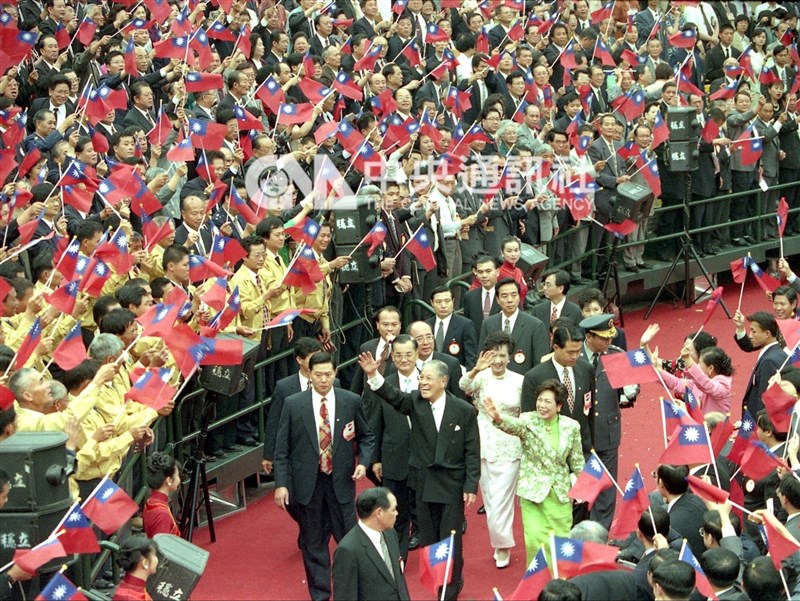
This is a special report commemorating the 30th anniversary of Taiwan's direct presidential elections. Scholars point out that since the first election in 1996, successive elections have cultivated a sense of a 'community of common destiny' among the people of Taiwan, Penghu, Kinmen, and Matsu, strengthening Taiwanese consciousness. This is a key achievement of Taiwan's bloodless democratic transition. However, the report also delves into the challenges that Taiwanese society still faces, including a divided national identity, conflicting historical memories such as views on WWII, and divergent policy lines among political elites on issues like national defense. Citing scholars like Chen Shih-min, Hsieh Hua-yuan, and Su Tzu-yun, the article analyzes the impact of democratization on generational identity and concludes that bridging internal divisions and consolidating democracy are crucial current tasks for Taiwan.
📋 Article Processing Timeline
- 📰 Published: May 20, 2026 at 13:53
- 🔍 Collected: May 20, 2026 at 14:01 (8 min after Published)
- 🤖 AI Analyzed: May 20, 2026 at 14:04 (3 min after Collected)
This year marks the 30th anniversary of Taiwan's direct presidential elections. Through interviews with key figures and scholars, the Central News Agency hopes to outline the course and face of Taiwan's transformation from an authoritarian to a democratic system. From the martial law era, where one had to write a 'last will' before forming a new political party, to the 1990 Wild Lily student movement demanding political reform with the support of civil society, Taiwan completed its democratization through bloodless reform in just a few short years. The first direct presidential election was held in 1996, a globally unique success story of democracy. Looking back at history, re-examining and rewriting the chapters of Taiwan's democratic movement can help us face the new challenges of deepening and consolidating democracy today.
Behind every vote cast by a voter is an affirmation of their identity with the land and the system. Scholars point out that the successive major elections initiated by the direct presidential election have given the people of Taiwan, Penghu, Kinmen, and Matsu a sense of being in the same boat, a 'community of common destiny,' further consolidating a Taiwanese consciousness. However, issues such as a divided national identity and contradictions in diverse historical memories still require time to be bridged.
What kind of qualitative change could a direct presidential election trigger for the future of Taiwanese society? Chen Shih-min, an associate professor in National Taiwan University's Department of Political Science who was a junior in college when the government announced the lifting of martial law in 1987, stated that he received a lot of party-state education in junior and high school. However, after experiencing the 1996 direct presidential election and the threat of Chinese military exercises, the Greater China sentiment accumulated from that education has basically disappeared.
Chen pointed out that a key concept of the direct presidential election is that only the people in the 'area of effective control of the Republic of China'—Taiwan, Penghu, Kinmen, and Matsu—elect their leader together. This gives the people living here a sense of being a 'community of common destiny' in the same boat. Moreover, after experiencing multiple presidential elections and national referendums, the people living in Taiwan, Penghu, Kinmen, and Matsu will further consolidate a Taiwanese consciousness.
Chen stated that China opposes Taiwan's referendums and direct presidential elections precisely because the Beijing authorities are well aware that as Taiwan holds more national elections, the atmosphere of being a community of common destiny with a Taiwanese consciousness will only grow stronger.
Another unique aspect of Taiwan's peaceful democratization process from the 1980s to the 90s was the role of the military under the party-state system, namely, the nationalization of the military. Lai I-chung, a consulting member of Taiwan Thinktank, recalled the international wave of democratic transition in the 90s, noting that Poland, the Czech Republic, and Slovakia were still facing uncertainty about their democratization, while Yugoslavia erupted into a multi-year civil war. Chen believes that Taiwan's completion of democratization through bloodless reform in less than 10 years from the lifting of martial law to the direct presidential election is a success story in the history of global democracy.
While the direct presidential election initiated the consolidation of a Taiwanese community consciousness, after 30 years and multiple major elections, incidents still occur, such as a high school teacher advocating for 'zero military purchases' and peace through Taiwanese identifying as Chinese, a new recruit training company commander insulting a Taiwanese-Japanese recruit, and a retired high-ranking general criticizing the Legislative Yuan President within the Kuomintang. It seems Taiwan remains divided on the level of national identity.
Hsieh Hua-yuan, president of the Taiwan Association of University Professors, stated at a recent seminar that the division and continuation of national identity is a fundamental obstacle to the rooting of democracy in Taiwan. First, Taiwan cannot become a normal sovereign state internationally. Second, although Taiwan has some degree of ethnic tension, the division of national identity is the truly important issue, which includes education, economic interests, and other considerations that must be faced prudently.
Hsieh pointed out, thirdly, that Taiwan's diverse and contradictory historical memories are very alarming, such as disputes over the terminology for the end of World War II and the War of Resistance against Japan, or transposing issues of modern Chinese history onto the island of Taiwan. He gave an example of a school exam question asking which country's planes had bombed Taiwan during WWII, where a teacher insisted the answer was Japan. This is an erroneous historical memory, because at that time, Taiwanese were participating in Japan's National Spiritual Mobilization to fight against China, not in the War of Resistance against Japan.
In this regard, Shen Ming-shih, a research fellow at the Institute for National Security at the Institute for National Defense and Security Research and a military academy graduate, believes that one cannot conclude Taiwan's military has not been nationalized based on isolated cases. Rather, some high-ranking generals or young officers may still have a generational gap and cognitive ambiguity regarding the concepts of 'separation of party and government' and 'separation of party and military.' This also reflects that the professional identification of some officers with military nationalization needs to be strengthened, and military education needs to be re-examined and reinforced.
As for grassroots soldiers, Shen pointed out that people in their 30s in Taiwan are now considered the 'naturally independent' generation, and the younger 20-somethings are probably even less concerned. The fact that the company commander's insult to the new recruit was leaked shows that 'of course, the average soldier also thought it was wrong!'
The division in national identity in Taiwan still needs time to be digested. Looking back at the past 30 years, Chen Shih-min states that the generation now aged 30 to 40 has become 'naturally independent,' and the generation under 30 also leans towards independence. This is the Taiwanese consciousness formed by the successive elections that began in 1996. 'This is the most important impact of the 30 years of direct presidential elections.'
Looking to the future, Su Tzu-yun, Director of the Institute for National Defense and Security Research's Division of National Defense Strategy and Resources, who decided on a career in military research due to the CCP's military exercises against Taiwan, frankly admits that although Taiwan has undergone several rotations of political parties, the divergence in paths among political elites, which even affects defense investment, remains an internal challenge for Taiwan.
Su said with a heavy heart, 'After the end of the Taiwan Strait Crisis in 1996, successive presidents and high-ranking military officials from all parties have worked hard to strengthen the nation's ability to survive. Thirty years have passed, Taiwan has better economic strength, and the public should deepen Taiwan's democracy. The predecessors of 30 years ago protected us, and now it is our turn to invest in national defense to protect Taiwan's next generation.'
Behind every vote cast by a voter is an affirmation of their identity with the land and the system. Scholars point out that the successive major elections initiated by the direct presidential election have given the people of Taiwan, Penghu, Kinmen, and Matsu a sense of being in the same boat, a 'community of common destiny,' further consolidating a Taiwanese consciousness. However, issues such as a divided national identity and contradictions in diverse historical memories still require time to be bridged.
What kind of qualitative change could a direct presidential election trigger for the future of Taiwanese society? Chen Shih-min, an associate professor in National Taiwan University's Department of Political Science who was a junior in college when the government announced the lifting of martial law in 1987, stated that he received a lot of party-state education in junior and high school. However, after experiencing the 1996 direct presidential election and the threat of Chinese military exercises, the Greater China sentiment accumulated from that education has basically disappeared.
Chen pointed out that a key concept of the direct presidential election is that only the people in the 'area of effective control of the Republic of China'—Taiwan, Penghu, Kinmen, and Matsu—elect their leader together. This gives the people living here a sense of being a 'community of common destiny' in the same boat. Moreover, after experiencing multiple presidential elections and national referendums, the people living in Taiwan, Penghu, Kinmen, and Matsu will further consolidate a Taiwanese consciousness.
Chen stated that China opposes Taiwan's referendums and direct presidential elections precisely because the Beijing authorities are well aware that as Taiwan holds more national elections, the atmosphere of being a community of common destiny with a Taiwanese consciousness will only grow stronger.
Another unique aspect of Taiwan's peaceful democratization process from the 1980s to the 90s was the role of the military under the party-state system, namely, the nationalization of the military. Lai I-chung, a consulting member of Taiwan Thinktank, recalled the international wave of democratic transition in the 90s, noting that Poland, the Czech Republic, and Slovakia were still facing uncertainty about their democratization, while Yugoslavia erupted into a multi-year civil war. Chen believes that Taiwan's completion of democratization through bloodless reform in less than 10 years from the lifting of martial law to the direct presidential election is a success story in the history of global democracy.
While the direct presidential election initiated the consolidation of a Taiwanese community consciousness, after 30 years and multiple major elections, incidents still occur, such as a high school teacher advocating for 'zero military purchases' and peace through Taiwanese identifying as Chinese, a new recruit training company commander insulting a Taiwanese-Japanese recruit, and a retired high-ranking general criticizing the Legislative Yuan President within the Kuomintang. It seems Taiwan remains divided on the level of national identity.
Hsieh Hua-yuan, president of the Taiwan Association of University Professors, stated at a recent seminar that the division and continuation of national identity is a fundamental obstacle to the rooting of democracy in Taiwan. First, Taiwan cannot become a normal sovereign state internationally. Second, although Taiwan has some degree of ethnic tension, the division of national identity is the truly important issue, which includes education, economic interests, and other considerations that must be faced prudently.
Hsieh pointed out, thirdly, that Taiwan's diverse and contradictory historical memories are very alarming, such as disputes over the terminology for the end of World War II and the War of Resistance against Japan, or transposing issues of modern Chinese history onto the island of Taiwan. He gave an example of a school exam question asking which country's planes had bombed Taiwan during WWII, where a teacher insisted the answer was Japan. This is an erroneous historical memory, because at that time, Taiwanese were participating in Japan's National Spiritual Mobilization to fight against China, not in the War of Resistance against Japan.
In this regard, Shen Ming-shih, a research fellow at the Institute for National Security at the Institute for National Defense and Security Research and a military academy graduate, believes that one cannot conclude Taiwan's military has not been nationalized based on isolated cases. Rather, some high-ranking generals or young officers may still have a generational gap and cognitive ambiguity regarding the concepts of 'separation of party and government' and 'separation of party and military.' This also reflects that the professional identification of some officers with military nationalization needs to be strengthened, and military education needs to be re-examined and reinforced.
As for grassroots soldiers, Shen pointed out that people in their 30s in Taiwan are now considered the 'naturally independent' generation, and the younger 20-somethings are probably even less concerned. The fact that the company commander's insult to the new recruit was leaked shows that 'of course, the average soldier also thought it was wrong!'
The division in national identity in Taiwan still needs time to be digested. Looking back at the past 30 years, Chen Shih-min states that the generation now aged 30 to 40 has become 'naturally independent,' and the generation under 30 also leans towards independence. This is the Taiwanese consciousness formed by the successive elections that began in 1996. 'This is the most important impact of the 30 years of direct presidential elections.'
Looking to the future, Su Tzu-yun, Director of the Institute for National Defense and Security Research's Division of National Defense Strategy and Resources, who decided on a career in military research due to the CCP's military exercises against Taiwan, frankly admits that although Taiwan has undergone several rotations of political parties, the divergence in paths among political elites, which even affects defense investment, remains an internal challenge for Taiwan.
Su said with a heavy heart, 'After the end of the Taiwan Strait Crisis in 1996, successive presidents and high-ranking military officials from all parties have worked hard to strengthen the nation's ability to survive. Thirty years have passed, Taiwan has better economic strength, and the public should deepen Taiwan's democracy. The predecessors of 30 years ago protected us, and now it is our turn to invest in national defense to protect Taiwan's next generation.'