China's April Economic Data Weakens; UBS Expert Cites Policy Shift After Q1 'Strong Start'
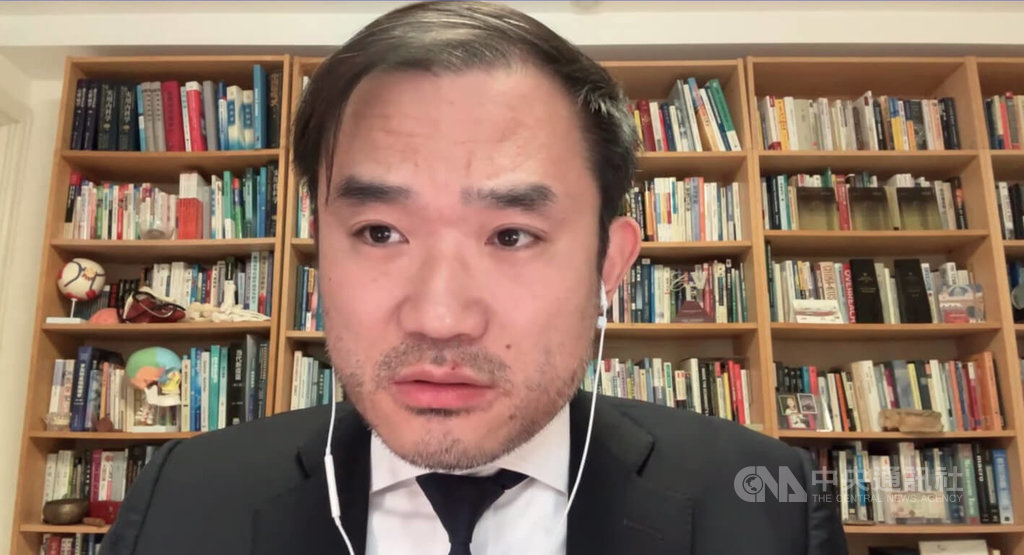
On May 20, Song Yu, Chief China Economist at UBS Securities, stated that the weakening of China's key economic data in April was due to a policy shift towards risk control after achieving a 'strong start' in the first quarter. He noted that this pattern of strong initial support followed by a shift is a common cause of short-term cyclical fluctuations in China's economy. He anticipates further policy adjustments to meet the goals for the first year of the 5-year plan. Regarding real estate, he views the current adjustment as a result of policy; while current measures are 'like side dishes' with limited impact, their continuous accumulation will help normalize the market and reduce the drag on the economy.
📋 Article Processing Timeline
- 📰 Published: May 20, 2026 at 19:00
- 🔍 Collected: May 20, 2026 at 19:32 (31 min after Published)
- 🤖 AI Analyzed: May 20, 2026 at 19:39 (7 min after Collected)
China's main economic indicators, such as the value-added of industrial enterprises above a designated size and total retail sales of consumer goods, weakened in April. A UBS expert stated today that after China's first-quarter economic data achieved a 'strong start,' the policy focus shifted, causing a general decline in April's data, and he anticipates a relatively quick readjustment of policy.
The 29th UBS Asian Investment Forum (AIC) will be held in Hong Kong starting on the 25th. Today, UBS held an online media sharing session to discuss China's macroeconomic outlook.
Song Yu, Chief China Economist at UBS Securities, first mentioned the 'Trump-Xi meeting,' stating, 'My characterization of it is a continuation of the recent stability in US-China relations.' This meeting frequently mentioned the 'next 3 years,' with the underlying meaning being the hope to maintain this stable relationship during US President Trump's term.
He pointed out that with the world facing the shadows of cold and hot wars, as well as trade wars, the continuation of stability from this meeting provides some relief from the uncertainty for businesses operating overseas.
Secondly, Song Yu discussed that China's Q1 economic data this year was better than expected, but in April, various economic indicators suddenly cooled down, including declines in consumer retail and investment, representing a relatively comprehensive and phased pullback.
Song Yu analyzed that in recent years, China's economy has often shown a certain degree of short-term cyclical fluctuations. The underlying mechanism is often that policies are intensified in the fourth quarter of the previous year to ensure that year's economic targets are met, with the actual results affecting both that quarter and the next.
He noted that, coupled with the pursuit of a 'strong start' in the first quarter to boost confidence in achieving the full-year economic goals, policies at the beginning of the year usually tend to have stronger support, 'giving it plenty of gas.' Furthermore, export performance was strong in the first quarter of this year, and it being the opening year of a 5-year plan, investment was also more active.
However, Song Yu said that after the 'strong start,' a subtle adjustment often occurs. Policy attention shifts to risk prevention and control, debt risks, or the implementation of environmental policies. If the short-term adjustment is too rapid, it can cause volatility.
Song Yu said that while it's common for March to be strong and April to be weak in previous years, this year's April data was generally so weak that 'there's not much to discuss.' He expects that subsequent policies will be readjusted relatively quickly to achieve the opening goals of the 5-year plan.
According to data released by China's National Bureau of Statistics on the 18th, the value-added of industrial enterprises above a designated size in China increased by 4.1% year-on-year in April, the lowest since July 2023 and below the 5.7% year-on-year increase in March. Total retail sales of consumer goods in April only grew by 0.2% year-on-year, the lowest since December 2022.
Furthermore, the media at the meeting were concerned about whether the negative impact of China's real estate on the economy is nearing its end. Song Yu stated that the clearing process is 'not over.' He emphasized that the recent adjustment in real estate is 'firstly, not of its own doing, and secondly, not accidental, but the result of policy adjustments.'
He pointed out that after the 'Qiushi' journal set the tone for real estate at the beginning of the year, China's finance ministry, the central bank, and local governments in Beijing and Shanghai successively rolled out policies. He described the current pace of policy as 'serving side dishes,' believing that the force of a single policy is limited and cannot immediately reverse market expectations. However, through continuous and gradual policy accumulation, it can help progressively enhance policy credibility and lead to a normalization of demand, contributing to a virtuous cycle.
Song Yu believes that the drag of real estate on China's macroeconomy is expected to be diminishing, but the relationship between real estate and the macroeconomy is interactive. 'If the macroeconomy had been consistently good, if growth had been very strong all these years, and everything else was fine, would real estate be like this?'. He said that many influencing factors are behind this, including policy, 'our economy is still a policy-led one.'
The 29th UBS Asian Investment Forum (AIC) will be held in Hong Kong starting on the 25th. Today, UBS held an online media sharing session to discuss China's macroeconomic outlook.
Song Yu, Chief China Economist at UBS Securities, first mentioned the 'Trump-Xi meeting,' stating, 'My characterization of it is a continuation of the recent stability in US-China relations.' This meeting frequently mentioned the 'next 3 years,' with the underlying meaning being the hope to maintain this stable relationship during US President Trump's term.
He pointed out that with the world facing the shadows of cold and hot wars, as well as trade wars, the continuation of stability from this meeting provides some relief from the uncertainty for businesses operating overseas.
Secondly, Song Yu discussed that China's Q1 economic data this year was better than expected, but in April, various economic indicators suddenly cooled down, including declines in consumer retail and investment, representing a relatively comprehensive and phased pullback.
Song Yu analyzed that in recent years, China's economy has often shown a certain degree of short-term cyclical fluctuations. The underlying mechanism is often that policies are intensified in the fourth quarter of the previous year to ensure that year's economic targets are met, with the actual results affecting both that quarter and the next.
He noted that, coupled with the pursuit of a 'strong start' in the first quarter to boost confidence in achieving the full-year economic goals, policies at the beginning of the year usually tend to have stronger support, 'giving it plenty of gas.' Furthermore, export performance was strong in the first quarter of this year, and it being the opening year of a 5-year plan, investment was also more active.
However, Song Yu said that after the 'strong start,' a subtle adjustment often occurs. Policy attention shifts to risk prevention and control, debt risks, or the implementation of environmental policies. If the short-term adjustment is too rapid, it can cause volatility.
Song Yu said that while it's common for March to be strong and April to be weak in previous years, this year's April data was generally so weak that 'there's not much to discuss.' He expects that subsequent policies will be readjusted relatively quickly to achieve the opening goals of the 5-year plan.
According to data released by China's National Bureau of Statistics on the 18th, the value-added of industrial enterprises above a designated size in China increased by 4.1% year-on-year in April, the lowest since July 2023 and below the 5.7% year-on-year increase in March. Total retail sales of consumer goods in April only grew by 0.2% year-on-year, the lowest since December 2022.
Furthermore, the media at the meeting were concerned about whether the negative impact of China's real estate on the economy is nearing its end. Song Yu stated that the clearing process is 'not over.' He emphasized that the recent adjustment in real estate is 'firstly, not of its own doing, and secondly, not accidental, but the result of policy adjustments.'
He pointed out that after the 'Qiushi' journal set the tone for real estate at the beginning of the year, China's finance ministry, the central bank, and local governments in Beijing and Shanghai successively rolled out policies. He described the current pace of policy as 'serving side dishes,' believing that the force of a single policy is limited and cannot immediately reverse market expectations. However, through continuous and gradual policy accumulation, it can help progressively enhance policy credibility and lead to a normalization of demand, contributing to a virtuous cycle.
Song Yu believes that the drag of real estate on China's macroeconomy is expected to be diminishing, but the relationship between real estate and the macroeconomy is interactive. 'If the macroeconomy had been consistently good, if growth had been very strong all these years, and everything else was fine, would real estate be like this?'. He said that many influencing factors are behind this, including policy, 'our economy is still a policy-led one.'