Central News Agency Message
(Central News Agency, reporter Shen Pei-yao, Taipei, 14th) Civic groups have questioned that the three-shift nurse-to-patient ratio, calculated as an average, has become a numbers game. The Ministry of Health and Welfare (MOHW) stated today that it will first conduct a trial at ministry-affiliated hospitals, including Taipei and Taoyuan, to explore using technological means such as medical professional certificates or check-in systems to implement dynamic monitoring for each shift, rather than just calculating a monthly average.
The amendment to the Medical Care Act was passed on its third reading on May 8, officially incorporating the three-shift nurse-to-patient ratio into law. President Lai Ching-te recently announced that it will be implemented in phases starting from May 20, 2027. Currently, the MOHW stipulates the nurse-to-patient ratio for the night shift as 1:11 for medical centers, 1:13 for regional hospitals, and 1:15 for district hospitals.
The Taiwan Nursing and Midwifery Union, dissatisfied with the current calculation method, held a press conference today, pointing out that the law currently specifies an "average" three-shift nurse-to-patient ratio, leaving many units with long-term excessive nurse-to-patient ratios unregulated. Even with President Lai's announcement on Nurses' Day that the three-shift ratio will be "implemented next year," it is difficult to truly improve the situation of overworked and exhausted nurses.
Chen Ching-mei, Deputy Director of the MOHW's Department of Nursing and Health Care, explained in a media interview this afternoon that although the goal is to achieve precise, real-time reflection at fixed points and times, there are practical difficulties. In large medical centers with hundreds of wards, how to uniformly present real-time numbers remains a technical challenge.
She explained that the current basis for the MOHW's incentive rewards is a consensus reached after discussions among various units two years ago. It adopts a method of daily statistics and monthly reporting to ensure a fair calculation basis for all hospitals and administrative feasibility.
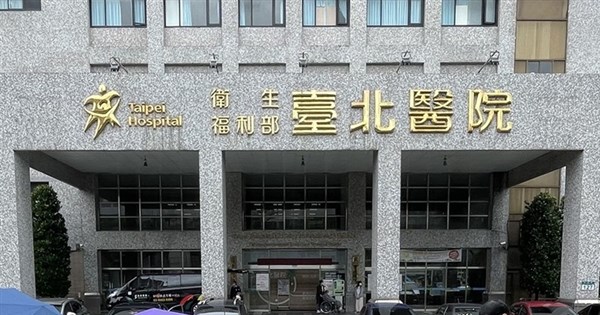
However, in response to the expectations of frontline nursing staff, Chen said that MOHW Minister Shih Chung-liang has instructed the Medical and Welfare Association to take the lead in studying a pilot program at its affiliated hospitals. The focus will be on ministry-affiliated hospitals in the northern, central, and southern regions, with Taipei Hospital and Taoyuan Hospital becoming the first indicator units as they have already implemented new systems.
Chen pointed out that the pilot directions include using "medical personnel certificate" card-ins or integrating with employee ID check-in systems to study how to directly reflect the actual manpower on duty during each time slot.
"All technological means have pros and cons, such as whether certificate card-ins will increase the extra burden on clinical nurses," Chen admitted. She said that there are currently plans to invite nursing groups, the information department, and hospital representatives to a brainstorming meeting. The second meeting, originally scheduled for May 8, was postponed due to Nurses' Day activities and is now being rescheduled by the information department, hoping to find a balance between "ideal" and "reality."
Regarding the regulatory notice, Chen stated that the draft amendment to the "Standards for the Establishment of Medical Institutions" is still being processed by the Department of Medical Affairs. Although it will temporarily continue to use averages for the distribution of incentive funds, if the technology monitoring model proves successful in the ministry-affiliated hospitals, there is still room for further discussion and adjustment of the system. (Editor: Kuan Chung-wei) 1150514
FACT BOX
- Source: CNA (Central News Agency)
- Category: Taiwan