US-Iran War Key News
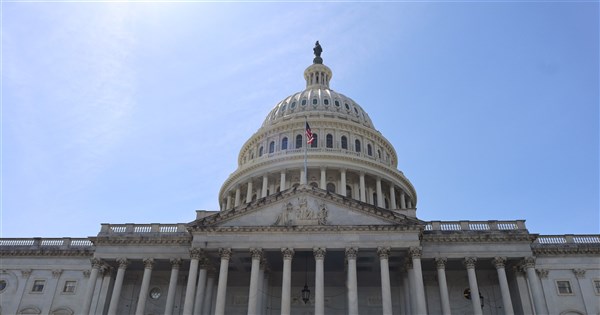
(Central News Agency Washington 16th comprehensive foreign report) The US House of Representatives today rejected a Democratic proposal that would have allowed President Trump to continue military action against Iran only with congressional authorization. This marks another setback for Democrats in their push to restore Congress's central role in war powers.
Agence France-Presse reported that the US Congress is increasingly uneasy about the six-week-long Middle East conflict, concerned about rising costs and an uncertain outcome, as well as the risks of an escalating war. Amidst this, Democratic lawmakers pushed the bill to a vote in the House.
Today's vote largely followed party lines, with nearly all Republican members voting against it, though one defected and another abstained. On the Democratic side, one lawmaker also voted against their own party's bill.
Democrats argue that Trump's conflict with Israel, initiated on February 28, lacked congressional authorization, and according to the US Constitution, the power to declare war belongs to Congress.
House Foreign Affairs Committee Ranking Member Gregory Meeks stated before the vote: "We are standing on a cliff, and Congress must act before this president pushes everyone off. Every day we delay, we get closer to a war we cannot escape."
Compared to a similar Democratic proposal in March, the margin of today's vote was narrower, but ultimately, Republican support was insufficient.
Trump continues to enjoy broad Republican support, despite some lawmakers' dissatisfaction with the administration's refusal to publicly explain the war's financial and military burdens.
During congressional hearings on the 15th and 16th, White House Budget Director Russ Vought refused to estimate the cost to taxpayers and did not confirm the $50 billion estimated by Senate Budget Committee Ranking Member Jeff Merkley.
Democrats emphasize that even though proposals to limit presidential war powers have been repeatedly rejected, they are still meaningful because they force lawmakers to take a clear stance. (Compiled by Chi Chin-ling) 1150417
Choose to stand with facts, every sponsorship you make is a force to protect press freedom.
Download the Central News Agency "First-hand News" APP to instantly grasp the latest news.
The text, images, and videos on this website may not be reproduced, publicly broadcast, or publicly transmitted and used without authorization.
FACT BOX
- Source: CNA (Central News Agency)
- Category: regulation