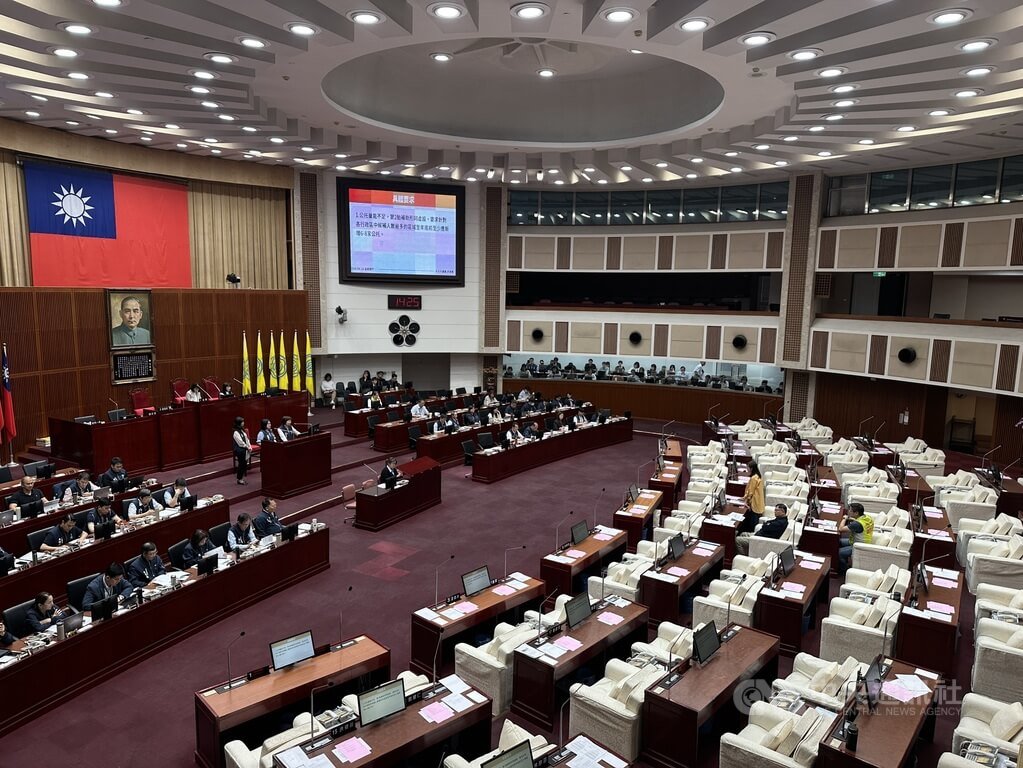
Taipei City Councilor Hsu Shu-hua stated today that the capacity for public childcare falls far short of actual demand, leading to low lottery success rates and long waiting lists. The city government responded that one new center will be added in each administrative district by the end of the year, and it will pay attention to districts with more newborns to evaluate increasing the number of public childcare facilities.
During a Taipei City Council civil affairs departmental inquiry this afternoon, Democratic Progressive Party councilor Hsu Shu-hua questioned Mayor Chiang Wan-an's policy of free public childcare for the second child, arguing it is effectively useless due to insufficient capacity. She suggested a priority admission system for second children is needed to realize the concept of free care.
Hsu reviewed data on newborns and public childcare institutions in Taipei's districts, noting that from 2024 to the end of March this year, Neihu District had 3,963 newborns with 960 on the waiting list for public childcare. Xinyi District had 2,716 newborns and 792 on the waiting list.
Hsu said the data shows that Taipei's public childcare capacity is far from meeting actual demand. For instance, the entire city's public childcare can only accommodate 2,008 children, while 3,854 are on the waiting list. While supporting the city's childcare policy, she noted the low lottery success rate has led many parents to complain the policy is 'empty talk.'
Hsu stated that with 3,854 people on the waiting list for public childcare institutions, it is estimated to take about 6 years to get a child into public care, by which time 'the child would have graduated from elementary school.' She demanded the city government increase the number of public childcare facilities in districts with higher birth rates, adding at least 6 to 8 centers by the end of the year to meet parents' needs.
In response, Yao Shu-wen, Commissioner of the Taipei City Department of Social Welfare, stated that priority admission measures for public or quasi-public childcare will be studied.
Taipei City Secretary-General Wang Yu-fen stated that, in principle, one new public childcare institution will be added to each administrative district by the end of this year, and the quantity for next year will continue to be assessed. Special attention will be paid to districts with more newborns to evaluate whether the number of public childcare facilities can be increased. (Editor: Hsiao Po-wen) 1150414
FACT BOX
- Source: CNA (Central News Agency)
- Category: regulation