Sun Yat-sen University Researches Superbug to Aid Vaccine and Alternative Therapy Development
A research team from National Sun Yat-sen University and Academia Sinica discovered the key mechanism by which the superbug Acinetobacter baumannii triggers severe human inflammation, proposing new directions for precision vaccines and alternative therapies.
📋 Article Processing Timeline
- 📰 Published: April 16, 2026 at 16:42
- 🔍 Collected: April 16, 2026 at 17:01 (19 min after Published)
- 🤖 AI Analyzed: April 19, 2026 at 00:39 (55h 37m after Collected)
Central News Agency
(CNA Reporter Lin Chiao-lien, Kaohsiung, 16th) The "superbug" Acinetobacter baumannii has long threatened clinical treatments. A research team from National Sun Yat-sen University (NSYSU) recently discovered the key mechanism by which this bacterium triggers strong inflammatory responses in the human body, proposing new directions for precision vaccines and alternative therapies. The findings were published in an international journal.
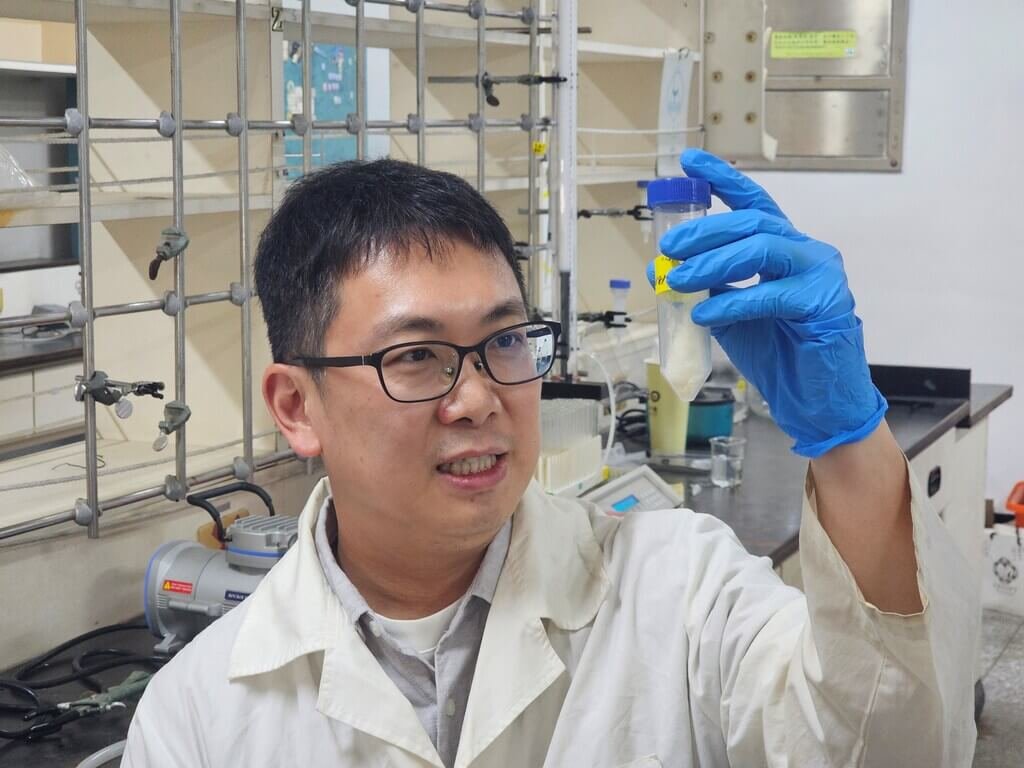
NSYSU issued a press release today stating that an assistant professor from the Department of Marine Biotechnology and Resources, Lee Yi-ming, and Academia Sinica researcher Wu Shih-hsiung formed a research team that, for the first time, identified the key "chemical switch" that this type of bacteria uses to activate strong inflammatory responses in humans, bringing a breakthrough in the fight against antibiotic-resistant bacteria.
NSYSU stated that the research team's results were published in the top international journal "Carbohydrate Polymers." The team pointed out that Acinetobacter baumannii possesses multiple antibiotic resistances, with an infection mortality rate reaching 30% to over 70%, and has been listed by the World Health Organization (WHO) as a critical pathogen urgently needing new therapies.
Lee Yi-ming mentioned that the key reason this bacterium is so hard to eradicate lies in its surface being covered by a layer of exopolysaccharides, acting like body armor. Not only can it evade immune system attacks, but it also triggers severe inflammatory responses like pneumonia and sepsis.
The research team used "bacteriophages"—viruses that specifically infect bacteria—to precisely cut the exopolysaccharides on the surface of the SK44 strain of Acinetobacter baumannii. The results showed that the "O-acetylated pentasaccharide" fragments generated after the exopolysaccharides were broken down were exactly the key signal that activated the TLR4 pathway of immune cells.
The team stated that the human immune system does not react randomly but only initiates the inflammatory mechanism after precisely recognizing specific "acetylation markers." Once these markers are removed, the immune response is significantly reduced.
Lee Yi-ming said that traditional strategies mostly target the entire exopolysaccharide, akin to opening full fire on the enemy, but research shows the immune system actually only locks onto specific structures. In the future, if designs can target the "acetylation sites," it is hopeful to develop a more precise new conjugate vaccine with lower side effects, improving treatment efficiency.
In addition, the research proposed a new strategy for alternative therapies, using phage protein enzymes to destroy the outer structure of the bacteria, weakening its defense capabilities, making it easier for the bacteria to be cleared by drugs or the immune system. This provides treatment possibilities beyond antibiotics and opens a brand new direction for clinical treatment.
Co-authors of this paper also include Academia Sinica Institute of Biological Chemistry postdoctoral researcher Huang Tzu-yin, student Yang Yen-ju, and NSYSU Department of Marine Biotechnology and Resources students Cheng Po-wen and Lin Chun-ting. (Editor: Chang Ya-ching) 1150416
Choose to stand with facts; every sponsorship from you is a force to protect press freedom.
Download the CNA "First Hand News" APP to grasp the latest news instantly.
The text, images, and audio/video of this website may not be reproduced, publicly broadcast, or publicly transmitted and utilized without authorization.
(CNA Reporter Lin Chiao-lien, Kaohsiung, 16th) The "superbug" Acinetobacter baumannii has long threatened clinical treatments. A research team from National Sun Yat-sen University (NSYSU) recently discovered the key mechanism by which this bacterium triggers strong inflammatory responses in the human body, proposing new directions for precision vaccines and alternative therapies. The findings were published in an international journal.
NSYSU issued a press release today stating that an assistant professor from the Department of Marine Biotechnology and Resources, Lee Yi-ming, and Academia Sinica researcher Wu Shih-hsiung formed a research team that, for the first time, identified the key "chemical switch" that this type of bacteria uses to activate strong inflammatory responses in humans, bringing a breakthrough in the fight against antibiotic-resistant bacteria.
NSYSU stated that the research team's results were published in the top international journal "Carbohydrate Polymers." The team pointed out that Acinetobacter baumannii possesses multiple antibiotic resistances, with an infection mortality rate reaching 30% to over 70%, and has been listed by the World Health Organization (WHO) as a critical pathogen urgently needing new therapies.
Lee Yi-ming mentioned that the key reason this bacterium is so hard to eradicate lies in its surface being covered by a layer of exopolysaccharides, acting like body armor. Not only can it evade immune system attacks, but it also triggers severe inflammatory responses like pneumonia and sepsis.
The research team used "bacteriophages"—viruses that specifically infect bacteria—to precisely cut the exopolysaccharides on the surface of the SK44 strain of Acinetobacter baumannii. The results showed that the "O-acetylated pentasaccharide" fragments generated after the exopolysaccharides were broken down were exactly the key signal that activated the TLR4 pathway of immune cells.
The team stated that the human immune system does not react randomly but only initiates the inflammatory mechanism after precisely recognizing specific "acetylation markers." Once these markers are removed, the immune response is significantly reduced.
Lee Yi-ming said that traditional strategies mostly target the entire exopolysaccharide, akin to opening full fire on the enemy, but research shows the immune system actually only locks onto specific structures. In the future, if designs can target the "acetylation sites," it is hopeful to develop a more precise new conjugate vaccine with lower side effects, improving treatment efficiency.
In addition, the research proposed a new strategy for alternative therapies, using phage protein enzymes to destroy the outer structure of the bacteria, weakening its defense capabilities, making it easier for the bacteria to be cleared by drugs or the immune system. This provides treatment possibilities beyond antibiotics and opens a brand new direction for clinical treatment.
Co-authors of this paper also include Academia Sinica Institute of Biological Chemistry postdoctoral researcher Huang Tzu-yin, student Yang Yen-ju, and NSYSU Department of Marine Biotechnology and Resources students Cheng Po-wen and Lin Chun-ting. (Editor: Chang Ya-ching) 1150416
Choose to stand with facts; every sponsorship from you is a force to protect press freedom.
Download the CNA "First Hand News" APP to grasp the latest news instantly.
The text, images, and audio/video of this website may not be reproduced, publicly broadcast, or publicly transmitted and utilized without authorization.