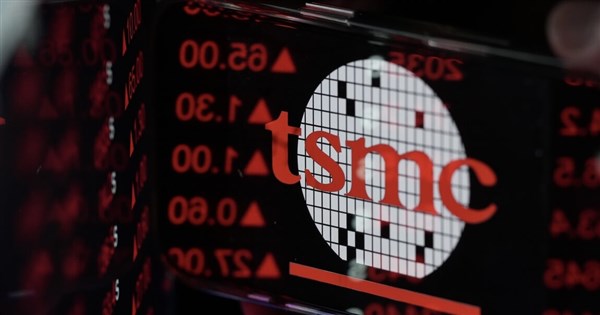
Strong AI Demand Drives TSMC Growth Over 30%, Key Takeaways from Investor Conference
TSMC reported strong Q1 earnings, exceeding two capital stocks, and expects Q2 revenue to grow by another 10%. Chairman C.C. Wei announced over 30% annual growth, surpassing expectations, and confirmed 3nm capacity expansion in Taiwan, the US, and Japan to meet AI demand. Capital expenditure for 2026 is projected to be between $52 billion and $56 billion.
📋 Article Processing Timeline
- 📰 Published: April 16, 2026 at 19:56
- 🔍 Collected: April 16, 2026 at 20:01 (5 min after Published)
- 🤖 AI Analyzed: April 16, 2026 at 20:10 (8 min after Collected)
Taipei, April 16 (CNA) Driven by strong AI demand, wafer foundry giant TSMC delivered an impressive performance in the first quarter, earning more than two capital stocks, and maintains an optimistic outlook for the second quarter, with an estimated 10% growth in dollar revenue. Chairman C.C. Wei announced that annual growth will exceed 30%, better than expected, and to meet customer demand, TSMC is uncharacteristically expanding 3nm production capacity in Taiwan, the United States, and Japan.
The highly anticipated TSMC investor conference took place this afternoon, releasing many positive messages as expected by the market. Not only did Q1 revenue, gross margin, and operating profit margin all exceed expectations, but revenue and profit also hit historical highs, with earnings per share reaching NT$22.08 for the quarter.
Regarding concerns from institutional investors about supply and demand, capital expenditure, the impact of the Middle East situation, and competitive dynamics such as Tesla CEO Elon Musk entering wafer manufacturing, C.C. Wei addressed them directly and clearly. As for TSMC's previous acquisition of a second large plot of land near its existing Arizona facility, Wei said TSMC hopes to build a comprehensive production line in Arizona to meet years of demand for advanced technology. Below are the key takeaways from the TSMC investor conference.
C.C. Wei stated that the shift from generative AI and query models to agentic AI and command-and-execute models is leading to an even higher consumption of tokens for large language models processing text, driving continuous growth in computing power demand and supporting strong demand for advanced semiconductors.
Wei pointed out that AI demand is strong and continuously increasing. After confirming with customers and their clients, such as cloud service providers, the outlook is very positive. TSMC must accelerate cleanroom construction and equipment procurement, and advance the overall schedule, working with construction units and equipment suppliers to speed up progress.
TSMC CFO Wendell Huang said that higher capital expenditure is related to higher growth opportunities in the coming years. TSMC's technological leadership and differentiated advantages allow it to capture multi-year structural demand from major industry trends such such as AI, 5G, and high-performance computing (HPC).
Huang said TSMC continues to invest heavily to support customer growth, with capital expenditure for 2026 expected to be near the upper end of the $52 billion to $56 billion range.
C.C. Wei said that TSMC's 2nm process will enter mass production in Q4 2025. Due to strong demand from AI, smartphones, and HPC, TSMC's 2nm will be mass-produced simultaneously in multiple phases of fabs in Hsinchu and Kaohsiung.
In the past, TSMC would not add additional capacity once a certain process technology reached its target capacity. However, to meet the strong demand for AI, TSMC is expanding capital investment to increase 3nm capacity.
Wei said TSMC is adding a new 3nm fab in the Southern Taiwan Science Park's mega-fab cluster, expected to enter mass production in the first half of 2027; the second fab in Arizona, USA, will adopt 3nm technology, planned for mass production in the second half of 2027; and the second fab in Kumamoto, Japan, will also use 3nm, expected to enter mass production in 2028.
TSMC continues to advance process technology. The A14 process will adopt the second-generation nanosheet transistor structure, with high interest and participation from AI, smartphone, and HPC customers. The A14 process is planned for mass production in 2028.
Compared to the 2nm process, the A14 process offers a 10% to 15% speed increase at the same power consumption; at the same speed, power consumption is reduced by 25% to 30%, and logic density increases by nearly 20%.
Huang said that the prices of some chemical raw materials and gases are likely to rise due to the recent situation in the Middle East. Based on current assessments, this may affect TSMC's profits, but it is too early to quantify these impacts.
Huang said TSMC implements a comprehensive enterprise risk management system to identify and assess all relevant risks and proactively adopt risk control strategies. Regarding raw material supply, TSMC continues to develop multi-source supply solutions and promote local supply chains. In the short term, no impact on TSMC's operations from raw material supply is expected.
Regarding energy, Huang said TSMC works closely with Taipower and the Taiwan government to ensure stable and sufficient energy supply. The Taiwan government has announced that sufficient liquefied natural gas supply has been secured and can be maintained at least until May. The government is also actively ensuring further LNG supply, diversifying procurement from other regions, and exploring other power backup solutions. No short-term impact on TSMC's operations is expected.
Regarding Tesla CEO Elon Musk's decision to build his own TeraFab wafer fab, C.C. Wei said that building a new fab takes 2 to 3 years, and subsequent mass production and yield improvement take another 1 to 2 years. The overall cycle is long, capital-intensive, and there are no shortcuts.
Regarding competition from Intel in the wafer foundry sector, Wei said Intel is both a customer and a strong competitor of TSMC, and TSMC will not underestimate any competitor.
Wei said TSMC will not easily outsource orders to peers and will try its best to increase capacity to ensure it can meet customer demand. (Editor: Lin Shu-yuan) 1150416
The highly anticipated TSMC investor conference took place this afternoon, releasing many positive messages as expected by the market. Not only did Q1 revenue, gross margin, and operating profit margin all exceed expectations, but revenue and profit also hit historical highs, with earnings per share reaching NT$22.08 for the quarter.
Regarding concerns from institutional investors about supply and demand, capital expenditure, the impact of the Middle East situation, and competitive dynamics such as Tesla CEO Elon Musk entering wafer manufacturing, C.C. Wei addressed them directly and clearly. As for TSMC's previous acquisition of a second large plot of land near its existing Arizona facility, Wei said TSMC hopes to build a comprehensive production line in Arizona to meet years of demand for advanced technology. Below are the key takeaways from the TSMC investor conference.
C.C. Wei stated that the shift from generative AI and query models to agentic AI and command-and-execute models is leading to an even higher consumption of tokens for large language models processing text, driving continuous growth in computing power demand and supporting strong demand for advanced semiconductors.
Wei pointed out that AI demand is strong and continuously increasing. After confirming with customers and their clients, such as cloud service providers, the outlook is very positive. TSMC must accelerate cleanroom construction and equipment procurement, and advance the overall schedule, working with construction units and equipment suppliers to speed up progress.
TSMC CFO Wendell Huang said that higher capital expenditure is related to higher growth opportunities in the coming years. TSMC's technological leadership and differentiated advantages allow it to capture multi-year structural demand from major industry trends such such as AI, 5G, and high-performance computing (HPC).
Huang said TSMC continues to invest heavily to support customer growth, with capital expenditure for 2026 expected to be near the upper end of the $52 billion to $56 billion range.
C.C. Wei said that TSMC's 2nm process will enter mass production in Q4 2025. Due to strong demand from AI, smartphones, and HPC, TSMC's 2nm will be mass-produced simultaneously in multiple phases of fabs in Hsinchu and Kaohsiung.
In the past, TSMC would not add additional capacity once a certain process technology reached its target capacity. However, to meet the strong demand for AI, TSMC is expanding capital investment to increase 3nm capacity.
Wei said TSMC is adding a new 3nm fab in the Southern Taiwan Science Park's mega-fab cluster, expected to enter mass production in the first half of 2027; the second fab in Arizona, USA, will adopt 3nm technology, planned for mass production in the second half of 2027; and the second fab in Kumamoto, Japan, will also use 3nm, expected to enter mass production in 2028.
TSMC continues to advance process technology. The A14 process will adopt the second-generation nanosheet transistor structure, with high interest and participation from AI, smartphone, and HPC customers. The A14 process is planned for mass production in 2028.
Compared to the 2nm process, the A14 process offers a 10% to 15% speed increase at the same power consumption; at the same speed, power consumption is reduced by 25% to 30%, and logic density increases by nearly 20%.
Huang said that the prices of some chemical raw materials and gases are likely to rise due to the recent situation in the Middle East. Based on current assessments, this may affect TSMC's profits, but it is too early to quantify these impacts.
Huang said TSMC implements a comprehensive enterprise risk management system to identify and assess all relevant risks and proactively adopt risk control strategies. Regarding raw material supply, TSMC continues to develop multi-source supply solutions and promote local supply chains. In the short term, no impact on TSMC's operations from raw material supply is expected.
Regarding energy, Huang said TSMC works closely with Taipower and the Taiwan government to ensure stable and sufficient energy supply. The Taiwan government has announced that sufficient liquefied natural gas supply has been secured and can be maintained at least until May. The government is also actively ensuring further LNG supply, diversifying procurement from other regions, and exploring other power backup solutions. No short-term impact on TSMC's operations is expected.
Regarding Tesla CEO Elon Musk's decision to build his own TeraFab wafer fab, C.C. Wei said that building a new fab takes 2 to 3 years, and subsequent mass production and yield improvement take another 1 to 2 years. The overall cycle is long, capital-intensive, and there are no shortcuts.
Regarding competition from Intel in the wafer foundry sector, Wei said Intel is both a customer and a strong competitor of TSMC, and TSMC will not underestimate any competitor.
Wei said TSMC will not easily outsource orders to peers and will try its best to increase capacity to ensure it can meet customer demand. (Editor: Lin Shu-yuan) 1150416
FAQ
What were TSMC's Q1 results?
TSMC earned more than two capital stocks in Q1, with record-high revenue and profit.
How is TSMC responding to AI demand?
TSMC is expanding 3nm production capacity in Taiwan, the US, and Japan, and accelerating mass production of 2nm and A14 processes.